United States · California
Where to Stay in Santa Cruz, California
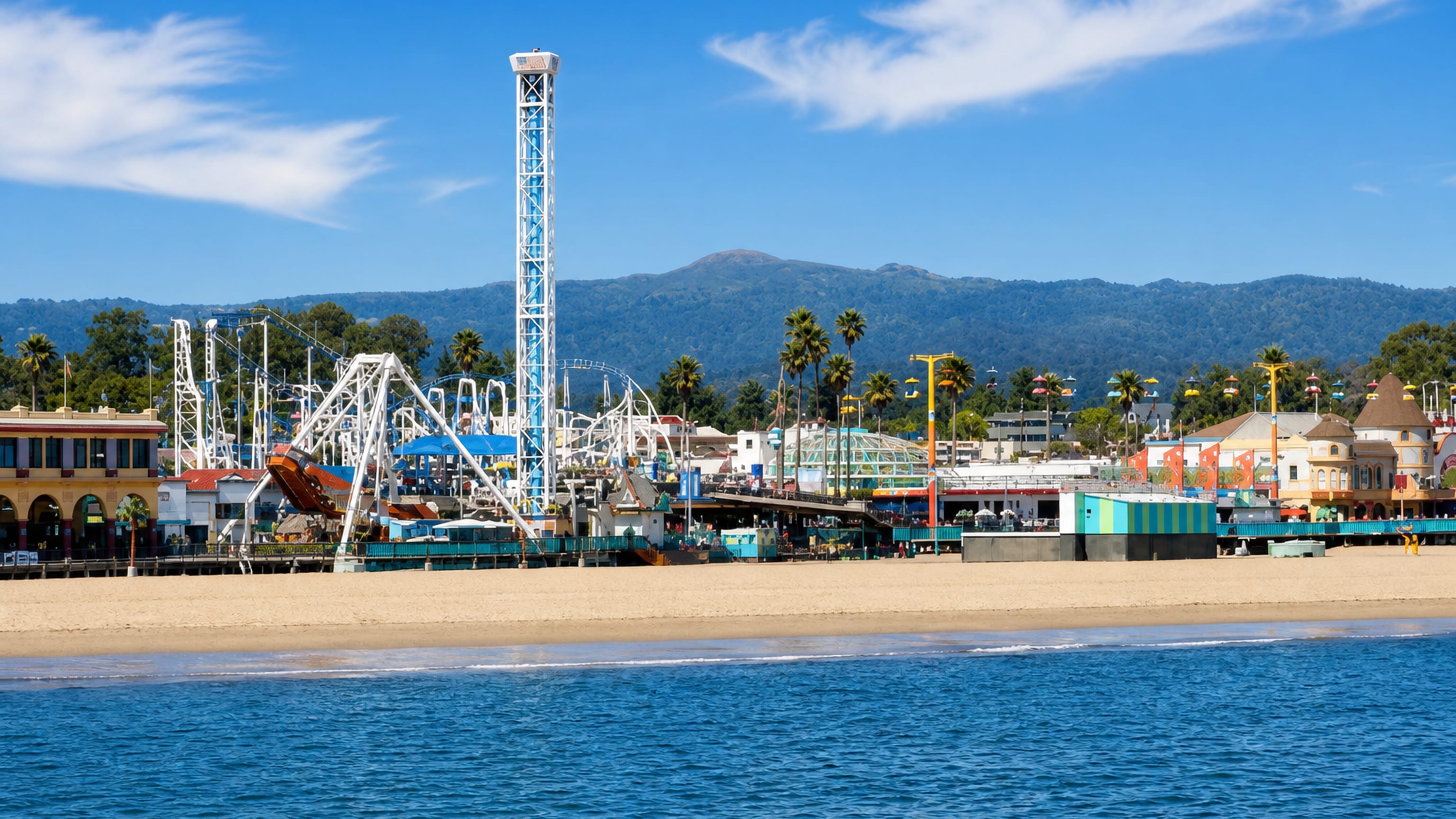
Santa Cruz holds the northern corner of Monterey Bay, a California beach city with a wooden coaster on the sand and a mission dating from 1791.
Hotel links are affiliate links: booking through them may earn us a commission, at no extra cost to you. It never affects how places are ranked. How this works


Where to stay in Santa Cruz
Where visitors usually base themselves, and why.
Monterey Bay decides this one. The seafront beside the Santa Cruz Beach Boardwalk puts the sand, the Giant Dipper, and the Santa Cruz Looff Carousel within a few minutes on foot, which is precisely what most visitors are after and precisely what makes it the loudest ground in the city through the summer. Rooms there go first.
They also want the earliest booking. Downtown is the calmer alternative, and it stands only a few streets back. Beds around the Museum of Art and History keep the restaurants and the county-seat business close while leaving the beach a short walk off, which suits anyone whose evening should not be organised around a fairground.
Along the shore the ground rises toward the Santa Cruz Lighthouse and the Santa Cruz Surfing Museum, where the break rather than the boardwalk is the draw and the streets stay residential. Mission Santa Cruz and Holy Cross Church occupy higher ground again. In Santa Cruz these choices sit minutes apart.
Roughly 41 square kilometres cover the whole city, and walking from the mission down to the sand takes less time than parking near either one in August. Surfing? Sleep out by the lighthouse. With children in tow the Boardwalk end earns its noise, and if you came for Santa Cruz County and the coast past it, downtown keeps you nearest the road out.
Find hotels in Santa Cruz
Direct booking searches for these neighbourhoods.
Beach Boardwalk seafront
The strip facing Monterey Bay where the Santa Cruz Beach Boardwalk, the Giant Dipper, and the Santa Cruz Looff Carousel keep the crowds and the noise.Find hotels in Beach Boardwalk seafrontan evening of dinner and galleries off the sandDowntown Santa Cruz
The blocks around the Museum of Art and History, a few streets back from the water, holding the restaurants and the county-seat offices.Find hotels in Downtown Santa Cruzsurfers who want the break in sight from the doorThe lighthouse shore
Residential streets on the rise toward the Santa Cruz Lighthouse and the Santa Cruz Surfing Museum, with the surf break as the local landmark. Beds are limited here, so book early.Find hotels in The lighthouse shorea quiet base beside the founding groundAround Mission Santa Cruz
The higher ground held by Mission Santa Cruz and Holy Cross Church, quiet and set apart from the seafront traffic below. Lodging is scarce in this area; reserve in advance.Find hotels in Around Mission Santa CruzHotel links are affiliate links: booking through them may earn us a commission, at no extra cost to you. It never affects how places are ranked. How this works
Things to do in Santa Cruz
Ranked by global recognition; descriptions from Wikidata (CC0).
Museums & Galleries
3- Santa Cruz Surfing Museum
- Museum of Art and History
- Santa Cruz Lighthouse
Churches & Religious Sites
2- Mission Santa Cruz Heritage
- Holy Cross Church
Parks & Gardens
1- Santa Cruz Beach Boardwalk Heritage
Landmarks & Notable Places
2- Hinds House Heritage
- Elias H. Robinson House Heritage
worth knowingacross 4 categories in Santa Cruz
About Santa Cruz
Surf first, everything else after.
What is Santa Cruz known for?
Santa Cruz lies along the northern edge of Monterey Bay and pulls visitors for its beaches and its surf culture ahead of anything else, with the Santa Cruz Beach Boardwalk and the wooden Giant Dipper holding down the seafront end of that reputation. The Santa Cruz Surfing Museum records the rest. Mission Santa Cruz supplies the deeper layer, and the business of running Santa Cruz County goes on in a downtown that sits a few streets back from the water rather than on it.
What are the main landmarks in Santa Cruz?
The Boardwalk carries the crowds. Santa Cruz Beach Boardwalk holds the Giant Dipper, a wooden coaster old enough to count as a landmark in its own right, and the Santa Cruz Looff Carousel, the pair listed together as the Santa Cruz Looff Carousel and Roller Coaster. Undertow sits on the same seafront.
Away from the sand, Mission Santa Cruz and Holy Cross Church mark the founding ground, the Museum of Art and History runs the county's collections, and the Santa Cruz Lighthouse, the Santa Cruz Surfing Museum, the Hinds House, and the Elias H. Robinson House fill out the list.
What is the history of Santa Cruz?
The record starts in 1791. Mission Santa Cruz was founded that year on the rise above the shore of Monterey Bay, and the settlement that gathered around it grew into the seat of Santa Cruz County, a job the city has never given up. Holy Cross Church keeps the same ground.
Both names translate the dedication: the holy cross, in the Spanish of the founders. The nineteenth century left the domestic evidence. The Hinds House and the Elias H. Robinson House survive from the decades when the town filled the flat land between the mission rise and the water, and the Museum of Art and History holds the county's account of that period.
Then the sea rewrote the local economy. Santa Cruz Beach Boardwalk turned a working shoreline into a resort, the Giant Dipper and the Santa Cruz Looff Carousel arrived as the machinery of that trade, and the waves breaking along this edge of Monterey Bay built a surf culture substantial enough that the Santa Cruz Surfing Museum exists to record it, a short way from the Santa Cruz Lighthouse. Visitors became the business.
What began as a mission on a hill above the bay works as a beach town that also happens to run a county.
Where is Santa Cruz?
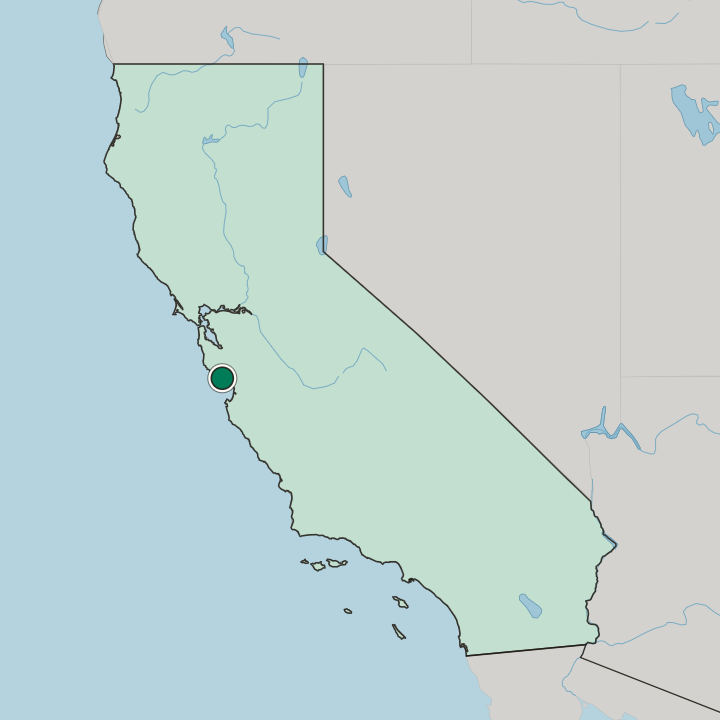
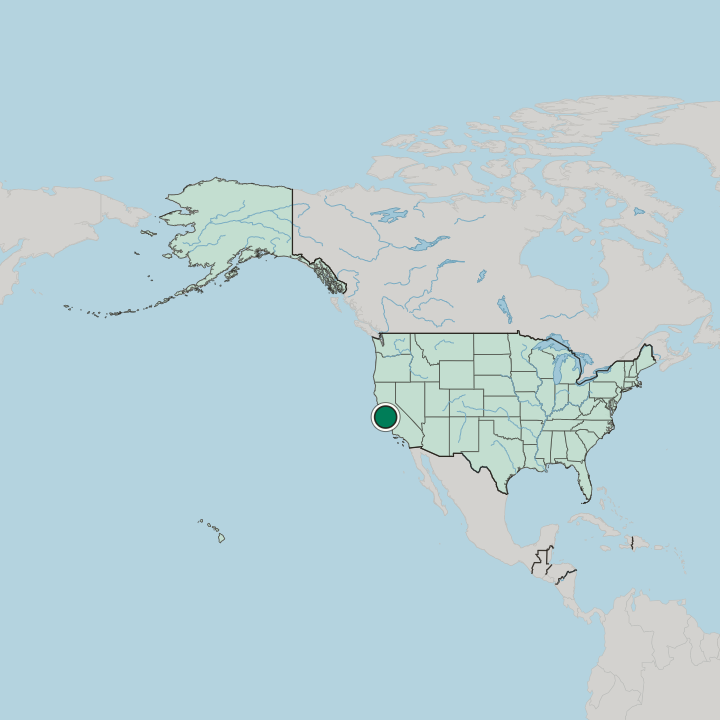
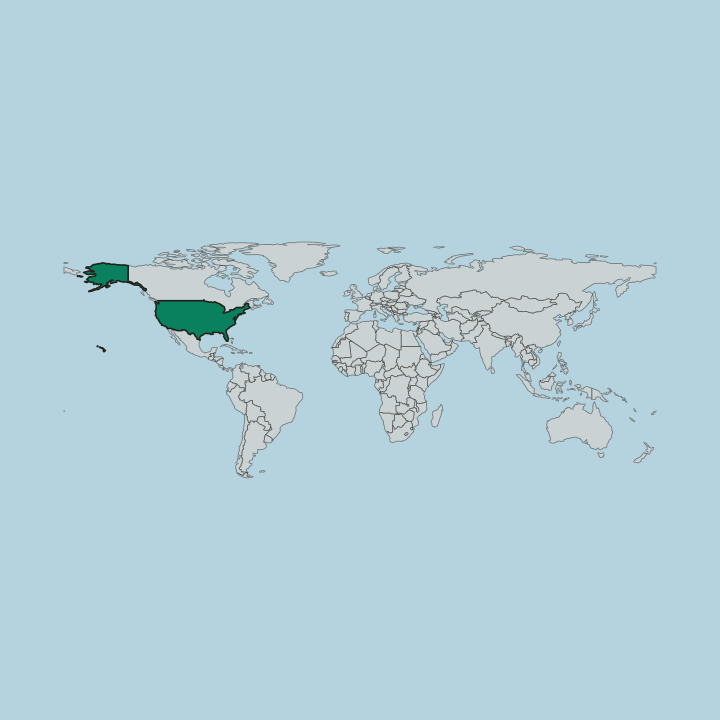
Bay in front, hills behind. Santa Cruz covers roughly 41 square kilometres at the northern corner of Monterey Bay, where the shoreline turns and the land climbs away from the water into the ridges that shut the coast off from the interior. San Jose lies about 40 miles north. San Francisco is 75 miles up the same coast, which makes this the seaward edge of a far larger urban region rather than an isolated town.
What is the climate of Santa Cruz?
Monterey Bay sets the terms. Water on the doorstep narrows the whole range, so summer afternoons seldom turn hot and winter nights seldom turn cold, and the fog that forms over the bay can hold this shore grey most of a morning before it lifts. Rain belongs to winter.
The temperate band puts the wet months at the cold end of the year, and the ridges behind the city collect more of that rain than the beach ever sees.
How do you get to Santa Cruz?
Approaches come over the ridge. San Jose sits about 40 miles north, and the road in from that side has to cross high ground before it drops to Monterey Bay, which is why the final stretch eats more time than the distance suggests. San Francisco is 75 miles off.
Once inside Santa Cruz, the Santa Cruz Beach Boardwalk, the Museum of Art and History, and Mission Santa Cruz stand close enough together that a car turns mainly into a parking problem.
Common questions
What is the best area to stay in Santa Cruz?
Beach Boardwalk seafront: sand-first stays within earshot of the Giant Dipper. Downtown Santa Cruz: an evening of dinner and galleries off the sand. The lighthouse shore: surfers who want the break in sight from the door. Around Mission Santa Cruz: a quiet base beside the founding ground.
Good for
More cities in California
Updated October 2026