United States · California
Where to Stay in Santa Monica, California
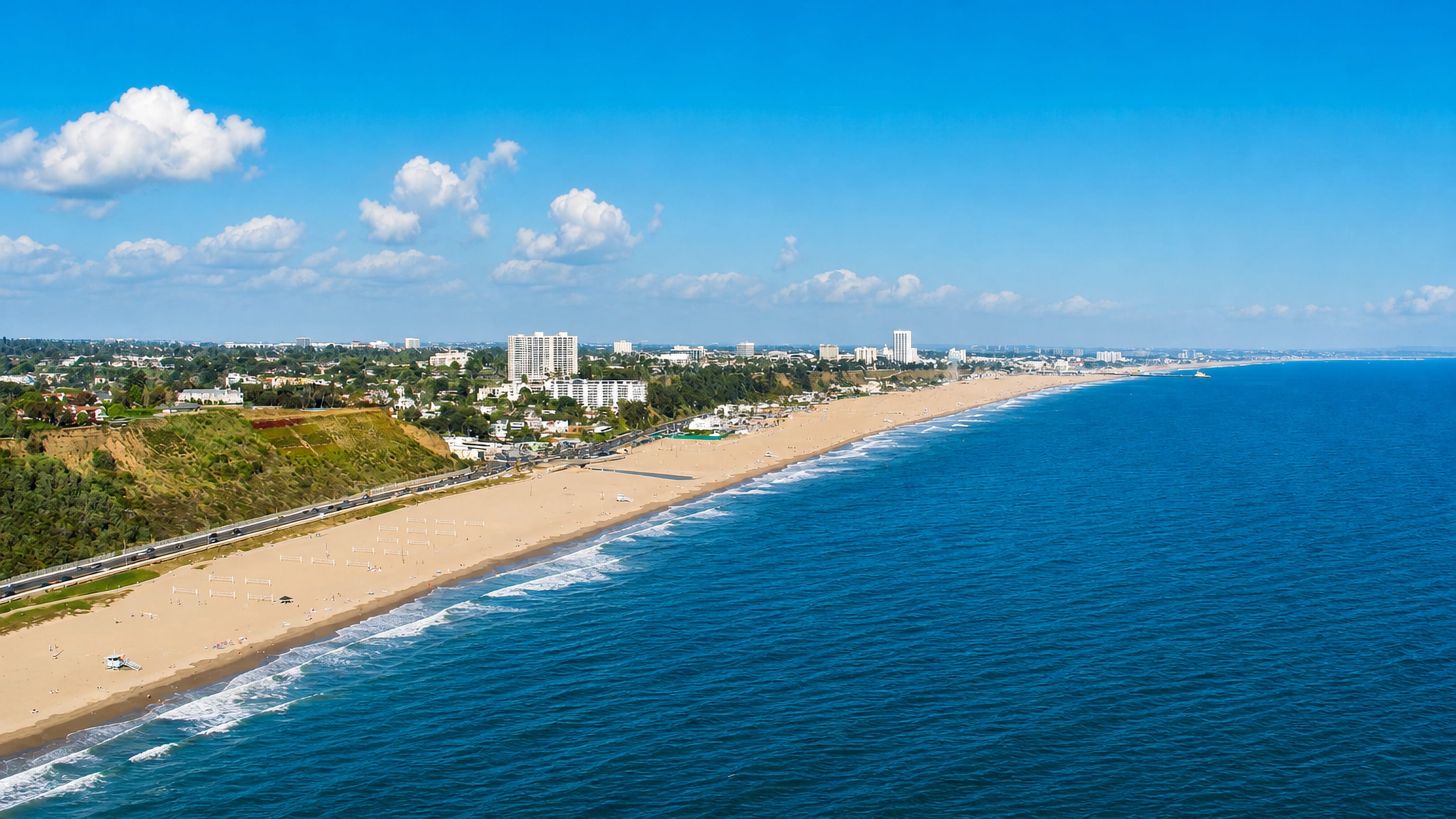
Sea light washes the shore at Santa Monica, a coastal city in California, known for the Santa Monica Pier and Muscle Beach.
Hotel links are affiliate links: booking through them may earn us a commission, at no extra cost to you. It never affects how places are ranked. How this works


Where to stay in Santa Monica
The practical side of choosing where to sleep.
Santa Monica runs compact along its shore, and a few clear bases stand out. The beachfront gathers the pier, the promenade, and the sand, and it makes the simplest base if you want the Santa Monica Pier, Pacific Park, and a swim within a short walk of your door. Just inland, the downtown streets around the California Heritage Museum keep the shops, the old houses, and a quieter pace, best if you want brick and cafes over the boardwalk crowds.
The blocks near St. Monica Catholic Church suit travellers after the town's older grid away from the water. Out toward the airfield, the district by the Museum of Flying draws those after the aviation heritage and the flat approach roads. Beds crowd the seafront.
Rooms thin in the outer residential streets, so book those early. Almost every base sits within walking reach of the pier, which keeps the beach itself close at hand.
Find hotels in Santa Monica
Direct booking searches for these neighbourhoods.
Beachfront
Promenade and boardwalk by the Santa Monica Pier and Pacific Park.Find hotels in Beachfrontshops and old housesDowntown
Cafe streets around the California Heritage Museum inland from the shore.Find hotels in Downtownthe town's quieter streetsOld grid
Residential blocks near St. Monica Catholic Church away from the water.Find hotels in Old gridaviation heritageAirfield district
Flat approach roads by the Museum of Flying at the old airfield.Find hotels in Airfield districtHotel links are affiliate links: booking through them may earn us a commission, at no extra cost to you. It never affects how places are ranked. How this works
Things to do in Santa Monica
Ranked by global recognition; descriptions from Wikidata (CC0).
Museums & Galleries
3- Edgemar
- California Heritage Museum
- Venice Heritage Museum
Churches & Religious Sites
1- St. Monica Catholic Church, Santa Monica
Stadiums & Sports
1- Corsair Field
Parks & Gardens
2- Santa Monica Pier Heritage
- Pacific Park
Landmarks & Notable Places
3- Henry Weaver House Heritage
- Muscle Beach
- Dolores del Río House
worth knowingacross 5 categories in Santa Monica
About Santa Monica
What is Santa Monica known for?
Santa Monica is known for its pier and its wide Pacific beach. The Santa Monica Pier reaches out over the water with Pacific Park and the Pacific Wheel turning above the deck, and Muscle Beach draws crowds to the sand at its foot. Along the shore, the Heal the Bay Aquarium sits under the pier, and the California Heritage Museum keeps the town's story in an old house nearby.
St. Monica Catholic Church rises among the streets back from the water. The beach defines the place.
What are the main landmarks in Santa Monica?
Santa Monica gathers its landmarks on the pier and along the shore. The Santa Monica Pier carries Pacific Park and the Pacific Wheel out over the water, and the Santa Monica Looff Hippodrome shelters the old carousel on the deck. The Heal the Bay Aquarium sits beneath the pier, while Muscle Beach draws its crowds to the sand at the shore's edge.
Heritage stands inland too. The California Heritage Museum keeps the town's story in an old house, St. Monica Catholic Church rises among the streets, and the Museum of Flying holds the aviation heritage out by the old airfield.
What is the history of Santa Monica?
Santa Monica traces its roots to 1769, when a Spanish expedition crossed the coastal plain of California and left the saint's name on the land above the Pacific shore. For decades it stayed ranch country on the bluffs over the water, cattle grazing the plain where the town would rise. The sea drew the settlement out.
A resort grew along the beach as the railway reached the coast, and a pleasure pier was built out over the surf, its old carousel still turning inside the Santa Monica Looff Hippodrome on the deck. The amusement park followed on the pier, the rides that became Pacific Park spinning above the water where the Pacific Wheel now turns. Aviation shaped the inland flats in the following century, and a great aircraft works rose by the airfield whose story the Museum of Flying keeps out on the plain.
The California Heritage Museum holds the town's older houses in the streets back from the shore, and St. Monica Catholic Church stands from the growing city among them. The bluffs held the beach town above the sea. Its name endured.
The pier still reaches out over the water.
Where is Santa Monica?
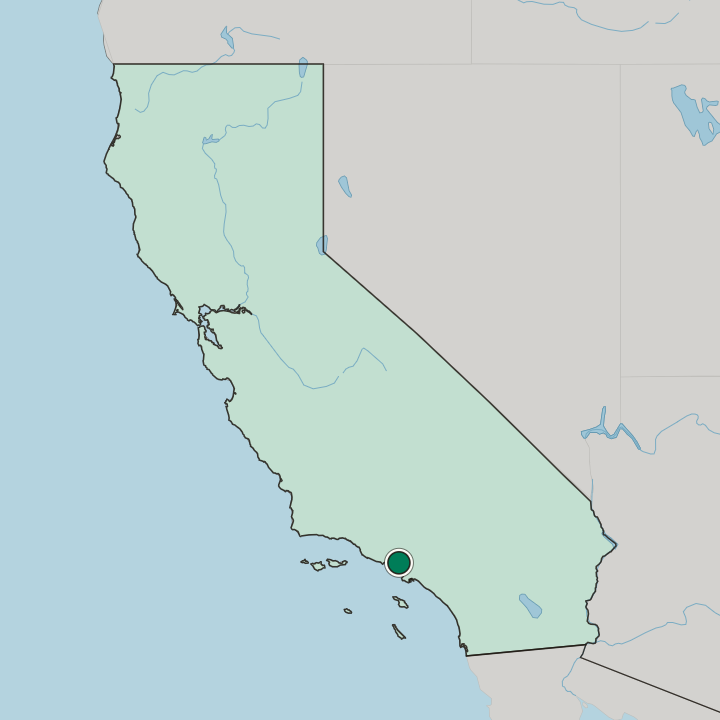
Santa Monica sits on the Pacific shore in California, on a coastal plain that ends at a line of low bluffs above the beach. The city spreads across the level ground back from the sand, its grid running inland from the water until the plain rises toward the surrounding hills. Its wide beach runs along a broad bay.
The bluffs edge the sea. Boats and swimmers work the water off the Santa Monica Pier, and downtown holds the old centre near the California Heritage Museum, back from the shore.
What is the climate of Santa Monica?
Santa Monica has a mild Mediterranean climate, tempered by the Pacific along its shore in California. Summers are warm and dry, the sun holding steady over the beach for months while a sea breeze cools the shore through the afternoons and morning fog often greys the coast. Winters stay cool.
The wet season brings the year's rain in from the ocean before the long dry stretch returns, and the water keeps the air even along the bluffs. Hard frost is rare on the coastal plain.
How do you get to Santa Monica?
Santa Monica is well linked across California. A major international airport lies just south along the coast, handling West Coast and long-haul flights within easy reach of the shore. A light-rail line runs east from the beach toward the wider metropolitan grid, ending near the downtown streets and the pier.
Freeways cross behind the city. They feed traffic to the shore from every direction across the coastal plain, while buses reach the beachfront, the promenade, and the airfield district by the Museum of Flying.
Common questions
What is the best area to stay in Santa Monica?
Beachfront: the pier and the sand on foot. Downtown: shops and old houses. Old grid: the town's quieter streets. Airfield district: aviation heritage.
Good for
More cities in California
Updated October 2026