United States · California
Where to Stay in Santa Rosa, California
Santa Rosa is the county seat of Sonoma County, the largest city in California's Wine Country and the working base for the vineyards around it.
Hotel links are affiliate links: booking through them may earn us a commission, at no extra cost to you. It never affects how places are ranked. How this works


Where to stay in Santa Rosa
One neighbourhood here has its own guide — here's what it is best for.

 Santa RosaUnited States
Roseland
Roseland is a Santa Rosa neighborhood that stayed an unincorporated enclave inside the city until annexation brought it in during 2017.Where to stay →Hotel links are affiliate links: booking through them may earn us a commission, at no extra cost to you. It never affects how places are ranked. How this works
Find hotels in Santa Rosa
Direct booking searches for these neighbourhoods.
Downtown Santa Rosa
The county-seat blocks around the Sonoma County Museum, where the courts, the offices, and the late-serving restaurants share one grid.Find hotels in Downtown Santa Rosafamilies using the Schulz museum as the day's anchorThe Schulz museum side
Low, quiet streets built around the Charles M. Schulz Museum and Research Center, away from the downtown bars. Beds are limited here, so book early.Find hotels in The Schulz museum sideslow mornings among nineteenth-century porchesThe old-house streets
Residential blocks that kept the Comstock House, the Sweet House, and the Wasserman House standing through a century of rebuilding. Few places to stay nearby — book ahead.Find hotels in The old-house streetsa first morning that starts among the vinesThe vineyard edge
Where the street grid gives out and the wine country of Sonoma County begins, with the Napa Valley an easy drive on from there. Beds are limited here, so book early.Find hotels in The vineyard edgeHotel links are affiliate links: booking through them may earn us a commission, at no extra cost to you. It never affects how places are ranked. How this works
Things to do in Santa Rosa
Ranked by global recognition; descriptions from Wikidata (CC0).
Museums & Galleries
2- Charles M. Schulz Museum and Research Center
- Sonoma County Museum
Landmarks & Notable Places
3- Wasserman House Heritage
- Comstock House Heritage
- Sweet House Heritage
worth knowingacross 2 categories in Santa Rosa
About Santa Rosa
Wine country business, first of all.
What is Santa Rosa known for?
Santa Rosa is the base for the vineyards of Sonoma County and for trips over to the Napa Valley, which is why a good many visitors treat it as somewhere to sleep, eat, and set out from rather than as the destination itself. The Charles M. Schulz Museum and Research Center shifts that calculation. It runs the county as well, with the courts, the offices, and the Sonoma County Museum downtown, and it stands as the largest city of both California's Wine Country and the Redwood Coast.
What are the main landmarks in Santa Rosa?
One museum outweighs the others. The Charles M. Schulz Museum and Research Center pulls in visitors who would otherwise drive straight past Santa Rosa toward the vineyards, and it sits in a city that keeps the rest of its landmarks domestic in scale. The Sonoma County Museum holds the county's collections downtown.
Three houses account for most of what is left, the Comstock House, the Sweet House, and the Wasserman House, all of them survivors from the century in which the town was built.
What is the history of Santa Rosa?
The city dates from 1868. Santa Rosa took the seat of Sonoma County and grew as the market town for the farmland around it, which in this part of California meant orchards and vineyards long before wine gave anyone a reason to make the trip. The houses record that century.
The Comstock House, the Sweet House, and the Wasserman House all survive from the decades when the money was agricultural and the building was done to last. Position counted as much as produce. Santa Rosa stands in the North Bay at the top of the Bay Area, near enough to San Francisco for that city's appetite to reach it, far enough out to keep an identity separate from the towns down by the water.
Wine rewrote the terms eventually. The vineyards of Sonoma County, the Napa Valley beside them, and the Redwood Coast off to the west turned the county into a destination, and the largest city in California's Wine Country became the place that absorbed the traffic, the beds, and the county's administrative work at the same time. The Charles M. Schulz Museum and Research Center came later.
It gave Santa Rosa a draw of its own instead of a share in somebody else's, which is a rarer thing for a county seat than it sounds.
Where is Santa Rosa?
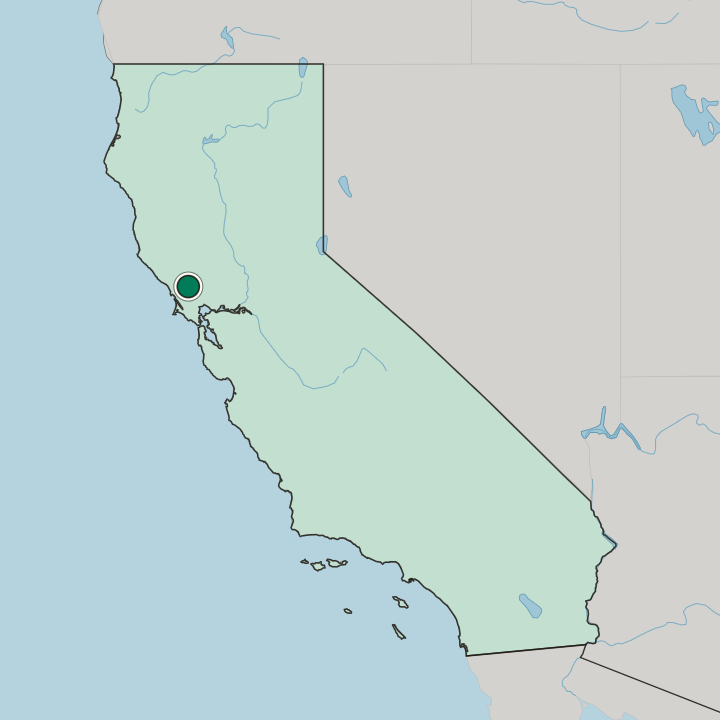
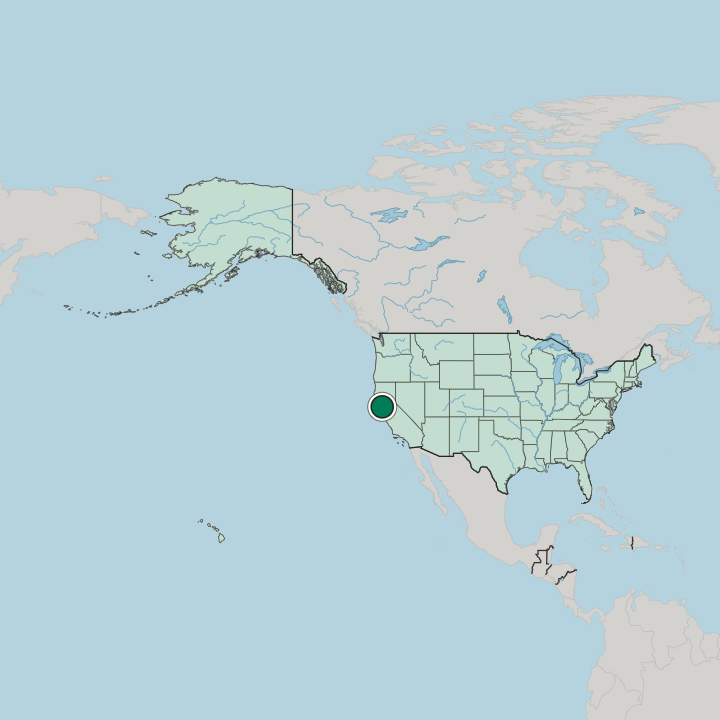
Valley floor, hills either side. Santa Rosa spreads across roughly 107 square kilometres of the North Bay in Sonoma County, with the vineyard land of the Wine Country wrapped around the city limits and the Redwood Coast an hour's drive west over the ridges. It belongs to the Bay Area.
Only San Jose, San Francisco, Oakland, and Fremont are larger within that region.
What is the climate of Santa Rosa?
The ridges toward the coast do the sorting. Marine air works inland from the Redwood Coast through gaps in those hills, cooling Santa Rosa's nights even after a hot afternoon, and that daily swing is precisely what the vineyards of Sonoma County are planted to use. Summers run dry.
Rain concentrates in the cool months of the temperate band, filling the creeks that cross the valley floor and holding the surrounding hills green for a season before they turn gold again.
How do you get to Santa Rosa?
Approaches run up from the south. The drive out of San Francisco crosses the northern edge of the Bay Area into the North Bay, and traffic rather than distance settles how long it takes, particularly at weekends when the wine country of Sonoma County fills. A car is effectively required.
Once here, the Charles M. Schulz Museum and Research Center, the downtown blocks, and the vineyards outside the city all sit a short drive apart, though the Redwood Coast takes longer to reach than a map suggests.
Common questions
What is the best area to stay in Santa Rosa?
Downtown Santa Rosa: evenings that outlast the tasting rooms. The Schulz museum side: families using the Schulz museum as the day's anchor. The old-house streets: slow mornings among nineteenth-century porches. The vineyard edge: a first morning that starts among the vines.
Good for
More cities in California
Updated October 2026