United States · Illinois
Where to Stay in Aurora, Illinois
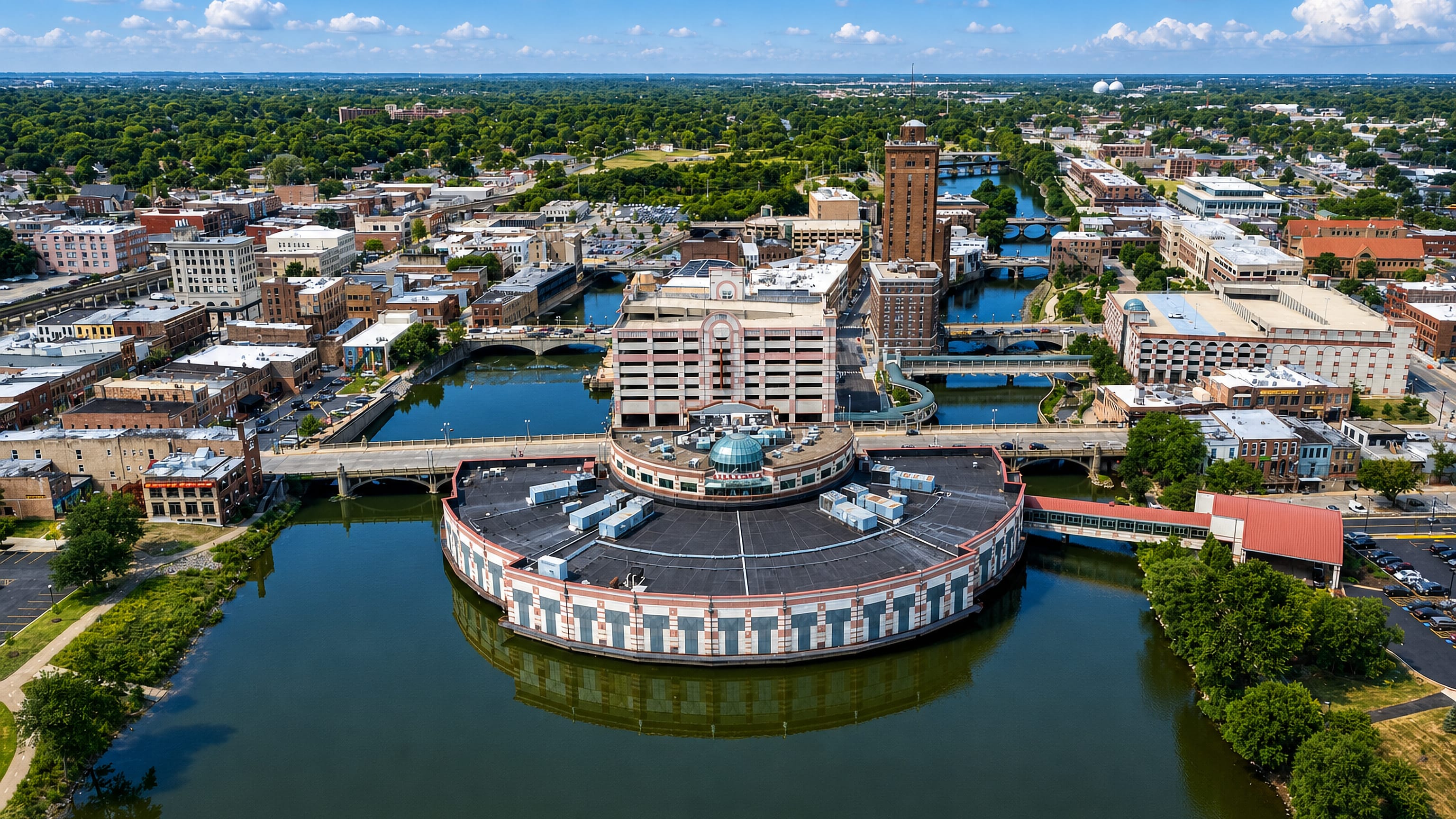
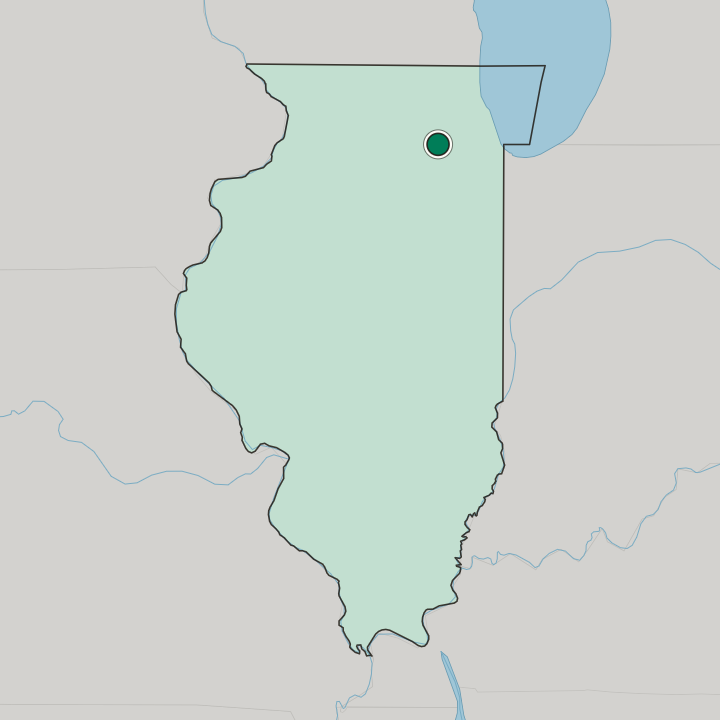
Aurora is the second-largest city in Illinois, strung along the Fox River about 35 miles west of Chicago and dating from 1835.
Hotel links are affiliate links: booking through them may earn us a commission, at no extra cost to you. It never affects how places are ranked. How this works


Where to stay in Aurora
The practical side of choosing where to sleep.
Downtown holds the theatre and the museums. The Paramount Theatre, the Aurora Regional Fire Museum and the Grand Army of the Republic Hall belong to the few blocks beside the Fox River, and a room in that quarter puts the Two Brothers Roundhouse and the Keystone Building on the same short circuit. Hotel Arthur belongs to that stretch too.
The Graham Building marks the commercial side of the old centre, while the International Harvester Showroom and Warehouse survives from the decades when farm machinery moved through the city. That corner suits anyone here for the buildings. Phillips Park sets a different tone.
Rooms towards Phillips Park Zoo trade the downtown register for green ground and easier parking, which matters more to stays built around family days than around a night at the Paramount Theatre. Aurora University marks a third option. Its side of the city keeps students and visiting families rather than theatre crowds, and the Middle Avenue Historic District adds streets of older housing under a listing of its own.
Big Woods School and the Sam and Ruth VanSickle Ford House lie well beyond a walk. Copley Hospital gives the outer city another fixed point.
Find hotels in Aurora
Direct booking searches for these neighbourhoods.
The Paramount blocks
Grand Army of the Republic Hall, the Keystone Building and Hotel Arthur stand in the same riverside blocksFind hotels in The Paramount blocksFamily days planned around Phillips Park Zoo rather than the downtown registerTowards Phillips Park
Green ground and parking at the zoo end, away from the Two Brothers Roundhouse crowdFind hotels in Towards Phillips ParkCampus visitors wanting the Middle Avenue Historic District within reachThe Aurora University side
Quieter streets around Aurora University, with older housing on the Middle Avenue listingFind hotels in The Aurora University sideHotel links are affiliate links: booking through them may earn us a commission, at no extra cost to you. It never affects how places are ranked. How this works
Things to do in Aurora
Ranked by global recognition; descriptions from Wikidata (CC0).
Museums & Galleries
1- Grand Army of the Republic Hall Heritage
Castles & Historic Sites
1- Middle Avenue Historic District Heritage
Landmarks & Notable Places
4- Sam and Ruth VanSickle Ford House Heritage
- Keystone Building Heritage
- Graham Building Heritage
- Big Woods School Heritage
worth knowingacross 3 categories in Aurora
About Aurora
The Paramount Theatre anchors downtown.
What is Aurora known for?
Aurora Regional Fire Museum, the Grand Army of the Republic Hall and the Two Brothers Roundhouse give the centre a run of preserved buildings unusual for a place at the edge of Chicagoland. Phillips Park Zoo pulls families out to the parkland. Aurora University and the Middle Avenue Historic District round out a list that runs well past the usual suburban inventory.
What are the main landmarks in Aurora?
Theatre and railway dominate. The Paramount Theatre and the Two Brothers Roundhouse carry the loudest names, one built for shows and the other for locomotives, and the Aurora Regional Fire Museum sits among them. Commerce left its own facades.
The Graham Building, the Keystone Building and the International Harvester Showroom and Warehouse still stand, while the Grand Army of the Republic Hall and Copley Hospital belong to civic Aurora. Big Woods School closes the list.
What is the history of Aurora?
Aurora dates from 1835. The Fox River gave the settlement its reason for being, and the mills and workshops that followed the water put the place on a footing quite separate from the farm villages around it. Chicago pulled the region toward it.
Aurora sat far enough out along the Fox River to keep an industrial character of its own, and the International Harvester Showroom and Warehouse records the machinery trade that ran through the city. The old centre survived. Two Brothers Roundhouse, the Keystone Building and the Graham Building came through the twentieth century intact, and the Paramount Theatre still holds its place on the same downtown streets.
Copley Hospital and the Grand Army of the Republic Hall belong to the civic side of that record, while the Middle Avenue Historic District protects whole streets of housing from the same decades. Big Woods School and the Sam and Ruth VanSickle Ford House stand outside the centre. Aurora grew into the second-largest city in Illinois without ever becoming a county seat, which left its downtown to develop on commercial rather than administrative terms.
Hotel Arthur dates from that commercial city.
Where is Aurora?
The Fox River runs through it. Aurora spreads across roughly 119 square kilometres at the outer edge of Chicagoland, so the built ground shades from downtown blocks into suburban streets and then into open farmland. Chicago is about 35 miles away.
Phillips Park Zoo and the river corridor supply the main green space, and the Fox River valley carries recreation of an urban, suburban, and rural kind within one city boundary.
What is the climate of Aurora?
The seasons here swing wide. Aurora sits in the temperate band of the northern hemisphere well inland from any coast, which leaves summer warmth and winter cold free to build without a sea to soften either end. Snow belongs to the short days.
Spring and autumn pass quickly between the two extremes, and visitors timing a trip around Phillips Park Zoo or a walk along the Fox River tend to find those shoulder weeks kindest.
How do you get to Aurora?
Chicago lies about 35 miles off. Most arrivals come from that side of Chicagoland, and the run out crosses the suburban belt before the Fox River marks the point where Aurora's own street grid takes over. The railway left a monument.
Two Brothers Roundhouse carries the rail trade's name into the present, and the blocks around the Paramount Theatre and the Aurora Regional Fire Museum stay compact enough to cover on foot.
Common questions
What is the best area to stay in Aurora?
The Paramount blocks: Theatre nights at the Paramount Theatre with the Aurora Regional Fire Museum next morning. Towards Phillips Park: Family days planned around Phillips Park Zoo rather than the downtown register. The Aurora University side: Campus visitors wanting the Middle Avenue Historic District within reach.
More cities in Illinois
Updated September 2026