United States · Illinois
Where to Stay in Champaign, Illinois
Champaign is a Champaign County city in Illinois, a principal city of the Champaign-Urbana metropolitan area, dating from 1855.
Hotel links are affiliate links: booking through them may earn us a commission, at no extra cost to you. It never affects how places are ranked. How this works


Where to stay in Champaign
Where the beds are, and what that means for the visit.
The campus side decides most stays. Rooms towards the University of Illinois put the Krannert Art Museum, the Spurlock Museum and Illinois Field within a short walk of one another, which suits anyone here for a game, a lecture or an afternoon among the collections. The Sousa Archives and Center for American Music sits in the same orbit.
Term brings crowds. Beds on that side fill fastest when the University of Illinois has something on, so a stay planned around campus dates wants booking well ahead of the weekend it belongs to. Downtown Champaign reads differently.
The Orpheum Children's Science Museum, First Presbyterian Church and the Channing-Murray Foundation give that half of the city its own reasons to stay, and the distances stay short enough to reach campus without difficulty. Urbana is the alternative. The Champaign-Urbana metropolitan area runs across Champaign, Urbana and Savoy, so a room in any of the three keeps the whole community in play for a visitor who is not tied to one address.
Farm House and Wee Haven are listed too. Champaign County spreads well past the built-up ground, and a car turns the towns around into an easy fallback when a university weekend takes every bed near campus.
Find hotels in Champaign
Direct booking searches for these neighbourhoods.
The University of Illinois edge
Spurlock Museum and the Sousa Archives and Center for American Music within the same walkFind hotels in The University of Illinois edgeFamilies combining the Orpheum Children's Science Museum with a quick run to campusDowntown Champaign
First Presbyterian Church and the Channing-Murray Foundation stand on this half of the cityFind hotels in Downtown ChampaignVisitors content anywhere in the Champaign–Urbana metropolitan areaUrbana and Savoy
Beds spread beyond the campus edge, a short drive from Illinois FieldFind hotels in Urbana and SavoyHotel links are affiliate links: booking through them may earn us a commission, at no extra cost to you. It never affects how places are ranked. How this works
Things to do in Champaign
Ranked by global recognition; descriptions from Wikidata (CC0).
Museums & Galleries
2- Krannert Art Museum
- Orpheum Children's Science Museum
Churches & Religious Sites
2- Channing-Murray Foundation Heritage
- First Presbyterian Church
Stadiums & Sports
1- Illinois Field
Landmarks & Notable Places
2- Wee Haven Heritage
- Farm House Heritage
worth knowingacross 4 categories in Champaign
About Champaign
The university sets the pace.
What is Champaign known for?
Champaign shares the main campus of the University of Illinois with Urbana, and the Krannert Art Museum, the Spurlock Museum and the Sousa Archives and Center for American Music all belong to that community. Illinois Field handles the sport. The Orpheum Children's Science Museum works for younger visitors, while the Channing-Murray Foundation and First Presbyterian Church stand among the older buildings.
What are the main landmarks in Champaign?
Museums lead here. The Krannert Art Museum and the Spurlock Museum carry the largest collections, the Sousa Archives and Center for American Music keeps the musical record, and the Orpheum Children's Science Museum takes the youngest visitors. Sport and worship fill the rest.
Illinois Field holds the games, while First Presbyterian Church and the Channing-Murray Foundation stand among the older addresses, and Farm House and Wee Haven complete the listed set.
What is the history of Champaign?
Champaign dates from 1855. The city grew inside Champaign County as a settlement separate from Urbana, and the two have remained distinct municipalities ever since, even though their streets long ago ran together. Then came the university.
The main campus of the University of Illinois settled into the community that Champaign, Urbana and Savoy now share, and the institutions that followed gave a county town the museums of a much larger place. Savoy sits in the same community, the third of the towns the metropolitan area is composed of. The collections came with it.
The Krannert Art Museum, the Spurlock Museum and the Sousa Archives and Center for American Music grew alongside the campus, and the Orpheum Children's Science Museum came to serve a different audience entirely. Older Champaign survives in pieces. First Presbyterian Church, the Channing-Murray Foundation, Farm House and Wee Haven carry the register of the town that existed before the campus reached its present size.
Illinois Field belongs to that long century as well. Champaign has stayed outside the Chicago metropolitan area throughout, which left the university, rather than a commuter railway, as the thing that decided how large the city would grow.
Where is Champaign?
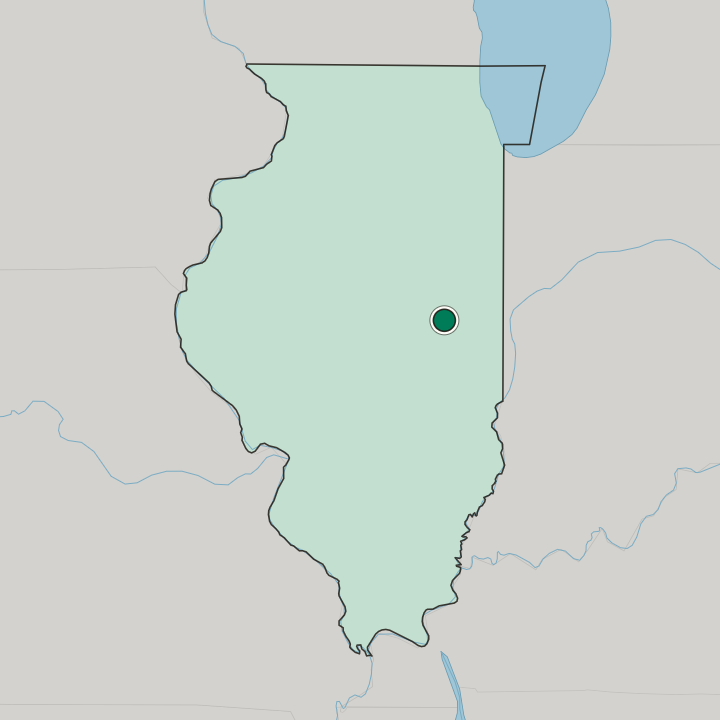
Champaign and Urbana touch. The city covers close to sixty square kilometres of Champaign County, and the built area runs on into Urbana and out towards Savoy, so the Champaign-Urbana metropolitan area reads as one place on the ground. Champaign County spreads around it.
Nothing here belongs to the Chicago metropolitan area, which lies well off, and the university campus supplies the closest thing the city has to a fixed centre.
What is the climate of Champaign?
Winters bite here. Champaign sits far inland in Illinois with no coast or range to break the weather, so cold settles hard over the short days and the summer months turn heavy and humid. Autumn suits the campus best.
Games at Illinois Field and walks between the Krannert Art Museum and the Spurlock Museum fall in the pleasantest stretch of the year, before winter closes over the Champaign-Urbana metropolitan area.
How do you get to Champaign?
Urbana is the other half. Arrivals into the Champaign-Urbana metropolitan area serve Champaign, Urbana and Savoy together, so a journey ending in one of the three puts the University of Illinois campus within a short run. Chicago lies well beyond.
The city stands outside the Chicago metropolitan area, which makes most approaches a run across Illinois, and once here the Orpheum Children's Science Museum, Illinois Field and the Krannert Art Museum sit close enough to combine in a day.
Common questions
What is the best area to stay in Champaign?
The University of Illinois edge: Game days at Illinois Field and afternoons in the Krannert Art Museum. Downtown Champaign: Families combining the Orpheum Children's Science Museum with a quick run to campus. Urbana and Savoy: Visitors content anywhere in the Champaign–Urbana metropolitan area.
Good for
More cities in Illinois
Updated September 2026