United States · Illinois
Where to Stay in Peoria, Illinois
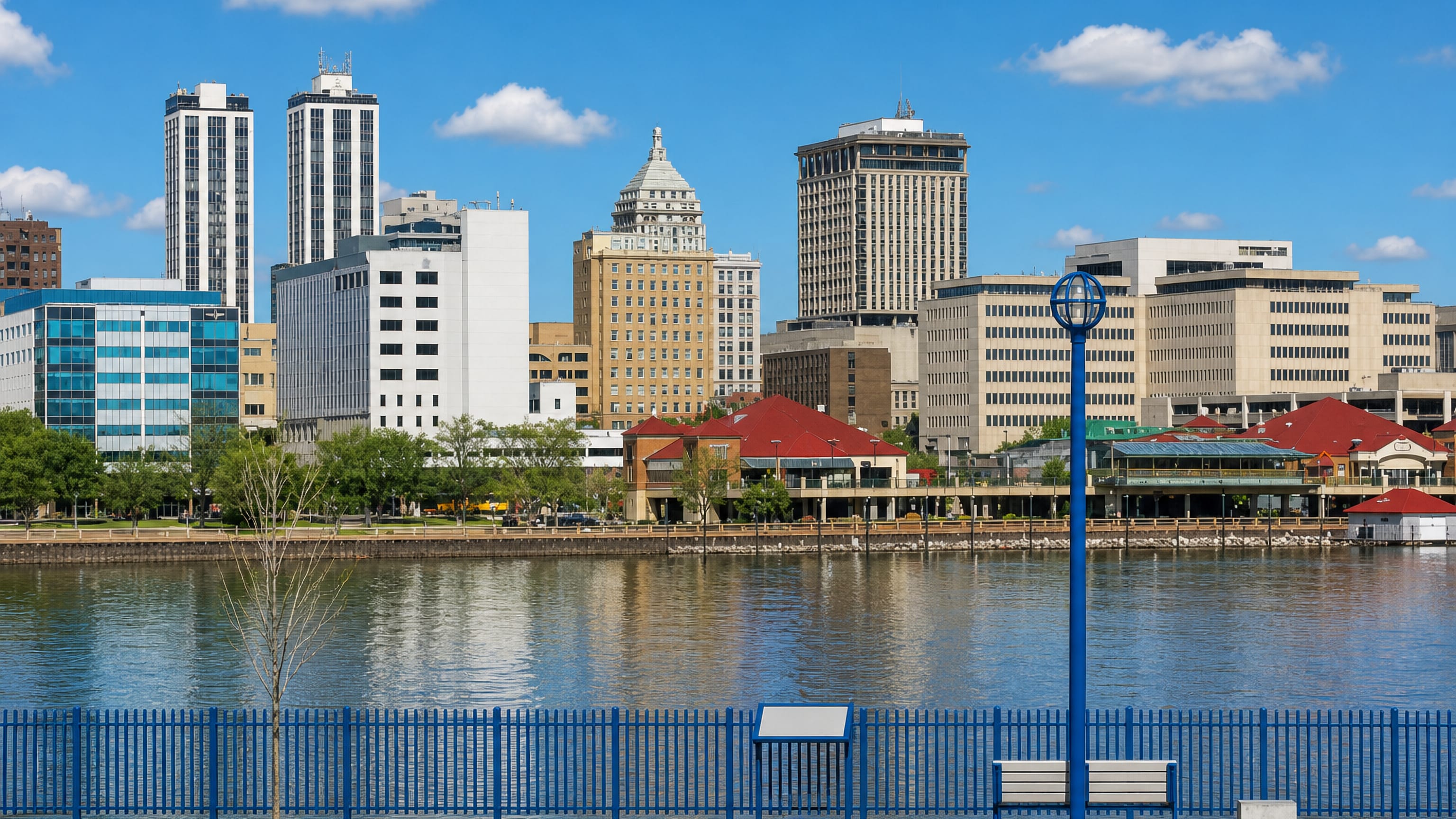
Peoria stands on the Illinois River as the seat of Peoria County and the hub of Central Illinois, with a riverfront museum and a zoo of its own.
Hotel links are affiliate links: booking through them may earn us a commission, at no extra cost to you. It never affects how places are ranked. How this works


Where to stay in Peoria
How the choice of base plays out on the ground.
Bed choice here follows the Illinois River. Rooms toward the riverfront put the Peoria Riverfront Museum and the water within reach on foot, which suits a short visit built around the museum and an evening beside the current rather than a car and a parking search. The walk is short.
Downtown lies behind that strip, close to the county-seat business that keeps Peoria occupied on weekdays and to Dozer Park whenever a game fills it, so a room there covers two different reasons for coming with one address. Farther out the pattern changes. Rooms past the edge come with parking and a quick run to the Peoria Zoo, and the approach roads that bring in Tazewell, Woodford, and Stark make the outer stretch straightforward to reach by car.
Space is easier out there. Anyone booking for Shea Stadium, or for a service at the Cumberland Presbyterian Church or the First United Methodist Church, can weigh that against the walk-everything convenience of the riverfront, and the honest answer turns on whether you intend to drive at all during the stay. Peoria Mineral Springs falls between the two, neither central nor rural.
Peoria County spreads well past the built-up blocks, and the quiet arrives quickly.
Find hotels in Peoria
Direct booking searches for these neighbourhoods.
The riverfront
The Peoria Riverfront Museum and the water sit within one walk of each otherFind hotels in The riverfrontWeekday county-seat business and game nights at Dozer ParkDowntown by Dozer Park
County offices and the ballpark share the middle of Peoria between themFind hotels in Downtown by Dozer ParkDrivers making a quick run to the Peoria ZooThe outer approach roads
Roads in from Tazewell, Woodford, and Stark meet the city along this stretchFind hotels in The outer approach roadsHotel links are affiliate links: booking through them may earn us a commission, at no extra cost to you. It never affects how places are ranked. How this works
Things to do in Peoria
Ranked by global recognition; descriptions from Wikidata (CC0).
Museums & Galleries
1- Peoria Riverfront Museum
Churches & Religious Sites
3- Cumberland Presbyterian Church Heritage
- First United Methodist Church (Peoria, Illinois)
- St. Bernard Parish
Castles & Historic Sites
1- Peoria Mineral Springs Heritage
Stadiums & Sports
2- Dozer Park
- Shea Stadium
Landmarks & Notable Places
3- Pettingill-Morron House Heritage
- John C. Flanagan House Museum Heritage
- Judge Jacob Gale House Heritage
worth knowingacross 5 categories in Peoria
About Peoria
The Illinois River sets the terms.
What is Peoria known for?
Peoria works as the regional hub for the farming counties around it, and its draws gather near the water, the Peoria Riverfront Museum, the Peoria Zoo, and the ballfields at Dozer Park and Shea Stadium. County-seat business fills the middle of town, while the metropolitan area it heads reaches over Fulton, Marshall, Stark, Tazewell, and Woodford. Peoria Mineral Springs sits on the same landmark roll.
What are the main landmarks in Peoria?
The Peoria Riverfront Museum carries the city's collection. Around it the roll spreads wide: the Peoria Zoo, the ballfields of Dozer Park and Shea Stadium, and two surviving family houses in the Judge Jacob Gale House and the Pettingill-Morron House, each named for the household that raised it. Peoria Mineral Springs keeps a curious entry.
Two congregations add their buildings, the Cumberland Presbyterian Church and the First United Methodist Church.
What is the history of Peoria?
Peoria's founding dates to 1680. What the site had was the Illinois River, and the settlement that grew on its bank took the roles a river town takes, landing, market, and eventually the seat of Peoria County once the county drew its lines. Peoria County keeps its seat here still.
County business followed the courts and the records, and that work holds a town steady long after the landings themselves fall quiet, so the county calendar still brings people into town through the week. The houses hold the older record. Names like the Judge Jacob Gale House and the Pettingill-Morron House attach to the households who built them, and both survive on a landmark roll that also carries the Cumberland Presbyterian Church and the First United Methodist Church, congregations that put up buildings meant to outlast their founders.
Collections went one way. The Peoria Riverfront Museum gathers what the city and the county accumulated across the generations between that founding date and the metropolitan area of six counties the place anchors, an area drawn over Fulton, Marshall, Stark, Tazewell, and Woodford alongside Peoria County itself. Six counties answer to one centre.
Central Illinois still meets here, and the market role that came with the landing has proved the most durable thing the river left behind.
Where is Peoria?
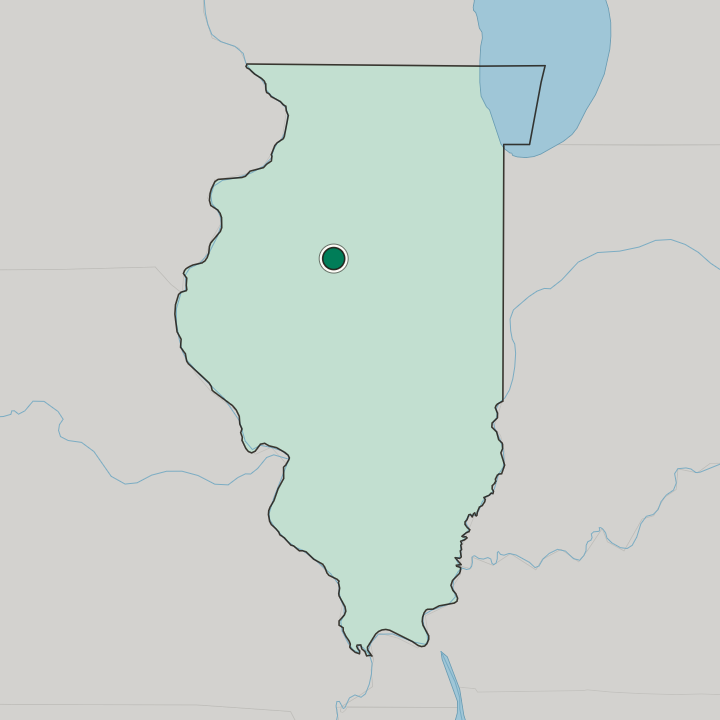
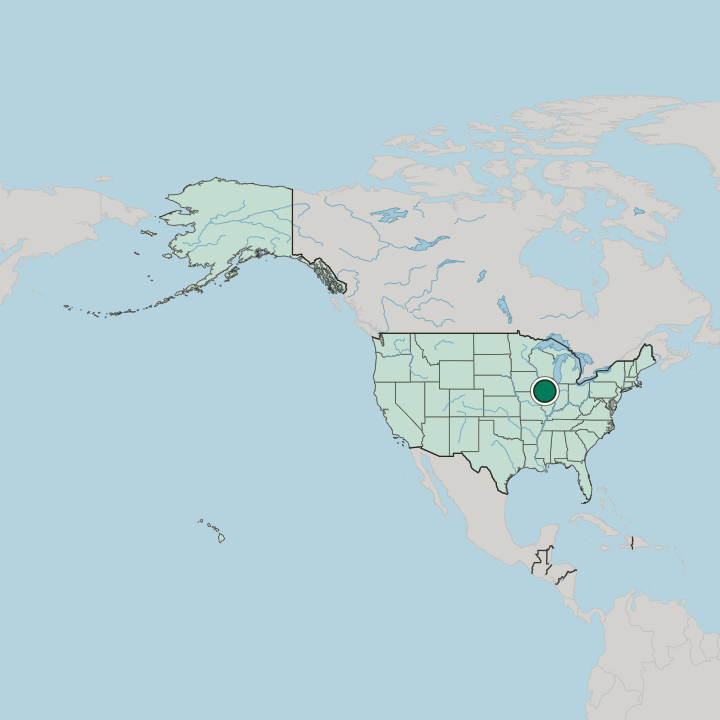
Water divides the map. Peoria occupies roughly a hundred and thirty square kilometres along the Illinois River in Central Illinois, with farm country running out from the built-up blocks in every direction the roads take. Peoria County surrounds it.
The metropolitan area stretches further again, over Fulton, Marshall, Stark, Tazewell, and Woodford, which is a wide catchment for a city of this size.
What is the climate of Peoria?
The Illinois River runs through all four seasons. Peoria lies in the temperate band of the northern hemisphere, well inland, so the year swings from a cold half to a warm one without any sea to soften either end of the range. The gap is wide.
Warm months carry the Peoria Zoo and the riverfront walk, and the cold ones push visitors indoors to the Peoria Riverfront Museum instead.
How do you get to Peoria?
Roads come in from the farm counties. Peoria draws traffic from Fulton, Marshall, Stark, Tazewell, and Woodford into one set of streets beside the Illinois River, which is what a regional hub for farm country amounts to in practice. Central Illinois surrounds it.
The Illinois River cuts through the middle of the built-up area, and county-seat errands fill the working week while the Peoria Zoo fills the weekend.
Common questions
What is the best area to stay in Peoria?
The riverfront: Museum visitors who want the Illinois River outside the door. Downtown by Dozer Park: Weekday county-seat business and game nights at Dozer Park. The outer approach roads: Drivers making a quick run to the Peoria Zoo.
Good for
More cities in Illinois
Updated September 2026