United States · Illinois
Where to Stay in Elgin, Illinois
Elgin is a Fox River city in Cook and Kane counties, Illinois, known for its Victorian architecture and the Elgin Symphony Orchestra.
Hotel links are affiliate links: booking through them may earn us a commission, at no extra cost to you. It never affects how places are ranked. How this works


Where to stay in Elgin
The practical side of choosing where to sleep.
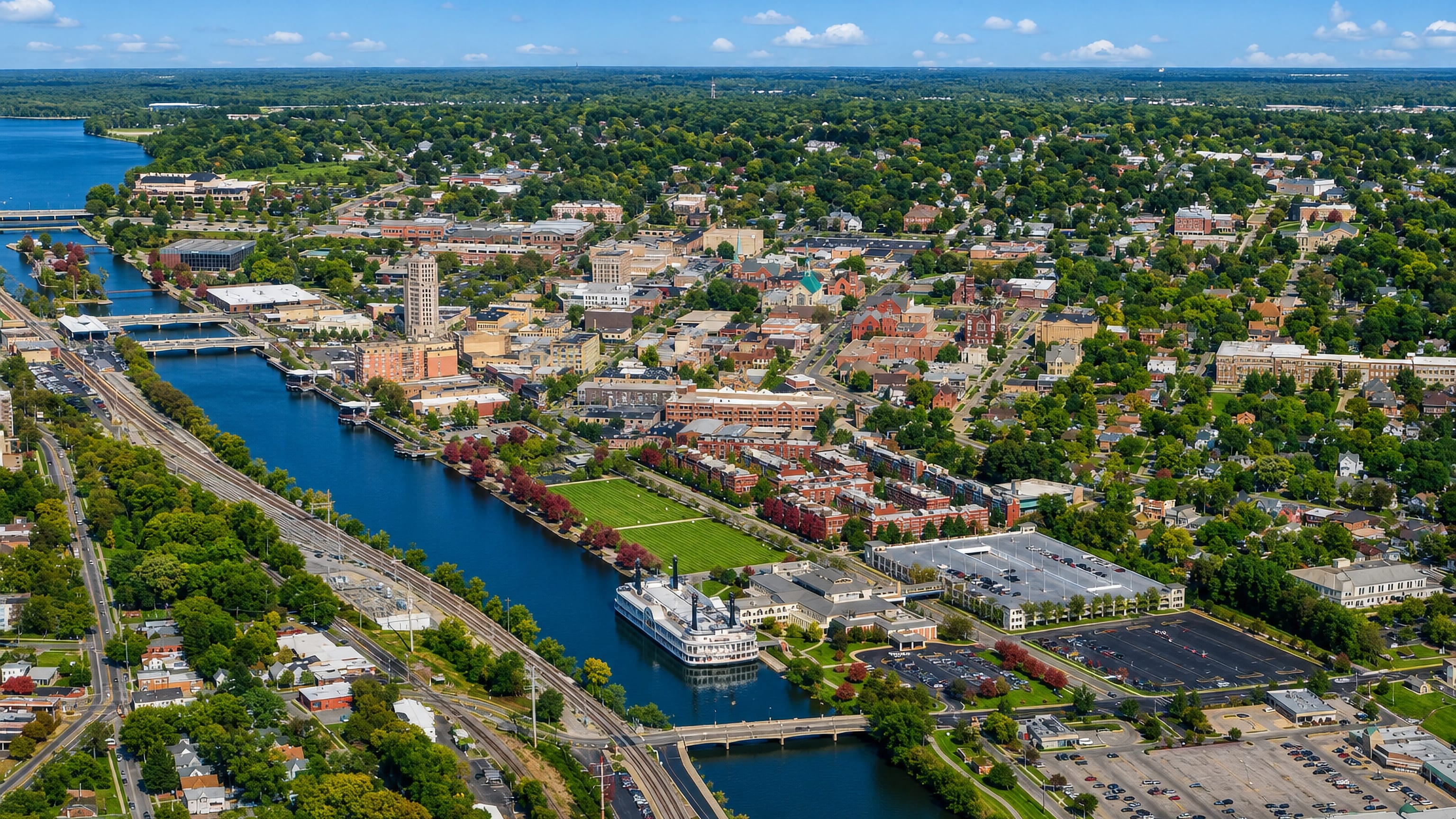
The Fox River splits Elgin, and the choice of base largely follows it. The oldest streets stand near the water, where nineteenth-century houses run in near-continuous rows and the museums that carry the city's name are gathered: the Elgin Public Museum, the Elgin Area Historical Society, and the Laura Davidson Sears Academy of Fine Art. Stay there for the walking.
The Fox River is the spine of that walk. Concert nights with the Elgin Symphony Orchestra pull the same crowd into the same few blocks, and a room in the old core turns the evening into a walk rather than a drive. Away from the river the city spreads across two counties, Cook and Kane, into newer subdivisions and commercial roads.
Beds out there are plainer. What they buy is parking and an easy road run, since Elgin sits roughly 56 km northwest of Chicago and the whole of Chicagoland opens up from that position. Holy Trinity Lutheran Church and the First Universalist Church give the older parishes a visible presence, and the Fox River itself is the obvious thing to do with an early morning.
Find hotels in Elgin
Direct booking searches for these neighbourhoods.
The Fox River core
The old streets beside the Fox River, with the Elgin Public Museum and the Elgin Area Historical Society within the same few blocks.Find hotels in The Fox River coreNineteenth-century streets on footAround the Gifford-Davidson House
Named Victorian houses, the Gifford-Davidson House and the Ora Pelton House among them, on quiet residential blocks. Rooms are few around here — worth securing early.Find hotels in Around the Gifford-Davidson HouseParking and the road back toward ChicagoOuter Elgin, Kane County side
Newer development spread beyond the riverside core, built around the roads out into Chicagoland.Find hotels in Outer Elgin, Kane County sideHotel links are affiliate links: booking through them may earn us a commission, at no extra cost to you. It never affects how places are ranked. How this works
Things to do in Elgin
Ranked by global recognition; descriptions from Wikidata (CC0).
Museums & Galleries
3- Elgin Public Museum
- Elgin Area Historical Society
- Laura Davidson Sears Academy of Fine Art
Churches & Religious Sites
2- First Universalist Church Heritage
- Holy Trinity Lutheran Church, Elgin
Landmarks & Notable Places
2- Ora Pelton House Heritage
- Gifford-Davidson House Heritage
worth knowingacross 3 categories in Elgin
About Elgin
Victorian architecture is the calling card.
What is Elgin known for?
Whole streets of nineteenth-century houses survive along the Fox River, and individual survivors such as the Gifford-Davidson House and the Ora Pelton House carry names of their own on the city's landmark list. The other half of the reputation is musical, thanks to the Elgin Symphony Orchestra. Museums fill in the rest: the Elgin Public Museum, the Elgin Area Historical Society, and the Laura Davidson Sears Academy of Fine Art are the named ones.
What are the main landmarks in Elgin?
The Elgin Public Museum is the headline stop, and the Elgin Area Historical Society keeps the documentary side of the same story. Fine art gets a building to itself. The Laura Davidson Sears Academy of Fine Art covers the visual arts, while two houses on the landmark list, the Gifford-Davidson House and the Ora Pelton House, stand for the Victorian architecture the city is known for.
Two churches complete the list: Holy Trinity Lutheran Church and the First Universalist Church.
What is the history of Elgin?
The founding year is 1835. Settlement began on the Fox River at a point roughly 56 km northwest of Chicago, and the city still straddles a county line, with parts in both Cook and Kane. Water came first here.
The river gave the site its reason, and the street pattern still answers to it. What the record carries is the name and the founding date, and the rest of the early story sits in the Elgin Area Historical Society's keeping. The nineteenth century is what the architecture records.
Victorian houses went up in numbers large enough that they became the city's signature, and two of them, the Gifford-Davidson House and the Ora Pelton House, are named landmarks in their own right. Congregations built alongside them, leaving Holy Trinity Lutheran Church and the First Universalist Church on the same streets. Culture followed.
The Elgin Symphony Orchestra gave the city a musical reputation, and the Elgin Public Museum, the Elgin Area Historical Society, and the Laura Davidson Sears Academy of Fine Art now hold the record of what came before. Chicagoland grew out to meet it in the end.
Where is Elgin?
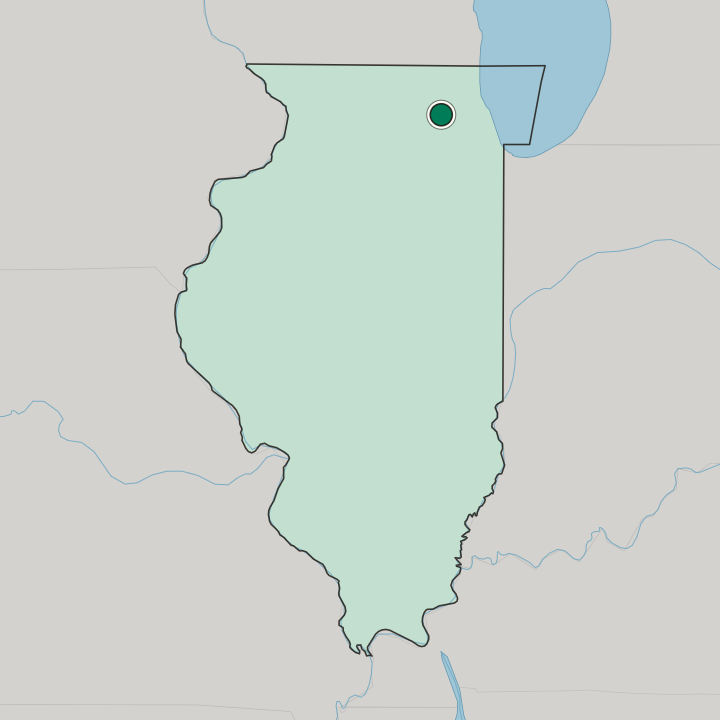
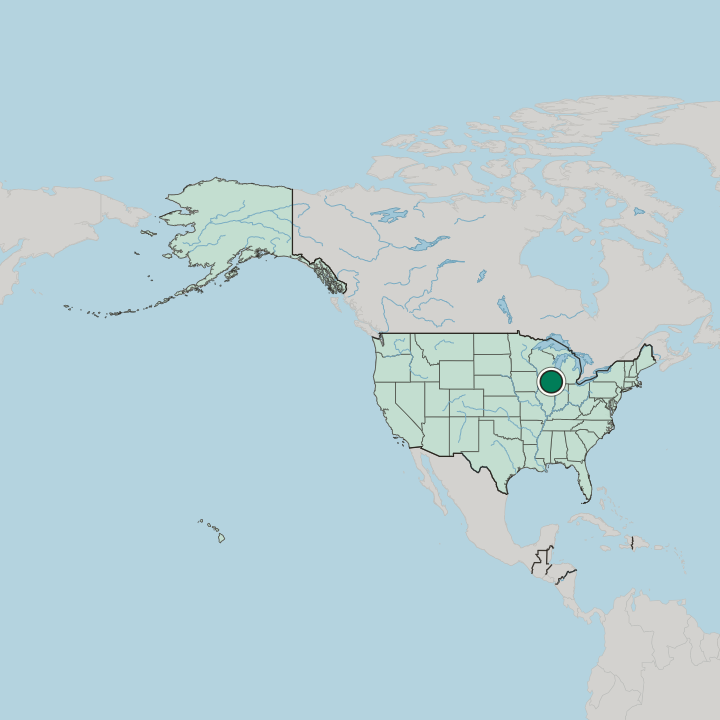
Elgin stands on the Fox River, roughly 56 km northwest of Chicago. Two counties share it. The city line runs across both Cook and Kane, so one municipality answers to two county administrations, and its footprint spreads well beyond the old riverside core.
The Fox River is the organising feature, cutting through the middle and carrying the Victorian streets along its banks, while newer development runs outward from there into the surrounding Chicagoland grid.
What is the climate of Elgin?
Seasons here are sharply drawn, in the way of the temperate band, and the Fox River is where the difference reads clearest across the year. January is the hard end. Northern-hemisphere timing puts the cold at the start of the year and the warmth in high summer, which is when the riverside walks and the Victorian streets are at their easiest to spend a day on.
Indoors carries the difference otherwise, and the Elgin Public Museum, the Elgin Area Historical Society, and the Laura Davidson Sears Academy of Fine Art absorb a grey afternoon without complaint.
How do you get to Elgin?
Elgin lies roughly 56 km northwest of Chicago, so most arrivals come out from the city rather than into it. The drive is the default. Roads out of Chicagoland run to Elgin across both Cook and Kane counties, and the Fox River crossings funnel traffic into the older streets on either bank.
Once here, the distances shrink: the Elgin Public Museum, the Elgin Area Historical Society, and the Victorian houses sit within the same older core.
Common questions
What is the best area to stay in Elgin?
The Fox River core: Museum days and Victorian house walks. Around the Gifford-Davidson House: Nineteenth-century streets on foot. Outer Elgin, Kane County side: Parking and the road back toward Chicago.
Good for
More cities in Illinois
Updated September 2026