United States · Wisconsin
Where to Stay in Eau Claire, Wisconsin
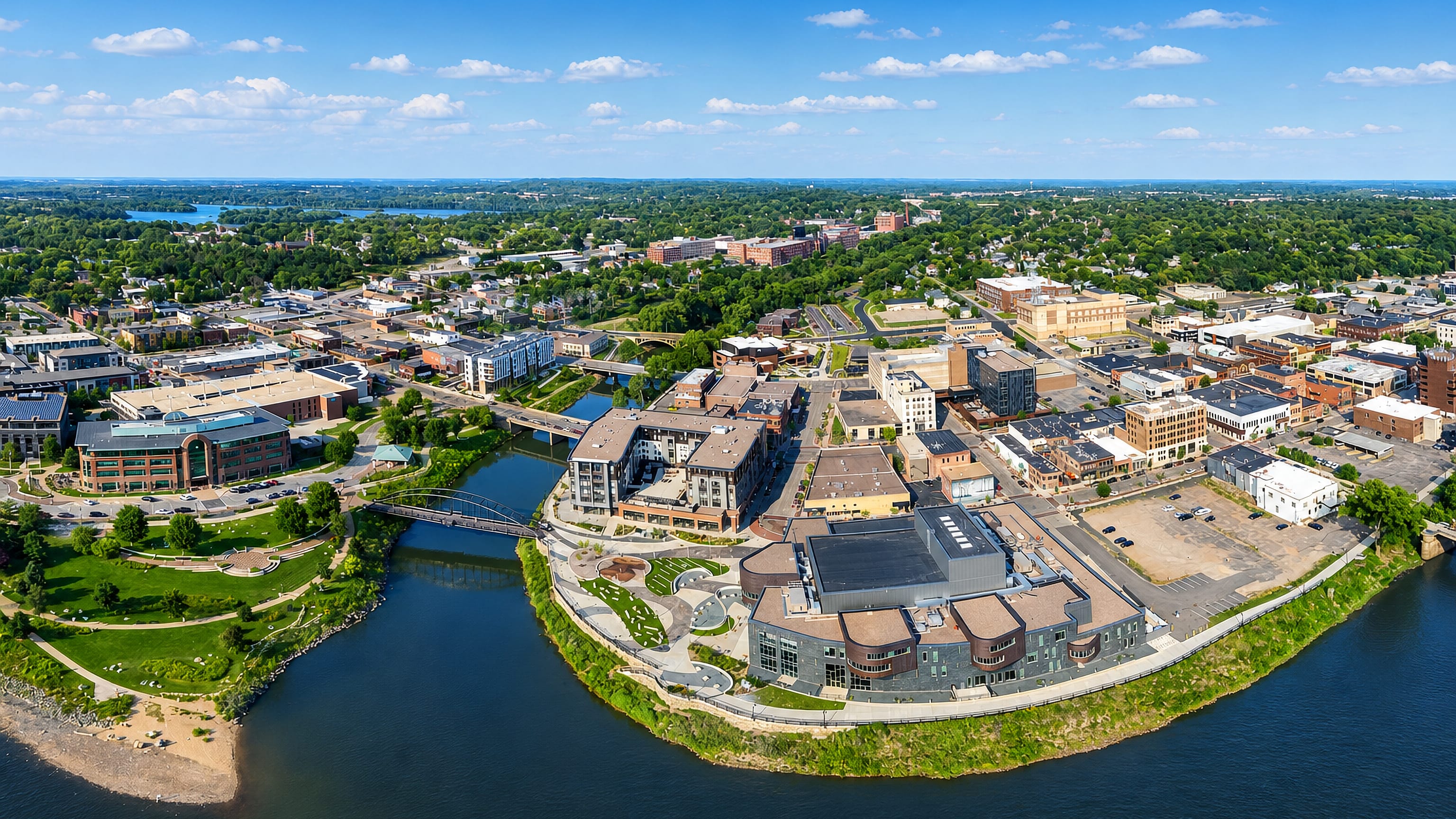
Eau Claire is the seat of Eau Claire County in Wisconsin, centre of the metropolitan area known locally as the Chippewa Valley.
Hotel links are affiliate links: booking through them may earn us a commission, at no extra cost to you. It never affects how places are ranked. How this works


Where to stay in Eau Claire
The practical side of choosing where to sleep.
Two sides, one compact city. Rooms near Sacred Heart Church put a visitor inside the older grid, where the Cobblestone House and the Pearl and Eva Chambers House stand among ordinary residential blocks and the walk to the county offices of Eau Claire County is short enough to make twice in a day. That compactness is the argument for staying central.
Anyone here for the listed buildings will spend most of a visit inside a few streets, and a bed chosen outside them turns every small errand into a drive. Beyond the old grid the pattern changes. Rooms gather along the through roads instead, which suits an arrival by car and a stay whose reach is the wider Chippewa Valley rather than the city blocks themselves, including the ground across the line in Chippewa County.
The trade is an honest one. A central room buys walking distance to the Steven House, the Martin Van Buren Barron House and the First Methodist Episcopal Church, while a room out by the road buys parking, quiet and a faster exit toward the rest of Eau Claire County. Either way, the other side stays close.
Eau Claire is small enough that the decision shapes the mornings rather than the whole visit.
Find hotels in Eau Claire
Direct booking searches for these neighbourhoods.
Around Sacred Heart Church
Sacred Heart Church and the Cobblestone House stand within the same short grid of older Eau Claire streets. Rooms are few around here — worth securing early.Find hotels in Around Sacred Heart ChurchBusiness with Eau Claire County in the county seatThe county-seat blocks
Eau Claire County keeps its seat and its offices a short walk from the Steven HouseFind hotels in The county-seat blocksCar arrivals working outward across the Chippewa ValleyThe Chippewa County edge
The built-up area crosses into Chippewa County where the through roads leave for the rest of the Chippewa Valley. Few places to stay nearby — book ahead.Find hotels in The Chippewa County edgeHotel links are affiliate links: booking through them may earn us a commission, at no extra cost to you. It never affects how places are ranked. How this works
Things to do in Eau Claire
Ranked by global recognition; descriptions from Wikidata (CC0).
Churches & Religious Sites
4- St. Patrick's Church Heritage
- Sacred Heart Church Heritage
- Community House, First Congregational Church Heritage
- First Methodist Episcopal Church Heritage
Landmarks & Notable Places
7- Steven House Heritage
- Martin Van Buren Barron House Heritage
- Cobblestone House Heritage
- Brady Anderson and Waldemar Ager House Heritage
- David Drummond House Heritage
Show 2 more →
- Pearl and Eva Chambers House Heritage
- Orlando Brice House Heritage
worth knowingacross 2 categories in Eau Claire
About Eau Claire
Administration and the built record share the ground here.
What is Eau Claire known for?
Eau Claire County runs its county business from the city, while the older streets keep a long line of listed houses, the Cobblestone House, the David Drummond House and the Orlando Brice House among them. Sacred Heart Church anchors the parish side. The built-up area crosses the line into Chippewa County, and the wider Chippewa Valley carries the name outward to the smaller places around it.
What are the main landmarks in Eau Claire?
Names do most of the work here. The Martin Van Buren Barron House, the Brady Anderson and Waldemar Ager House and the Pearl and Eva Chambers House each carry the households that built them, while the Cobblestone House takes its name from its fabric instead of an owner. Church buildings fill out the rest.
Sacred Heart Church, the First Methodist Episcopal Church and the Community House, First Congregational Church are the ones the register keeps.
What is the history of Eau Claire?
The surviving record is domestic. What Eau Claire keeps from its earlier decades is a run of private houses rather than a citadel or a palace, and the heritage register reads like a roll of households: Barron, Drummond, Brice, Chambers, Steven. Waldemar Ager shares a house name with Brady Anderson.
Those pairings carry weight. A single roof standing under two family names is how a growing city writes itself down, and the listed buildings are the closest thing the public record here offers to a founding roll. Congregations arrived with the households.
Sacred Heart Church, the First Methodist Episcopal Church and the Community House, First Congregational Church stand for separate bodies of worshippers, which in a city of this size says more about who came and stayed than any single monument could. Eau Claire County took the seat. The line with Chippewa County still runs through the built-up area, so the place has been administered in two directions at once, and the Chippewa Valley name settled over the whole of it.
No founding year survives on record. What survives instead are the houses, the churches and the county boundary that cuts between them.
Where is Eau Claire?
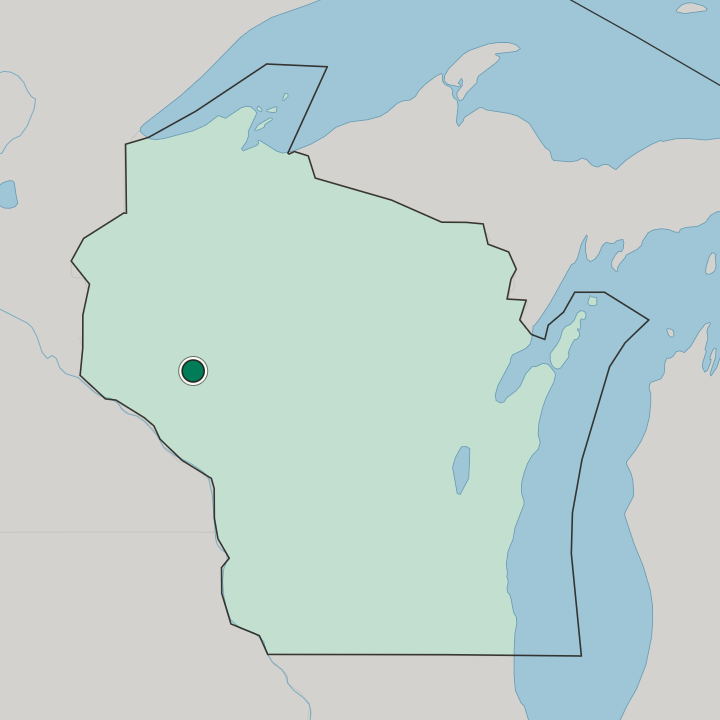
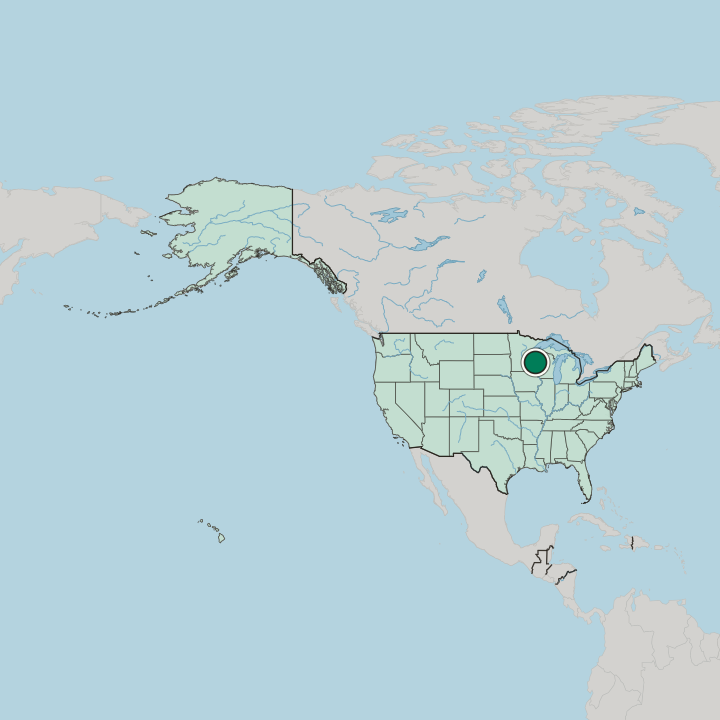
Eau Claire spreads over about ninety square kilometres, enough ground that the built-up area runs past the county line and takes in a share of Chippewa County alongside its own Eau Claire County. Two counties, one city. The Chippewa Valley is the name the wider metropolitan area answers to, and it gathers the smaller places around the city into a single region within Wisconsin.
The seat stays here.
What is the climate of Eau Claire?
Four seasons, fully separated. Eau Claire sits in the temperate band of the northern hemisphere, so the year swings between a real winter and a real summer rather than sliding between a wet season and a dry one. The Chippewa Valley takes the same weather as the city it is named for, which makes packing a question of the month rather than of which part of the metropolitan area holds the room.
Layers travel well.
How do you get to Eau Claire?
Getting to Eau Claire is a drive. The record names no station, terminal or operator, which leaves the car as the practical way in and out, whether the approach comes from the rest of Eau Claire County or across the line from Chippewa County. Once parked, the city is walkable.
With a room near Sacred Heart Church or the Cobblestone House, the listed buildings sit close enough together that a day on foot covers most of them.
Common questions
What is the best area to stay in Eau Claire?
Around Sacred Heart Church: Walking days built on Sacred Heart Church and the Cobblestone House. The county-seat blocks: Business with Eau Claire County in the county seat. The Chippewa County edge: Car arrivals working outward across the Chippewa Valley.
Good for
More cities in Wisconsin
Updated September 2026