United States · Wisconsin
Where to Stay in La Crosse, Wisconsin
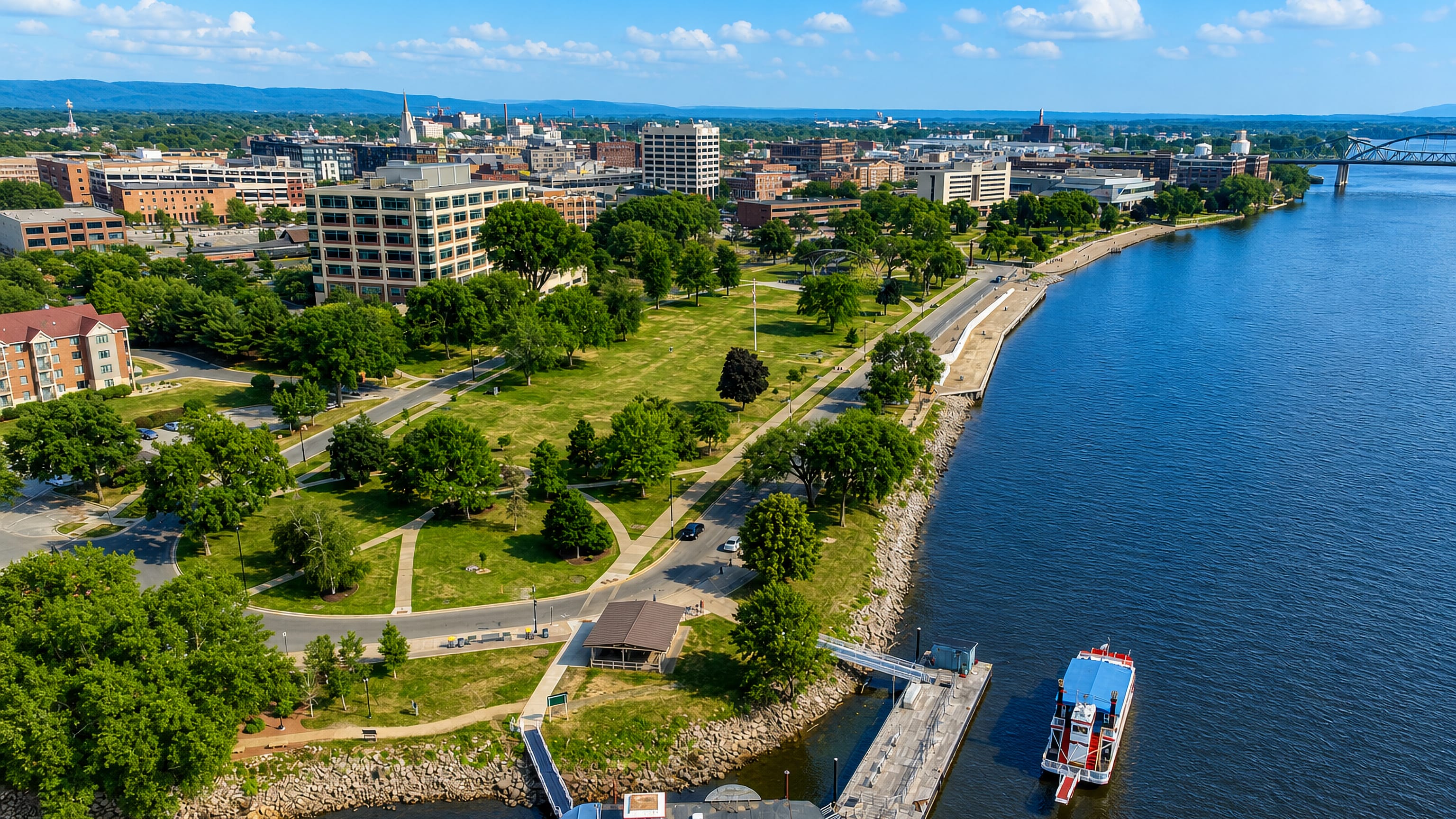
Bluffs and the Mississippi River frame La Crosse, county seat of La Crosse County and the working centre of the Coulee Region in Wisconsin.
Hotel links are affiliate links: booking through them may earn us a commission, at no extra cost to you. It never affects how places are ranked. How this works


Where to stay in La Crosse
The practical side of choosing where to sleep.
Everything here answers to the Mississippi River. A room on the front puts the water at the window and the whole width of the valley in view, which is the reason most people come to a bluff town at all, and it leaves the merchant streets of La Crosse behind rather than around you. The river is the view.
Barge traffic and open water make their own hours. Inland the character changes within a few blocks. Christ Episcopal Church, the Mons Anderson House and the Gideon C. Hixon House stand in the older grid, where the walking is level, the buildings are the point and the bluffs close the horizon at the end of the streets.
Copeland Park suits a slower stay. Rooms out that way trade the water frontage for space and easier parking, which matters for anyone using La Crosse County and the Coulee Region as much as the city itself. Onalaska takes the overflow when the calendar is busy, and beds there sit near enough that a night in one place and a day in the other is no hardship.
Find hotels in La Crosse
Direct booking searches for these neighbourhoods.
The Mississippi front
The Mississippi River runs the length of the city front with the bluffs closing the other side. Few places to stay nearby — book ahead.Find hotels in The Mississippi frontShort walks between Christ Episcopal Church and the Mons Anderson HouseThe Christ Episcopal Church grid
Christ Episcopal Church, the Mons Anderson House and the Gideon C. Hixon House share one older grid of streetsFind hotels in The Christ Episcopal Church gridSpace and parking for trips out into the Coulee RegionToward Copeland Park
Copeland Park is the one park the register names in La Crosse, which makes it the green anchor of this sideFind hotels in Toward Copeland ParkHotel links are affiliate links: booking through them may earn us a commission, at no extra cost to you. It never affects how places are ranked. How this works
Things to do in La Crosse
Ranked by global recognition; descriptions from Wikidata (CC0).
Churches & Religious Sites
3- Christ Episcopal Church Heritage
- St. Elias Antiochian Orthodox Church
- St. James the Less Roman Catholic Church
Stadiums & Sports
1- Copeland Park
Landmarks & Notable Places
4- Gideon C. Hixon House Heritage
- Mons Anderson House Heritage
- John L. Callahan House Heritage
- Otto and Ida Loeffler House Heritage
worth knowingacross 3 categories in La Crosse
About La Crosse
A river town before anything else.
What is La Crosse known for?
The Mississippi River gives La Crosse its front and the bluffs give it a back wall, and the compact grid between the two holds most of what the heritage register lists, from merchant houses to a run of parish churches. Copeland Park is the open ground. Christ Episcopal Church and the Mons Anderson House speak for the older stock, while the Coulee Region around the city carries the same bluff country outward.
What are the main landmarks in La Crosse?
Merchant houses lead. The Gideon C. Hixon House, the Mons Anderson House, the John L. Callahan House and the Otto and Ida Loeffler House each carry a family name into the register, which is how a river city records the people who traded on it. Three traditions of worship survive in the same small grid.
Christ Episcopal Church, St. Elias Antiochian Orthodox Church and St. James the Less Roman Catholic Church each keep their own ground, and Copeland Park closes the list with open space.
What is the history of La Crosse?
The founding is dated to 1842. A settlement at that spot on the Mississippi River had the two things a river town needed, a landing and a valley floor wide enough to build on, and the grid that went down then still carries the oldest addresses in La Crosse. Trade paid for the houses.
The Mons Anderson House and the Gideon C. Hixon House belong to merchants, and the John L. Callahan House and the Otto and Ida Loeffler House extend the same list into later decades. Worship divided the city along other lines entirely. Christ Episcopal Church, St. Elias Antiochian Orthodox Church and St. James the Less Roman Catholic Church record three separate communities keeping their own ground in one small city, which says more about who arrived here than a single cathedral ever could.
La Crosse County took its seat here. That role held while the surrounding Coulee Region stayed rural and while Onalaska grew into the second name on the metropolitan area, so the city has long been the administrative as well as the commercial centre of its valley. Copeland Park belongs to the same register.
Where is La Crosse?
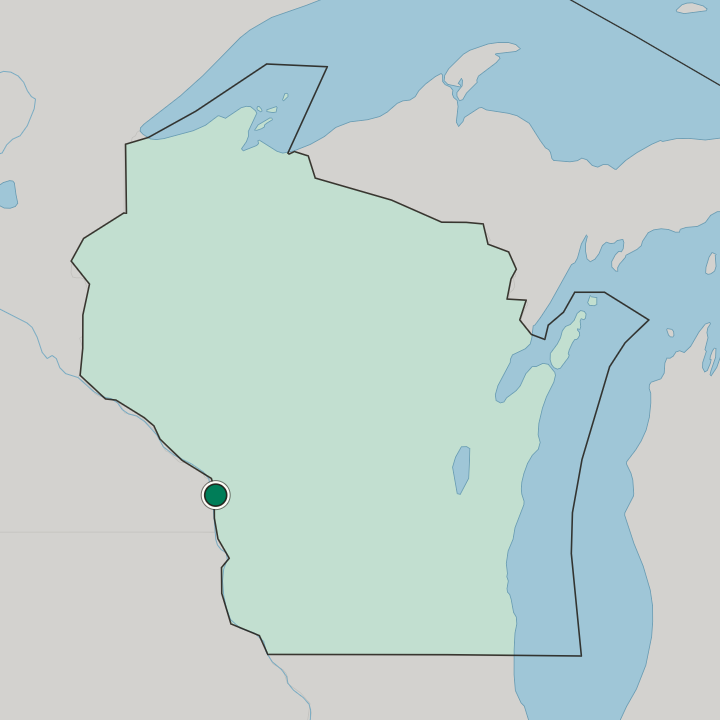
Water on one side, bluffs on the other. La Crosse occupies the ground between the Mississippi River and the high land that rises behind the built-up area, which is the pattern the Coulee Region repeats through every valley it covers. La Crosse County holds the city and the farmland around it.
Onalaska is the other name on the metropolitan area. Both sit within the same corridor.
What is the climate of La Crosse?
The Mississippi River and the bluffs run the local weather between them, holding the air in the valley and giving the city mornings that differ from the open country above the rim. La Crosse lies in the temperate band north of the equator. Seasons here are four, and distinct.
A visit in one is not a visit in another, so the month booked matters more than the street, and the Coulee Region behaves the same way from valley to valley.
How do you get to La Crosse?
Geography narrows the approach. Roads into La Crosse come along the Mississippi River or down through the coulees, because the bluffs behind the city rule out a straight run across open country from the inland side. Onalaska shares that corridor.
Once inside the grid, Christ Episcopal Church, Copeland Park and the riverbank are a walk apart rather than a drive, which is the practical advantage of a city built on a narrow valley floor.
Common questions
What is the best area to stay in La Crosse?
The Mississippi front: Windows facing the Mississippi River and the barge traffic. The Christ Episcopal Church grid: Short walks between Christ Episcopal Church and the Mons Anderson House. Toward Copeland Park: Space and parking for trips out into the Coulee Region.
Good for
More cities in Wisconsin
Updated September 2026