Austria · Wien · Vienna
Oberlaa, Vienna — Area Guide & Where to Stay
Oberlaa is where the U1 ends, a former village on Vienna's south rim, absorbed into the tenth district, Favoriten, around the city's only thermal spring.
Hotel links are affiliate links: booking through them may earn us a commission, at no extra cost to you. It never affects how places are ranked. How this works


Where to stay in Oberlaa
How the choice of base plays out on the ground.
Book along the U1, not in Oberlaa. The southern terminus opened on 2 September 2017 and put the spa village on one unbroken line into the middle of Vienna, so the sensible base is any address that line already serves: Reumannplatz in Favoriten, five stops north and itself the end of the U1 from 1978 to 2017, or Karlsplatz and Stephansplatz for the tourist core. Read the platform display before boarding, because only every second train runs the last stretch beyond Alaudagasse.
What Oberlaa gives back is a day at the Therme Wien reached without one change of train, and a scatter of Heurigen wine taverns around the old village core that keep going long after the last spa guest has left.
Few places to stay in Oberlaa — most visitors book in Vienna or Favoriten nearby.
About Oberlaa
What are the main landmarks in Oberlaa?
The Therme Wien is why most Viennese come this far south. It opened on 27 September 2010 next to the older spa centre, working a sulphur spring that an oil test drilling struck on the bank of the Liesing in 1934. Above it climbs the Kurpark Oberlaa, some 608,000 square metres of terraced planting kept from the Wiener Internationale Gartenschau 1974, with the Schmerber-Kreuz standing where silent-film crews once shot on the slope.
The old core holds the rest. Mathias Gerl built the present Pfarrkirche Oberlaa in 1744-1746 where a church is already recorded in 1267, the Friedhof Oberlaa was consecrated in 1833, and the Volksschule Oberlaa at Oberlaaer Platz 10 is the oldest school in what is now Favoriten.
What is the history of Oberlaa?
Laa appears in the records of Stift Klosterneuburg in 1140, when Oberlaa and Unterlaa were still one settlement; Oberlaa is named on its own in 1324. Manorial rule ended in 1849 and the village became an autonomous municipality in Lower Austria. Then a railway split it.
The Donauländebahn opened in 1872 with a station on Oberlaa ground, and the fields north of the tracks were annexed to Vienna in 1892, leaving the church, the school and the vineyards outside the city for another forty-six years. Groß-Wien took the rest in 1938; a Soviet veto delayed the post-war unwinding until 1954, and Oberlaa remained Viennese, all of it now inside the tenth district. Austrian Airlines opened its head office at Fontanastraße 1 in 1978 and moved out in 2007, and the building was pulled down between September 2012 and early 2013.
Where is Oberlaa?
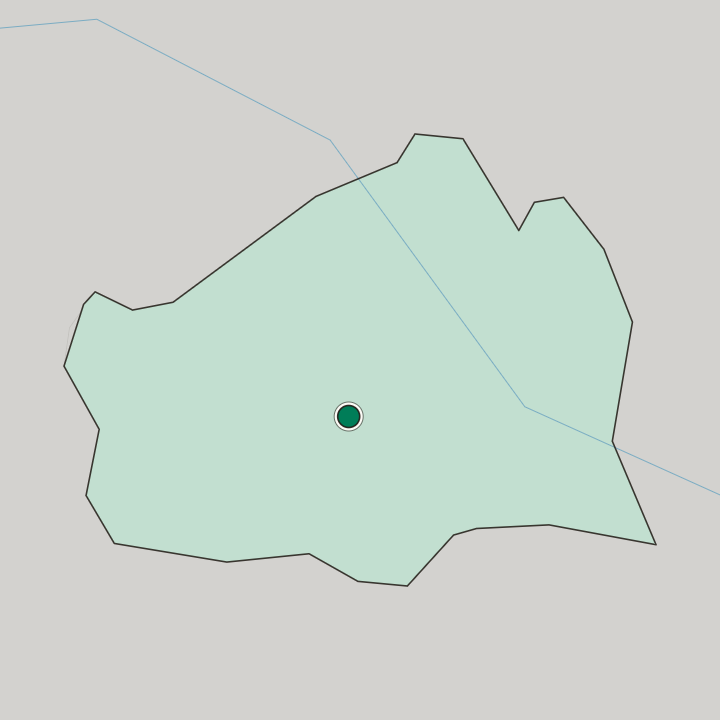
The Liesing crosses Oberlaa and draws its edge against Rothneusiedl, while the Donauländebahn cuts the place in two: Oberlaa Stadt, 748.28 hectares of parkland and housing under the Laaer Berg to the north, and Oberlaa Land, 450.37 hectares of village core and vineyard to the south. Inzersdorf lies upstream, Unterlaa downstream. The two together make 1,198.65 hectares, and south of the last fields the Lower Austrian market town of Leopoldsdorf begins, its Stierofen-Siedlung reaching into the cadastral ground of Oberlaa Land.
Common questions
What is the best area to stay in Oberlaa?
Vienna: a first visit that also wants the thermal baths. Favoriten: cheaper rooms five stops from the terminus.
More areas in Vienna
Updated October 2026