Azerbaijan
Ganja City, Azerbaijan — Towns & Travel Guide
Ganja is Azerbaijan's second city, an old Silk Road town on the Ganja River below the Lesser Caucasus.
Hotel links are affiliate links: booking through them may earn us a commission, at no extra cost to you. It never affects how places are ranked. How this works


Towns & cities in Ganja City
One town here has its own guide — it links to where to stay.
 Azerbaijan
Ganja
Ganja is a historic city of northwestern Azerbaijan, tied to the poet Nizami Ganjavi.Where to stay →
Hotel links are affiliate links: booking through them may earn us a commission, at no extra cost to you. It never affects how places are ranked. How this works
About Ganja City
What is Ganja City known for?
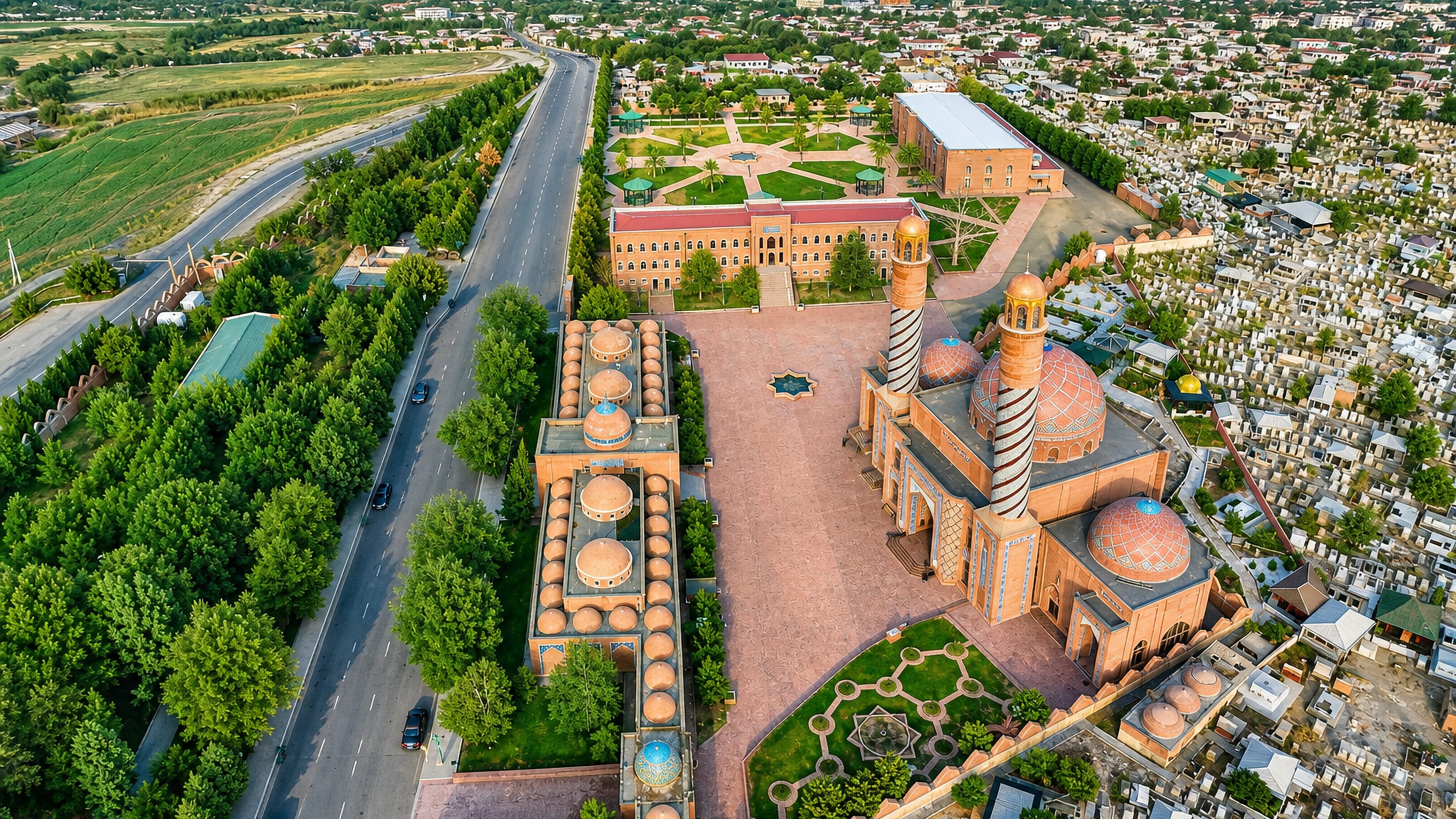
Ganja is the poet's town. The 12th-century writer Nizami Ganjavi was born here, and his tall cylindrical mausoleum stands on the road east of the centre, ringed by gardens. The city is Azerbaijan's second largest after Baku, a former Silk Road stop that grew rich on trade between Asia and Europe.
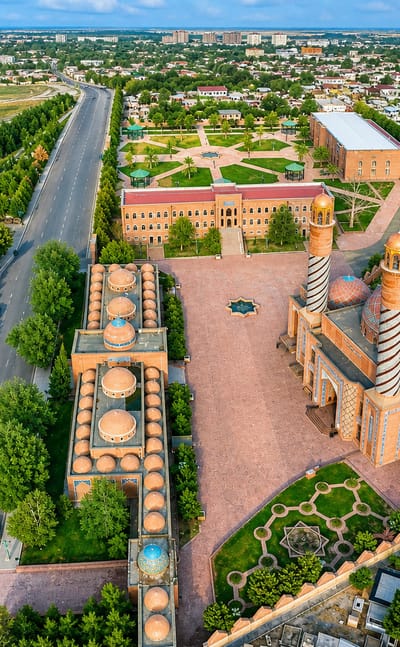
Red brick is its signature: the Juma Mosque, the old caravanserais, and the strange Bottle House built from thousands of glass bottles all share that fired-clay look.
Where is Ganja City?
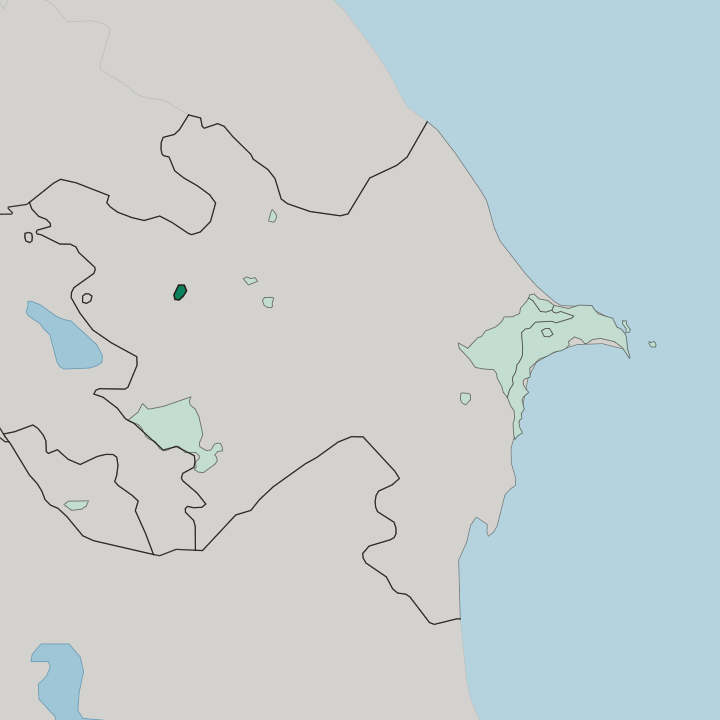
Ganja lies in western Azerbaijan, roughly midway along the road between Baku and the Georgian border. It sits at the north-eastern foot of the Lesser Caucasus, where the mountains drop toward the broad Kura lowland. The town is built on the Ganja River, a small stream that gathers on the northern slopes of the Murovdag range high in the Lesser Caucasus and runs down to join the Kura, the great river of the South Caucasus that carries on eastward to the Caspian Sea.
That places Ganja on a shelf of ground between mountain and plain, high enough to escape the worst summer heat of the lowland yet open to it. South of town the land rises quickly into forested slopes and the peak of Kapaz. Lake Göygöl lies up there, a mountain lake dammed behind a landslide thrown down by the great earthquake of 1139.
The setting is fertile. Orchards and vineyards spread across the plain around the city, watered by streams off the range. Baku sits far to the east on the Caspian, the country's capital and largest city, a long haul across the lowland from here.
What is Ganja City like?
Ganja wears its literary past openly. Nizami Ganjavi, the 12th-century poet who shaped Persian verse, was born and buried here, and the city has built its self-image around him. His cylindrical mausoleum on the eastern edge is the place people are sent to first.
The name itself carries weight: Ganja comes from the Persian ganj, meaning treasure or treasury, a hint at the wealth that Silk Road caravans once left behind. Brick is the other constant. Walk the old centre and the red fired-clay of the Juma Mosque, the domed Chokak bathhouse and the covered caravanserais repeats street after street, the work of local kilns over centuries.
The oddest expression of that habit is the Bottle House, a two-storey home whose walls are set with thousands of glass bottles and coloured stones. Azerbaijani is the language of the streets and the signs. The pace is slower and more provincial than Baku's, and locals like it that way.
Tea houses, walnut groves and the nearby mountains anchor daily life as much as any monument does.
What is the history of Ganja City?
The town is old. Ganja traces its origins to around 660, an early foundation on the caravan roads of the South Caucasus, and it later rose as the seat of the Atabegs and the centre of its own khanate under Persian rule. In 1804 a Russian army stormed the walls after a three-month siege, and the tsars renamed it Yelizavetpol.
The Soviets called it Kirovabad from 1935. Ganja got its old name back in 1989, on the eve of independence.
What is the climate of Ganja City?
Ganja has a dry semi-arid climate, cooler than the Caspian lowland thanks to its perch below the Lesser Caucasus. Summers are hot and rainless. Winters run cold, with frost and the odd snowfall drifting down off the mountains, and rain comes mostly in the milder shoulders of spring and autumn rather than the heart of the year.
Meltwater and streams off the Lesser Caucasus keep the orchards and vineyards on the plain green through the dry months.
How do you get to Ganja City?
Ganja has its own airport. Ganja International Airport lies just outside town and links the city to Baku and to a handful of destinations in Russia and Turkey. Overland, the main highway and railway between Baku and the Georgian border both run through Ganja, so trains and buses reach it from the capital in a few hours across the Kura lowland.
From the city, roads climb south into the Lesser Caucasus toward Lake Göygöl and the mountain parks.
Common questions
What is the best area to stay in Ganja City?
The old centre: walking to Ganja's brick monuments. The Nizami mausoleum road: seeing the Nizami Ganjavi mausoleum. Toward Göygöl and the mountains: a base for Göygöl National Park.
Good for
More regions in Azerbaijan
Updated September 2026