Azerbaijan
Nakhchivan Autonomous Republic, Azerbaijan — Towns & Travel Guide
Nakhchivan is Azerbaijan's landlocked exclave, an arid mountain republic cut off from the rest of the country by Armenia.
Hotel links are affiliate links: booking through them may earn us a commission, at no extra cost to you. It never affects how places are ranked. How this works


Towns & cities in Nakhchivan Autonomous Republic
One town here has its own guide — it links to where to stay.
 Azerbaijan
Naxçıvan
Naxçıvan is the capital of the Nakhchivan Autonomous Republic, an exclave of Azerbaijan.Where to stay →
Hotel links are affiliate links: booking through them may earn us a commission, at no extra cost to you. It never affects how places are ranked. How this works
About Nakhchivan Autonomous Republic
What is Nakhchivan Autonomous Republic known for?
Nakhchivan is the only autonomous republic within Azerbaijan, and it touches none of it. Armenia cuts it off completely. Travellers come for the 12th-century Momine Khatun Mausoleum in the capital, the cragged fortress of Alinja, and the salt caves of Duzdag drilled deep into the mountainside.
The İlandağ ridge, cleft at its summit, rises over the plain and is tied in local legend to Noah's Ark. Most of the republic is dry, folded rock. The Aras River draws its whole southern edge against Iran.
Where is Nakhchivan Autonomous Republic?
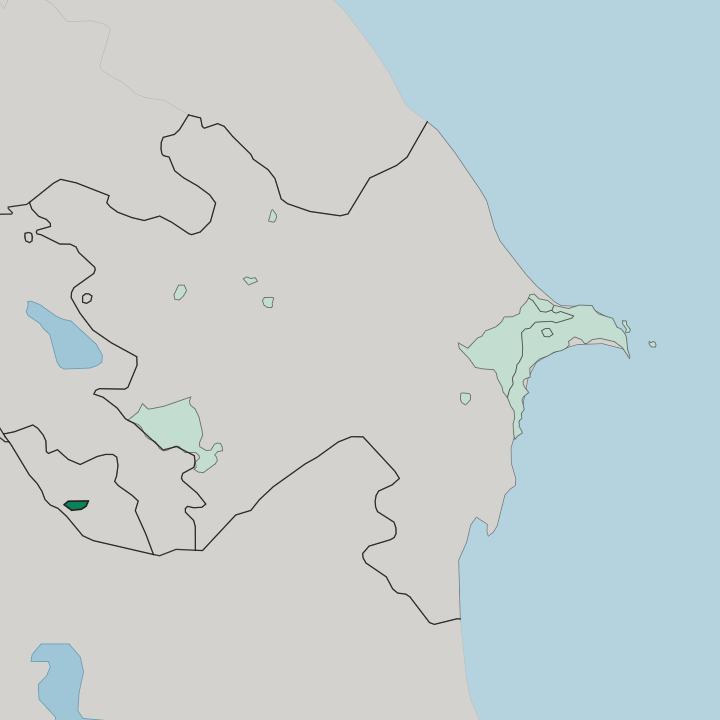
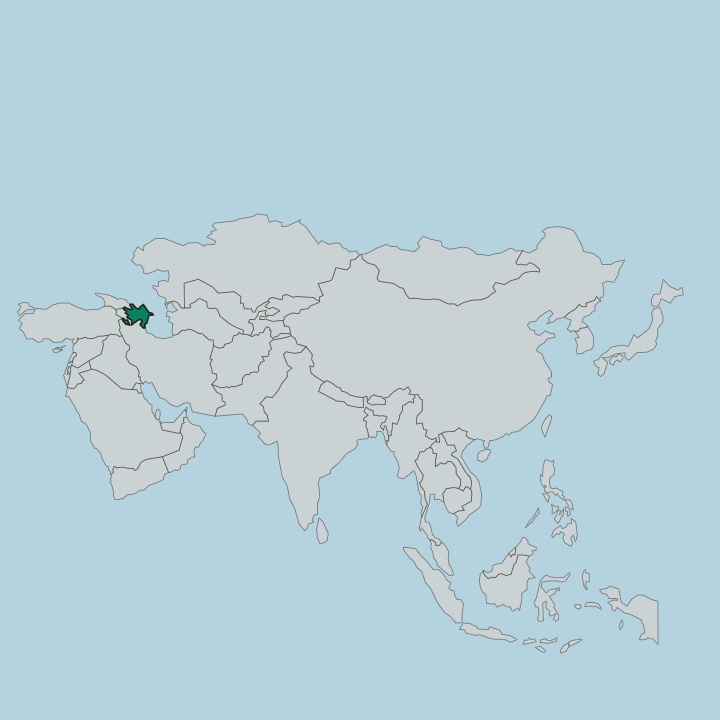
Nakhchivan sits apart from the rest of Azerbaijan, a wedge of dry highland pinned between three foreign borders. Armenia wraps around its whole eastern and northern flank, severing it from the Azerbaijani mainland roughly forty kilometres away across Armenian soil. Iran runs along the south and south-west. Turkey touches it for only a narrow strip in the north-west, Azerbaijan's single land link to the Turkic west.
The Aras River draws almost the entire southern boundary, dividing the republic from Iran as it flows down toward the Kura. The land itself is arid and steeply folded. Along the Armenian border the Zangezur Mountains rise and throw off the ridges that fill the interior, among them the twin-horned İlandağ standing over the central plain.
Rivers cut down from that high rim to the Aras, and the valleys they carve hold nearly all the towns and orchards. The capital lies on the lower ground in the west, under those peaks. Ordubad sits far to the east, wedged against the mountains where the Aras bends toward the Iranian province of East Azerbaijan.
Little of the republic is flat.
What is Nakhchivan Autonomous Republic like?
Nakhchivan wears its age openly. The people are Azerbaijani and speak Azerbaijani, and the republic guards a distinct branch of the culture, shaped by centuries hard against the Iranian and Turkish frontiers. Its architecture is its signature.
The 12th-century Momine Khatun Mausoleum, a ten-sided tower of red brick banded with turquoise tile and Kufic script, gave its name to a whole medieval school of building raised here by the architect Ajami Nakhchivani. Carpet weaving runs just as deep, and Nakhchivani rugs hang in museums well beyond Azerbaijan. Faith and legend soak the land.
The İlandağ ridge is said to have been split by the keel of Noah's Ark, and the Ashabi-Kahf cave east of the capital is venerated as the shelter of the Seven Sleepers named in the Quran. Ordubad keeps its own rhythm, an old town of narrow mud-walled lanes and orchard gardens fed by kahriz channels, its cuisine noticeably different from the food of the Azerbaijani mainland. Pilgrims still climb the rock paths to these shrines, as they have for generations.
The republic feels older and quieter than Baku, and it knows it.
What is the history of Nakhchivan Autonomous Republic?
Its roots run to the Bronze Age. Nakhchivan is one of the oldest inhabited corners of the Caucasus, and tradition holds that the capital was founded by Noah after the flood. It flowered under the medieval Atabegs, whose court raised the Momine Khatun Mausoleum in 1186 and fortified the near-impregnable heights of Alinja.
Tamerlane took that fortress only after a fourteen-year siege. Persian and Russian rule followed, then Soviet. Cut off from the rest of Azerbaijan by the drawing of Armenia's borders, it was made an autonomous republic and remains so, the only one the country has.
What is the climate of Nakhchivan Autonomous Republic?
Nakhchivan runs to extremes. Ringed by the Zangezur Mountains and shut off from any sea, it holds a dry continental climate that swings hard between the seasons. Winters on the plain drop well below freezing, while summers turn hot and parched under a fierce sun.
Rain is scarce, under half a metre a year, so the lowlands stay a bare steppe and farming leans on the Aras River and the channels drawn from it. Snow lingers on the high peaks long after the valleys have baked dry.
How do you get to Nakhchivan Autonomous Republic?
Reaching Nakhchivan means flying. Because Armenia severs the exclave from the rest of Azerbaijan, there is no road or rail from the mainland, and Azerbaijan Airlines runs the lifeline hop from Baku into Nakhchivan International Airport. The alternative is a land crossing from neighbouring Iran or Turkey.
Inside the republic, a light rail line and roads thread the Aras valley from the capital out toward Ordubad in the east and Sharur in the north-west. The airport sits just outside the capital.
Common questions
What is the best area to stay in Nakhchivan Autonomous Republic?
Nakhchivan city: basing your whole Nakhchivan trip. Ordubad: orchard valleys away from the capital.
Good for
More regions in Azerbaijan
Updated September 2026