Azerbaijan
Absheron Rayon, Azerbaijan — Towns & Travel Guide
Absheron Rayon wraps the western edge of the Caspian oil peninsula around Baku, a semi-desert of salt lakes and eternal flame.
Hotel links are affiliate links: booking through them may earn us a commission, at no extra cost to you. It never affects how places are ranked. How this works


Towns & cities in Absheron Rayon
One town here has its own guide — it links to where to stay.
 Azerbaijan
Khirdalan
Khirdalan, or Xırdalan, is the seat of Azerbaijan's Absheron District and the site of the Baltika-Baku brewery, a city only since 2006.Where to stay →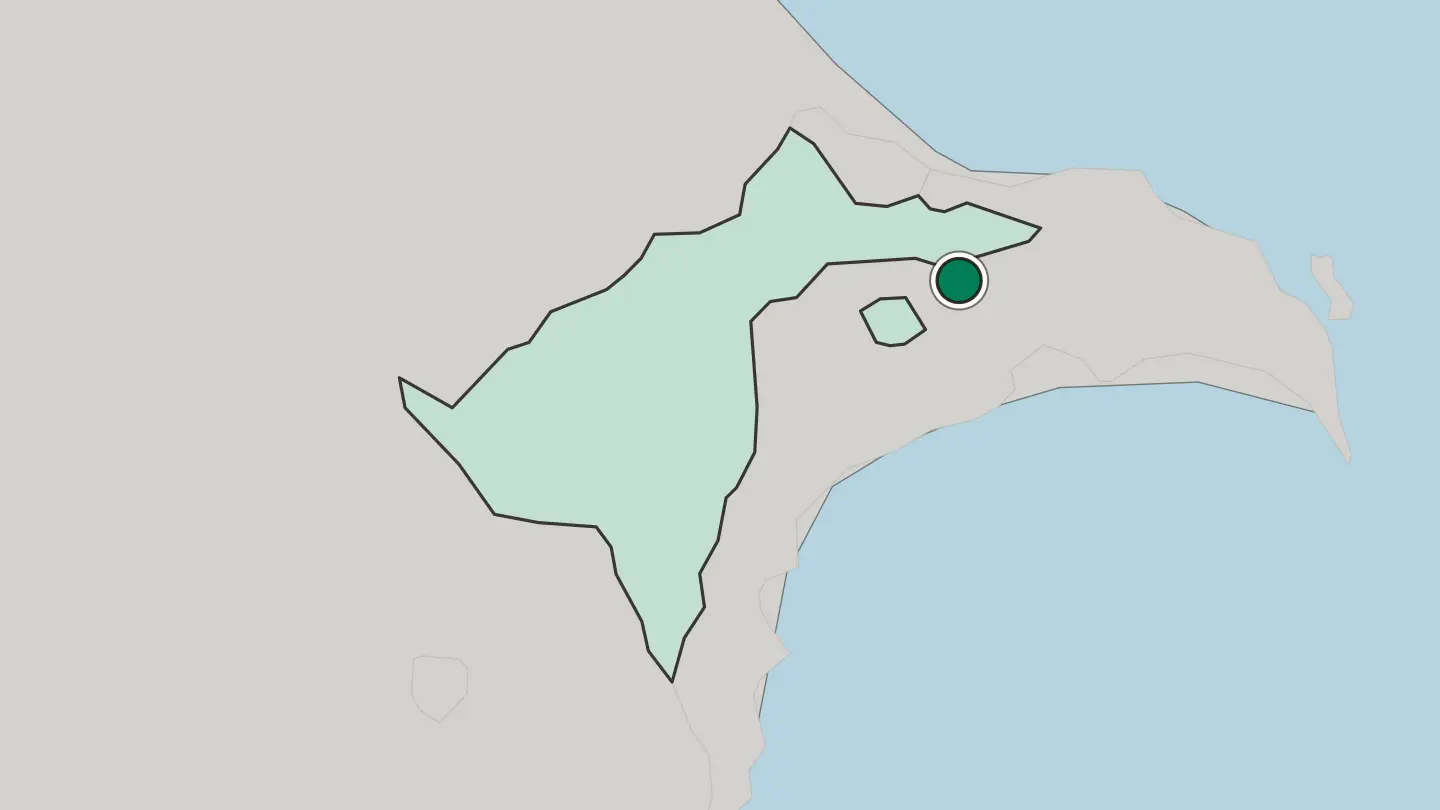
Hotel links are affiliate links: booking through them may earn us a commission, at no extra cost to you. It never affects how places are ranked. How this works
About Absheron Rayon
Fire is the signature.
What is Absheron Rayon known for?
At Yanar Dağ, near the village of Məmmədli, a hillside of natural gas has burned without pause for as long as anyone can remember, and Marco Polo noted the peninsula's flames on his way east. The district also rings Baku with strange water: Lake Masazır turns rose-pink when the salt-loving algae bloom, and salt has been cut from it since 1813. Beyond the wonders it is workaday ground, the semi-desert apron of orchards, olive groves, and gas fields that feeds the capital next door.
Where is Absheron Rayon?
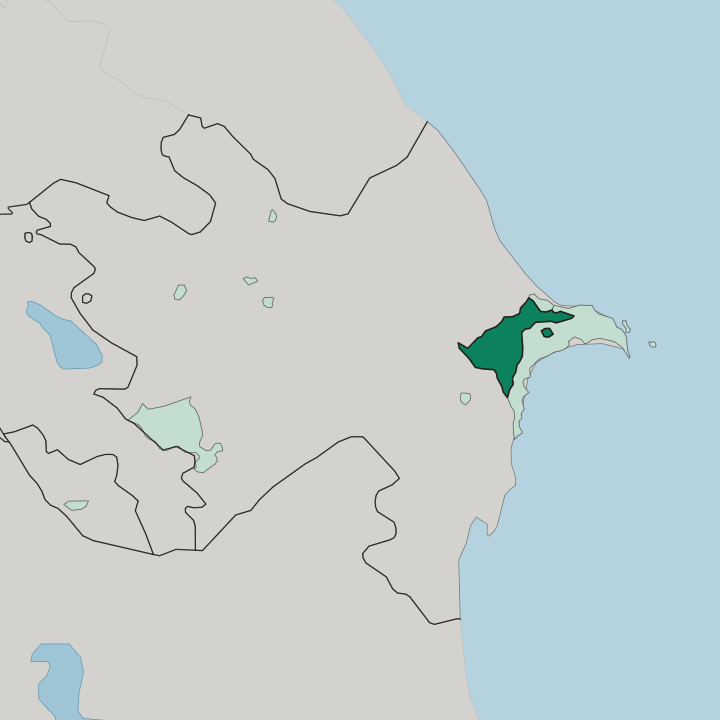
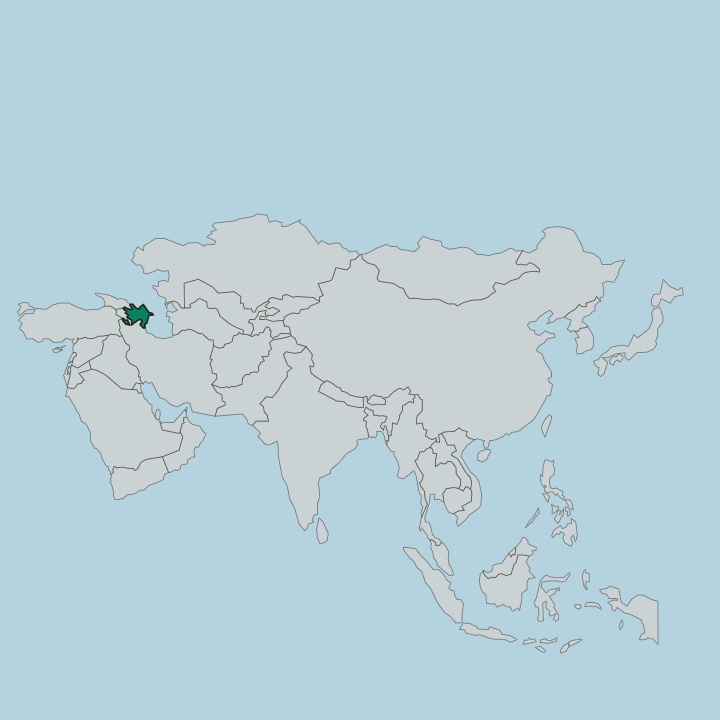
Absheron Rayon lies in eastern Azerbaijan, on the western shoulder of the Abşeron Peninsula where it juts into the Caspian Sea. It curls around the capital. The district borders Sumqayıt and the Xızı district to the north, wraps most of the way around Baku, and runs south and west toward the Qobustan and Salyan districts.
Its own seat, Xırdalan, sits barely north-west of the capital's edge. The land is low and gently rolling, an easternmost fray of the Caucasus that never climbs into real mountains, and much of it reads as dry semi-desert. Salt lakes pit the plain.
Rose-tinted Lake Masazır is the famous one, its water saltier than the sea, and the district holds a scatter of smaller salt pans besides. The capital's water is stored here too. The Jeyranbatan reservoir, dammed in 1958 between Baku and Sumqayıt, still feeds both cities their drinking water, and mud volcanoes bubble across the surrounding flats where pockets of natural gas seep to the surface.
One of those vents is the ever-burning slope of Yanar Dağ. It is dry, oil-scented, and wide open. The Caspian shore hems its eastern side, but much of the rayon sits inland, back from the water that gives the peninsula its name.
What is Absheron Rayon like?
Fire and salt run through the culture as surely as they run through the ground. Azerbaijan calls itself the Land of Fire, and the Abşeron Peninsula is why: the burning slope of Yanar Dağ and the peninsula's fire-worship past gave the whole country its name and one of its oldest emblems. The rayon lives beside that legend rather than on top of it.
This is Baku's back yard, and it feels the pull. Its towns fill with people who work in the capital's oil, gas, and service trades, so the everyday culture is that of a commuter belt threaded with Soviet-era industry, olive groves, and salt works. The district was even styled a Capital of Craft, and old trades in carpet-weaving and metalwork carry on in its villages.
Salt works still hum. Its people speak Azerbaijani and mostly follow Islam, the two threads that bind the wider country. Look past the gas flares and you find the older Abşeron: squat stone mosques from the 18th and 19th centuries, bathhouses and tombs going back centuries, and low farmhouses hunkered against the wind off the Caspian.
The result is a landscape that is at once industrial and ancient. It powers a capital and prays in medieval mosques, all on the same dry plain.
What is the history of Absheron Rayon?
Absheron Rayon is a young line drawn on very old ground. The Soviet authorities carved it out on 4 January 1963, hiving off the rural land around Baku so its farms, kolkhozes, and factories could feed the workers and industry of Baku and Sumqayıt. That administrative birth is recent.
The ground beneath it is not: the Abşeron Peninsula has been worked for its oil and its natural fires since antiquity, and its flaming vents drew travellers and fire-worshippers long before any district was mapped. A modern boundary was laid over an ancient, gas-rich shore.
What is the climate of Absheron Rayon?
It is dry. The Abşeron Peninsula is the parched corner of Azerbaijan, a semi-desert where summers run warm and rainless and winters stay cool and damp under a hard, near-constant wind off the Caspian. Rain is meagre, some years little more than a couple of hundred millimetres, which is why the plain reads as scrub and salt flat rather than green field.
That wind is the peninsula's constant companion, funnelling across the flats hot in summer and biting in winter, and locals reckon time by it as much as by the calendar.
How do you get to Absheron Rayon?
You come through Baku. The capital's Heydar Aliyev airport sits out on the peninsula, and nearly every visitor lands there before setting foot in the surrounding district. From the city it is a short drive out to Xırdalan, Masazır, and the Yanar Dağ flame, all clustered within a half-hour of the centre by road.
The rayon has no separate gateway of its own. Baku's ring roads and the highways toward Sumqayıt thread straight through it, so a car or a local tour is the usual way to reach the pink lake and the burning hill.
Common questions
What is the best area to stay in Absheron Rayon?
Xırdalan: a base beside Baku. Masazır: the pink lake and the fire mountain. Baku: hotels and the Old City.
Good for
More regions in Azerbaijan
Updated September 2026