Belgium · Wallonia
Where to Stay in Verviers, Wallonia
At the foot of the Ardennes, Verviers turned wool into an industry, and the province of Liège kept the museums after the trade left.
Hotel links are affiliate links: booking through them may earn us a commission, at no extra cost to you. It never affects how places are ranked. How this works


Where to stay in Verviers
How the choice of base plays out on the ground.
The centre around the église Saint-Remacle de Verviers holds most of the rooms, with the Centre historique de la laine et de la mode and the Musée des Beaux-Arts et de la Céramique both walkable from it. Most visitors settle right there. It suits you if the visit is about the museums and the old manufacturing streets, and if the Ardennes are a day trip rather than the whole reason for the journey.
Evenings there are hushed. The wool museum alone takes half a day. Dison sits just outside, gathered round the église Saint-Fiacre de Dison, and works for drivers who want a calmer base within minutes of the centre.
Petit-Rechain lies farther out again, marked by the Perron de Petit-Rechain, and needs a car for anything past the doorstep. Beds are few there. For a longer stay, the streets near the Athénée Royal Thil Lorrain lean residential and put the Musée d'Archéologie et de Folklore inside a short walk.
Anyone heading into the Ardennes should still sleep in town, since the roads out are simpler to drive in daylight than the return is after dark.
Find hotels in Verviers
Direct booking searches for these neighbourhoods.
Saint-Remacle centre
Most rooms stand here, with the Centre historique de la laine et de la mode and the art museum both on foot.Find hotels in Saint-Remacle centrea calmer base minutes from the wool museumDison
Gathered round the église Saint-Fiacre de Dison, with parking straightforward and the centre a short drive. Beds are limited here, so book early.Find hotels in Disondrivers running on into the ArdennesPetit-Rechain
Marked by the Perron de Petit-Rechain, out where the municipality thins and a car settles every question. Beds are limited here, so book early.Find hotels in Petit-Rechaina residential week near the Musée d'Archéologie et de FolkloreAthénée Royal Thil Lorrain streets
Quiet blocks by the Athénée Royal Thil Lorrain, with the folklore museum a short walk from the door. Rooms are few around here — worth securing early.Find hotels in Athénée Royal Thil Lorrain streetsHotel links are affiliate links: booking through them may earn us a commission, at no extra cost to you. It never affects how places are ranked. How this works
Things to do in Verviers
Ranked by global recognition; descriptions from Wikidata (CC0).
Museums & Galleries
3- Solvent
- Centre historique de la laine et de la mode
- Musée d'Archéologie et de Folklore
Churches & Religious Sites
3- église Saint-Remacle de Verviers Heritage
- Église Saints-Antoine-Ermite-et-Apolline Heritage
- église Saint-Fiacre de Dison
Castles & Historic Sites
2- Perron de Petit-Rechain
- Column
Stadiums & Sports
1- Athénée Royal Thil Lorrain
worth knowingacross 4 categories in Verviers
About Verviers
Wool is the thread here.
What is Verviers known for?
The Centre historique de la laine et de la mode keeps the record of an industry that once made this one of the busier manufacturing towns of Wallonia, while the Musée des Beaux-Arts et de la Céramique holds the art side of the same city. Church towers mark the older quarters. The église Saint-Remacle de Verviers is the best known of them.
What are the main landmarks in Verviers?
The église Saint-Remacle de Verviers is the marker most walks start from. Two museums carry the town's memory: the Centre historique de la laine et de la mode for the wool trade and the Musée d'Archéologie et de Folklore for everything older than it. Art has its own house.
The Musée des Beaux-Arts et de la Céramique holds painting and ceramics, while the Église Saint-Jean Baptiste and the Église Saints-Antoine-Ermite-et-Apolline stand over quarters of their own. Outside the centre, the Perron de Petit-Rechain and the église Saint-Fiacre de Dison belong to villages the municipality later gathered in.
What is the history of Verviers?
Wool built this city. Verviers grew into an important industrial centre on the strength of that trade, and the Centre historique de la laine et de la mode now carries the whole story under one roof. The parishes are older.
The église Saint-Remacle de Verviers, the Église Saint-Jean Baptiste, and the Église Saints-Antoine-Ermite-et-Apolline all belong to a town that existed long before the looms arrived at the edge of the Ardennes. Industry drew the villages in. Dison and Petit-Rechain kept their own churches and markers, the église Saint-Fiacre de Dison and the Perron de Petit-Rechain among them, while the growing town took in the ground between.
Schools came with the growth. The Athénée Royal Thil Lorrain stands among the civic buildings that period left behind. Then the mills went.
The province of Liège kept a city whose centre still reads as a place of work, and the Musée des Beaux-Arts et de la Céramique and the Musée d'Archéologie et de Folklore now do the job the looms once did, holding the town's name up in Wallonia. What is left is a compact centre, museums where the industry stood, and church towers older than either.
Where is Verviers?
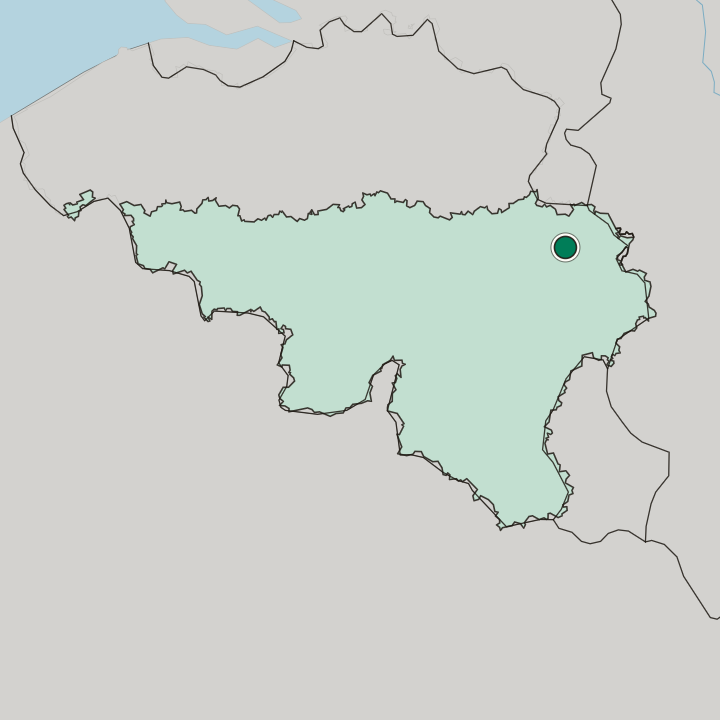
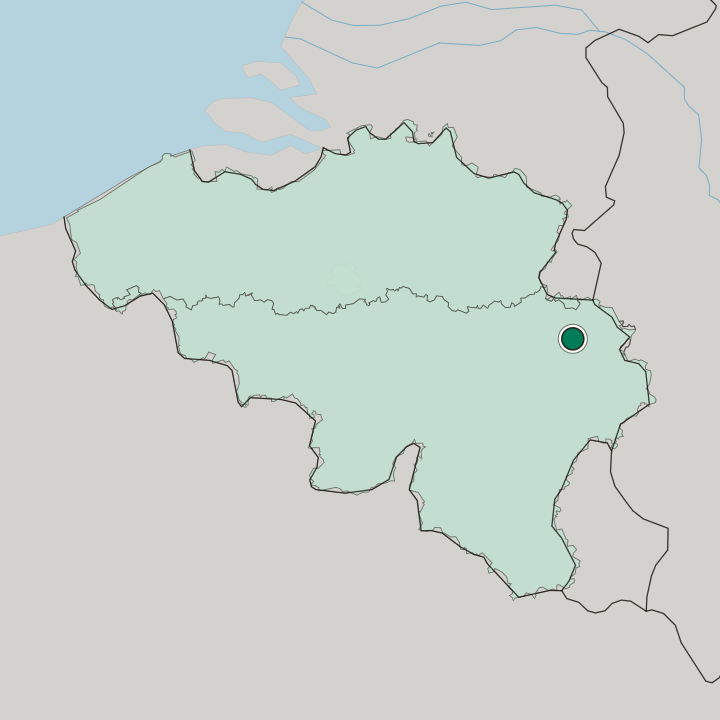
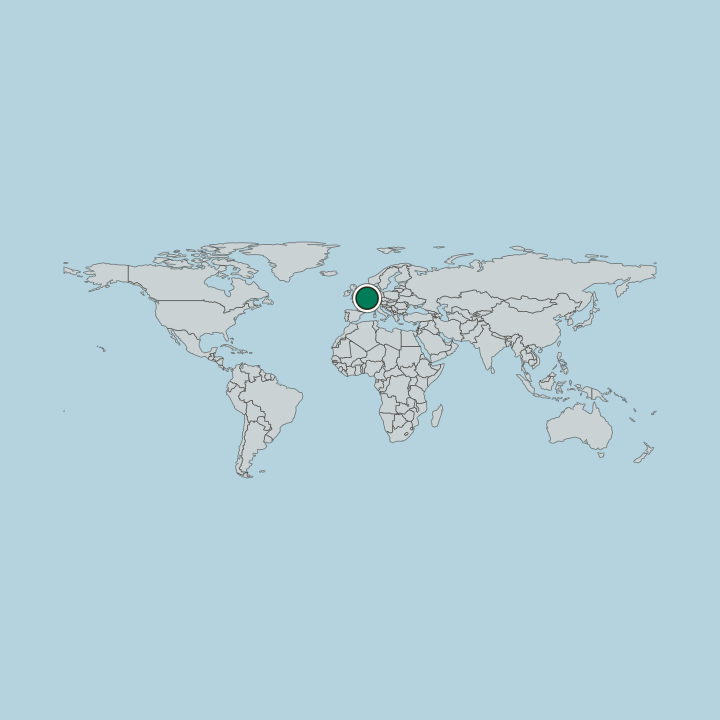
Verviers sits at the foot of the Ardennes, in the province of Liège. Distances inside it stay short. Dison and Petit-Rechain lie on its edges, close enough that a short drive covers them, and past those the ground rises toward the Ardennes proper, which is the country most visitors carry on into.
What is the climate of Verviers?
Weather comes off the Ardennes. Verviers lies in the temperate band, and the high ground beside it pulls more cloud and rain onto the town than the flatter parts of Wallonia see, so grey stretches can run for days. Snow is a real possibility.
Winter days here often end indoors, at the Centre historique de la laine et de la mode or the Musée des Beaux-Arts et de la Céramique, both of which work whatever the sky does.
How do you get to Verviers?
Verviers is reached from the Liège side. Roads run up from the lower ground of the province and on into the Ardennes, so the town serves as the last easy stop before the hills. The centre is walkable end to end.
Dison and Petit-Rechain need wheels, and so does anything beyond them, which is why most visitors treat the église Saint-Remacle de Verviers and the museums as the walking part of a trip and the Ardennes as the driving part.
Common questions
What is the best area to stay in Verviers?
Saint-Remacle centre: museum walks from the église Saint-Remacle de Verviers. Dison: a calmer base minutes from the wool museum. Petit-Rechain: drivers running on into the Ardennes. Athénée Royal Thil Lorrain streets: a residential week near the Musée d'Archéologie et de Folklore.
Good for
More cities in Wallonia
Updated October 2026