Bolivia
Departamento de Cochabamba, Bolivia — Towns & Travel Guide
Cochabamba is a department in the Sub-Andean region of Bolivia, the country's breadbasket, its capital known as the City of Eternal Spring.
Hotel links are affiliate links: booking through them may earn us a commission, at no extra cost to you. It never affects how places are ranked. How this works


Towns & cities in Departamento de Cochabamba
One town here has its own guide — it links to where to stay.

 Bolivia
Cochabamba
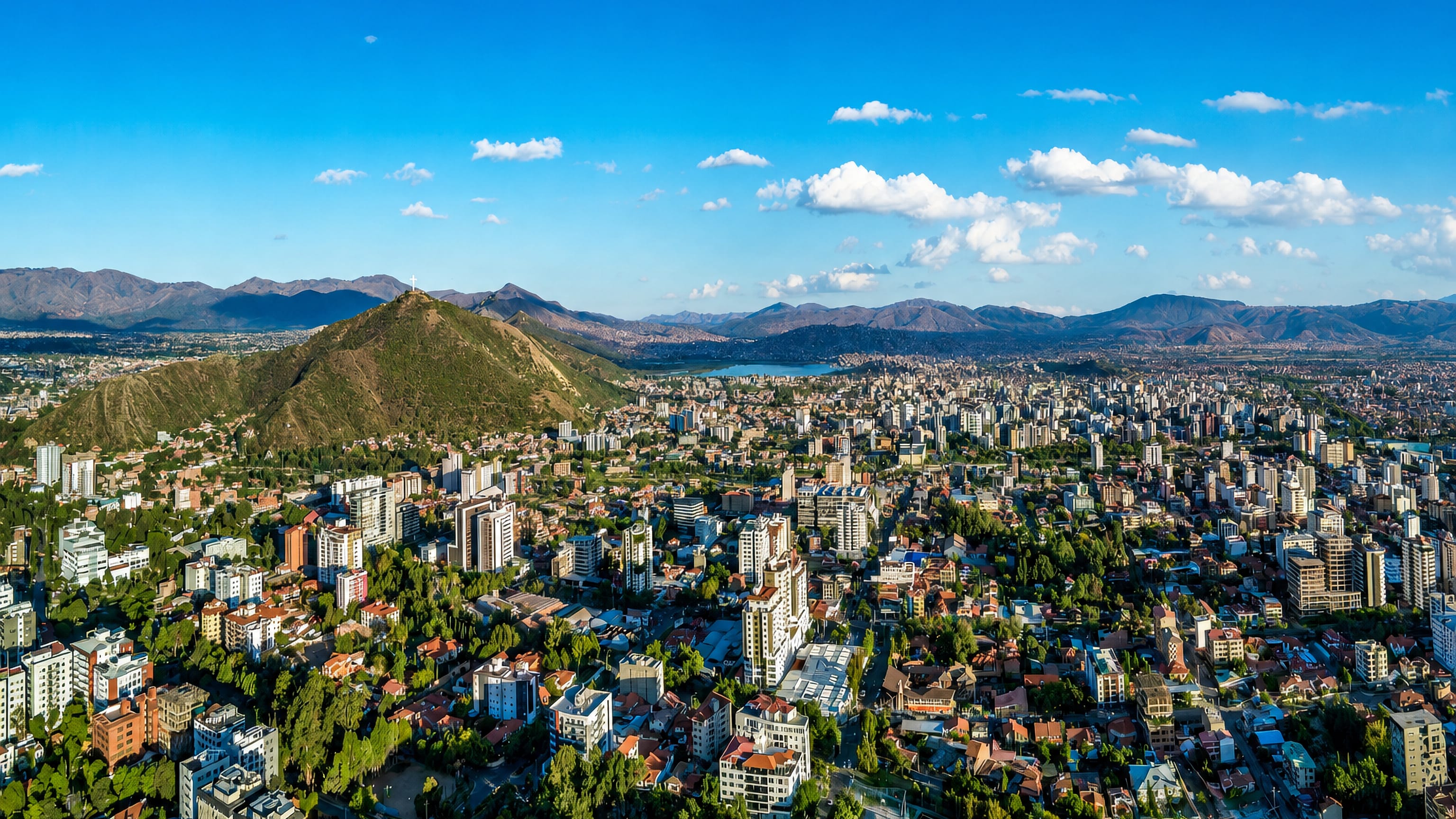
Cochabamba fills a valley of the Andes in central Bolivia, capital of its department and watched over by the Cristo de la Concordia.Where to stay →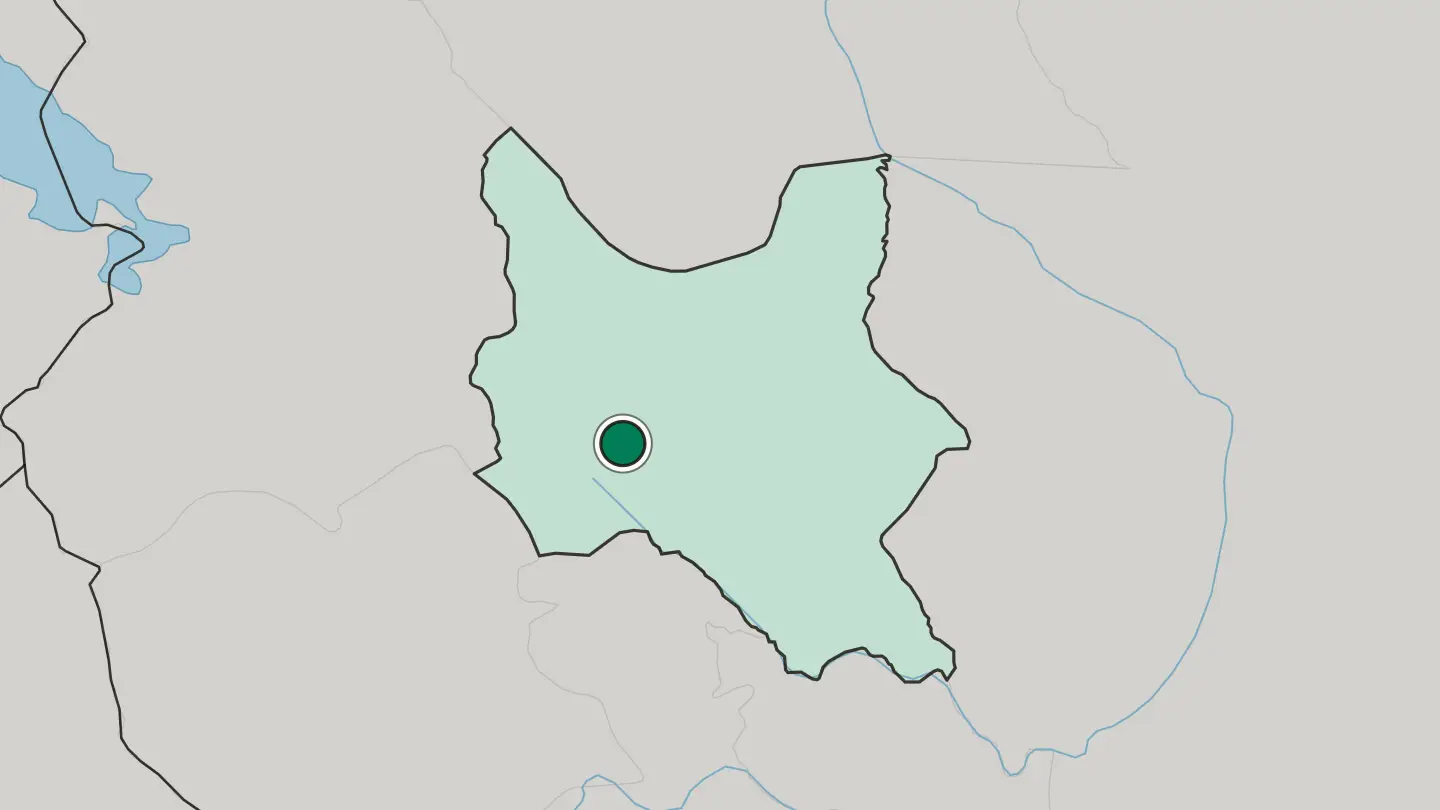
Hotel links are affiliate links: booking through them may earn us a commission, at no extra cost to you. It never affects how places are ranked. How this works
About Departamento de Cochabamba
Bolivia eats from here.
What is Departamento de Cochabamba known for?
Cochabamba is called the breadbasket of Bolivia for the range of agricultural products its position in the Andean valley region allows, and that reputation rests on ground rather than on any single crop. The capital city carries two nicknames. Cochabamba city is known as the City of Eternal Spring and as The Garden City, both earned by spring-like temperatures that hold through the year rather than arriving with a season.
Where is Departamento de Cochabamba?
The name is a description. Cochabamba comes from the Quechua qucha, or qhucha, meaning lake, joined to pampa, meaning plain, so the department carries a plain and a body of water in its own title. Bolivia's map explains the rest.
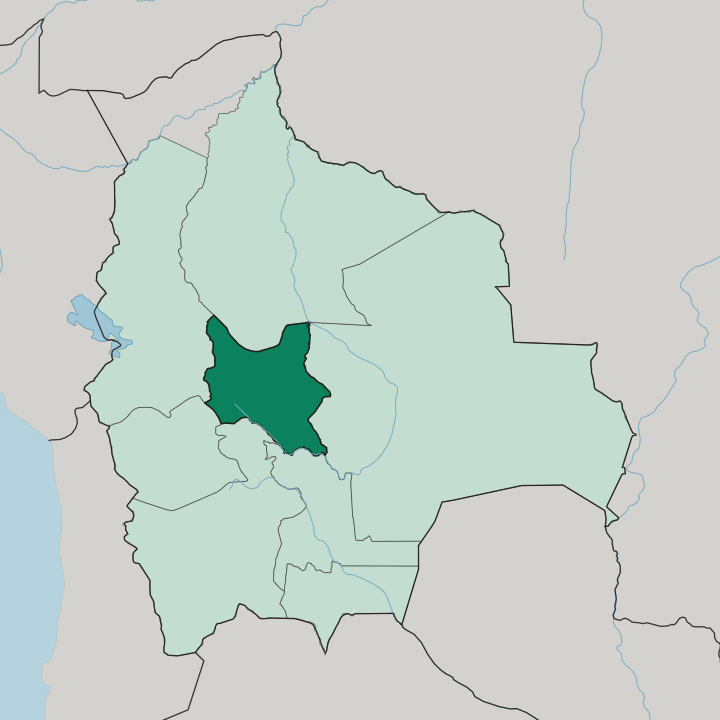
Cochabamba sits in the Sub-Andean region, in the Andean valley belt that runs between the tropical lowlands of Santa Cruz on one side and the highlands and altiplano of Potosí and La Paz on the other. Valleys are the operative landform. That middle position is what gives the department its agricultural variety, since neither the lowland heat of Santa Cruz nor the altitude of the altiplano dominates the growing conditions here.
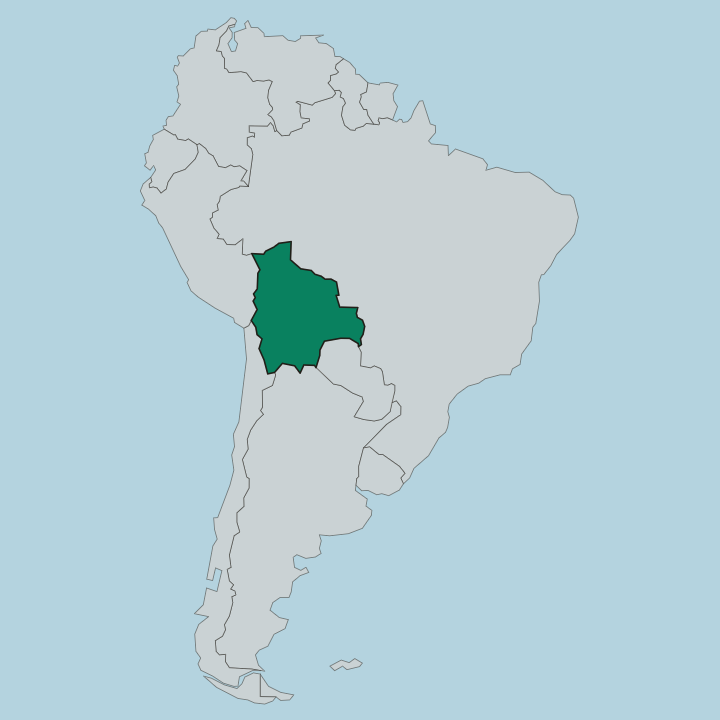
Bolivia counts nine departments. Cochabamba is one of them, and its position between two very different Bolivian environments is the single fact that most of its other characteristics follow from. The capital sits in that valley ground.
Cochabamba city takes its spring-like temperatures directly from the valley setting, which is why the names City of Eternal Spring and The Garden City attached to it rather than to anywhere on the altiplano.
What is Departamento de Cochabamba like?
Quechua named this place. The department's name is built from qucha, or qhucha, and pampa, two Quechua words for lake and plain, which puts an Andean language at the root of how Bolivians refer to the region at all. Food follows from farmland.
Being the breadbasket of Bolivia is a cultural fact as much as an economic one, because the variety of agricultural products a department supplies shapes what reaches its own tables. The nicknames say the rest. Cochabamba city answers to the City of Eternal Spring and to The Garden City, and both names describe a climate rather than a monument, which is unusual enough to mark the department out.
Neighbours frame the contrast. Santa Cruz brings tropical lowland habits and Potosí and La Paz bring highland and altiplano ones, and Cochabamba's valley position sets it between the two without belonging to either. Quechua survives in the everyday name.
A department whose title still reads as lake and plain in an indigenous language keeps that language present in ordinary speech, on maps and in the way the Sub-Andean region is described.
What is the history of Departamento de Cochabamba?
The name predates the department. Quechua speakers described this ground as qucha and pampa, lake and plain, and that description survived into the name of one of the nine departments of Bolivia. The valleys did the rest.
A position in the Andean valley region between the Santa Cruz lowlands and the Potosí and La Paz highlands made the department agriculturally useful to the whole country, and the breadbasket description followed from that usefulness rather than from any decree.
What is the climate of Departamento de Cochabamba?
The valleys do the work. Cochabamba city holds spring-like temperatures all year, which is why it answers to the City of Eternal Spring, and the Andean valley setting rather than any coast is what produces that steadiness. Height moderates the tropics here.
The department lies in the tropical band south of the equator, but its valley elevation between the Santa Cruz lowlands and the altiplano keeps it away from both lowland heat and highland cold.
How do you get to Departamento de Cochabamba?
Cochabamba is a middle stop. Overland routes across Bolivia that link the tropical lowlands of Santa Cruz to the highlands of La Paz and Potosí pass through the Andean valley region, which puts the department on the way rather than at the end of a line. The capital is the arrival point.
Cochabamba city serves as the hub for the department, and travellers coming down from the altiplano usually notice the change in air before they notice the change in scenery.
Common questions
What is the best area to stay in Departamento de Cochabamba?
Cochabamba city: Travellers who want the City of Eternal Spring itself as the base for the whole department. The Andean valleys: Visitors following the breadbasket farmland between the Santa Cruz lowlands and the Potosí highlands.
Good for
More regions in Bolivia
Updated September 2026