
Brazil · Espírito Santo
Where to Stay in Guarapari, Espírito Santo
Old stone, old faith. Guarapari has stood in Espírito Santo since 1679, and its churches, ruins, and wells still fix the shape of the town.
Hotel links are affiliate links: booking through them may earn us a commission, at no extra cost to you. It never affects how places are ranked. How this works




Where to stay in Guarapari
How the choice of base plays out on the ground.
Start from the churches. The Igreja de Nossa Senhora da Conceição and the Church of Sant'Ana mark the older ground of Guarapari, and rooms within reach of both put a visitor inside the part of town that rewards walking. The Ruínas da Igreja Nossa Senhora da Conceição and the Jesuits' Well sit in the same orbit, which makes this the obvious base for a short heritage-minded stay.
Beds cluster where the visitors do. The Radium Hotel appears on the town's own list of landmarks, which says something about how long Guarapari has been putting people up for the night. Away from the churches, the municipality spreads wide.
Quilombo Alto do Iguape belongs to that wider territory, and anyone staying beyond the centre trades walking distance for space and quiet. You want the old centre for a first stay, and the outskirts only if a car is part of the plan. The Saint John the Baptist Cemetery is another of the town's named sites, and a stay in the old streets keeps it, the well, and the ruins on a single route.
The choice is less about which district than about how far a day's walking should stretch. Nothing in the municipality is truly remote.
Find hotels in Guarapari
Direct booking searches for these neighbourhoods.
Around the Igreja de Nossa Senhora da Conceição
The Igreja de Nossa Senhora da Conceição and the Church of Sant'Ana sit close together, so the oldest part of Guarapari opens up without transport.Find hotels in Around the Igreja de Nossa Senhora da ConceiçãoRuins, the Jesuits' Well, and unhurried mornings among themBy the Ruínas da Igreja Nossa Senhora da Conceição
The Ruínas da Igreja Nossa Senhora da Conceição and the Jesuits' Well give this stretch its character, with the Radium Hotel a short way off.Find hotels in By the Ruínas da Igreja Nossa Senhora da ConceiçãoSpace, a car, and the territory beyond Guarapari's old coreQuilombo Alto do Iguape and the outer municipality
Quilombo Alto do Iguape lies away from the historic streets, so beds out here suit a trip built around driving rather than walking. Lodging is scarce in this area; reserve in advance.Find hotels in Quilombo Alto do Iguape and the outer municipalityHotel links are affiliate links: booking through them may earn us a commission, at no extra cost to you. It never affects how places are ranked. How this works
About Guarapari
Heritage here is unusually layered.
What is Guarapari known for?
The Igreja de Nossa Senhora da Conceição still stands, while the Ruínas da Igreja Nossa Senhora da Conceição hold the same dedication in broken walls, and the two together carry much of what Guarapari remembers. The Radium Hotel is the odd one out. It joins the Jesuits' Well and the Church of Sant'Ana on a list that runs from early church building to something much later.
Names do the work here.
What are the main landmarks in Guarapari?
Seven names carry the register. The Igreja de Nossa Senhora da Conceição and the Ruínas da Igreja Nossa Senhora da Conceição share a dedication across two very different states of repair. A third, the Church of Sant'Ana, joins them.
The Jesuits' Well carries a name from the same religious past, while the Saint John the Baptist Cemetery and Quilombo Alto do Iguape pull the list away from church building altogether. Then there is the Radium Hotel.
What is the history of Guarapari?
The date on record is 1679. The Jesuits' Well names the order that worked this stretch of Espírito Santo, and a well is exactly the kind of thing that survives when the buildings around it do not. Churches came, and one of them fell.
The Ruínas da Igreja Nossa Senhora da Conceição preserve a dedication that the Igreja de Nossa Senhora da Conceição still carries, so the same name in Guarapari points at two different chapters of the same story. The Church of Sant'Ana and the Saint John the Baptist Cemetery fill in the rest of that religious record. Not every strand is a church.
Quilombo Alto do Iguape stands for the Afro-Brazilian communities that formed their own settlements, a history that runs parallel to the parish records rather than through them. Later still, the Radium Hotel arrived. Its name belongs to a later chapter than the churches, and the building has lasted long enough to join them on the town's list of landmarks.
What survives reads as a sequence rather than a single era, a well and two churches and a cemetery and a hotel, each left by a different part of the town's life in Brazil. The names outlast the stories.
Where is Guarapari?
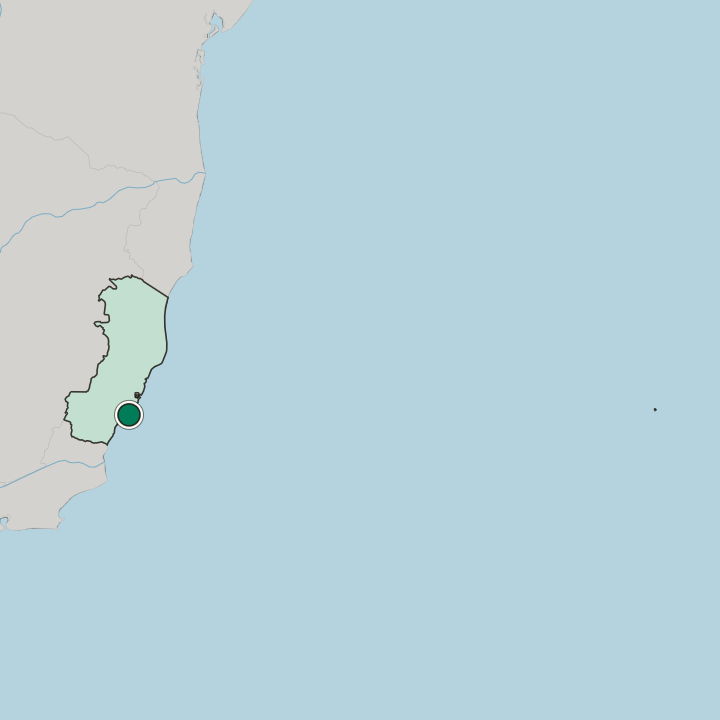
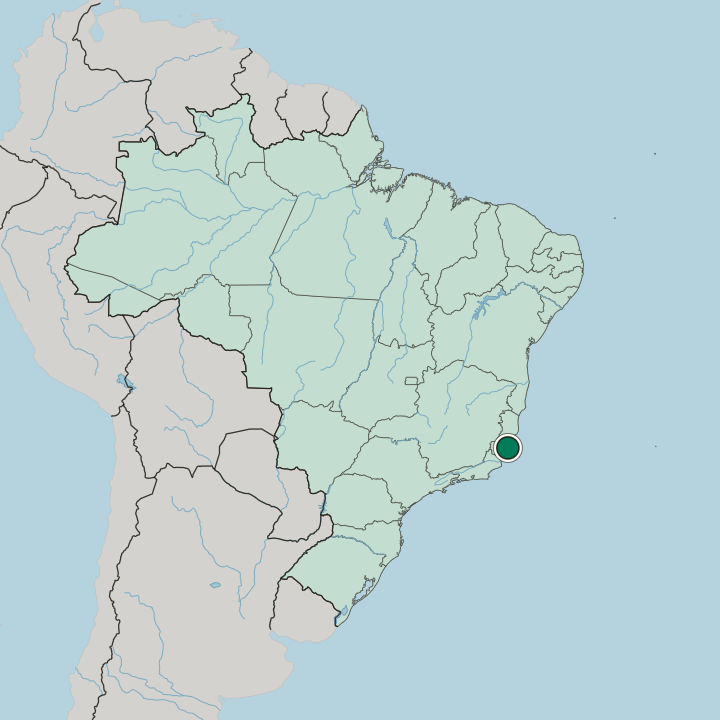
Guarapari occupies a wide municipal area in Espírito Santo, with the built-up town taking only a fraction of it and the rest spreading well beyond the old streets. The tropics reach this far. The town lies in the tropical band of the southern hemisphere, which sets the terms for the vegetation and for how the year divides.
Settlement is not all in one place. Quilombo Alto do Iguape sits away from the historic streets, one sign among several that the municipality of Guarapari holds more than a single centre.
What is the climate of Guarapari?
Espírito Santo lies inside the tropics, and Guarapari with it. That places the warm half of the year over December, January, and February, and turns the middle months into the cooler stretch, since the southern hemisphere runs its seasons the other way round. The heat holds steady all year.
Rain, not cold, is what divides one part of the year from another here, and the difference between seasons reads as a difference in how wet the air feels rather than how sharp it bites.
How do you get to Guarapari?
Espírito Santo is the frame for any approach. Guarapari sits within the state's road network rather than at the end of it, so arrivals come overland, and the practical question is less how to get in than how far the municipality then spreads. Its historic heart is small.
Igreja de Nossa Senhora da Conceição, the Church of Sant'Ana, and the Jesuits' Well fall inside a walkable stretch, so a car earns its keep only once the destination is somewhere like Quilombo Alto do Iguape. Distances inside the municipality are the real variable.
Common questions
What is the best area to stay in Guarapari?
Around the Igreja de Nossa Senhora da Conceição: A first stay with the Church of Sant'Ana and the old streets on foot. By the Ruínas da Igreja Nossa Senhora da Conceição: Ruins, the Jesuits' Well, and unhurried mornings among them. Quilombo Alto do Iguape and the outer municipality: Space, a car, and the territory beyond Guarapari's old core.
Good for
More cities in Espírito Santo
Updated September 2026