Brazil · Espírito Santo
Where to Stay in Vitória, Espírito Santo
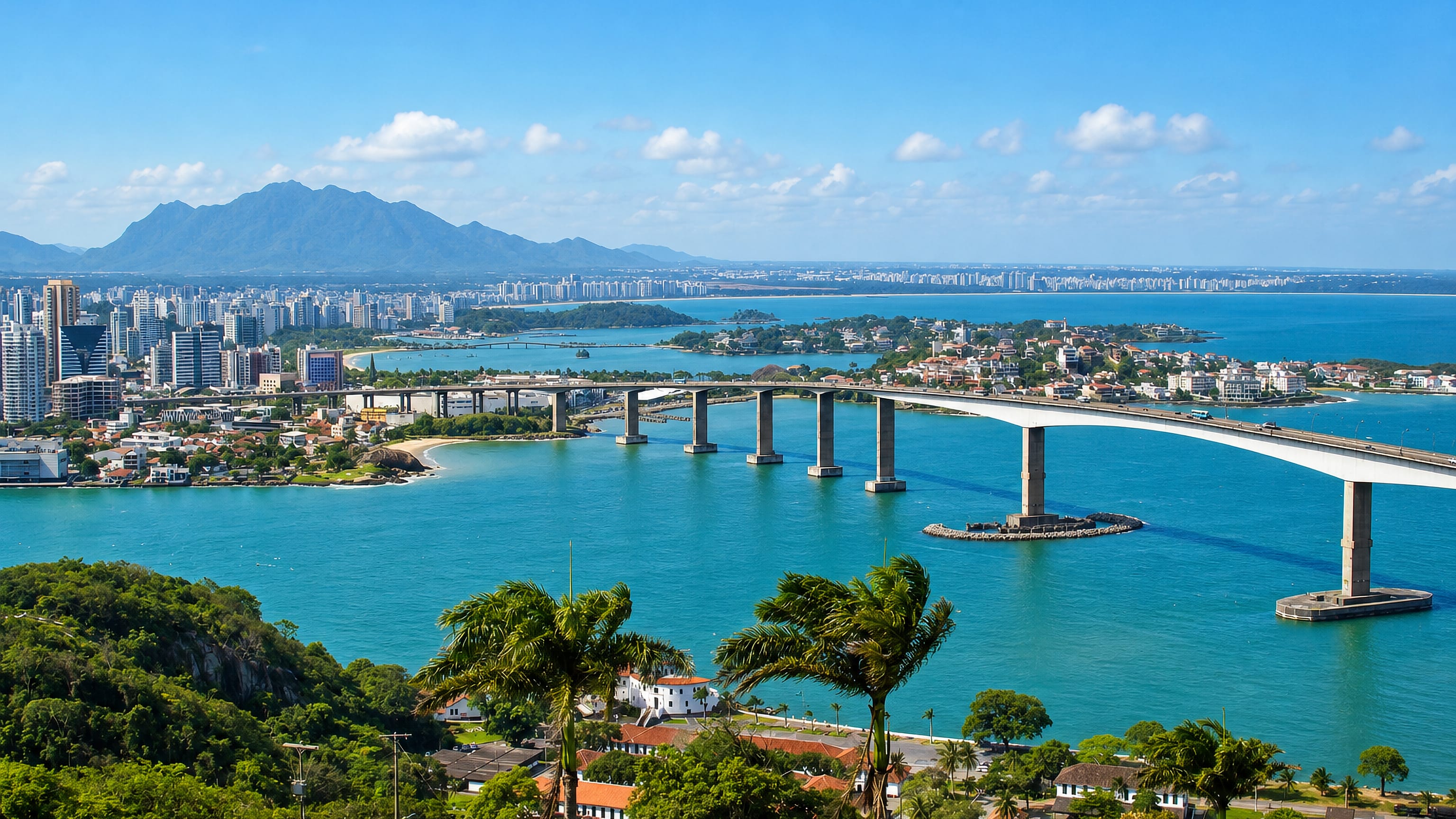
Granite hills rise straight off the water in Vitória, an island capital in Espírito Santo, known for the Terceira Ponte and the sands of Camburi.
Hotel links are affiliate links: booking through them may earn us a commission, at no extra cost to you. It never affects how places are ranked. How this works


Where to stay in Vitória
Where visitors usually base themselves, and why.
Vitória divides at the Terceira Ponte, with the old town on the bay side and the beaches facing open sea. Centro carries the history and empties after dark: Palácio Anchieta above the water, the Catedral Metropolitana, Teatro Carlos Gomes and the shaded walks of Parque Moscoso, all of it under the granite of the Maciço Central. Praia do Canto holds the beds.
Its Triângulo das Bermudas fills three streets with tables until late, Enseada do Suá next door holds the towers and Cais das Artes on the waterfront, and the sand at Camburi starts a short way north. North of the massif the island flattens out. Jardim da Penha and Mata da Praia are quiet, gridded and walkable to Camburi, which suits you if a morning swim outranks a night out, while Jardim Camburi sits at the far end within sight of the cranes at Tubarão.
Ilha do Boi and Ilha do Frade are the exception. Two rock islets tied to the shore by causeways, wooded and almost silent, they look straight down the Baía do Espírito Santo. Goiabeiras, out by the airport, is where the clay pots for moqueca are still burned in the open, and Vila Velha across the Terceira Ponte trades the old streets for a longer beach under the Convento da Penha.
Find hotels in Vitória
Direct booking searches for these neighbourhoods.
Centro
The colonial half of the island below the Maciço Central, where the state government still sits on the old Jesuit rock above the bayFind hotels in CentroBar tables in the Triângulo das BermudasPraia do Canto
The eating quarter behind the eastern shore, a few blocks from the point where the sand at Camburi beginsFind hotels in Praia do CantoBayfront towers beside Cais das ArtesEnseada do Suá
Reclaimed ground between Praia do Canto and the Terceira Ponte, with the marina and the concert halls at the foot of itFind hotels in Enseada do SuáA gridded quiet street ten minutes from CamburiJardim da Penha and Mata da Praia
Low residential blocks north of the Maciço Central, laid out between the university and the beach roadFind hotels in Jardim da Penha and Mata da PraiaWooded rock islets joined to the city by causewaysIlha do Boi and Ilha do Frade
Two granite outcrops off the eastern shore looking down the Baía do Espírito Santo, silent once the last car has goneFind hotels in Ilha do Boi and Ilha do FradeThe far end of the sand within sight of TubarãoJardim Camburi
The northern grid beyond the Camburi seafront, nearest to the airport at Goiabeiras and the ore piersFind hotels in Jardim CamburiHotel links are affiliate links: booking through them may earn us a commission, at no extra cost to you. It never affects how places are ranked. How this works
Things to do in Vitória
Ranked by global recognition; descriptions from Wikidata (CC0).
Museums & Galleries
3- Monjardim Manor House Heritage
- Cais das Artes
- Planetário de Vitória
Churches & Religious Sites
2- Church of Our Lady of the Rosary Heritage
- Matriz São Sebastião Heritage
Castles & Historic Sites
1- O Beijo
worth knowingacross 3 categories in Vitória
About Vitória
What is Vitória known for?
Vitória is the port at the bottom of the iron road from Minas Gerais. Ore trains come down the Vitória a Minas railway to Tubarão, one of the largest terminals on the Atlantic, and the city beach at Camburi runs on beside the loading piers. The cooking is the other export.
Moqueca capixaba is cooked in a black clay pot turned by hand at Goiabeiras, the Terceira Ponte carries the whole city across to Vila Velha, and the granite of the Maciço Central stands in the middle of the island like a wall.
What are the main landmarks in Vitória?
Vitória keeps its landmarks on rock. Palácio Anchieta grew out of the Jesuit college raised above the bay, and the tomb of José de Anchieta lies inside it. Escadaria Maria Ortiz climbs from the harbour to the old town.
The Catedral Metropolitana went up in Gothic revival on the site of the first church, Teatro Carlos Gomes has faced Praça Costa Pereira since the 1920s, and the Convento da Penha stands on a bare crag across the water in Vila Velha, in sight of most of the island.
What is the history of Vitória?
Vitória was founded as a refuge from the mainland in 1551. Vasco Fernandes Coutinho had landed on the mainland shore in 1535 and set his captaincy at Vila Velha, but the beach gave the Tupiniquim a clear run at it, so the Portuguese moved onto the island in the bay and walled themselves in behind the water. The name came after a battle.
A victory over the mainland peoples in the following decade turned Vila Nova do Espírito Santo into Vitória, and the Jesuits took the high rock above the harbour for the college that became Palácio Anchieta. Sugar, then coffee, then iron. Coffee from the Espírito Santo hills came down to the bay through the nineteenth century, and Florentino Avidos filled in the mangrove and threw the Cinco Pontes across the channel in the 1920s to give the port room.
The Estrada de Ferro Vitória a Minas was begun in 1904 and has hauled ore down to the coast ever since, Tubarão opened its piers on the north shore in 1966, and the Terceira Ponte finally joined the island to Vila Velha in 1989. The island had run out of flat ground long before that.
Where is Vitória?
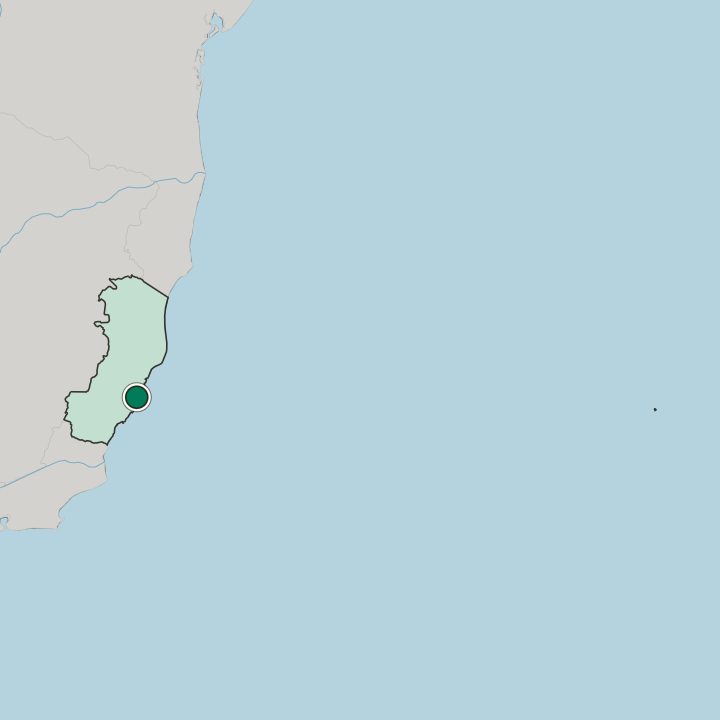
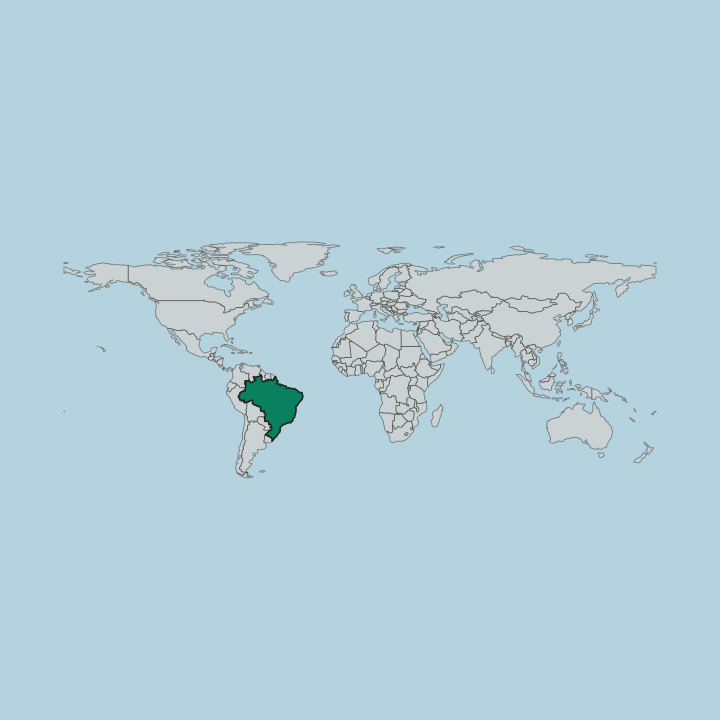
Vitória occupies an island in a bay on the coast of Espírito Santo, with the mainland wrapped around it on three sides. Granite is what shaped it. The Maciço Central rises out of the middle of the island and the Parque Estadual da Fonte Grande keeps forest on its flanks, while the Baía de Vitória takes in the Santa Maria da Vitória and the mangroves behind it, and the open Baía do Espírito Santo runs the sand of Camburi north to the piers at Tubarão.
Vila Velha lies over the channel.
What is the climate of Vitória?
Vitória takes its weather straight off the Atlantic. Heat sits on the island through the year, cut only by the wind that comes up the Baía do Espírito Santo in the afternoon and by the rain, which is heaviest from the end of spring into the new year. The dry months are the pleasant ones.
Cold fronts pushing up from the south flatten the heat for a few days in winter and stir the swell along Camburi, then the sun returns and the granite of the Maciço Central holds it until dark.
How do you get to Vitória?
Vitória is entered over water. Bridges tie the island to the mainland at both ends, and the highest of them, the Terceira Ponte, drops traffic from Vila Velha into Enseada do Suá. The BR-101 runs the length of the coast past the city, the BR-262 climbs west through Domingos Martins toward Belo Horizonte, and Eurico de Aguiar Salles airport sits at Goiabeiras on the northern shore.
Coaches leave from the rodoviária below the Cinco Pontes. The Vitória a Minas passenger train starts across the channel at Cariacica and runs all day up the valley to Belo Horizonte.
Common questions
What is the best area to stay in Vitória?
Centro: Palácio Anchieta, the cathedral and a bench in Parque Moscoso. Praia do Canto: Bar tables in the Triângulo das Bermudas. Enseada do Suá: Bayfront towers beside Cais das Artes. Jardim da Penha and Mata da Praia: A gridded quiet street ten minutes from Camburi. Ilha do Boi and Ilha do Frade: Wooded rock islets joined to the city by causeways. Jardim Camburi: The far end of the sand within sight of Tubarão.
Good for
More cities in Espírito Santo
Updated October 2026