Brazil
Espírito Santo, Brazil — Towns & Travel Guide
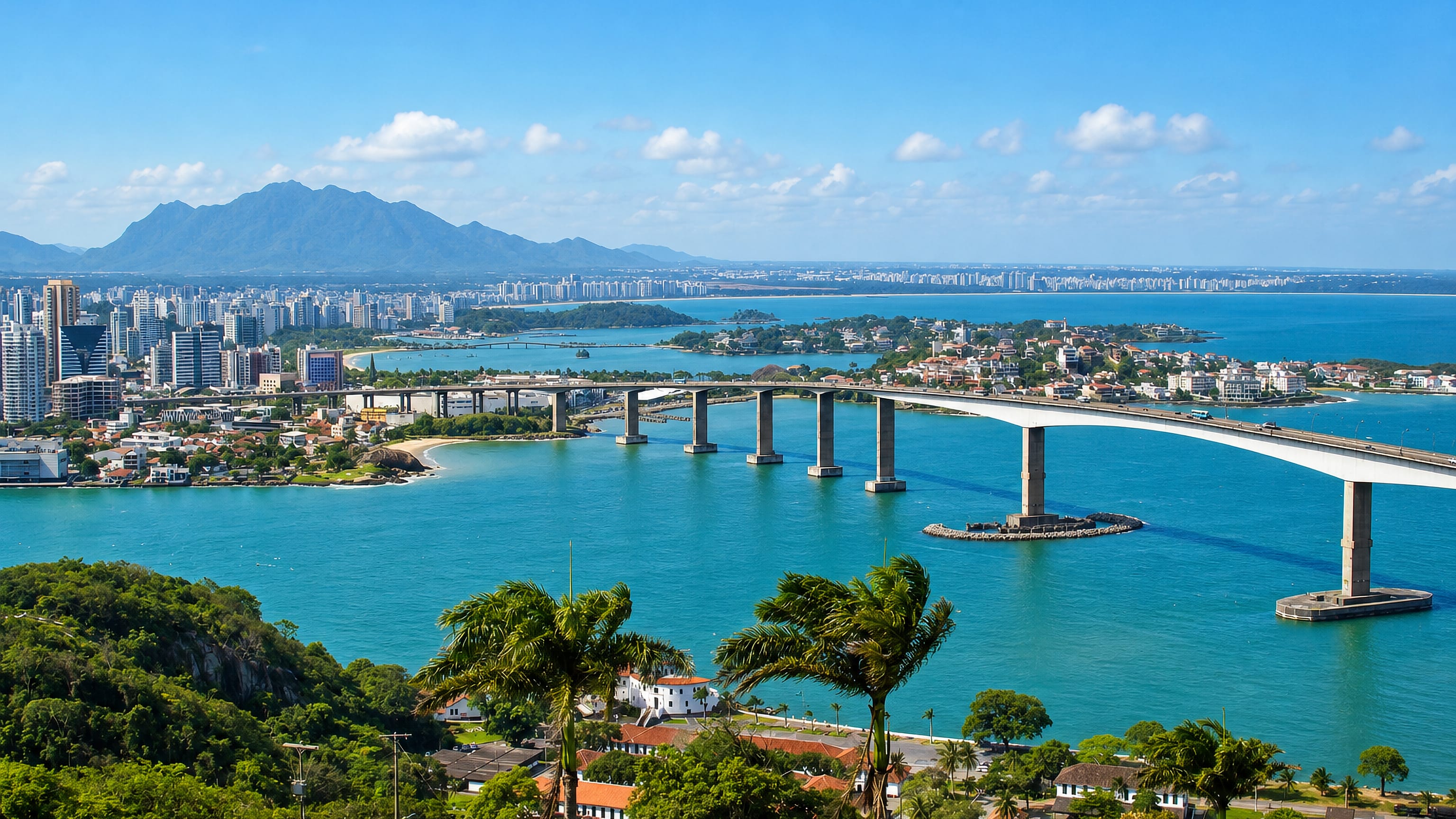
Espírito Santo is a coastal state on Brazil's Atlantic edge, its island capital Vitória wrapped by forested mountains and the sea.
Hotel links are affiliate links: booking through them may earn us a commission, at no extra cost to you. It never affects how places are ranked. How this works


Towns & cities in Espírito Santo
Pick a town or city — each links to where to stay.

 Brazil
Serra
Bigger than the capital next door. Serra fills the northern edge of Greater Vitória in central Espírito Santo, founded back in 1556.Where to stay →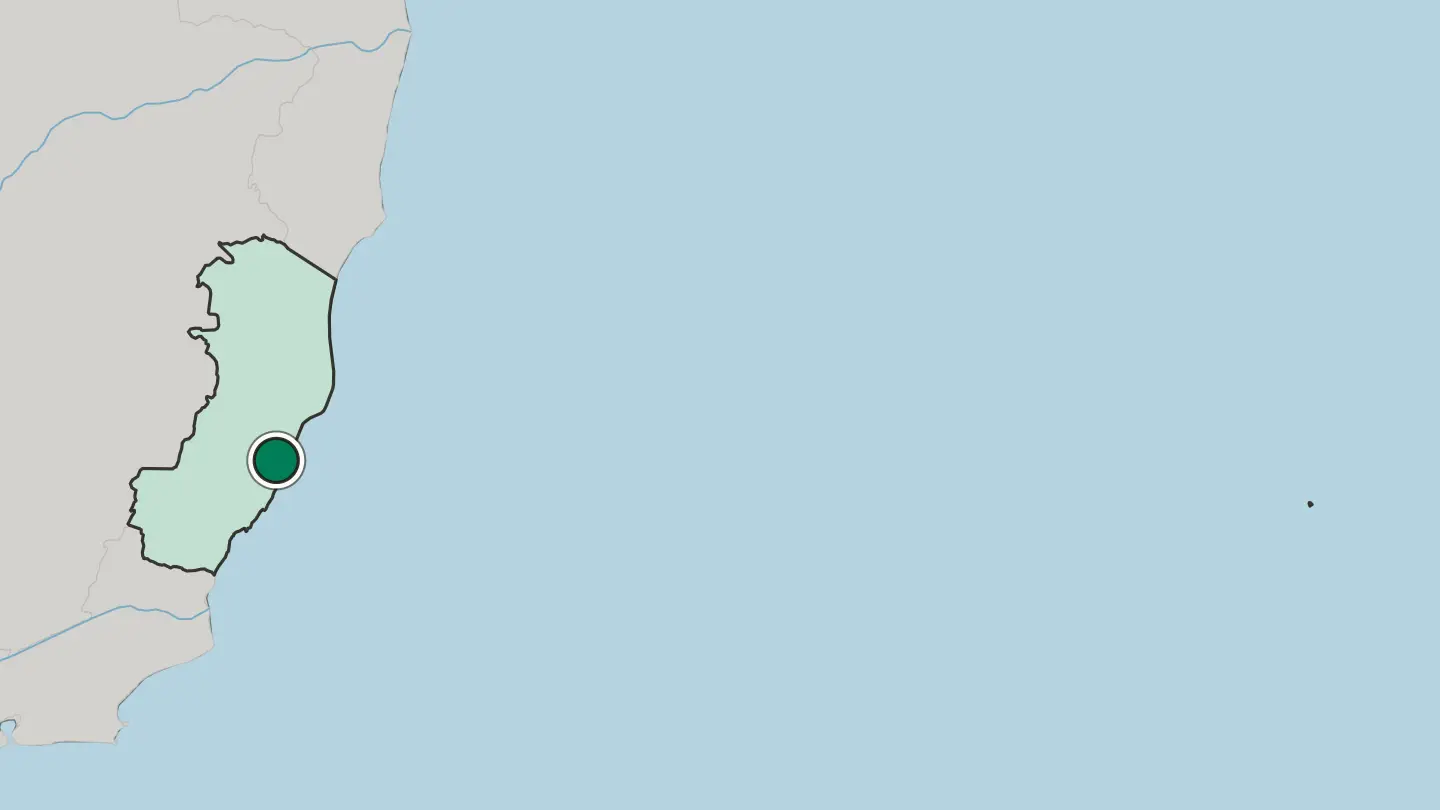
 Brazil
Vila Velha
Vila Velha means old village. It faces Vitória across the bay and has held the Espírito Santo coast since 1535.Where to stay →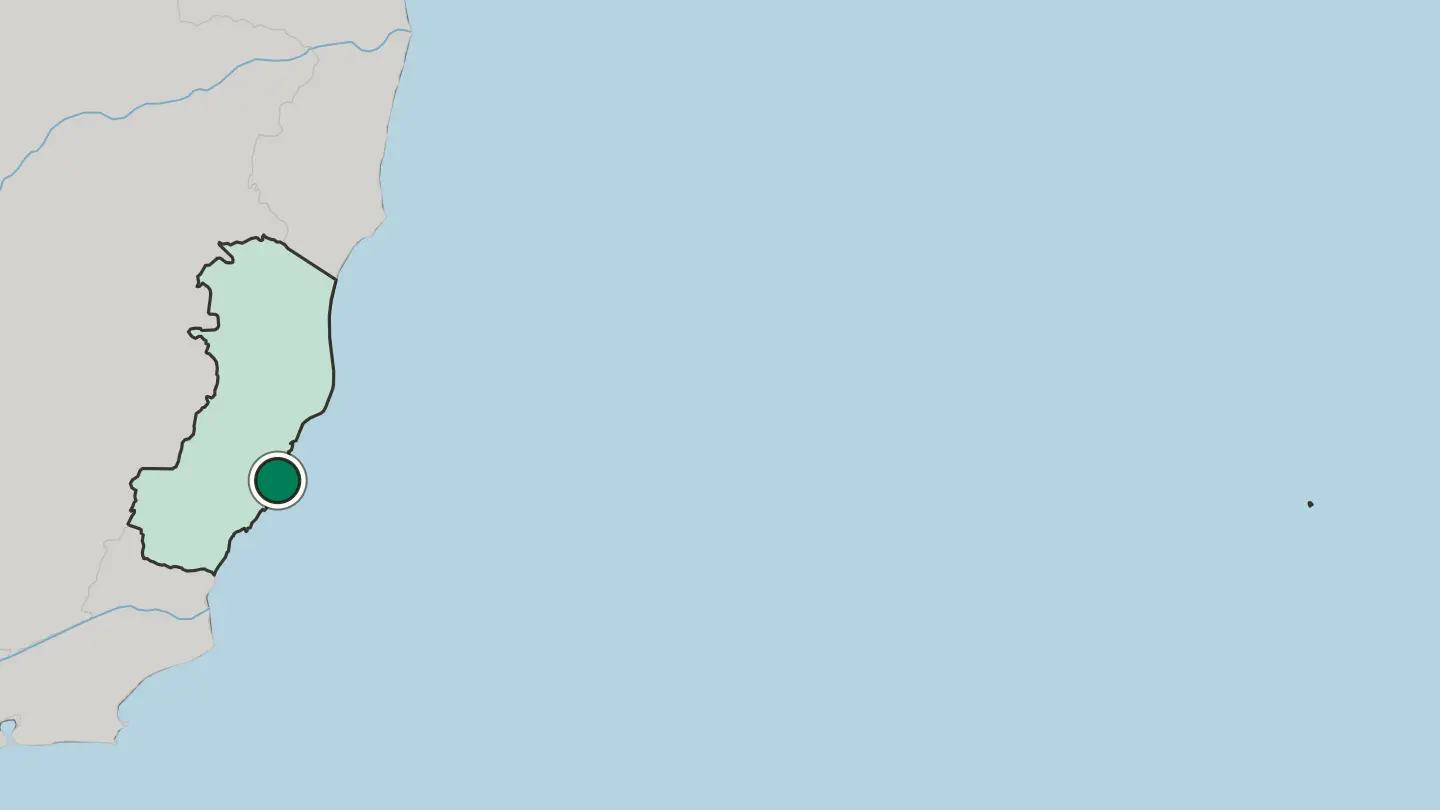
 Brazil
Vitória
Granite hills rise straight off the water in Vitória, an island capital in Espírito Santo, known for the Terceira Ponte and the sands of Camburi.Where to stay →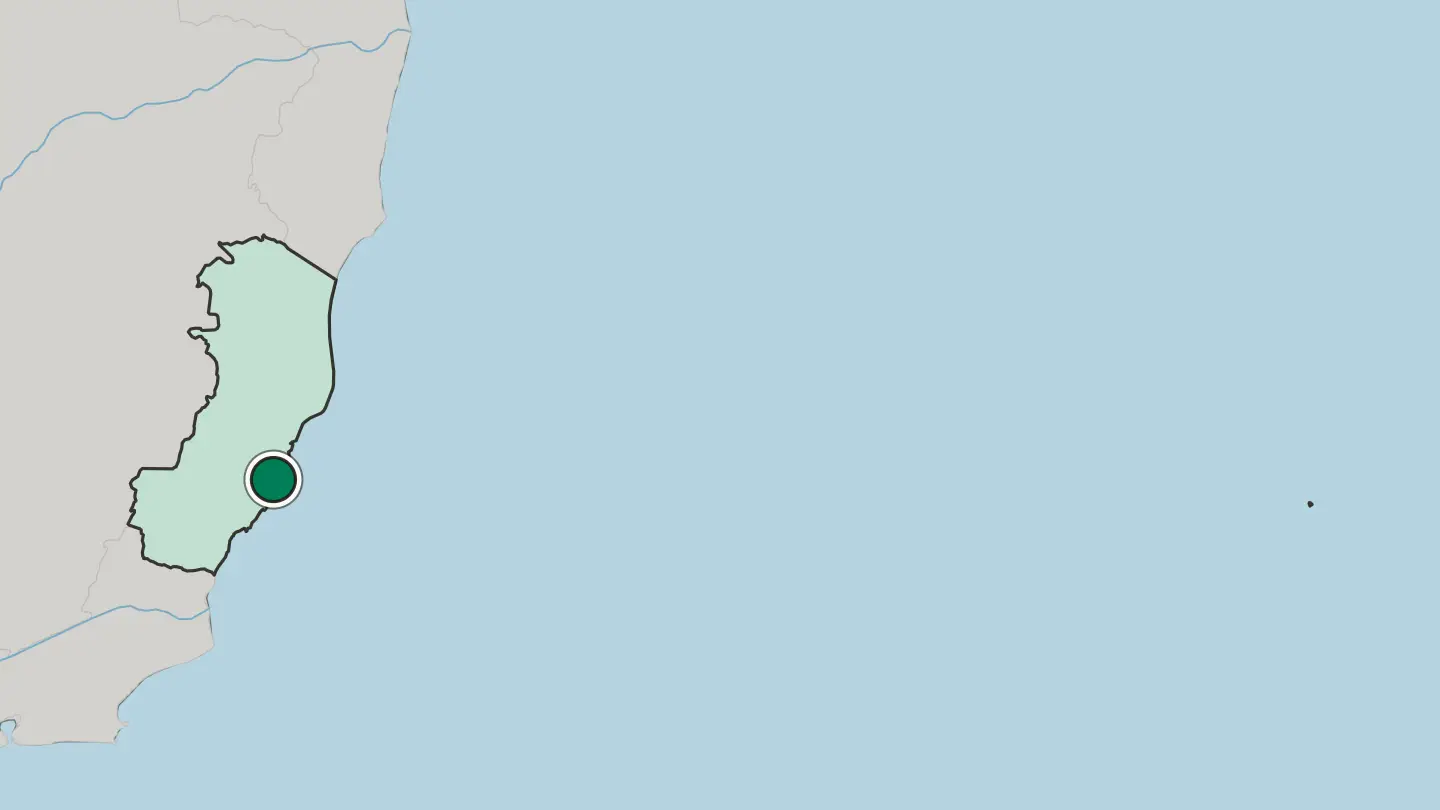
 Brazil
Cachoeiro de Itapemirim
Marble country. Cachoeiro de Itapemirim spreads along the Itapemirim River in southern Espírito Santo, Brazil's leading source of marble and granite.Where to stay →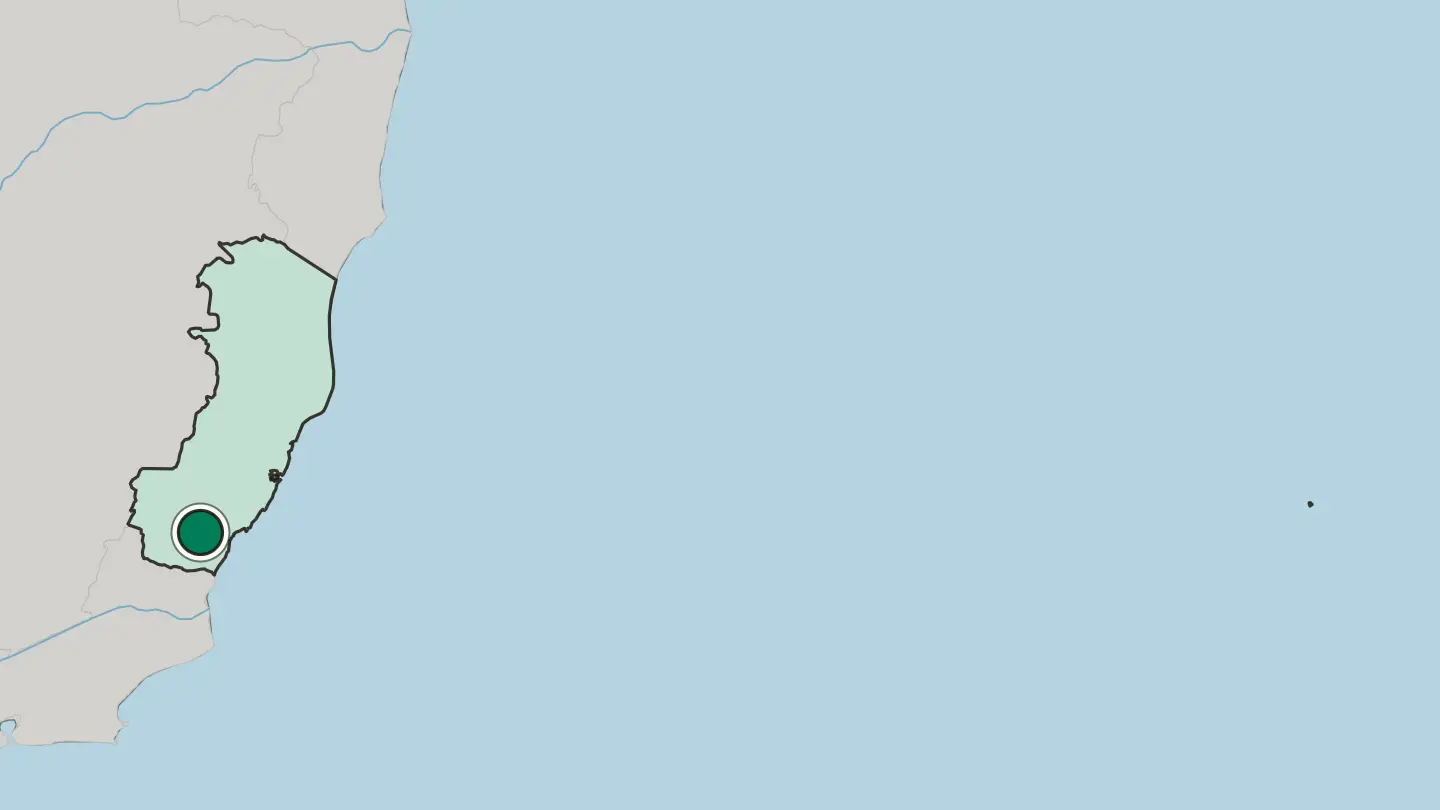
 Brazil
Guarapari
Old stone, old faith. Guarapari has stood in Espírito Santo since 1679, and its churches, ruins, and wells still fix the shape of the town.Where to stay →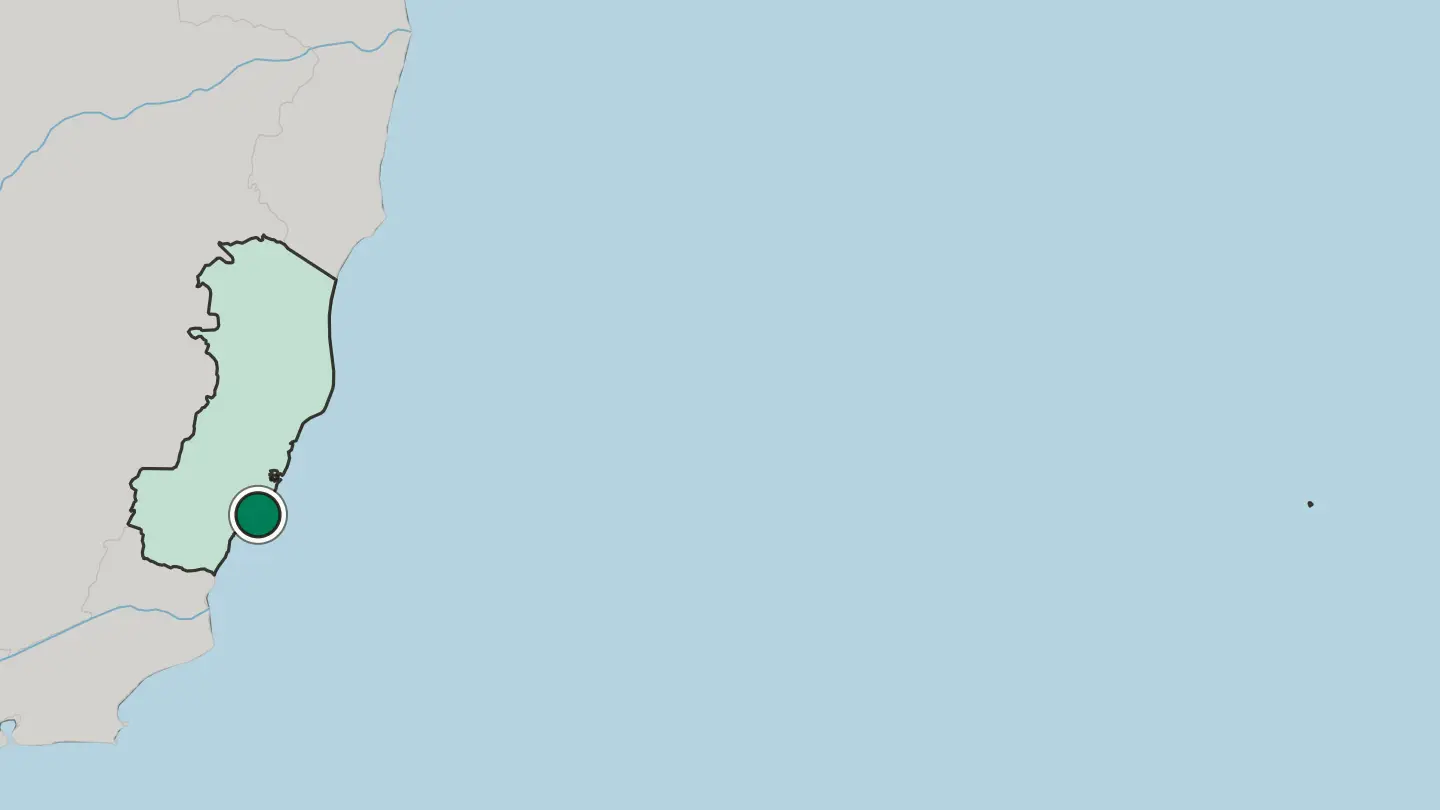
Hotel links are affiliate links: booking through them may earn us a commission, at no extra cost to you. It never affects how places are ranked. How this works
About Espírito Santo
What is Espírito Santo known for?
Espírito Santo is known for its Atlantic beaches and its coffee. Guarapari draws sun-seekers to dark monazite sands south of the capital. Inland, the Caparaó range climbs to Pico da Bandeira, one of Brazil's highest summits, and small mountain towns settled by Italian and Pomeranian families pour arabica coffee and pull polenta at their harvest fairs.
Over the bay from Vitória, the white Convento da Penha crowns its cliff above Vila Velha, the state's oldest pilgrimage site.
Where is Espírito Santo?
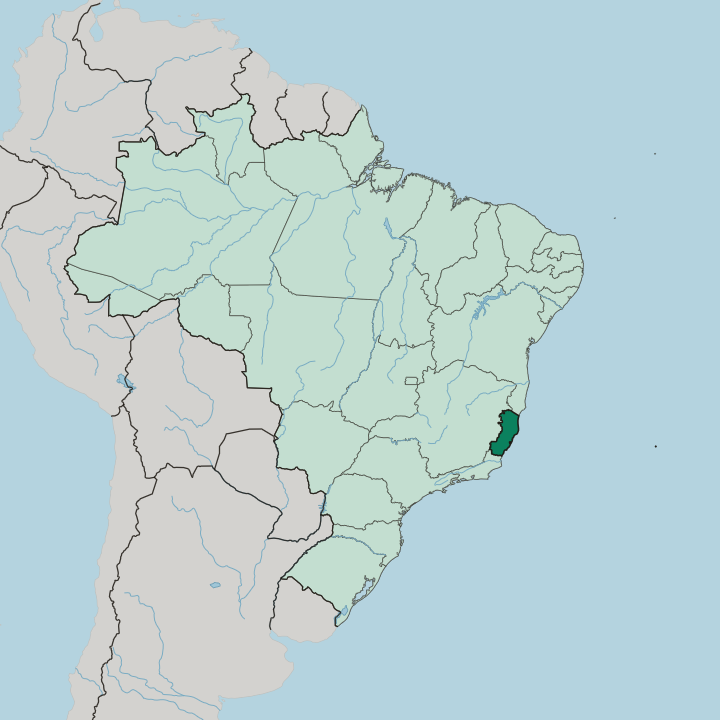
Espírito Santo runs along Brazil's Atlantic coast, a narrow state facing the ocean on its whole eastern edge. Bahia borders it to the north. Minas Gerais wraps the western and north-western interior, and Rio de Janeiro closes the state off to the south, where the Itapemirim and other rivers finish their run to the sea. The land rises as it leaves the water. A coastal plain of beaches, lagoons and mangroves gives way inland to hills and then to the Caparaó range on the Minas Gerais border, where Pico da Bandeira stands among the highest summits in the country.
Three rivers cross the state from the interior toward the Atlantic: the Doce in the north, the São Mateus above it, and the Itapemirim in the south. Vitória, the capital, sits on an island in a bay midway down the coast, wrapped by the mainland cities of Vila Velha, Serra and Cariacica. Far out in the ocean, the volcanic islands of Trindade and Martim Vaz belong to the state as well.
Much of the interior still carries the dense Atlantic Forest. The ocean is always close at hand. Every major river here empties east into the same ocean.
What is Espírito Santo like?
Espírito Santo feels more European in its hills than most of Brazil, and its people carry the name capixaba. Two-thirds of the state traces its roots to Italy, whose families settled the central and southern mountains from the 1870s onward and still farm coffee, press cheese and cure the pork sausage called socol. Their calendar keeps the old festivals.
Venda Nova do Imigrante holds the Festa da Polenta each year, tipping a vast sheet of cornmeal down a chute for the crowd. Higher in the ranges around Santa Maria de Jetibá and Domingos Martins live the Pomeranians, descendants of German-speaking settlers who arrived in the mid-1800s and kept their tongue; the state holds the largest community of East Pomeranian speakers left anywhere. African and Indigenous roots run through the coast in the drumming Bandas de Congo and in the food.
The signature dish is moqueca capixaba, a fish stew cooked in a black clay pot without the palm oil or coconut of the Bahian version, the pots themselves shaped by hand at Goiabeiras in the capital. Portuguese is the shared language. Underneath it, on a Sunday in the mountains, Italian dialect or Pomeranian still surfaces at the table.
What is the history of Espírito Santo?
The captaincy of Espírito Santo was one of the original grants of Portuguese Brazil, handed to the nobleman Vasco Fernandes Coutinho, who landed with his settlers in 1535 and named the colony for the Holy Spirit. The name marks Pentecost. His first seat at Vila Velha proved exposed to raids by the Tupiniquim and other peoples, so the capital shifted to a defensible island, where Vitória was founded in 1551.
Sugar, and later the coffee carried down from the Minas Gerais highlands, ran the economy for generations. Espírito Santo joined the Brazilian republic as a state in 1889.
What is the climate of Espírito Santo?
The coast of Espírito Santo runs hot and humid, tropical in every sense. Rain falls mostly in the southern-hemisphere summer, roughly from October to March, while the cooler months from May onward stay drier and easier along the beaches. Altitude rewrites all of that inland.
In the Caparaó range and around Pedra Azul the air turns cool and misty, and the high slopes near Pico da Bandeira can drop below freezing on winter nights in June and July. That mountain chill is what lets the region grow its prized arabica coffee. The ocean keeps the shore mild.
How do you get to Espírito Santo?
For most, arriving in Espírito Santo means a flight. The flights land at Vitória's Eurico de Aguiar Salles Airport, on the edge of the capital, connecting through the big hubs at São Paulo and Rio de Janeiro rather than direct from abroad. By land, the coastal BR-101 highway threads the whole state from Bahia in the north to Rio de Janeiro in the south, and long-distance buses follow it.
The mountain towns lie inland. They sit a short drive from Vitória. Ports at Vitória and Tubarão handle the iron ore and coffee.
Common questions
What is the best area to stay in Espírito Santo?
Vitória: arriving and the city beach. Vila Velha: beaches beside the capital. Guarapari: a beach-resort base south of Vitória. Pedra Azul and the mountains: mountain agrotourism and cooler air.
Good for
More regions in Brazil
Updated September 2026