Brazil · Rio de Janeiro
Where to Stay in Nova Iguaçu, Rio de Janeiro
Nova Iguaçu spreads across the Baixada Fluminense inside the metro area of Rio de Janeiro, a municipality of old fazendas and disused rail stations.
Hotel links are affiliate links: booking through them may earn us a commission, at no extra cost to you. It never affects how places are ranked. How this works


Where to stay in Nova Iguaçu
How the choice of base plays out on the ground.
The old core comes first. Conjunto Urbano da Extinta Vila de Iguaçu preserves the ground the municipality started from, and beds near the centre put the Igreja Santo Antônio de Jacutinga and the Instituto de Educação Rangel Pestana inside easy reach. Most rooms sit on that side, where the streets run dense rather than rural.
The Instituto de Pesquisas Afro Cultural Odé Gbomi and the Lar de Joaquina e Galpão give the built-up part of the municipality two stops worth walking to. The country end is different. Tinguá, Jaceruba and Vila de Cava lie out in the wider municipality, and the Reservatório de Rio D'Ouro stands along the same old rail route.
Beds thin out past the built-up edge. Igreja Nossa Senhora Conceição de Marapicu and the Capela Nossa Senhora de Guadalupe mark two more of the outlying parishes. Fazenda São Bernardino counts among the estates the municipality kept.
You want the centre for transport and the old Vila de Iguaçu ground, the outskirts only if a car and the rail relics are the point. Rio de Janeiro sits inside the same metro area, a short run from the Baixada Fluminense.
Find hotels in Nova Iguaçu
Direct booking searches for these neighbourhoods.
The old Vila de Iguaçu ground
Conjunto Urbano da Extinta Vila de Iguaçu holds the oldest built ground in the municipalityFind hotels in The old Vila de Iguaçu groundDrives out to the Reservatório de Rio D’Ouro and the closed stationsTowards Tinguá and Vila de Cava
Rural country at the far end of the municipality, where rooms are few. Beds are limited here, so book early.Find hotels in Towards Tinguá and Vila de CavaHotel links are affiliate links: booking through them may earn us a commission, at no extra cost to you. It never affects how places are ranked. How this works
Things to do in Nova Iguaçu
Ranked by global recognition; descriptions from Wikidata (CC0).
Museums & Galleries
1- Instituto de Pesquisas Afro Cultural Odé Gbomi
Churches & Religious Sites
3- Igreja Nossa Senhora Conceição de Marapicu Heritage
- Igreja Santo Antônio de Jacutinga Heritage
- Capela Nossa Senhora de Guadalupe Heritage
Landmarks & Notable Places
1- Lar de Joaquina e Galpão Heritage
worth knowingacross 3 categories in Nova Iguaçu
About Nova Iguaçu
Rail once ran through here.
What is Nova Iguaçu known for?
Four old stations survive at Jaceruba, Tinguá, Vila de Cava and Rio D'Ouro, each carrying the name of a settlement inside a municipality that covers 521 km2 of the Baixada Fluminense. Fazenda São Bernardino and the Capela da Fazenda da Posse carry the names of estates on this ground. Rio de Janeiro lies inside the same metro area.
What are the main landmarks in Nova Iguaçu?
Four disused stations head the list. Antiga Estação Ferroviária de Jaceruba, Antiga Estação Ferroviária de Tinguá, Antiga Estação de Vila de Cava and Antiga Estação Ferroviária de Rio D'Ouro all survive, along with the Reservatório de Rio D'Ouro. Parish churches make up much of the rest, among them Igreja Santo Antônio de Jacutinga, Igreja Nossa Senhora Conceição de Marapicu and the Capela Nossa Senhora de Guadalupe.
The Instituto de Pesquisas Afro Cultural Odé Gbomi, the Instituto de Educação Rangel Pestana and the Conjunto Urbano da Extinta Vila de Iguaçu close the list.
What is the history of Nova Iguaçu?
The municipality dates from 1833. The Conjunto Urbano da Extinta Vila de Iguaçu preserves what is left of the original Vila de Iguaçu, the settlement whose name the municipality still carries. Estates worked the land.
Fazenda São Bernardino and the Capela da Fazenda da Posse survive from that period, when this part of the Baixada Fluminense was farmed rather than built on. Two parish churches, Igreja Santo Antônio de Jacutinga and Igreja Nossa Senhora Conceição de Marapicu, carry the names of the districts around them. Then the railway came.
Stations opened at Jaceruba, Tinguá, Vila de Cava and Rio D'Ouro, and the Reservatório de Rio D'Ouro shares the name of the last of them. Every one of those stations is now recorded as a former station. The city that followed swallowed the farm country, and Nova Iguaçu ended up inside the metro area of Rio de Janeiro, in the Baixada Fluminense that spreads across the lowland of the state.
Instituto de Educação Rangel Pestana, the Lar de Joaquina e Galpão and the Instituto de Pesquisas Afro Cultural Odé Gbomi belong to that later, urban Nova Iguaçu.
Where is Nova Iguaçu?
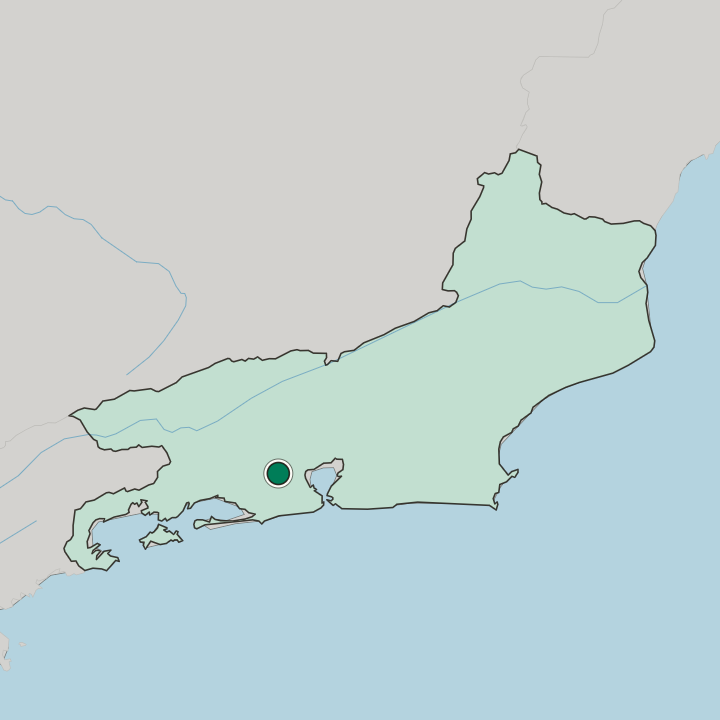
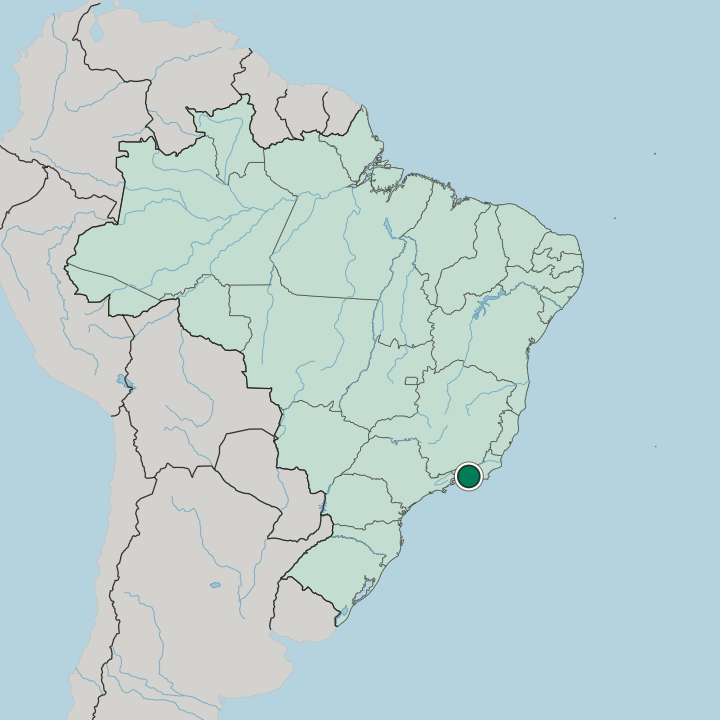
Lowland ground, not hills. Nova Iguaçu covers 521 km2 of the Baixada Fluminense, the flat country of Rio de Janeiro state, and the municipality runs from built-up streets out to the settlements at Tinguá and Jaceruba. A reservoir carries the name Rio D'Ouro.
This is tropical ground, and the year runs opposite the northern one.
What is the climate of Nova Iguaçu?
The Baixada Fluminense is low ground, and heat sits on it through the tropical year without the altitude that cools the hill towns of Rio de Janeiro state. Rain and heat move together. December through March is the hot stretch, and the middle of the year the mild one.
The metro area around Rio de Janeiro sees the same swing.
How do you get to Nova Iguaçu?
Everything arrives through Rio de Janeiro. Nova Iguaçu sits inside the metro area of that city, in the Baixada Fluminense, so the approach is a suburban one rather than a long haul across the state. The old line is finished.
Antiga Estação Ferroviária de Tinguá and Antiga Estação de Vila de Cava stand as reminders that trains once reached the far side of the municipality.
Common questions
What is the best area to stay in Nova Iguaçu?
The old Vila de Iguaçu ground: Transport links and the Igreja Santo Antônio de Jacutinga. Towards Tinguá and Vila de Cava: Drives out to the Reservatório de Rio D’Ouro and the closed stations.
Good for
More cities in Rio de Janeiro
Updated October 2026