Brazil · Rio de Janeiro
Where to Stay in Volta Redonda, Rio de Janeiro
Volta Redonda is a municipality of Rio de Janeiro state, named for the round curve of the Paraíba do Sul it was built around.
Hotel links are affiliate links: booking through them may earn us a commission, at no extra cost to you. It never affects how places are ranked. How this works


Where to stay in Volta Redonda
The practical side of choosing where to sleep.
Volta Redonda spreads over both banks of the Paraíba do Sul, and the river's loop, rather than any square or main street, is what separates one part of the city from another at booking time. Igreja de Santo Antônio anchors the older parish side. Rooms near it put the Memorial 9 de Novembro and the Monumento aos Ex-Combatentes within an easy walk, which suits you if the city's civic monuments are the reason for stopping here.
None of it is a long walk. Igreja Santa Cecília marks a second cluster, further back from the water. Beds around it trade the riverside for quiet, and the Museu da Memória do Trabalhismo Brasileiro sits close enough that a morning inside it costs almost nothing in travel.
The ground rises away from the river. Between the low bank and the higher ground the city climbs several hundred metres, so a hotel on the slopes and a hotel by the Paraíba do Sul are not the same stay at all. The Memorial Getúlio Vargas and the Memorial Zumbi dos Palmares stand apart from both clusters, and a stay chosen around them will be a walking stay rather than a waterside one.
Both banks carry beds. Igreja de Santo Antônio, the Museu da Memória do Trabalhismo Brasileiro, and the Monumento aos Ex-Combatentes fall on different sides of the loop, so which bank the room sits on sets the order of the day.
Find hotels in Volta Redonda
Direct booking searches for these neighbourhoods.
Around Igreja de Santo Antônio
Igreja de Santo Antônio and the memorial ground stand within a few streets of one anotherFind hotels in Around Igreja de Santo AntônioQuieter nights set back from the Paraíba do Sul bankThe Igreja Santa Cecília side
The Museu da Memória do Trabalhismo Brasileiro is a short walk from Igreja Santa CecíliaFind hotels in The Igreja Santa Cecília sideStays that accept the climb rather than the Paraíba do Sul waterfrontThe high ground above the loop
Volta Redonda rises several hundred metres from the river bank to its outer edges. Beds are limited here, so book early.Find hotels in The high ground above the loopHotel links are affiliate links: booking through them may earn us a commission, at no extra cost to you. It never affects how places are ranked. How this works
Things to do in Volta Redonda
Ranked by global recognition; descriptions from Wikidata (CC0).
Museums & Galleries
1- Museu da Memória do Trabalhismo Brasileiro
Churches & Religious Sites
2- Igreja de Santo Antônio (Volta Redonda) Heritage
- Igreja Santa Cecília Heritage
Castles & Historic Sites
2- Monumento aos Ex-Combatentes Heritage
- Memorial 9 de Novembro
worth knowingacross 3 categories in Volta Redonda
About Volta Redonda
The river bend named the place.
What is Volta Redonda known for?
Volta Redonda grew inside a rounded curve of the Paraíba do Sul, and the municipality's name records the round shape of the bend that its first streets were laid around. Memorials do much of the public work here: the Memorial 9 de Novembro, the Memorial Getúlio Vargas, and the Memorial Zumbi dos Palmares each fix a different strand of civic memory. The Museu da Memória do Trabalhismo Brasileiro carries the labour side.
What are the main landmarks in Volta Redonda?
Volta Redonda keeps its landmarks in two registers. Churches account for the first: Igreja de Santo Antônio and Igreja Santa Cecília. Memorials account for the second, and the Memorial 9 de Novembro, the Memorial Getúlio Vargas, and the Memorial Zumbi dos Palmares each carry a separate name into the streets rather than sharing one civic square between them.
The Monumento aos Ex-Combatentes stands for veterans. Indoors, the Museu da Memória do Trabalhismo Brasileiro is the city's own museum of Brazilian labour politics.
What is the history of Volta Redonda?
Volta Redonda is young as Brazilian cities go. Its municipal life begins in 1954, which is recent enough that the founding sits within living memory rather than being reconstructed from archives, and the shape of the place still reads as planned rather than accumulated. The bend did the naming.
A rounded curve in the Paraíba do Sul gave the site both its outline and the name the municipality carries. Public memory here is unusually explicit. The Memorial Getúlio Vargas fixes one national figure in the streets, while the Memorial Zumbi dos Palmares names another out of a far older Brazilian past.
Two strands, one city. The Museu da Memória do Trabalhismo Brasileiro takes the labour movement as its subject, a choice that says something about which history Volta Redonda considers its own. Other markers fill in around them.
The Memorial 9 de Novembro carries a date in its name, and the Monumento aos Ex-Combatentes belongs to returning veterans rather than to any founder. Churches complete the roll: Igreja de Santo Antônio and Igreja Santa Cecília give the parishes their fixed points in a city otherwise built to a plan. Rio de Janeiro state surrounds all of it.
Bare river bank before the middle of the last century, the site carries a municipality with its own museums, memorials, and monuments.
Where is Volta Redonda?
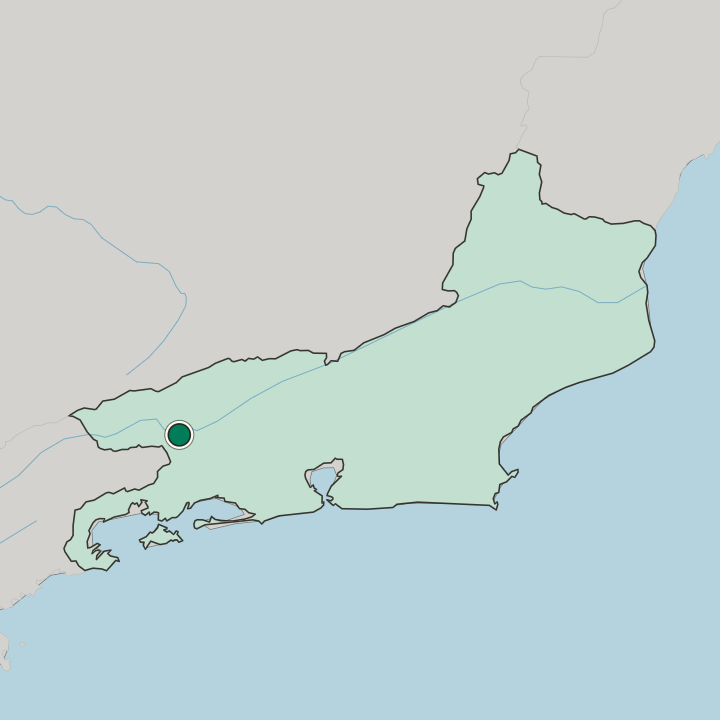
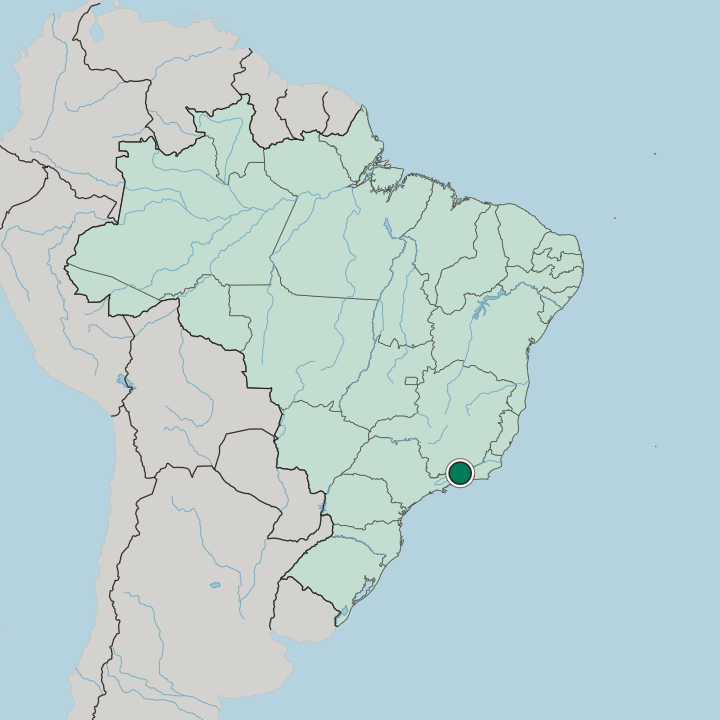
Volta Redonda occupies a stretch of the Paraíba do Sul valley inside Rio de Janeiro state. The river's rounded curve is the defining feature of the site, and the built-up area wraps around it instead of running straight along one bank the way most river towns do. Relief matters here.
Ground within the municipality ranges from a little over three hundred metres near the water to some seven hundred on the higher edges, so slope is a constant of moving about.
What is the climate of Volta Redonda?
Elevation does the tempering at Volta Redonda. The city lies well inside the tropics, yet the Paraíba do Sul valley here runs several hundred metres above sea level, and that height takes the hardest edge off the heat the same tropical band delivers nearer the coast. Southern-hemisphere timing applies.
Warmth peaks around the turn of the year and eases through the middle months, the reverse of the pattern most northern visitors carry with them.
How do you get to Volta Redonda?
Approach follows the Paraíba do Sul. The valley the river cuts through Rio de Janeiro state is the natural overland corridor, and the way into Volta Redonda follows it rather than crossing the higher ground that rings the municipality on either side. Buses and cars come up that corridor into Volta Redonda.
Once inside, the climb from the river bank to the upper edges runs several hundred metres, enough that the choice between a riverside address and a hillside one changes every journey across town.
Common questions
What is the best area to stay in Volta Redonda?
Around Igreja de Santo Antônio: Walking days built around the Memorial 9 de Novembro and the Monumento aos Ex-Combatentes. The Igreja Santa Cecília side: Quieter nights set back from the Paraíba do Sul bank. The high ground above the loop: Stays that accept the climb rather than the Paraíba do Sul waterfront.
Good for
More cities in Rio de Janeiro
Updated October 2026