Germany · Mecklenburg-Western Pomerania
Where to Stay in Neubrandenburg, Mecklenburg-Western Pomerania
Neubrandenburg dates from 1248 and stands on the Tollensesee, the urban centre of the Mecklenburg Lakeland, with the Marienkirche over its old core.
Hotel links are affiliate links: booking through them may earn us a commission, at no extra cost to you. It never affects how places are ranked. How this works


Where to stay in Neubrandenburg
Where the beds are, and what that means for the visit.
The old core is the default base. Rooms inside it reach the Marienkirche, the Kunstsammlung Neubrandenburg and the Neubrandenburg Regional Museum on foot, and the Franziskanerkloster and St. Georg sit within the same short circuit. St. Johannis stands in the same quarter.
The Tollensesee changes that. A room on the shore puts the Mecklenburg Lakeland first and the old core second, which is the right trade for anyone here to swim, walk or take a boat rather than to look at buildings. Both sides are small.
Broda pulls out of town. Kloster Broda and the Prämonstratenserstift Broda bei Neubrandenburg stand away from the centre, and a bed near them suits a visit organised around the monastic sites rather than the shopping streets. Height is the other option.
The Behmshöhe Observation tower marks the rise above the built-up area, and rooms up there swap the noise of the old core for a longer walk in. Ravensburg and the Meilenstein round out the list of places worth the detour, and the Karl-Marx-Denkmal, the Fritz-Reuter-Monument and the Brigitte-Reimann-Literaturhaus each argue for a base close to the middle.
Find hotels in Neubrandenburg
Direct booking searches for these neighbourhoods.
The old core by the Marienkirche
The Marienkirche, St. Johannis and the Kunstsammlung Neubrandenburg stand inside the old core, the part of Neubrandenburg that walks best.Find hotels in The old core by the MarienkircheSwimmers and walkers who want the Tollensesee outside the doorThe Tollensesee shore
The Tollensesee runs along one side of the city, and a room near the water puts the Mecklenburg Lakeland ahead of the museums.Find hotels in The Tollensesee shoreStays built around Kloster Broda and the Prämonstratenserstift BrodaTowards Broda
Kloster Broda and the Prämonstratenserstift Broda bei Neubrandenburg sit apart from the centre, which suits visitors following the monastic sites rather than the shops.Find hotels in Towards BrodaWalkers heading for the Behmshöhe Observation towerUnder the Behmshöhe
The Behmshöhe Observation tower holds the high point on this side of Neubrandenburg, away from the traffic of the old core.Find hotels in Under the BehmshöheHotel links are affiliate links: booking through them may earn us a commission, at no extra cost to you. It never affects how places are ranked. How this works
Things to do in Neubrandenburg
Ranked by global recognition; descriptions from Wikidata (CC0).
Museums & Galleries
3- Brigitte-Reimann-Literaturhaus Heritage
- Neubrandenburg Regional Museum
- Kunstsammlung Neubrandenburg
Churches & Religious Sites
4- Marienkirche Heritage
- St. Johannis Heritage
- Franziskanerkloster Heritage
- St. Georg Heritage
Castles & Historic Sites
3- Ravensburg Heritage
- Karl-Marx-Denkmal
- Meilenstein
worth knowingacross 3 categories in Neubrandenburg
About Neubrandenburg
The Tollensesee is the reason most people come.
What is Neubrandenburg known for?
Neubrandenburg works as the urban centre of the Mecklenburg Lakeland, so a stay here mixes open water with an old core in a way that neither the lake villages nor a larger city could offer. Literature has a foothold too. The Brigitte-Reimann-Literaturhaus, the Literaturzentrum Neubrandenburg and the Fritz-Reuter-Monument give the city a literary line, while the Kunstsammlung Neubrandenburg and the Neubrandenburg Regional Museum cover art and local history.
What are the main landmarks in Neubrandenburg?
The Marienkirche is the landmark of the old core. St. Johannis and the Franziskanerkloster carry the medieval church buildings, with St. Georg beyond them. Monuments make a second group: the Karl-Marx-Denkmal, the Fritz-Reuter-Monument and the Meilenstein.
Collections follow. The Kunstsammlung Neubrandenburg, the Neubrandenburg Regional Museum and the Brigitte-Reimann-Literaturhaus hold art, local history and literature between them, while Ravensburg and the Behmshöhe Observation tower stand outside the built-up middle.
What is the history of Neubrandenburg?
Neubrandenburg was founded in 1248. The town grew beside the water from the beginning, and the Tollensesee has shaped its outline ever since. The Marienkirche and St. Johannis belong to the centuries that followed, and the Franziskanerkloster records a friary inside the medieval town.
Broda is older ground. Kloster Broda and the Prämonstratenserstift Broda bei Neubrandenburg name a religious house on the edge of the modern city, and Ravensburg carries another name from outside the centre. St. Georg stands apart as well.
Two writers give the city its literary record. The Fritz-Reuter-Monument and the Brigitte-Reimann-Literaturhaus stand for that side of Neubrandenburg, and the Literaturzentrum Neubrandenburg keeps it working rather than purely commemorative. The Karl-Marx-Denkmal belongs to a different century from the Franziskanerkloster, and the two stand in the same city without explaining each other.
What is left sits in the museums. The Neubrandenburg Regional Museum and the Kunstsammlung Neubrandenburg hold the documentary and the artistic sides of a record that runs from 1248 onwards. The Meilenstein and the Behmshöhe Observation tower are smaller markers of the same long occupation of this shore.
Neubrandenburg has held its position at the head of the Mecklenburg Lakeland throughout.
Where is Neubrandenburg?
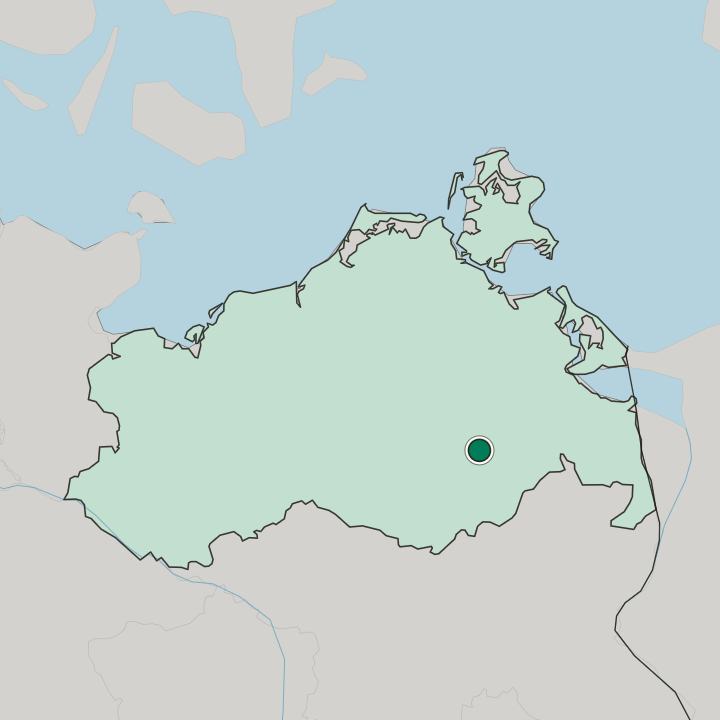
Water sits at the city's edge. The Tollensesee stretches away from Neubrandenburg into the Mecklenburg Lakeland, a country of lakes that gives the region its name and the city its role as the urban centre among them. Broda lies beyond the built-up ground.
The Behmshöhe Observation tower holds the high point, and Ravensburg marks another name outside the middle of the city.
What is the climate of Neubrandenburg?
The Tollensesee moderates the city's air. Water on that scale slows the swing between seasons, so Neubrandenburg holds its warmth a little longer into autumn than the open country of the Mecklenburg Lakeland behind it. Mist comes with it.
Mornings over the lake can stay grey well after the old core has cleared, and the temperate band the city sits in keeps winters cold rather than severe.
How do you get to Neubrandenburg?
Neubrandenburg is the road hub of its region. Traffic through the Mecklenburg Lakeland converges on the city because it is the urban centre among the lakes, which makes it the practical arrival point for a trip built on the water. The old core walks easily.
The Marienkirche, the Kunstsammlung Neubrandenburg and the Neubrandenburg Regional Museum sit inside one circuit, while Kloster Broda, Ravensburg and the Behmshöhe Observation tower need wheels or a long walk. A boat covers more of the Tollensesee than any road around the shore.
Common questions
What is the best area to stay in Neubrandenburg?
The old core by the Marienkirche: Guests who want the Marienkirche and the Kunstsammlung Neubrandenburg on foot. The Tollensesee shore: Swimmers and walkers who want the Tollensesee outside the door. Towards Broda: Stays built around Kloster Broda and the Prämonstratenserstift Broda. Under the Behmshöhe: Walkers heading for the Behmshöhe Observation tower.
Good for
More cities in Mecklenburg-Western Pomerania
Updated October 2026