Germany · Mecklenburg-Western Pomerania
Where to Stay in Universitäts- und Hansestadt Greifswald, Mecklenburg-Western Pomerania
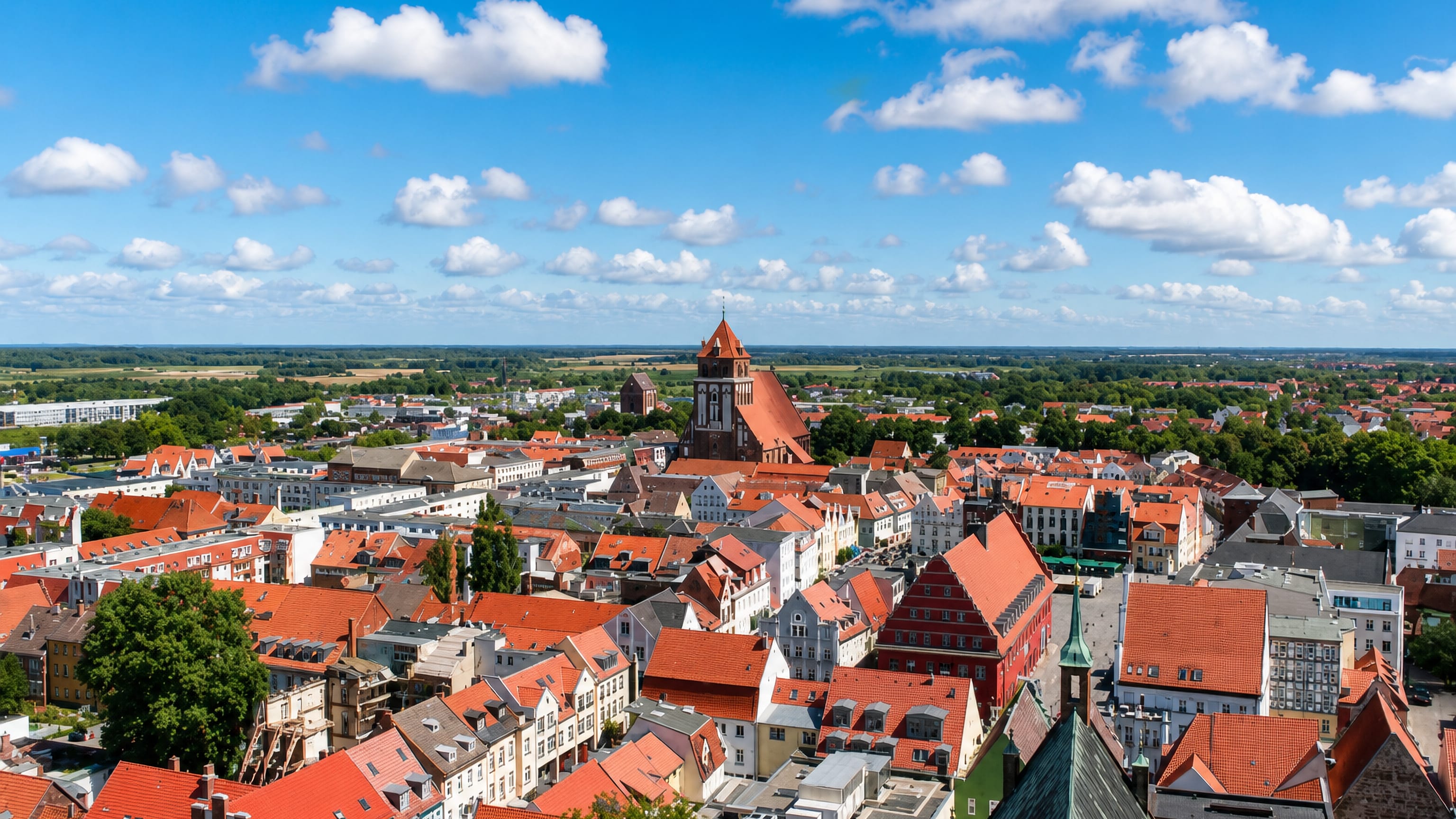
Greifswald is a university and Hanseatic city in Mecklenburg-Western Pomerania, with three medieval brick churches and a museum harbour on the water.
Hotel links are affiliate links: booking through them may earn us a commission, at no extra cost to you. It never affects how places are ranked. How this works


Where to stay in Universitäts- und Hansestadt Greifswald
The right area depends on your trip — here's what each neighbourhood is best for.

 Universitäts- und Hansestadt GreifswaldGermany
Ostseeviertel
The Ostseeviertel is a district of Greifswald on both sides of the Wolgaster Straße, its oldest part the city's first large housing estate, begun in 1956.Where to stay → Universitäts- und Hansestadt GreifswaldGermany
Wieck
Eldena Abbey stands here. Wieck is a quarter of Greifswald whose landmark list also names the Bugenhagenkirche.Where to stay →Hotel links are affiliate links: booking through them may earn us a commission, at no extra cost to you. It never affects how places are ranked. How this works
Find hotels in Universitäts- und Hansestadt Greifswald
Direct booking searches for these neighbourhoods.
Around Saint Nikolai
Saint Mary, Saint Jacobi, the Fangenturm, and the Pomeranian State Museum all within a few minutes on footFind hotels in Around Saint NikolaiAnyone who wants the Greifswald quays as the viewThe Museum harbour side
Streets that open straight onto the water at the Museum harbour Greifswald. Lodging is scarce in this area; reserve in advance.Find hotels in The Museum harbour sideDrivers heading for the Tierpark Greifswald and the Freizeitbad GreifswaldTowards the Tierpark
Simpler parking where the town runs out towards Neuenkirchen and WeitenhagenFind hotels in Towards the TierparkHotel links are affiliate links: booking through them may earn us a commission, at no extra cost to you. It never affects how places are ranked. How this works
Things to do in Universitäts- und Hansestadt Greifswald
Ranked by global recognition; descriptions from Wikidata (CC0).
Museums & Galleries
3- Pomeranian State Museum
- Akademische Kunstsammlung der Universität Greifswald
- Geburtshilflich-Gynäkologische Sammlung der Klinik und Poliklinik für Frauenheilkunde und Geburtshilfe
Churches & Religious Sites
7- Eldena Abbey Heritage
- St. Nikolai, Greifswald Heritage
- St. Mary's, Greifswald Heritage
- St. Jacobi church (Greifswald) Heritage
- Bugenhagenkirche (Greifswald-Wieck) Heritage
Show 2 more →
- Church in Weitenhagen Heritage
- Dorfkirche Neuenkirchen Heritage
Castles & Historic Sites
1- Caspar-David-Friedrich-Denkmal
Landmarks & Notable Places
1- Fangenturm
worth knowingacross 4 categories in Universitäts- und Hansestadt Greifswald
About Universitäts- und Hansestadt Greifswald
What is Universitäts- und Hansestadt Greifswald known for?
Three medieval churches, Saint Nikolai, Saint Mary, and Saint Jacobi, set the skyline of Greifswald, and the university holdings gathered as the Akademische Kunstsammlung der Universität Greifswald give the town a second, quieter register. Brick dominates. The Pomeranian State Museum holds the collections of the wider Vorpommern region.
A monument in the centre, the Caspar-David-Friedrich-Denkmal, carries the name of Caspar David Friedrich, while the Museum harbour Greifswald opens the town onto the water.
What are the main landmarks in Universitäts- und Hansestadt Greifswald?
Brick towers first. Saint Nikolai, Saint Mary, and Saint Jacobi stand as the three medieval churches of Greifswald, and the Fangenturm, the Dominikanerkloster Greifswald, and the Franziskanerkloster Greifswald fill out what the Middle Ages left. The Pomeranian State Museum and the Botanical Museum Greifswald cover the indoor half of a visit.
The Caspar-David-Friedrich-Denkmal keeps one name in view. Families head for the Tierpark Greifswald and the Freizeitbad Greifswald, and the Museum harbour Greifswald holds the waterfront end of the list.
What is the history of Universitäts- und Hansestadt Greifswald?
The record starts in 1199. Greifswald grew as a Hanseatic town, and its brick churches, Saint Nikolai, Saint Mary, and Saint Jacobi, remain the plainest survivals of the medieval centuries, with the Fangenturm standing among them. Water carried the early trade, and the Museum harbour Greifswald still marks the working edge of the town.
Two monastic houses stood here as well: the Dominikanerkloster Greifswald, still called the Schwarzes Kloster, and the Franziskanerkloster Greifswald. Both names still stick. Teaching turned Greifswald into a town of collections, and the Akademische Kunstsammlung der Universität Greifswald, the Anatomische Sammlung, and the Geologische Landessammlung Vorpommern all grew out of that habit.
The double title of Universitäts- und Hansestadt Greifswald records both halves of that past, the trading town and the teaching one, in a single official name. Maps went the same way, into the Historisch-geografische Kartensammlung. The Gustaf-Dalmann-Institut holds another such collection, and the Botanical Museum Greifswald keeps the plant record of the district in its own building.
Later the Pomeranian State Museum drew the regional record together under one roof, and the Caspar-David-Friedrich-Denkmal fixed the name of Caspar David Friedrich in the streets. The brick stayed put.
Where is Universitäts- und Hansestadt Greifswald?
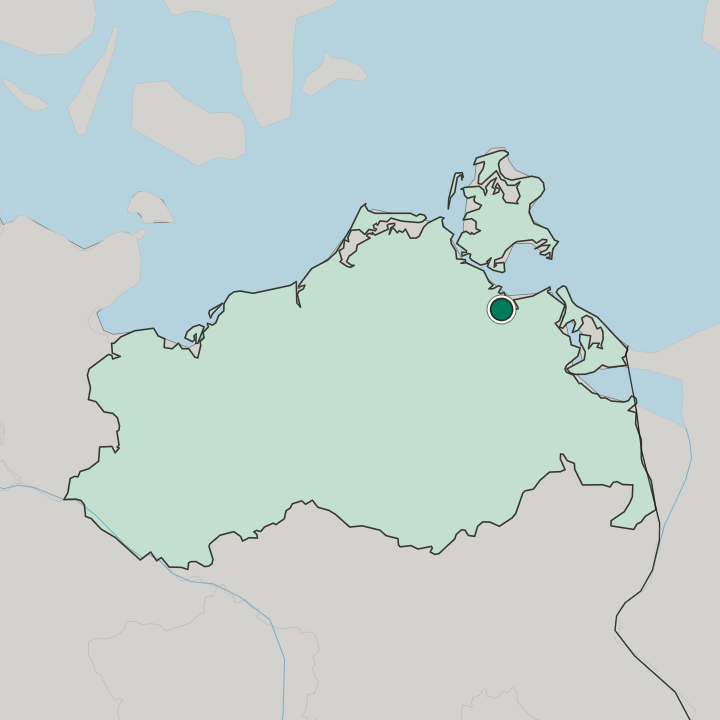
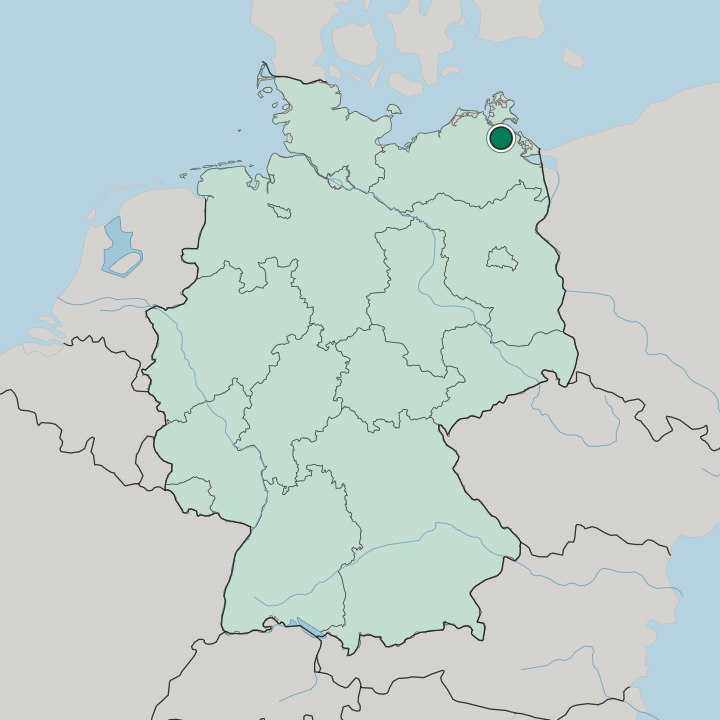
Greifswald stands in Mecklenburg-Western Pomerania, close enough to the water that the Museum harbour Greifswald sits inside the town rather than apart from it, with Neuenkirchen and Weitenhagen lying just beyond the last streets. Nothing lies far apart. Dorfkirche Neuenkirchen and the church in Weitenhagen mark the two nearest village settlements.
Church towers rather than terrain give Greifswald its outline, with Saint Nikolai, Saint Mary, and Saint Jacobi visible above the roofs from most of the older streets.
What is the climate of Universitäts- und Hansestadt Greifswald?
Water sets the terms. Air moving off the water past the Museum harbour Greifswald narrows the gap between the seasons, so cold months tend to arrive damp and grey rather than hard, and summer heat rarely settles for long. Rain spreads across the year in this temperate band rather than falling in one season.
Wind along the quays is the constant complaint.
How do you get to Universitäts- und Hansestadt Greifswald?
Roads in from Neuenkirchen and Weitenhagen bring drivers past village churches before the brick towers of Greifswald come into view, and the centre is compact enough that most arrivals finish on foot. Walking covers the core. Boats tie up at the Museum harbour Greifswald.
Anyone driving finds the easier parking out towards the Tierpark Greifswald and the Freizeitbad Greifswald, away from the streets around Saint Nikolai.
Common questions
What is the best area to stay in Universitäts- und Hansestadt Greifswald?
Around Saint Nikolai: Guests whose day starts on the Greifswald market square. The Museum harbour side: Anyone who wants the Greifswald quays as the view. Towards the Tierpark: Drivers heading for the Tierpark Greifswald and the Freizeitbad Greifswald.
Good for
More cities in Mecklenburg-Western Pomerania
Updated October 2026