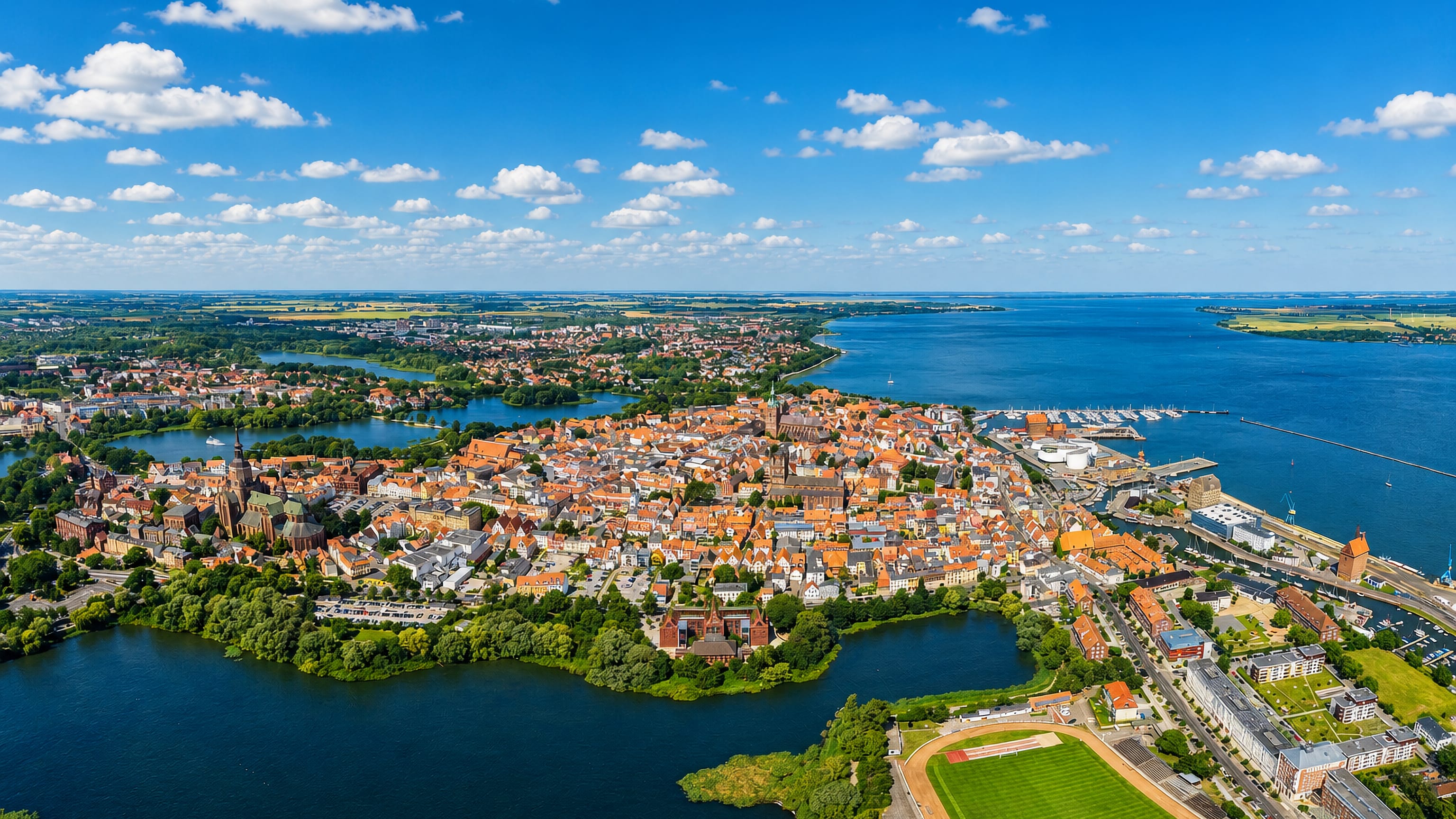
Germany · Mecklenburg-Western Pomerania
Where to Stay in Stralsund, Mecklenburg-Western Pomerania
Stralsund is a harbour city of Mecklenburg-Western Pomerania, chartered in 1234, where the Ozeaneum and the German Maritime Museum face the water.
Hotel links are affiliate links: booking through them may earn us a commission, at no extra cost to you. It never affects how places are ranked. How this works


Where to stay in Stralsund
One neighbourhood here has its own guide — here's what it is best for.

 StralsundGermany
Tribseer Vorstadt
Tribseer Vorstadt is the Stralsund district that holds the Zoo Stralsund and the Lutherkirche. Listed addresses fill the rest.Where to stay →Hotel links are affiliate links: booking through them may earn us a commission, at no extra cost to you. It never affects how places are ranked. How this works
Find hotels in Stralsund
Direct booking searches for these neighbourhoods.
The old town by Katharinenkirche
Katharinenkirche and the Stralsund Museum of Cultural History stand within the same few streets as the harbour frontFind hotels in The old town by KatharinenkircheLonger stays wanting Frankenstraße space over old-town cobblesFrankenstraße and the Carl-Heydemann-Ring
The Carl-Heydemann-Ring, the Jungfernstieg, and the Alte Richtenberger Straße hold the later housing outside the medieval coreFind hotels in Frankenstraße and the Carl-Heydemann-RingVisitors making for the Marinemuseum Dänholm and the crossingDänholm and Altefähr
Dänholm carries the Marinemuseum and the Nautineum Stralsund, with Altefähr facing the town from the far shoreFind hotels in Dänholm and AltefährHotel links are affiliate links: booking through them may earn us a commission, at no extra cost to you. It never affects how places are ranked. How this works
Things to do in Stralsund
Ranked by global recognition; descriptions from Wikidata (CC0).
Museums & Galleries
2- German Maritime Museum Heritage
- Nautineum Stralsund
Churches & Religious Sites
8- St. Mary's Church Heritage
- St. Nicholas' Church Heritage
- St.-Jakobi-Kirche (Stralsund) Heritage
- Johanniskloster Heritage
- St Katharinen in Stralsund Heritage
Show 3 more →
- Katharinenkirche Heritage
- Mariakron Abbey Heritage
- St. Nikolai (Altefähr) Heritage
Castles & Historic Sites
2- Schill-Denkmal
- Ernst Thälmann Monument Stralsund
Landmarks & Notable Places
1- Frankenstraße 39 (Stralsund) Heritage
worth knowingacross 4 categories in Stralsund
About Stralsund
The sea runs through the museums.
What is Stralsund known for?
The Ozeaneum, the German Maritime Museum, and the Nautineum Stralsund each take a different part of it, and together they give a compact centre three separate maritime collections. Older walls carry the rest: Katharinenkirche, the Johanniskloster, and the Apollonienkapelle stand among the streets. Zoo Stralsund fills the day out.
What are the main landmarks in Stralsund?
Churches set the shape of the old town. The Ozeaneum draws the crowds, but the tower of St. Mary's Church still governs every approach to the centre, and the Stralsund Museum of Cultural History keeps the older story indoors. Katharinenkirche anchors the medieval end.
Outside the centre, the Marinemuseum Dänholm, the Nautineum Stralsund, and Zoo Stralsund pull visitors away from the churches, while the Schill-Denkmal and the Ernst Thälmann Monument stand as memorials of later eras.
What is the history of Stralsund?
The charter dates from 1234. Medieval Stralsund left its churches standing, and the Johanniskloster, Katharinenkirche, and the Apollonienkapelle are what those centuries put inside the old walls. Apollonienkapelle is the smallest of them.
Mariakron Abbey belongs to the same religious past. Trade came off the water, and the ferry name at Altefähr and the naval ground on Dänholm both record crossings that mattered long before the museums arrived. The water shaped everything.
Monuments mark the later turns. The Schill-Denkmal and the Ernst Thälmann Monument were raised in different eras, and the city has kept both without turning either into its main story. Museums took over the storytelling.
The German Maritime Museum, the Stralsund Museum of Cultural History, the Nautineum Stralsund, and the Marinemuseum Dänholm each hold a piece of it, and the Ozeaneum joined that group on the water. The Museumshaus preserves an old town house. Growth pushed outward along Frankenstraße, the Alte Richtenberger Straße, and the Carl-Heydemann-Ring, where later housing rings the medieval core and the Jungfernstieg addresses sit among it.
Zoo Stralsund belongs to the modern city. Altefähr keeps its own church across the water.
Where is Stralsund?
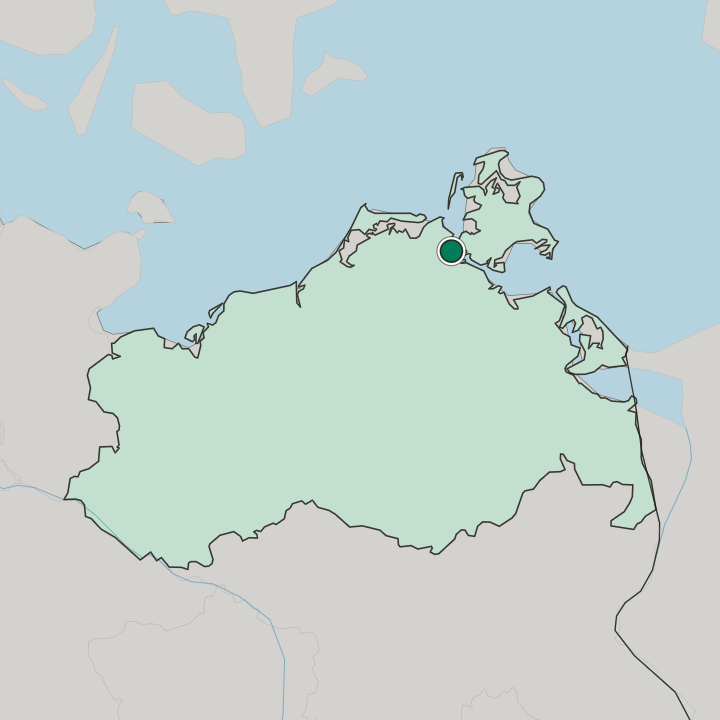
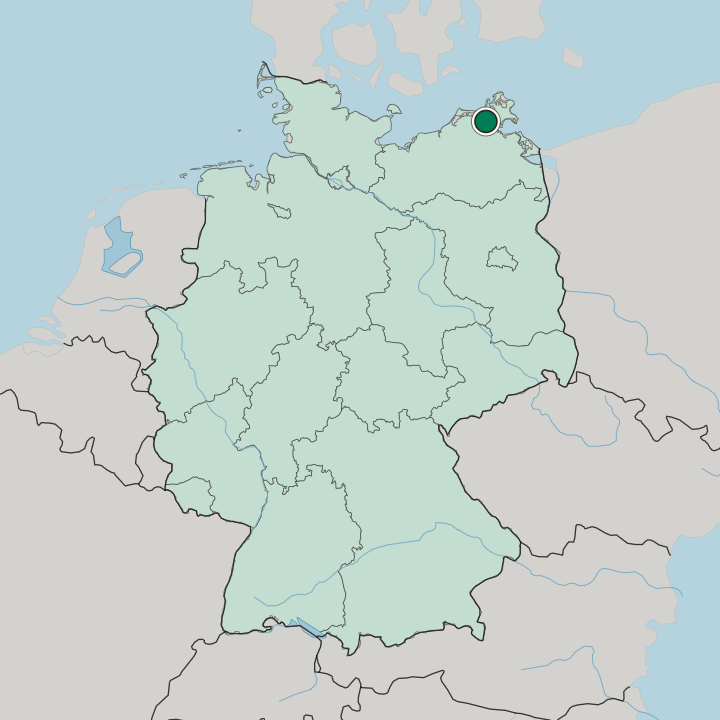
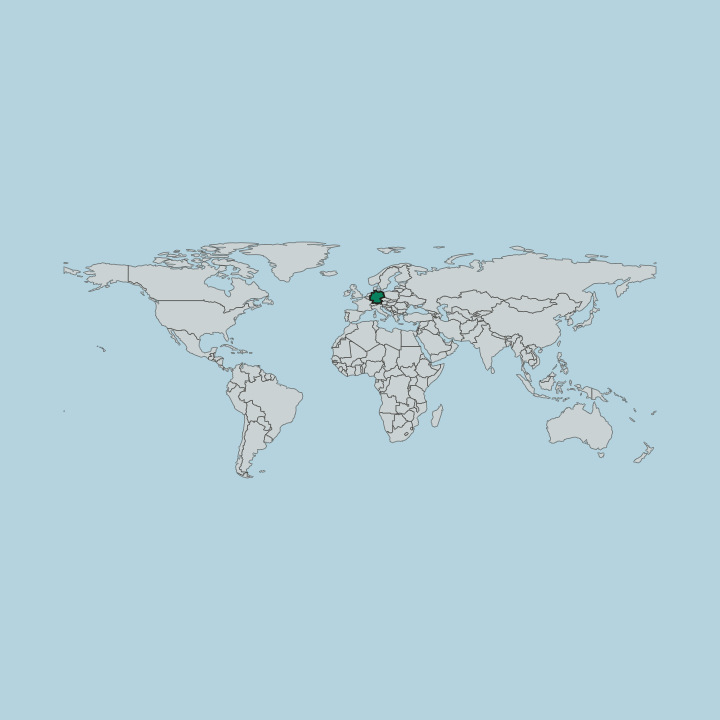
Stralsund is shaped by the water around it. The old core sits on the shore, with Dänholm and Altefähr out across the crossing, and the newer streets spreading inland behind the Carl-Heydemann-Ring. The state around it is Mecklenburg-Western Pomerania.
Zoo Stralsund and the ring roads mark the landward edge, while the Nautineum Stralsund and the Marinemuseum Dänholm sit on the water side of the same city. The whole of it lies in the temperate band.
What is the climate of Stralsund?
The water keeps the edges off. Stralsund sits in the temperate band, so summers stay mild and winters stay grey, with wind off the open water doing more to the feel of a day than the thermometer does. Rain spreads across the year.
Crossings to Dänholm and Altefähr take the weather full on, and the harbour front can be raw when the old town streets a block inland are still.
How do you get to Stralsund?
Arrival is over water or through the ring. The crossing to Altefähr and the way out to Dänholm sit on the water side, while Frankenstraße and the Carl-Heydemann-Ring bring traffic in from the land. The old town then does the rest on foot.
Zoo Stralsund, the Nautineum Stralsund, and the Marinemuseum Dänholm are the ones that need a plan, since they sit away from the church towers at the centre. Old Stralsund fits inside one walk.
Common questions
What is the best area to stay in Stralsund?
The old town by Katharinenkirche: Guests pairing the Ozeaneum with the old town churches. Frankenstraße and the Carl-Heydemann-Ring: Longer stays wanting Frankenstraße space over old-town cobbles. Dänholm and Altefähr: Visitors making for the Marinemuseum Dänholm and the crossing.
Good for
More cities in Mecklenburg-Western Pomerania
Updated October 2026