Germany · Rheinland-Pfalz
Where to Stay in Trier, Rheinland-Pfalz
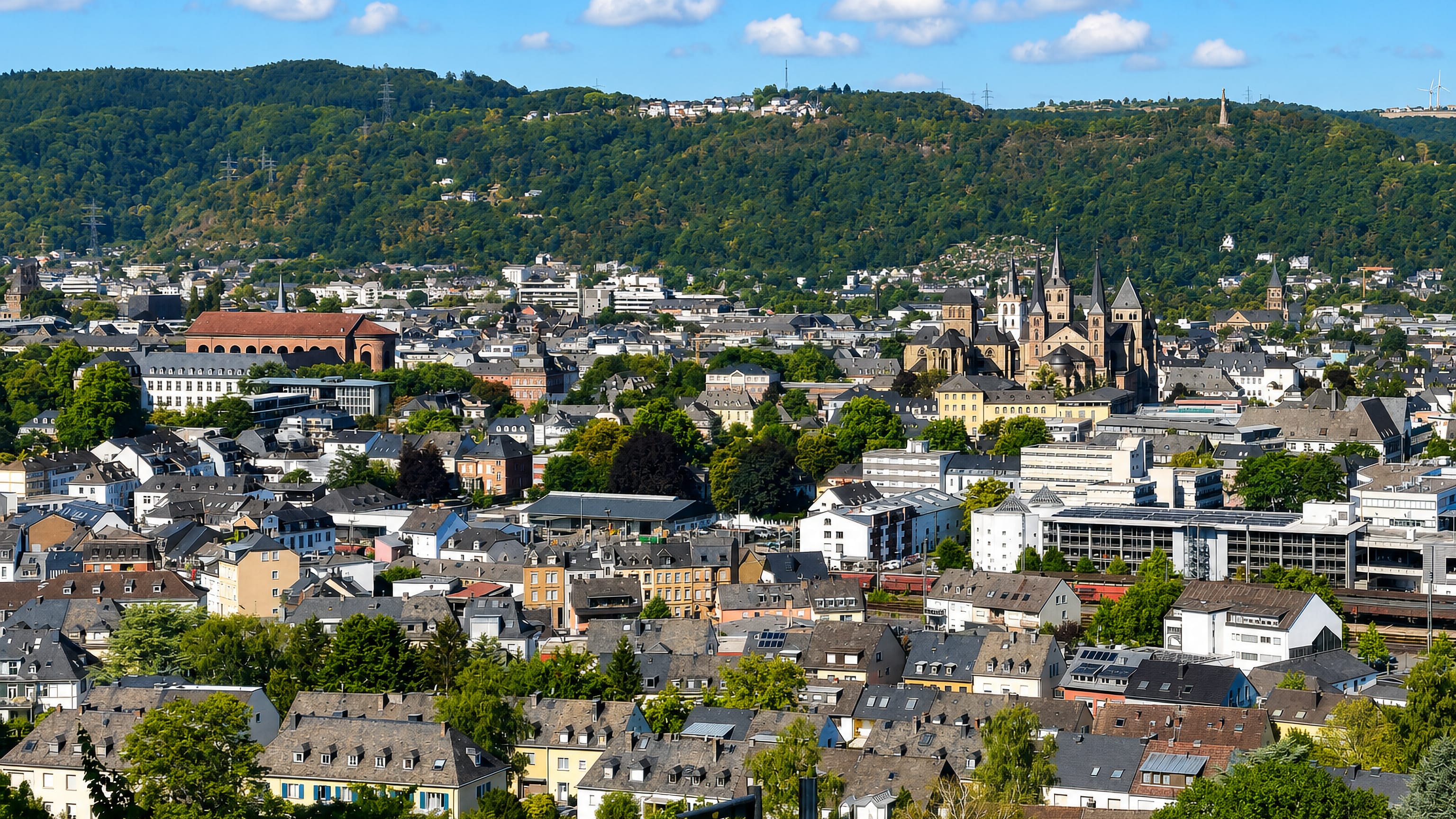
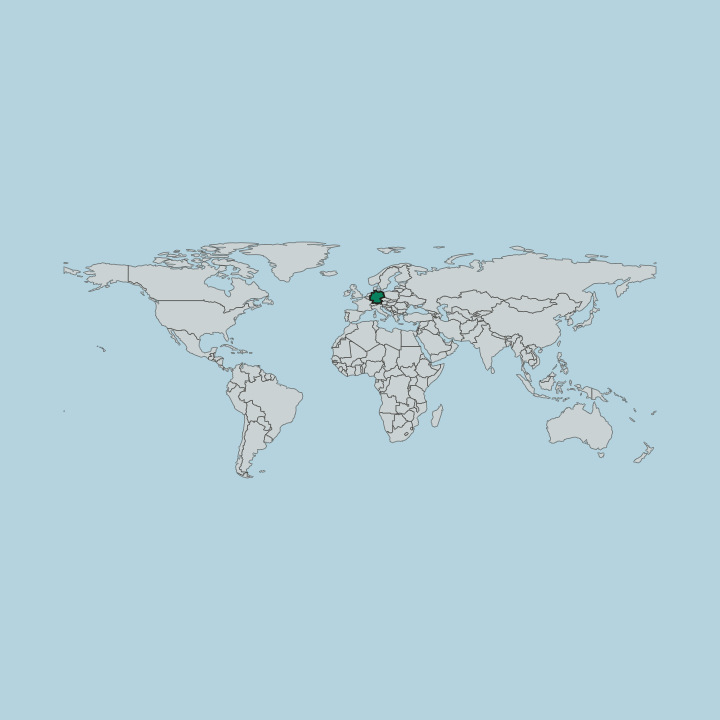
Roman stone lines the Moselle at Trier, Germany's oldest city, in the Rhineland-Palatinate hills, known for the Cathedral of Trier and the Aula Palatina.
Hotel links are affiliate links: booking through them may earn us a commission, at no extra cost to you. It never affects how places are ranked. How this works


Where to stay in Trier
Each area has its own feel; here's who each one suits.

 TrierGermany
Olewig
Olewig is one of the smaller districts of Trier, its ground holding the Tempel am Herrenbrünnchen and three parish churches.Where to stay →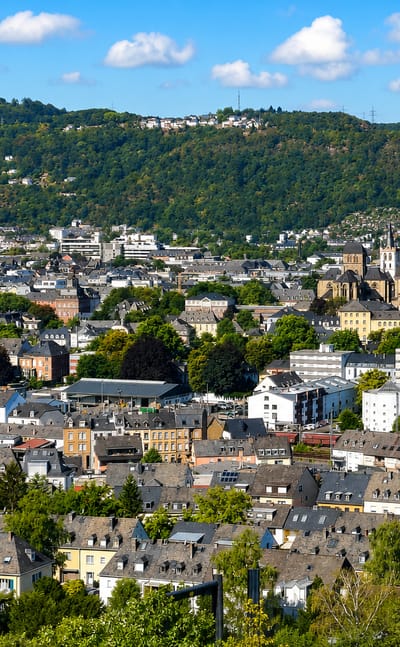 TrierGermany
Kürenz
Kürenz, a district of Trier, carries the Fernmeldeturm Trier-Petrisberg and the Transmitter Trier on its skyline.Where to stay → TrierGermany
Euren
Euren is a district of Trier, its ground marked by the temple precinct known as Tempelbezirk Irminenwingert.Where to stay →TrierGermanyNeu-Kürenz
Neu-Kürenz shares the Trier district list with Kürenz, Olewig and Euren, and carries no landmark, no boundary and no article of its own.Where to stay →TrierGermanyZewen-Oberkirch
Zewen-Oberkirch is a district of Trier holding the Roscheider Hof Open Air Museum and the monastery buildings of Kloster Karthaus.Where to stay →Hotel links are affiliate links: booking through them may earn us a commission, at no extra cost to you. It never affects how places are ranked. How this works
Find hotels in Trier
Direct booking searches for these neighbourhoods.
Old town around the cathedral
Minutes on foot from the Cathedral of Trier, the market square and the Rheinisches Landesmuseum Trier, with the riverside close by.Find hotels in Old town around the cathedralVineyard views above the MosellePetrisberg heights and Moselle slopes
Quieter streets climbing the Petrisberg above Trier, looking down over the roofs and the vine-covered valley.Find hotels in Petrisberg heights and Moselle slopesHotel links are affiliate links: booking through them may earn us a commission, at no extra cost to you. It never affects how places are ranked. How this works
Things to do in Trier
Ranked by global recognition; descriptions from Wikidata (CC0).
Museums & Galleries
3- Karl-Marx-House museum Heritage
- Rheinisches Landesmuseum Trier Heritage
- treasury of the Cathedral of Trier
Churches & Religious Sites
8- Cathedral of Trier Heritage
- Aula Palatina Heritage
- Liebfrauenkirche Heritage
- Jesuitenkirche Heritage
- Simeonstift of Trier Heritage
Show 3 more →
- Kloster Karthaus Heritage
- Martinskloster Heritage
- St. Jost, Trier Heritage
Castles & Historic Sites
5- Trier Imperial Baths Heritage
- Barbara Baths Heritage
- Mariensäule Heritage
- Forum baths Heritage
- Franzensknüppchen Heritage
Landmarks & Notable Places
3- Frankenturm Heritage
- Turm Jerusalem Heritage
- Fernmeldeturm Trier-Petrisberg
worth knowingacross 4 categories in Trier
About Trier
What is Trier known for?
Trier is known as the oldest city in Germany, a Roman foundation on the Moselle whose ancient monuments still stand among the streets. The Aula Palatina, the Trier Imperial Baths and the Barbara Baths survive from the imperial age. Rome runs deep here.
The Cathedral of Trier rose on the same ground and holds the treasury beside it, while the Karl-Marx-House recalls the philosopher born in the town, tying Trier's long Roman story to a name known across the wider world.
What are the main landmarks in Trier?
Trier's landmarks are led by its Roman survivals and its medieval cathedral. The Aula Palatina still stands as a vast brick hall, and the ruined Trier Imperial Baths and Barbara Baths mark the ancient city. Faith left its own monuments.
The Cathedral of Trier and the Gothic Liebfrauenkirche share a single close, the Rheinisches Landesmuseum Trier gathers the Roman finds, and the Simeonstift and the Karl-Marx-House complete a dense, walkable roster in the heart of the old town.
What is the history of Trier?
Trier was founded by the Romans on the Moselle and grew into one of the great cities of the empire, later serving as an imperial residence. The Aula Palatina was raised as an audience hall for that court, and the Trier Imperial Baths and Barbara Baths date from the same centuries, which is why the city calls itself the oldest in Germany. Little of that scale was lost.
After Rome, Trier became a powerful archbishopric, and the Cathedral of Trier grew from the old imperial foundations into the seat of its bishops. The town later passed into Rhineland-Palatinate and the modern German states. It kept adding to its story, from the medieval Liebfrauenkirche beside the cathedral to the house on the Brückenstraße where Karl Marx was born, now the Karl-Marx-House, so that Roman, ecclesiastical and modern history sit within a few streets of one another.
Where is Trier?
Trier lies on the banks of the Moselle in a valley between low hills of red sandstone. Vineyards climb those slopes, for the city sits within the Moselle wine region and its heights, like the Petrisberg, look down on the water. The border with Luxembourg runs close by.
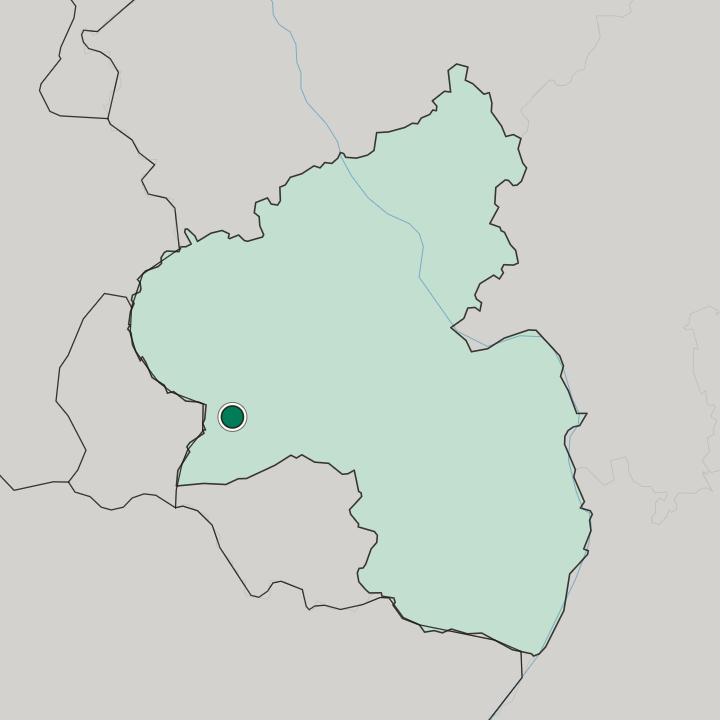
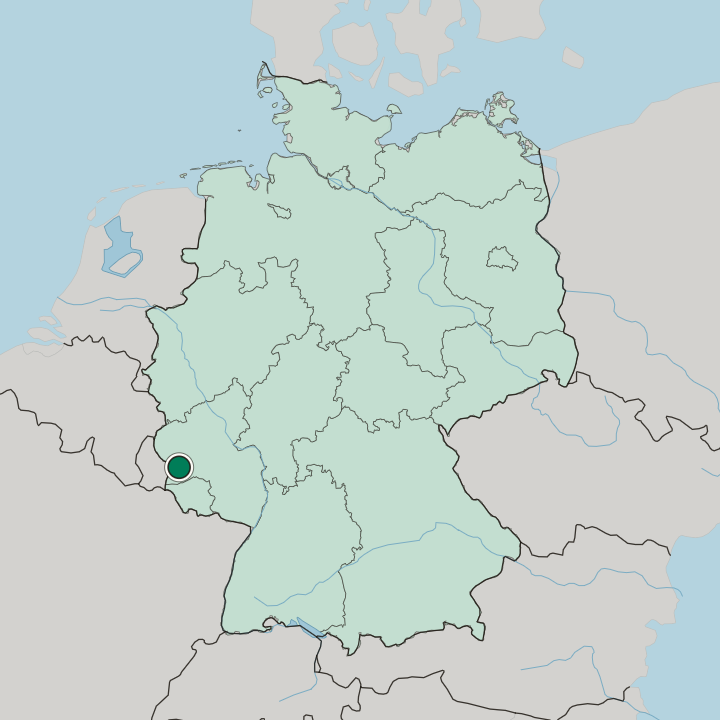
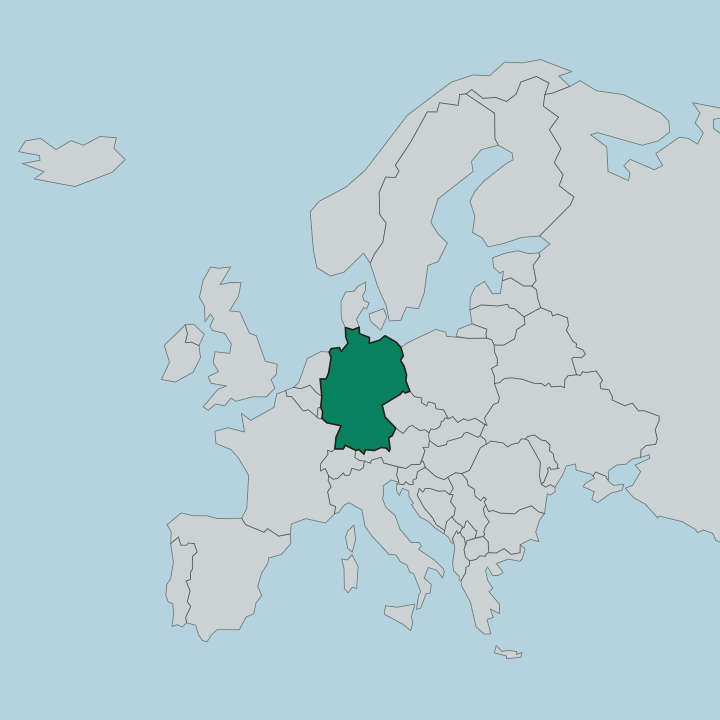
This corner of Rhineland-Palatinate in western Germany makes Trier a river town where the Moselle threads between the wine hills, carrying the valley's traffic and its grapes down toward the Rhine.
What is the climate of Trier?
Trier has one of the mildest climates in Germany, sheltered in the Moselle valley among its wine hills. Summers are warm and reliably sunny. That warmth ripens the vineyards on the red sandstone slopes above the river, and the sheltering hills keep the worst of the cold at bay through the winter, when frost settles more lightly here than on the higher ground of Rhineland-Palatinate.
Snow seldom lasts long by the water.
How do you get to Trier?
Trier sits at the western edge of Rhineland-Palatinate, close to Luxembourg, with rail lines running down the Moselle valley toward Koblenz and the Rhine. Regional trains reach the city and cross the nearby border into Luxembourg. The station is central.
Autobahns and river roads follow the Moselle through the wine hills, and local buses knit the centre to the slopes and the outer districts, so most visitors reach the Cathedral of Trier without a car.
Common questions
What is the best area to stay in Trier?
Old town around the cathedral: First stays among Trier's Roman monuments. Petrisberg heights and Moselle slopes: Vineyard views above the Moselle.
Good for
More cities in Rheinland-Pfalz
Updated October 2026