Germany · Rheinland-Pfalz
Where to Stay in Mainz, Rheinland-Pfalz
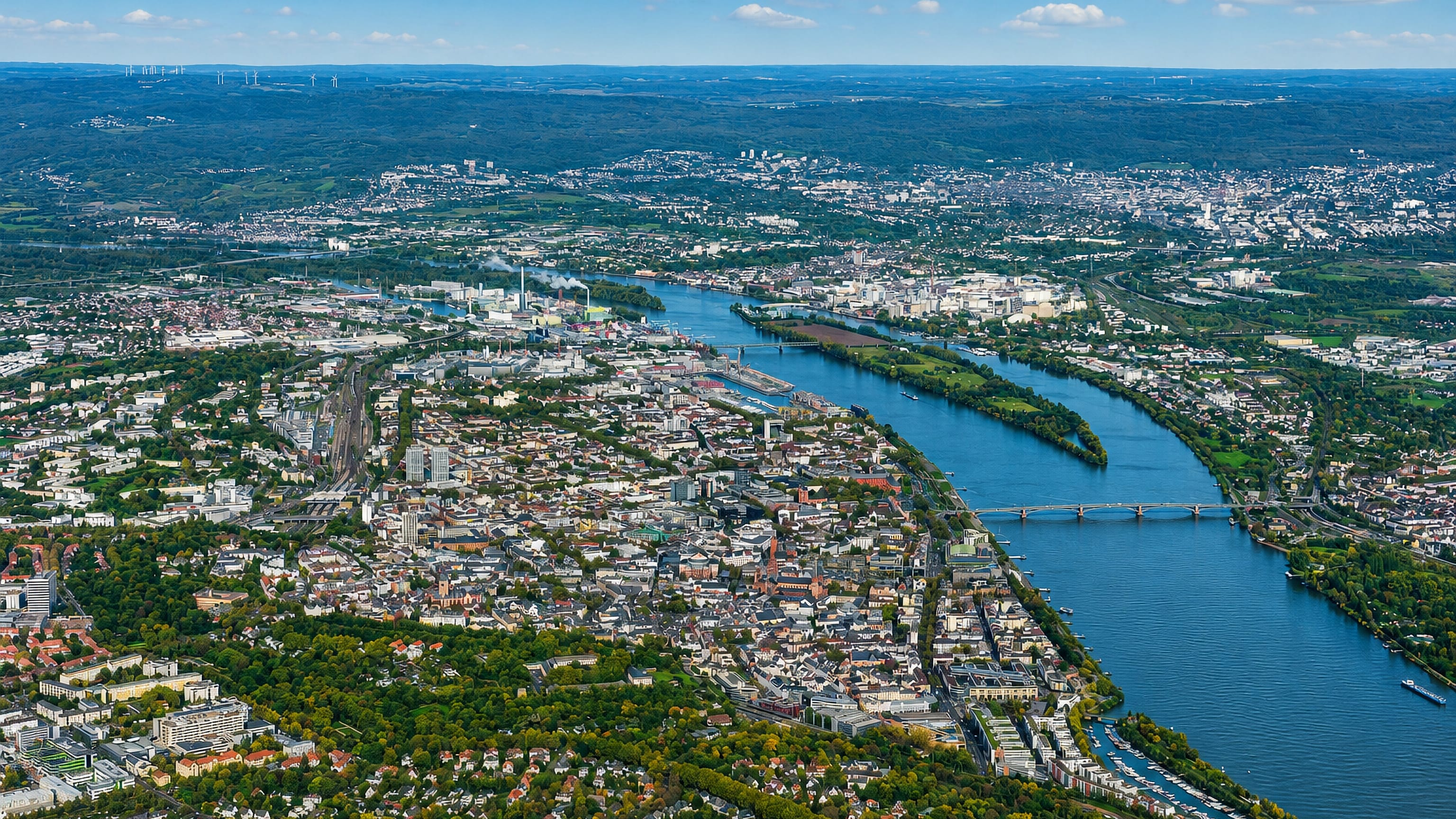
The Rhine bends past sandstone quays at Mainz, capital of Rheinland-Pfalz, where Gutenberg cast movable type and the German wine trade found its heart.
Hotel links are affiliate links: booking through them may earn us a commission, at no extra cost to you. It never affects how places are ranked. How this works


Where to stay in Mainz
Not every neighbourhood fits every trip — here's what each one is good for.

 MainzGermany
Weisenau
Weisenau is an Ortsbezirk of Mainz on the Rhine, joined to the city on 1 January 1930. Roman soldiers and craftsmen worked here.Weisenau → MainzGermany
Gonsenheim
Gonsenheim is a borough in the northwest corner of Mainz, with the Wildpark Mainz-Gonsenheim, Zoo Mainz and the Napoleonstein Gonsenheim inside it.Gonsenheim →Hotel links are affiliate links: booking through them may earn us a commission, at no extra cost to you. It never affects how places are ranked. How this works
Things to do in Mainz
Ranked by global recognition; descriptions from Wikidata (CC0).
Museums & Galleries
3- Golden-Ross-Kaserne Heritage
- Gutenberg Museum
- Römisch-Germanisches Zentralmuseum
Churches & Religious Sites
8- St. John' Church, Mainz Heritage
- Protestant Christ Church, Mainz Heritage
- St. Augustine's church (Mainz) Heritage
- St. Peter's Church Heritage
- St. Christoph's Church, Mainz Heritage
Show 3 more →
- Catholic St. Ignaz' Church, Mainz Heritage
- Karmeliterkirche Heritage
- St. Emmeran, Mainz Heritage
Castles & Historic Sites
4- Drususstein Heritage
- Restant aquaduct van Mogontiacum Heritage
- Gutenberg memorial Heritage
- Napoleonstein Gonsenheim Heritage
worth knowingacross 3 categories in Mainz
About Mainz
What is Mainz known for?
Mainz is known above all for Johannes Gutenberg, whose printing revolution is retold at the Gutenberg Museum near the cathedral square. The city anchors the German wine trade along the Rhine, and it carries deep Roman roots as the garrison town of Mogontiacum. Broadcasting matters here too.
National television grew up in Mainz, and the studios shape a media identity that sits beside the older stories of print, faith, and the vineyard slopes above the river.
What are the main landmarks in Mainz?
The main landmarks in Mainz cluster in the old town between the Rhine and the cathedral square. The Gutenberg Museum guards early printed books, while St. Peter's Church shows off exuberant Baroque interiors nearby. Roman Mainz survives in stone.
The Drususstein, a towering funerary monument, and the Sanctuary of Isis and Magna Mater recall Mogontiacum, and the Landesmuseum Mainz gathers finds from that garrison past under one roof for anyone tracing the city's oldest layers.
What is the history of Mainz?
Mainz began as Mogontiacum, a Roman legionary fortress planted where the Rhine meets the mouth of the Main. Legions garrisoned the site for centuries. The Drususstein, raised to honour the general Drusus, still stands from that era, and the Sanctuary of Isis and Magna Mater preserves the cults the soldiers carried up the river.
When Rome withdrew, the settlement passed into the hands of the church, and Mainz rose as one of the great archbishoprics of the medieval empire, its prince-archbishop ranking among the electors who chose the German king. The city's second revolution was made of metal and ink. Here Johannes Gutenberg developed movable type in the fifteenth century, and the printed book spread outward from these lanes to change the reading world.
Later centuries brought fortress walls, French occupation, and heavy wartime damage that scarred the old town. Reconstruction followed, patient and deliberate. Through all of it the Rhine kept the city tied to the wine trade and the river traffic that had defined it since the Roman surveyors first pegged out the fort, and Mainz remained the seat of Rheinland-Pfalz through the modern rebuilding of the German states.
Where is Mainz?
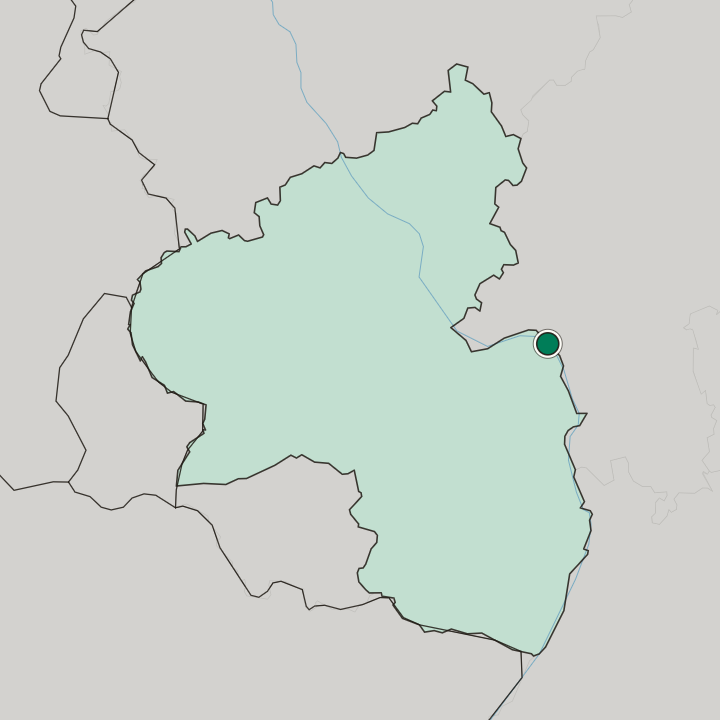
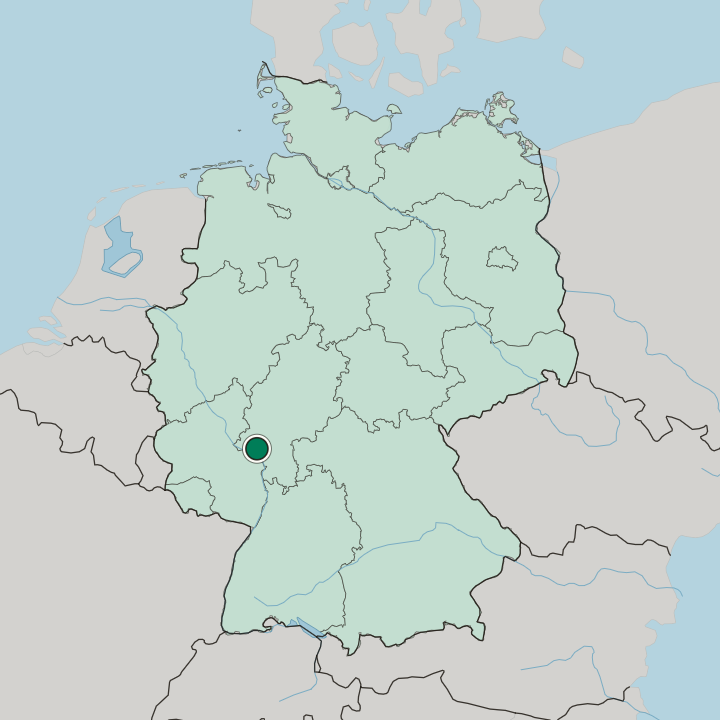
Mainz sits on the west bank of the Rhine, at the point where the Main joins the larger river opposite Wiesbaden. The old town spreads across a low riverside terrace, and vineyard slopes rise behind it toward the surrounding countryside of Rheinland-Pfalz. It is a river city first.
The Rhine sets its edge, carries its wine, and links it downstream to the wider Rhine-Main lands around Frankfurt am Main, with the water forming a natural boundary between two federal states.
What is the climate of Mainz?
Mainz has a mild river-valley climate shaped by its sheltered position along the Rhine. Winters stay relatively gentle for inland Germany, with cloud and rain more common than deep frost. The warm season settles in.
The vineyard slopes above the city ripen in long, dry spells that make this stretch of the Rhine one of the country's steadier wine-growing corners, and the surrounding hills of Rheinland-Pfalz temper the sharpest seasonal extremes.
How do you get to Mainz?
Getting to Mainz is easy from across the Rhine-Main region. The Hauptbahnhof sits on main rail lines linking the city to Frankfurt am Main, Wiesbaden across the river, and the wider German network. Frankfurt Airport lies a short ride away.
Local trains, buses, and the road bridges over the Rhine tie Mainz into the metropolitan region, so travellers reach the old town quickly whether they arrive by air at Frankfurt am Main or by rail through Rheinland-Pfalz.
Good for
More cities in Rheinland-Pfalz
Updated October 2026