Germany · Thuringia
Where to Stay in Erfurt, Thuringia
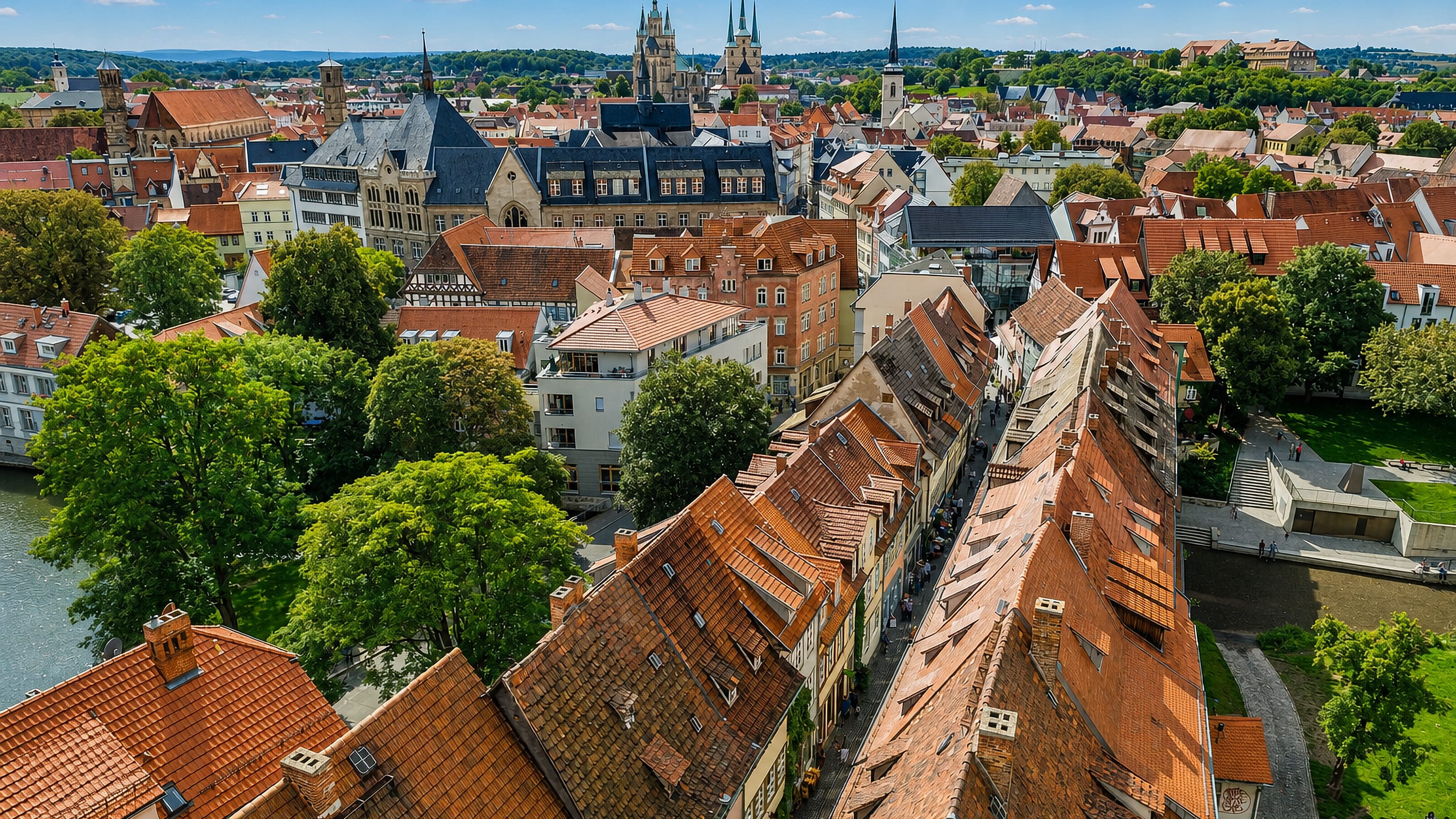
Timbered shops still stand on the Krämerbrücke in Erfurt, capital of Thuringia in the valley of the Gera, known for its cathedral hill and Luther.
Hotel links are affiliate links: booking through them may earn us a commission, at no extra cost to you. It never affects how places are ranked. How this works


Where to stay in Erfurt
Where you base yourself shapes the visit — here's the character of each area.

 ErfurtGermany
Gispersleben
Gispersleben is a district of Erfurt in Thuringia, just over ten square kilometres of village ground with three parish churches.Where to stay →ErfurtGermanyBischleben
Bischleben forms the Bischleben-Stedten Ortsteil of Erfurt together with Stedten an der Gera, and it was first recorded in 1184.Where to stay →ErfurtGermanyBindersleben
Bindersleben is a district of Erfurt in Thuringia, roughly eight square kilometres of village ground with one listed parish church.Where to stay →Hotel links are affiliate links: booking through them may earn us a commission, at no extra cost to you. It never affects how places are ranked. How this works
Find hotels in Erfurt
Direct booking searches for these neighbourhoods.
The Krämerbrücke lanes
In the medieval core with the Gera running under the housesFind hotels in The Krämerbrücke lanesTrams at the door and the Angermuseum across the squareThe Anger
On the broad square where the tram lines crossFind hotels in The AngerQuiet nights under the cathedral hillAndreasviertel
Narrow streets between the Andreaskirche and the Petersberg slopeFind hotels in AndreasviertelHotel links are affiliate links: booking through them may earn us a commission, at no extra cost to you. It never affects how places are ranked. How this works
Things to do in Erfurt
Ranked by global recognition; descriptions from Wikidata (CC0).
Museums & Galleries
3- Memorial and Education Centre Andreasstrasse
- Erinnerungsort Topf & Söhne
- Angermuseum
Churches & Religious Sites
8- Erfurt Cathedral Heritage
- St. Augustine's Monastery Heritage
- Preacher's Church Heritage
- Peterskirche Heritage
- Ägidienkirche (Erfurt) Heritage
Show 3 more →
- Kaufmannskirche (Erfurt) Heritage
- Michaeliskirche (Erfurt) Heritage
- Allerheiligenkirche (Erfurt) Heritage
Castles & Historic Sites
3- Denkmal für den unbekannten Wehrmachtsdeserteur
- Luther memorial Erfurt
- Wallanlage Kirchberg in Möbisburg
Landmarks & Notable Places
1- Stone House Heritage
worth knowingacross 4 categories in Erfurt
About Erfurt
What is Erfurt known for?
Erfurt is the capital of Thuringia and holds the largest intact medieval old town in the middle of the country, crossed by the Krämerbrücke, a lane of shops standing on a bridge over the Gera. Woad money built it. The cathedral and the Peterskirche look down from their two hills, Luther took his vows in the Augustinian house below, and the medieval Jewish monuments of the town, the Old Synagogue among them, carry a UNESCO listing.
What are the main landmarks in Erfurt?
Erfurt sets its landmarks on two hills and one bridge. Erfurt Cathedral and the Peterskirche stand on their heights above the roofs, reached from the Domplatz by a broad flight of steps, while the Krämerbrücke carries its houses over the Gera below. Luther studied here.
St. Augustine's Monastery keeps the cell of his novice years, the Michaeliskirche served the old university, and the Preacher's Church, the Kaufmannskirche and the Angermuseum fill the streets in between.
What is the history of Erfurt?
Erfurt takes its name from a ford. A crossing of the Gera on the road east drew a settlement, and in 742 Boniface set a bishop's seat here, which gives the town its first fixed date. Then the dye trade took over.
Woad, the blue dye grown across the Thuringian Basin, made the merchants rich enough to build the Krämerbrücke in stone and to line it with their own houses, and the same money founded a university that drew Martin Luther to study law. He stayed for the church instead. Luther entered St. Augustine's Monastery, was ordained in the cathedral, and left the Michaeliskirche and the Luther memorial to mark that decade of his life.
Mainz ruled the town for centuries and fortified the Petersberg in the baroque age, when a hill above a rich trading place was worth walls. Two dictatorships left harder marks. Ovens for the camps were built by the local firm Topf & Söhne, whose works are kept as a place of memory, and the prison in the Andreasstrasse held political prisoners until crowds broke into it in 1989.
Erfurt came out of that year as the capital of Thuringia.
Where is Erfurt?
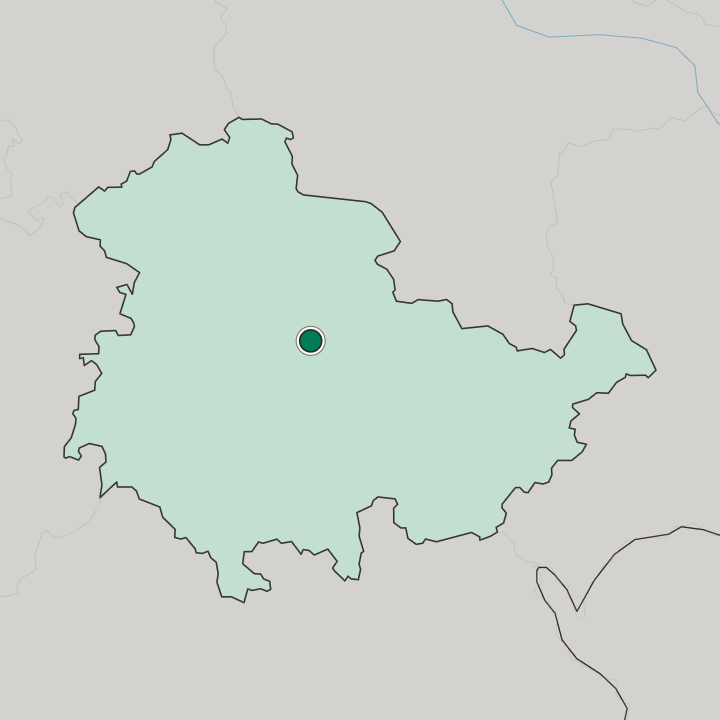
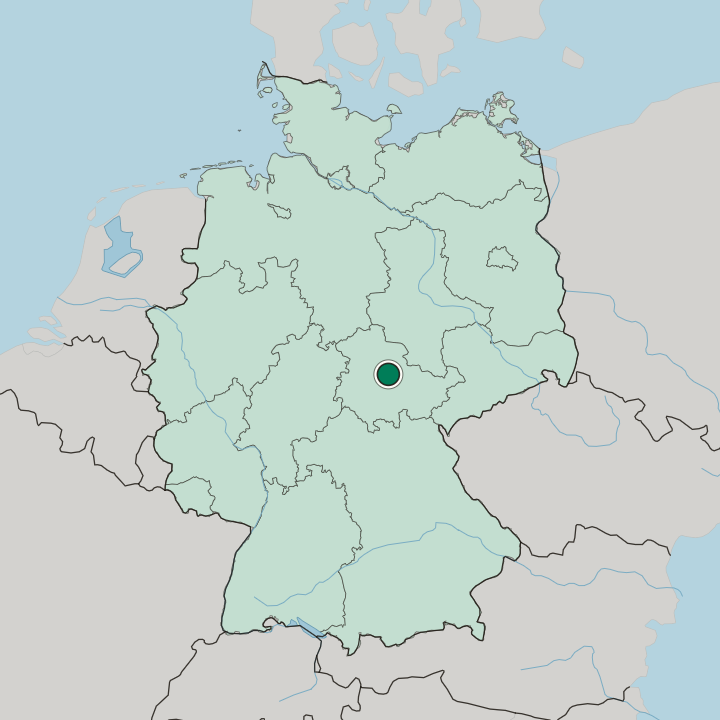
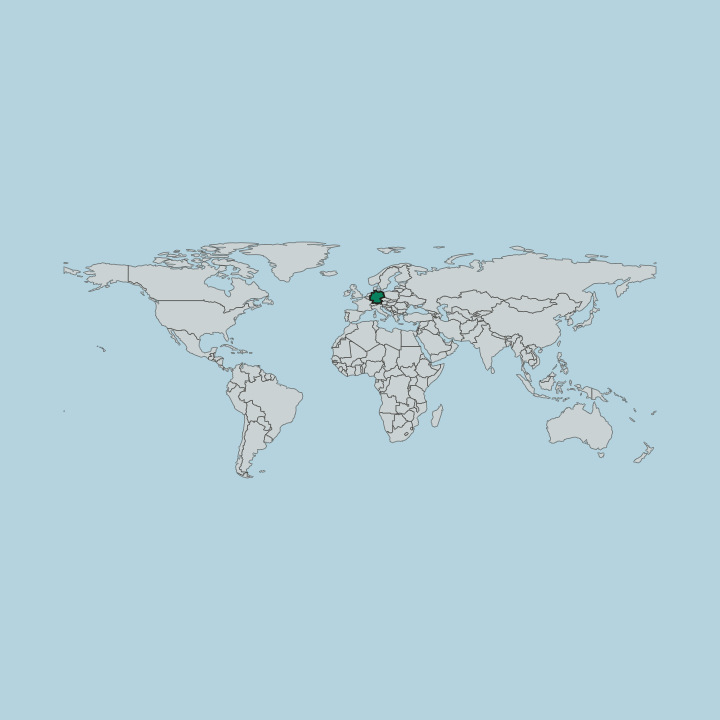
Erfurt lies in the wide valley of the Gera, in the southern part of the Thuringian Basin. The Thuringian Forest rises to the south, dark and heavily wooded, while the basin around the town is open loess farmland that grew the woad and still carries market gardens and seed fields. Two hills break the flat.
The Petersberg and the cathedral mount stand clear above the roofs, and the line of Thuringian cities runs out east and west from here, Eisenach and Gotha one way, Weimar and Jena the other.
What is the climate of Erfurt?
The Thuringian Forest keeps much of the rain off Erfurt. Weather coming from the west drops its water on the ridge, so the basin below counts among the drier corners of the country, with warm ripening summers and cold winters that hold frost on the valley floor. Frost outlasts the snow here.
The Gera meadows fog over on autumn mornings while the cathedral towers stand clear in the sun above them.
How do you get to Erfurt?
Erfurt Hauptbahnhof is one of the crossing points of the German fast-rail network. The Berlin to Munich line meets the route running from Frankfurt to Dresden here, so the town is an easy half-day from most of the country, and trams take four minutes from the platforms to the Anger. Roads follow the same logic.
The motorway across the Thuringian Basin carries traffic east toward Leipzig and west toward Eisenach, and a small airport sits on the plateau west of the built-up area.
Common questions
What is the best area to stay in Erfurt?
The Krämerbrücke lanes: Bridge shops once the day trippers have gone. The Anger: Trams at the door and the Angermuseum across the square. Andreasviertel: Quiet nights under the cathedral hill.
Good for
More cities in Thuringia
Updated October 2026