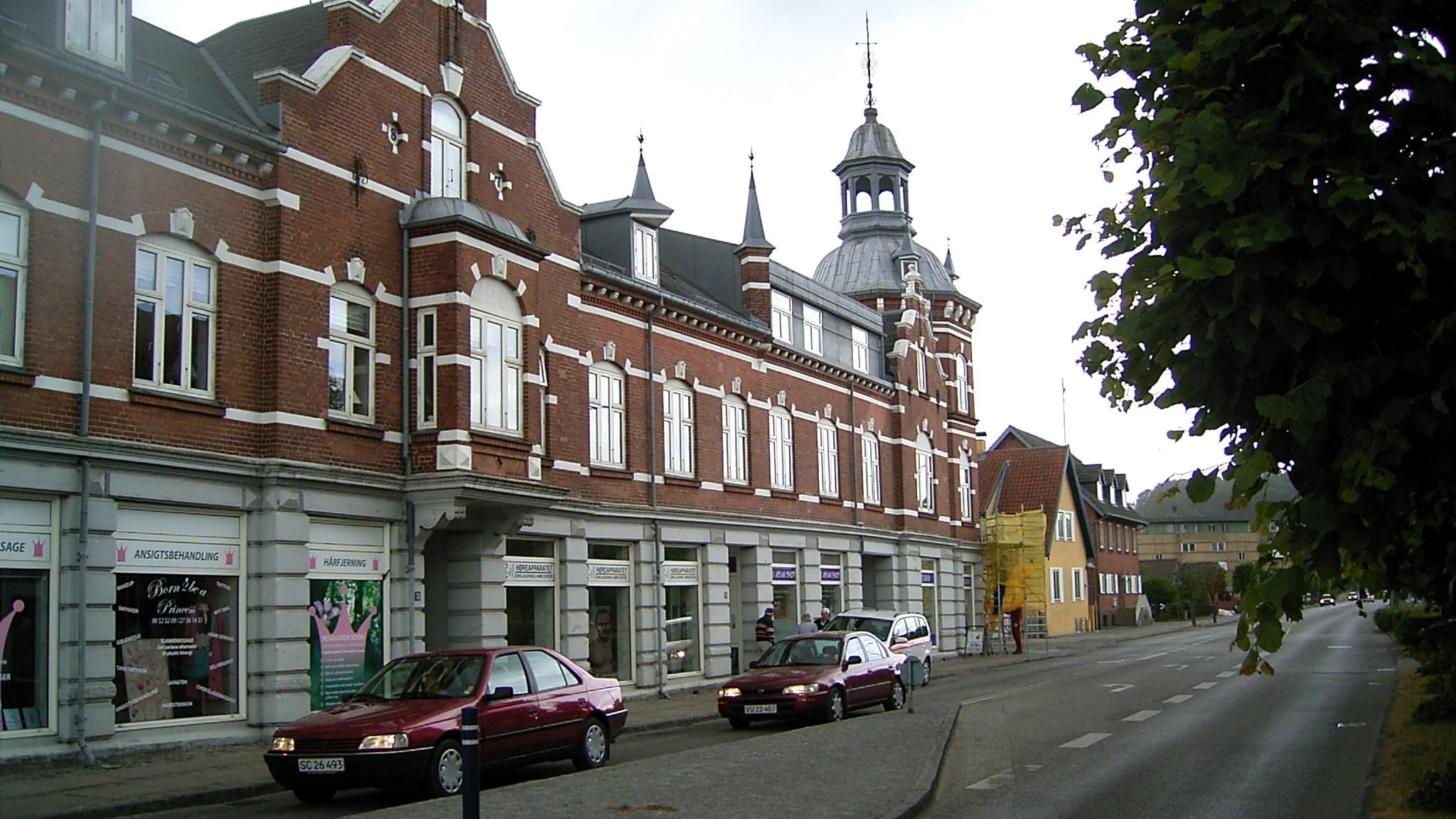
Denmark · North Denmark Region
Where to Stay in Hobro, North Denmark Region
Hobro is an old market town at the head of Mariager Fjord, in northern Denmark on the Jutland peninsula.
Hotel links are affiliate links: booking through them may earn us a commission, at no extra cost to you. It never affects how places are ranked. How this works


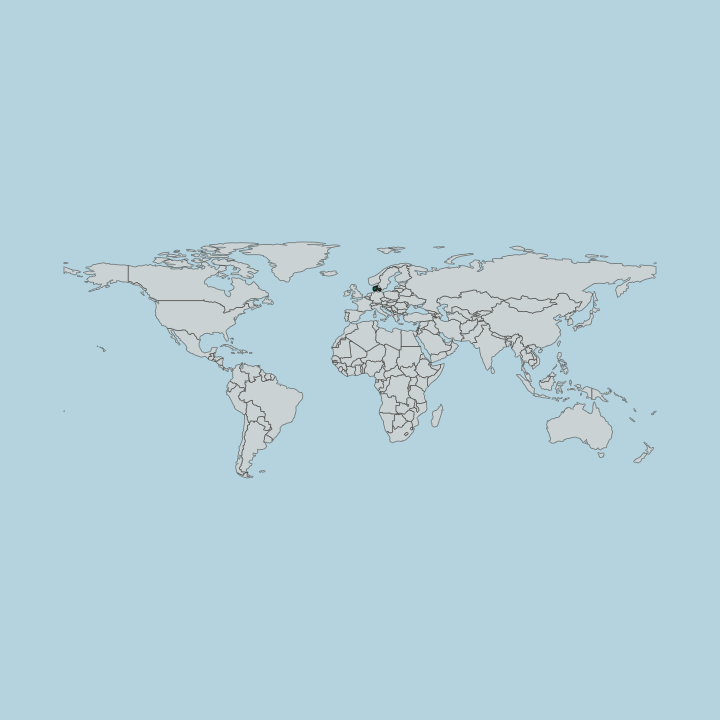
Where to stay in Hobro
How the choice of base plays out on the ground.
Hobro keeps its rooms close to the fjord head, where the old market town gathers above the water. The central quarter around Hobro Kirke and the harbour holds the hotels and guest rooms a traveller wants, within a walk of the Hobro Museum and the boats. Stay here for the fjord.
The streets near the station carry the practical beds, useful for onward trips along Mariager Fjord or down the Jutland peninsula, and easy to reach when you arrive by train. Visitors who have come for the Vikings lean toward the western edge nearest the Vikingemuseet Fyrkat, where the ring fortress and its grassland sit apart from the town. Summer fills the fjord-side rooms fast.
Book the central beds well ahead through the warm months, when the boats and the fortress draw their visitors and the demand gathers around the harbour.
Find hotels in Hobro
Direct booking searches for these neighbourhoods.
Fjord-head centre
central rooms by Hobro Kirke, the harbour and the Hobro Museum. Lodging is scarce in this area; reserve in advance.Find hotels in Fjord-head centreonward travel along Mariager Fjord and the peninsulaBy the station
practical beds a short walk from the trainsFind hotels in By the stationvisitors who have come for the Viking fortressFyrkat edge
rooms toward the grassland by the Vikingemuseet FyrkatFind hotels in Fyrkat edgeHotel links are affiliate links: booking through them may earn us a commission, at no extra cost to you. It never affects how places are ranked. How this works
Things to do in Hobro
Ranked by global recognition; descriptions from Wikidata (CC0).
Museums & Galleries
2- Gasmuseum Hobro
- Lystfartøjsmuseum Hobro
Churches & Religious Sites
3- Hobro Church church building in Mariagerfjord Municipality
- Nørre Onsild Church
- Hørby Church
Landmarks & Notable Places
1- Gattenborg
worth knowingacross 3 categories in Hobro
About Hobro
Hobro sits where the fjord ends.
What is Hobro known for?
It is an old market and railway town at the head of Mariager Fjord, set in hilly ground on the Jutland peninsula, and its great draw lies just outside it: the Viking ring fortress kept by the Vikingemuseet Fyrkat. The town is the seat of Mariagerfjord Municipality. Within it the Hobro Museum and the Gasmuseet hold the local story, from the medieval market to the age of town gas, while Hobro Kirke stands over the old centre.
What are the main landmarks in Hobro?
Hobro's great mark stands outside the town. The Vikingemuseet Fyrkat keeps the ring fortress raised in the Viking age on the high ground above the fjord, the reason most visitors come. In the town itself Hobro Kirke rises over the centre, and three museums hold the local story: the Hobro Museum, the Gasmuseet on the old gasworks, and the Lystfartøjsmuseet of pleasure craft by the water.
Churches mark the surrounding parishes. Hørby Kirke and Nørre Onsild Kirke serve the villages of the hilly country, with the old site of Gattenborg among them.
What is the history of Hobro?
The Vikings came here first. On the high ground above the head of Mariager Fjord they raised the ring fortress of Fyrkat, one of the great circular strongholds of the age, and its earthworks still ring the grass where the Vikingemuseet Fyrkat now tells the story. The fjord shaped everything after.
A medieval market town grew at the water's head where the trade of the surrounding hilly country could be loaded onto boats, and Hobro Kirke rose over a centre that lived off the fjord and the farms. For centuries it traded grain, cattle and timber down the long inlet toward the sea. The railway later joined the town to the rest of the Jutland peninsula and brought new industry, including the town gas now remembered in the Gasmuseet, while pleasure craft on the fjord found their own record in the Lystfartøjsmuseet.
Hobro became the seat of Mariagerfjord Municipality, with the village parishes of Hørby Kirke and Nørre Onsild Kirke looking to it. The fjord and the fortress still define the place.
Where is Hobro?
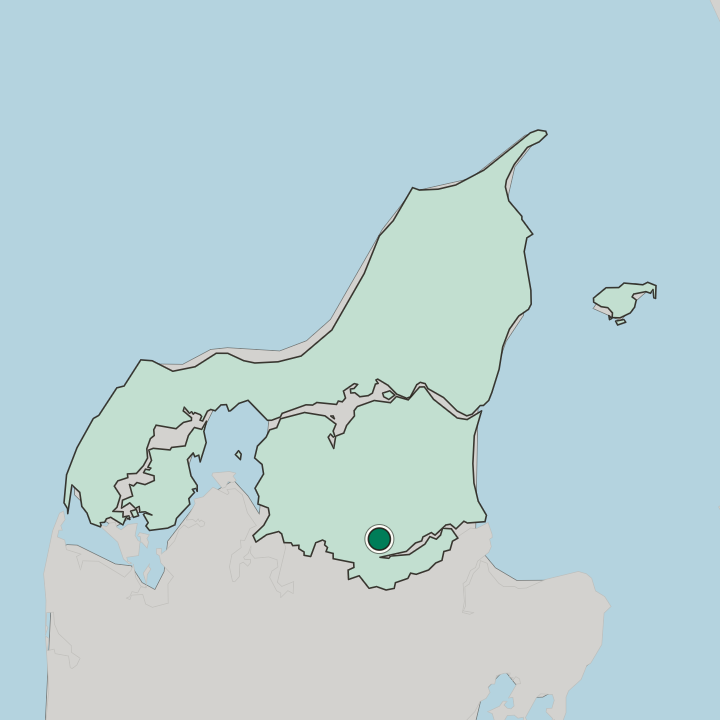
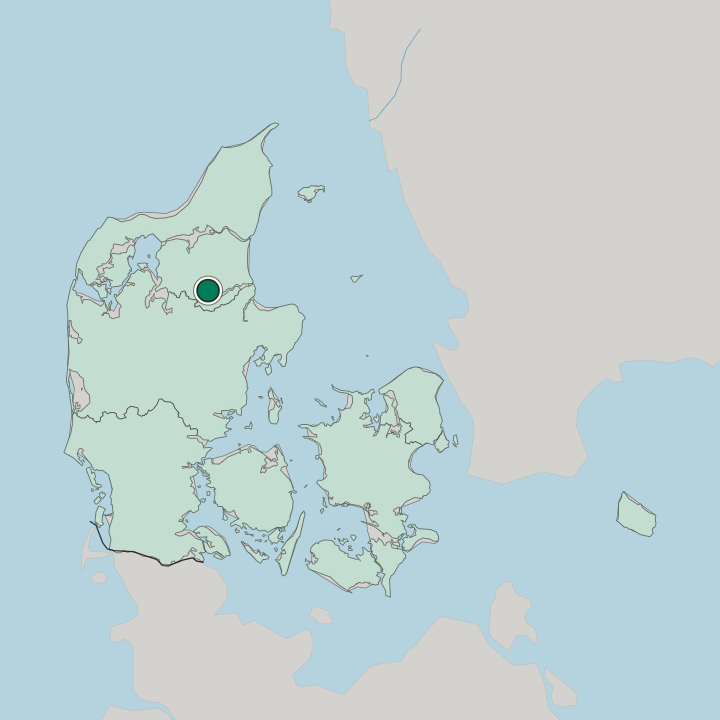
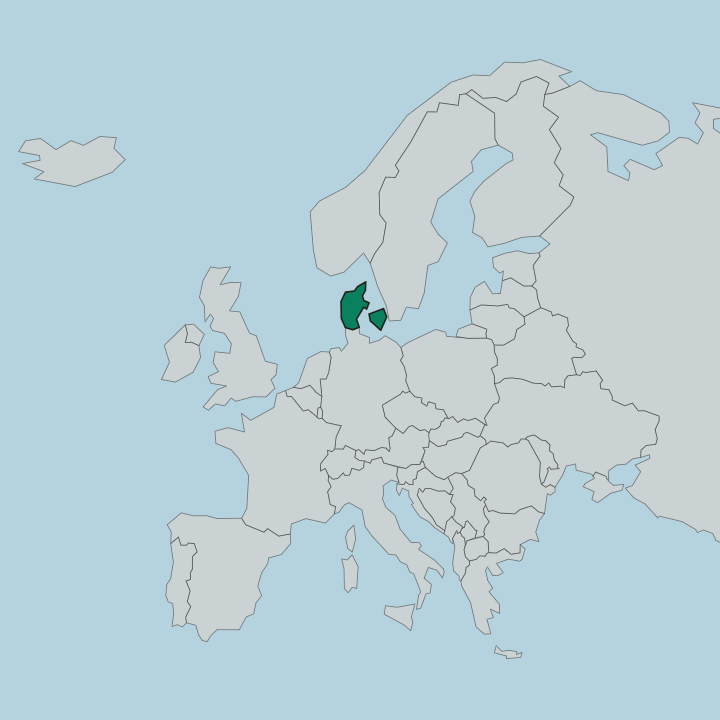
Hobro lies in northern Denmark, on the Jutland peninsula, in the southern part of North Denmark Region. The town sits at the very head of Mariager Fjord, where the long, narrow inlet runs inland and the land climbs into hilly terrain around the water. Slopes ring the fjord head.
The Viking ground of Fyrkat rises on the high country just west, while the fjord itself reaches away to the east down its wooded valley toward the open sea.
What is the climate of Hobro?
Hobro has the mild, damp weather of the inner Jutland peninsula, sheltered a little in the hilly ground at the head of Mariager Fjord. Winters stay cool and grey rather than hard, with the long sheltered inlet softening the cold that crosses the open peninsula, while summers run mild and green under the high northern light that lingers late over the fjord and the slopes around it. Fog gathers on the water.
Still mornings leave mist lying along Mariager Fjord before the day burns it off the hills.
How do you get to Hobro?
Rail runs straight through. Hobro sits on the main line up the Jutland peninsula, so trains reach it directly from the larger towns to the south and the north, and the station stands close to the fjord-head centre. Buses link out to the parishes and to Fyrkat.
Drivers come in across North Denmark Region on the motorway that threads the country beside Mariager Fjord, and the nearest airport lies a short way north up the peninsula, easily reached by road or rail.
Common questions
What is the best area to stay in Hobro?
Fjord-head centre: visitors who want the old town above the water. By the station: onward travel along Mariager Fjord and the peninsula. Fyrkat edge: visitors who have come for the Viking fortress.
Good for
More cities in North Denmark Region
Updated October 2026