Denmark · North Denmark Region
Where to Stay in Skagen, North Denmark Region
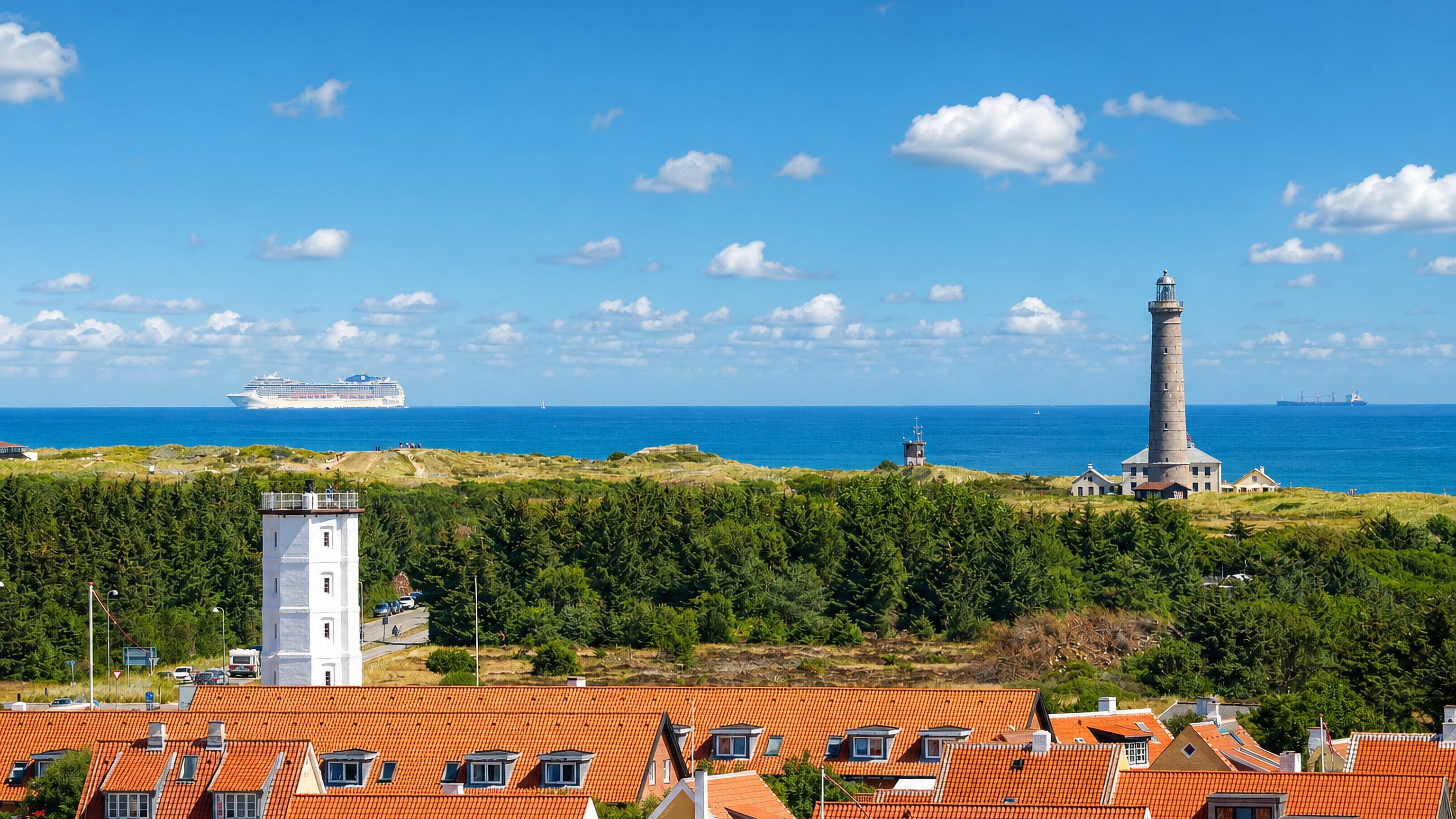
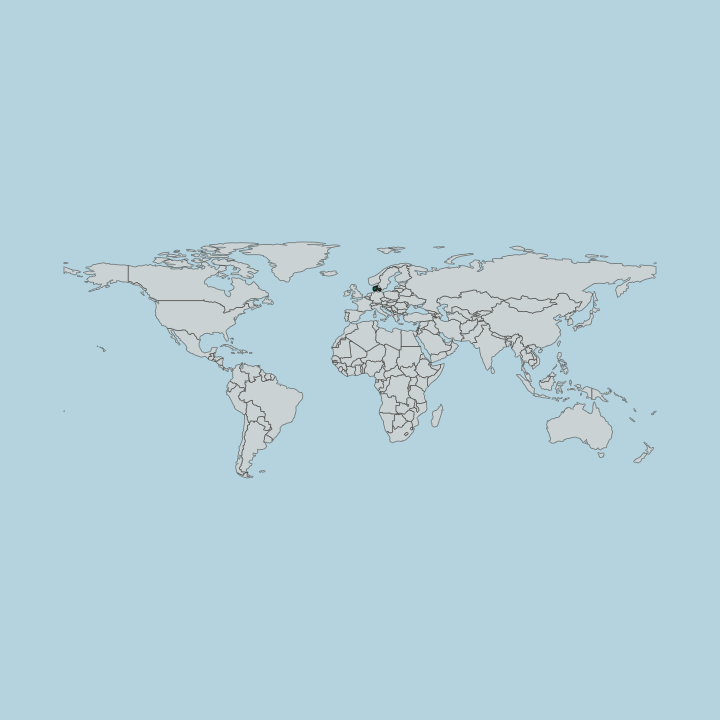
Skagen is the northernmost town in Denmark, on the Skagen Odde peninsula in the far north of Jutland.
Hotel links are affiliate links: booking through them may earn us a commission, at no extra cost to you. It never affects how places are ranked. How this works


Where to stay in Skagen
The practical side of choosing where to sleep.
Most beds in Skagen gather in the old town and along the harbour, where hotels, inns and guesthouses stand among the yellow houses within a short walk of Skagen Kirke, the Port of Skagen and the Skagens Museum. The centre suits visitors who want the art houses, the quays and the restaurants on the doorstep. For most visitors, the old town is the natural place to stay.
Out toward the tip, holiday houses and summer cottages scatter through the dunes of the Skagen Odde peninsula near Grenen and the Skagen Odde Naturcenter, the family choice for a week by the wide beaches at the top of Jutland. These book out early in summer. South along the coast, quieter guest rooms and lodging spread through Frederikshavn Municipality for those touring the far north by car between the museums, the dunes and the fishing harbour.
Reserve well ahead in July. Skagen draws crowds in season, so book early and use the town as the base for the peninsula and the meeting of the seas.
Find hotels in Skagen
Direct booking searches for these neighbourhoods.
Old town and harbour
inns among the yellow houses by Skagen Kirke, the Port of Skagen and the Skagens MuseumFind hotels in Old town and harbourfamilies on a beach week at the tipSkagen Odde dunes
summer cottages near Grenen and the Skagen Odde NaturcenterFind hotels in Skagen Odde dunesdrivers touring the far northSouthern coast road
quieter guest rooms along the Frederikshavn Municipality coast. Few places to stay nearby — book ahead.Find hotels in Southern coast roadHotel links are affiliate links: booking through them may earn us a commission, at no extra cost to you. It never affects how places are ranked. How this works
Things to do in Skagen
Ranked by global recognition; descriptions from Wikidata (CC0).
Museums & Galleries
4- Skagens Museum Heritage
- Anchers Hus Heritage Historic house and studio museum
- Skagen Bunker Museum
- Kystmuseet Skagen Danish museum
Churches & Religious Sites
2- Skagen Church church building in Frederikshavn Municipality
- The swedish sailor church
worth knowingacross 2 categories in Skagen
About Skagen
What is Skagen known for?
Skagen is the northernmost town in Denmark, set on the sandy Skagen Odde peninsula in the far north of Jutland. The fishing port and the painters made its name, the old town gathered around Skagen Kirke and the Port of Skagen on the east coast. Light defines this place.
Visitors come for the art of the Skagens Museum and the studio home of Anchers Hus, for the tip of the land at Grenen where two seas meet, and for the wide beaches of Frederikshavn Municipality at the very top of the country.
What are the main landmarks in Skagen?
The art draws the crowds. Skagens Museum holds the work of the painters who gathered here for the northern light, and their studio homes survive as the museums of Anchers Hus and Drachmanns Hus in the old town. Small museums fill the streets.
The Kystmuseet Skagen tells the coastal story, the Grenen Kunstmuseum stands near the tip, the Skagen Bunkermuseum keeps a wartime defence, and the Skagen Odde Naturcenter reads the shifting sands. Older marks ring the centre. Skagen Kirke serves the town near the Port of Skagen, the Svenske Sømandskirke recalls the Swedish fishing crews, and the burial mound of Svallerbakke rises from the heath of Frederikshavn Municipality as a protected ancient monument.
What is the history of Skagen?
Skagen grew from the fishery at the tip. Families gathered on the sandy Skagen Odde peninsula at the very north of Jutland, where they lived off the catch landed on the exposed shore and the drifting sand buried farms and even threatened the old church through the long hard centuries on this corner of the coast. The sand was a constant enemy.
That struggle and the working harbour are remembered in the Kystmuseet Skagen, while the parish raised the present Skagen Kirke as the town settled near the Port of Skagen. Then the painters came. In the late nineteenth century artists travelled north for the clear light over the dunes and the meeting of the seas, and their work and homes are gathered now in the Skagens Museum, Anchers Hus and Drachmanns Hus.
The Port of Skagen rose into the country's main fishing harbour, and the wide beaches and the tip at Grenen drew holidaymakers to the top of Denmark. Skagen became one of the best-known towns of Frederikshavn Municipality, its old fishing community settled into a modern life of art, harbour and summer crowds.
Where is Skagen?
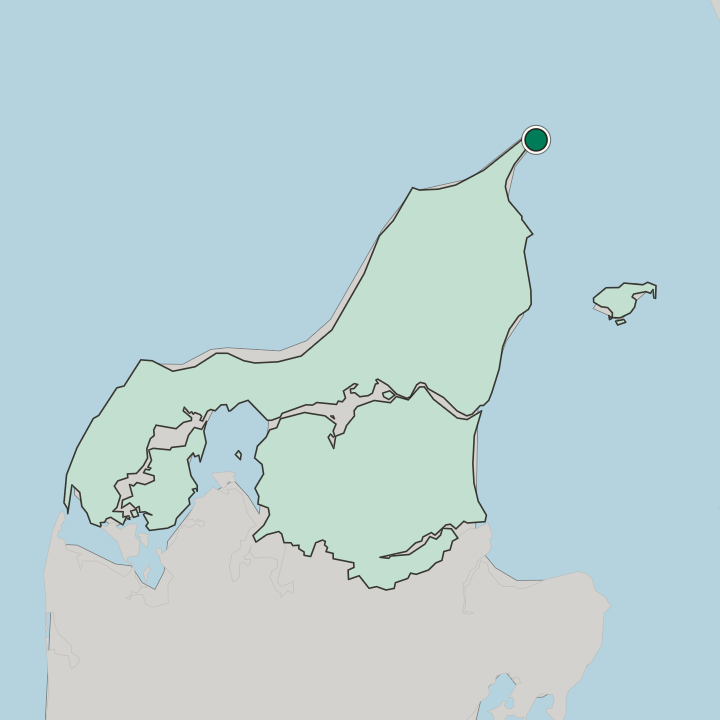
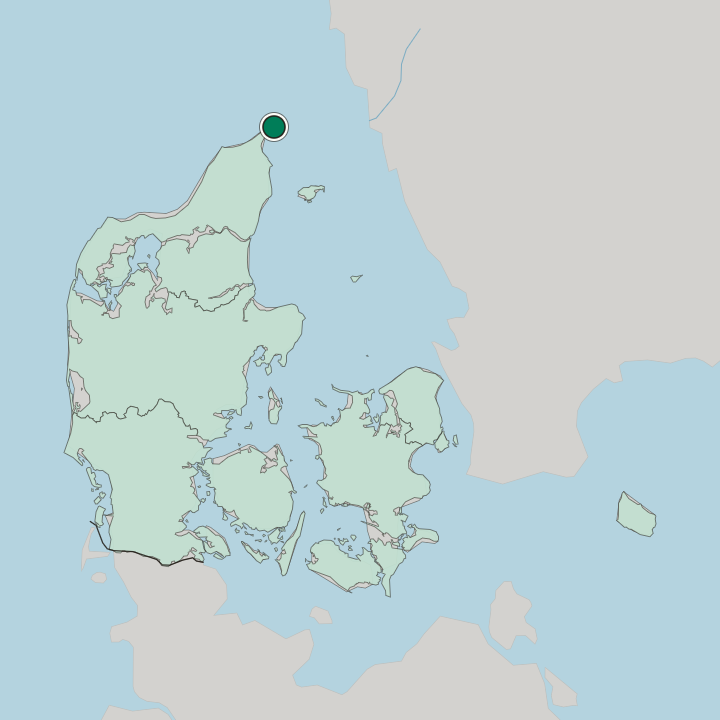
Skagen lies at the very top of Jutland, in the north-eastern part of North Denmark Region, on the east coast of the long Skagen Odde peninsula. Sand and dune cover the land, narrowing to the spit of Grenen where two seas meet at the tip. The setting is low, open and shifting. Frederikshavn Municipality runs south down the peninsula from the town, gathering the dunes, heath and beaches of the far north, while the road and rail line carry traffic the length of the spit to Frederikshavn and on toward Aalborg.
What is the climate of Skagen?
Skagen has the cool, wind-blown maritime climate of the far northern tip of Jutland. Winters stay mild but grey and gusty, the surrounding seas holding off hard frost while gales drive rain and salt spray across the open dunes of the Skagen Odde peninsula. Summers are fresh rather than hot.
The clear northern light that drew the painters falls long over the sand and water through the bright months, when daylight lingers late at the top of the country. Strong winds shape the dunes and the bent grass all year at Grenen.
How do you get to Skagen?
Skagen sits at the end of the line up the peninsula. A rail line and road run north along the Skagen Odde from Frederikshavn to the town, carrying the traffic out to the tip through Frederikshavn Municipality. Many visitors arrive by car or train.
Frederikshavn, the ferry port to the south, links the far north to Sweden and the rest of Denmark, while Aalborg and its airport handle longer journeys before the final run north to Skagen.
Common questions
What is the best area to stay in Skagen?
Old town and harbour: art lovers wanting the quays and museums close. Skagen Odde dunes: families on a beach week at the tip. Southern coast road: drivers touring the far north.
Good for
More cities in North Denmark Region
Updated October 2026