Ecuador: Regions, Cities & Travel Guide
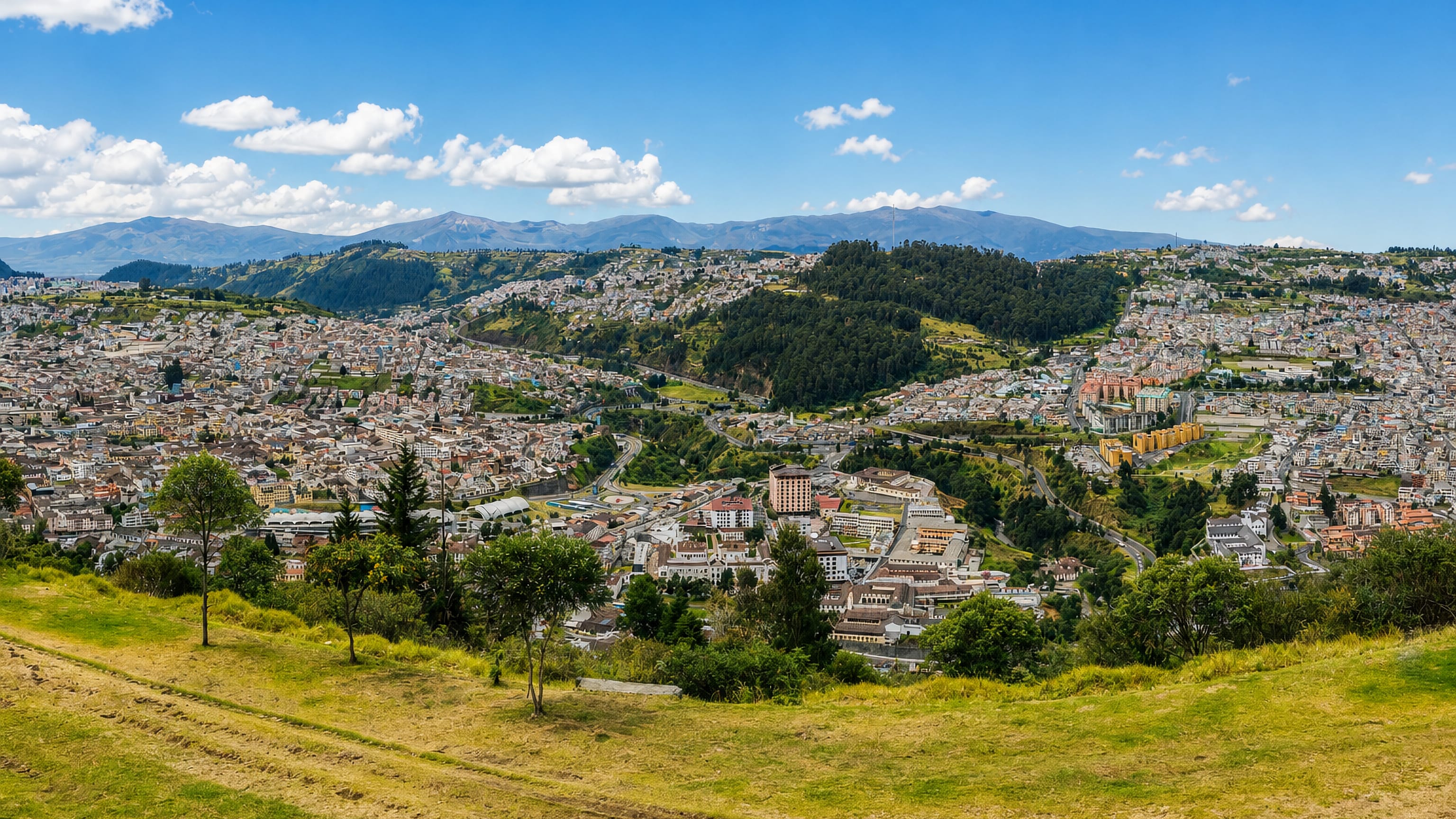
Ecuador straddles the Equator in northwestern South America, its capital Quito set high in the Andes above the Pacific coast.
Hotel links are affiliate links: booking through them may earn us a commission, at no extra cost to you. It never affects how places are ranked. How this works


Top destinations in Ecuador
Cities to start from, then drill into areas and hotels.
 Ecuador
Quito
Bell towers crowd a high Andean valley in Quito, capital of Ecuador and of Pichincha, set below the volcano Pichincha and known for its colonial old town.Where to stay →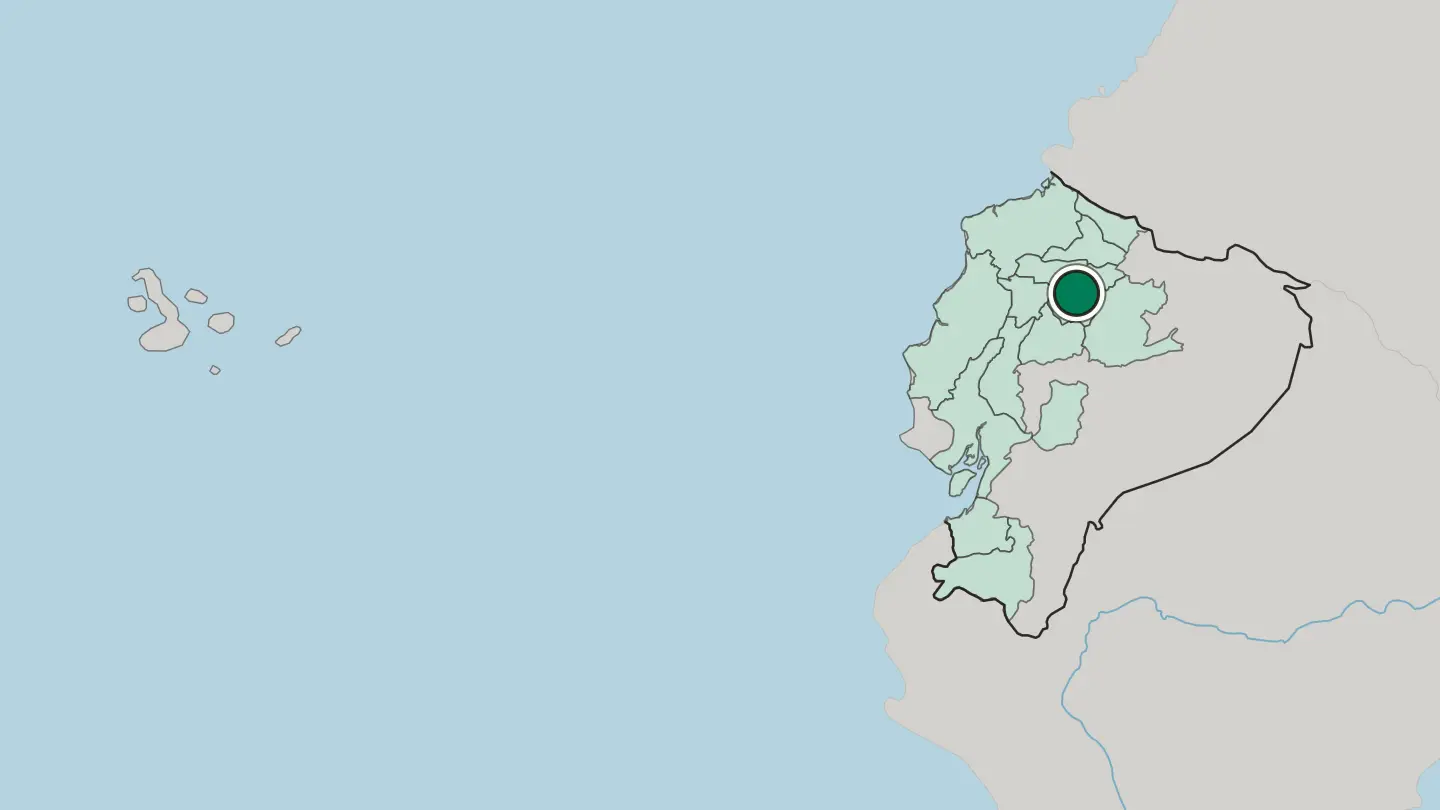
 Ecuador
Guayaquil
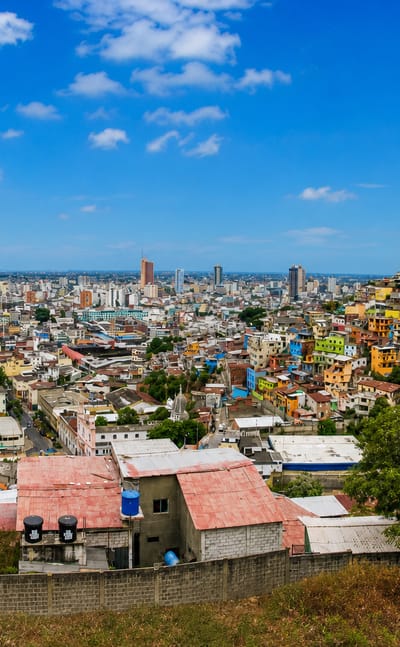
River water runs past the wharves of Guayaquil, the largest city of Ecuador and the port of Guayas, known for its riverfront and colonial churches.Where to stay →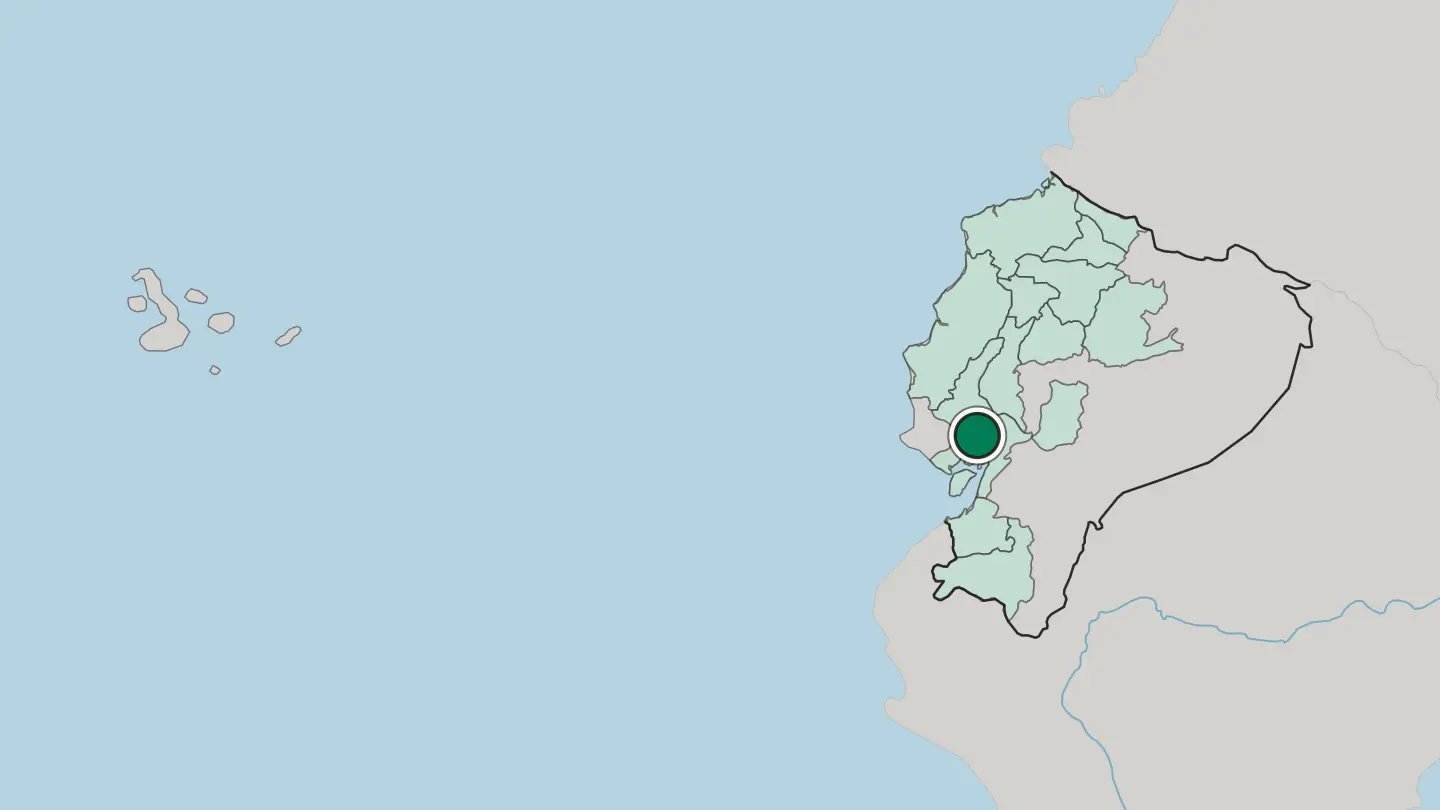 Ecuador
Manta
Manta is a city of the Pacific coast of Ecuador in Manabí, the country's great tuna port, an old seafaring town near where the true Panama hat is woven.Where to stay →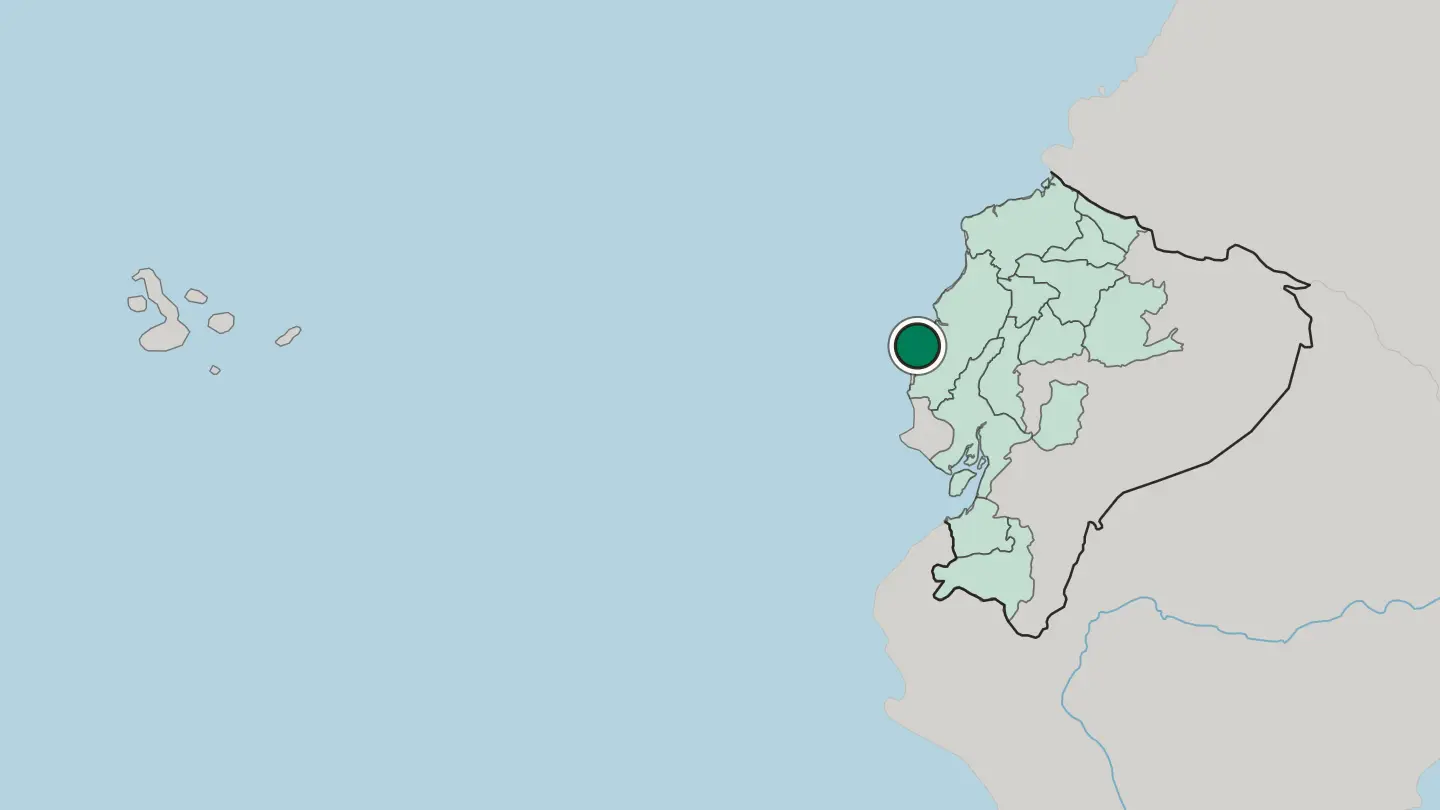
 Ecuador
Esmeraldas
Esmeraldas is a city of northwest Ecuador on the Pacific, the green province by the sea, the heart of Afro-Ecuadorian culture and its marimba music.Where to stay →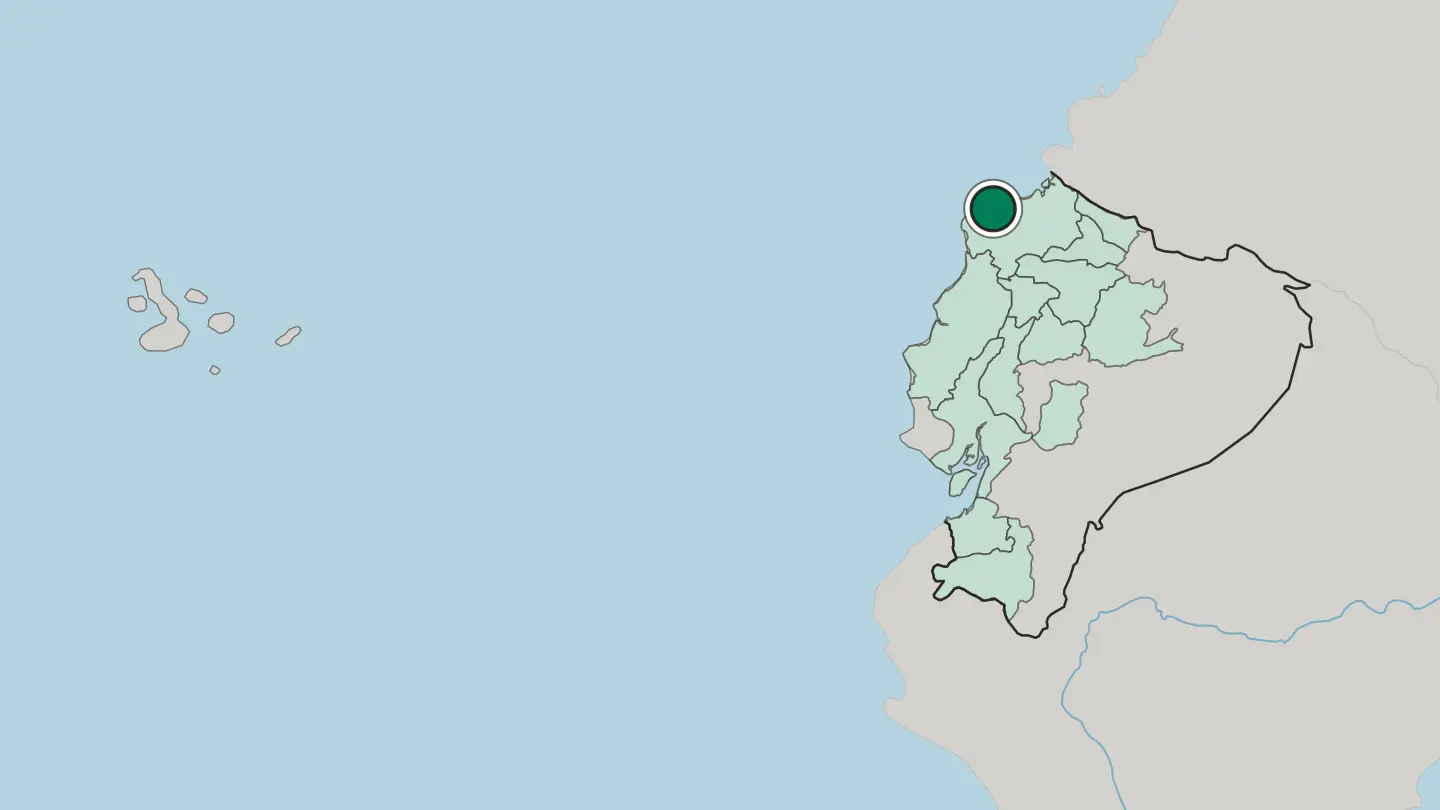
 Ecuador
Loja
Loja is a city of the southern highlands of Ecuador, an old colonial town in a green Andean valley, known nationally as its capital of music and the arts.Where to stay →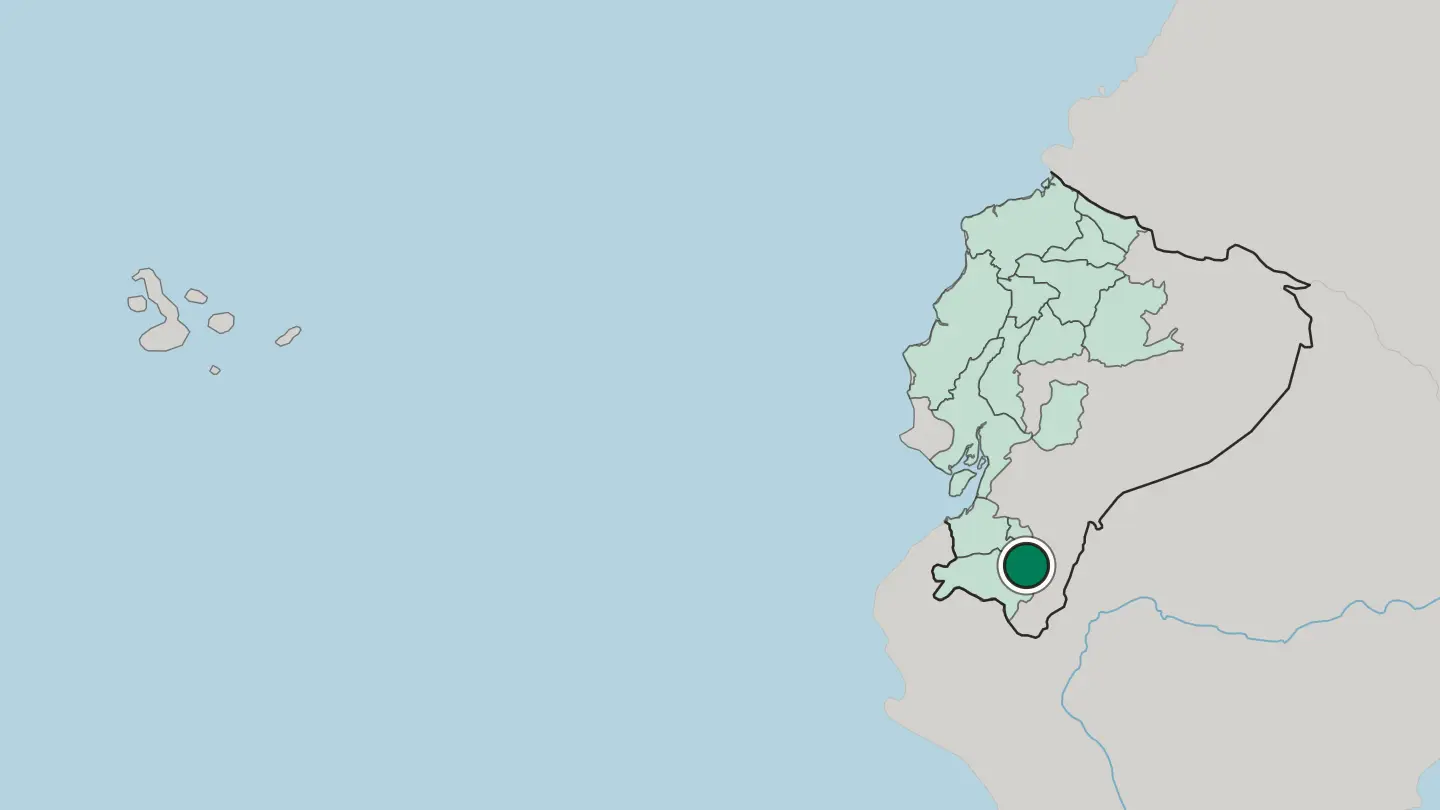 Ecuador
Santo Domingo de los Colorados
Santo Domingo is a city of the western lowlands of Ecuador, a market crossroads between the coast and the highlands, the country of the Tsáchila people.Where to stay →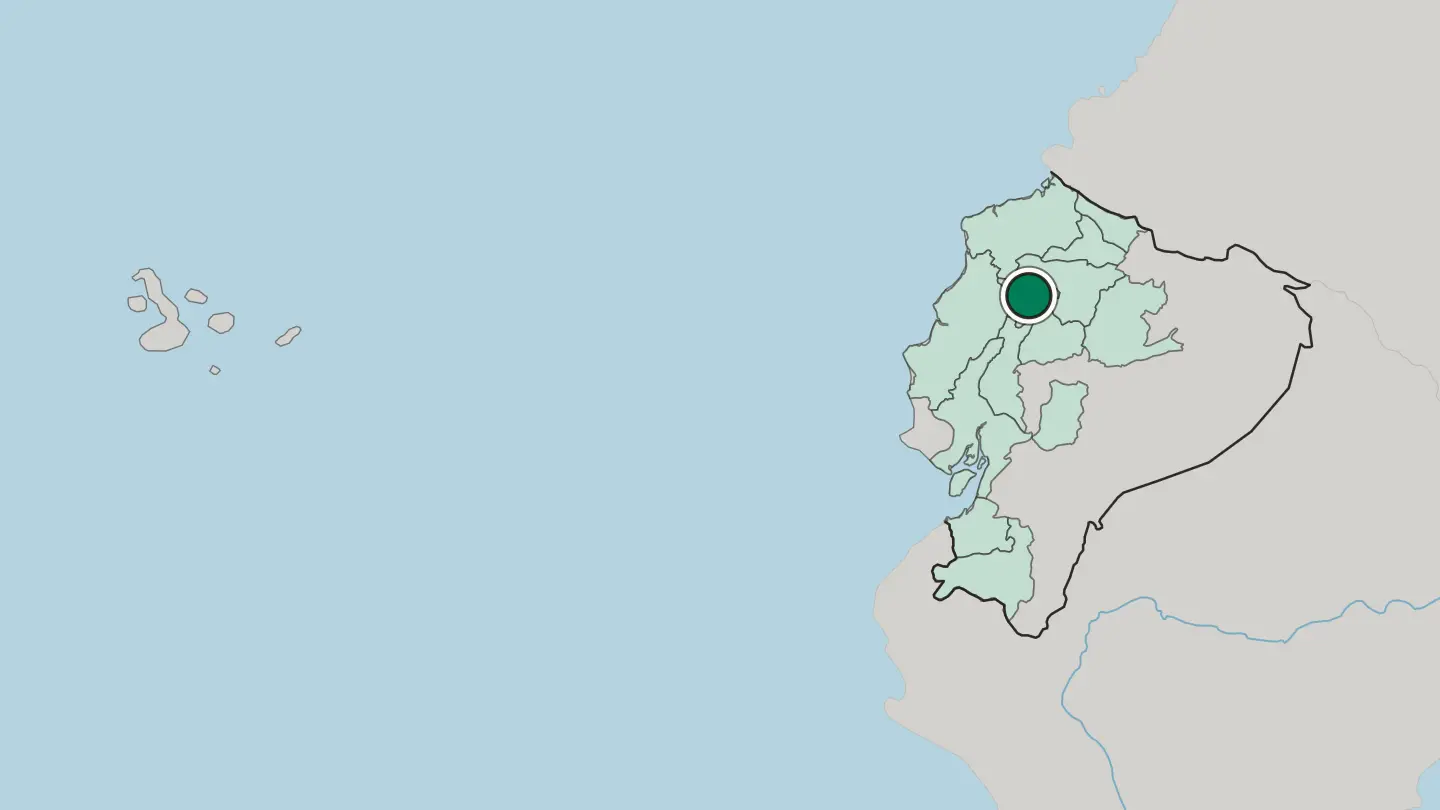 Ecuador
Ambato
Ambato is a city of the central Andes in Ecuador, the city of flowers and fruit, an orchard town of writers and festivals below the Tungurahua volcano.Where to stay →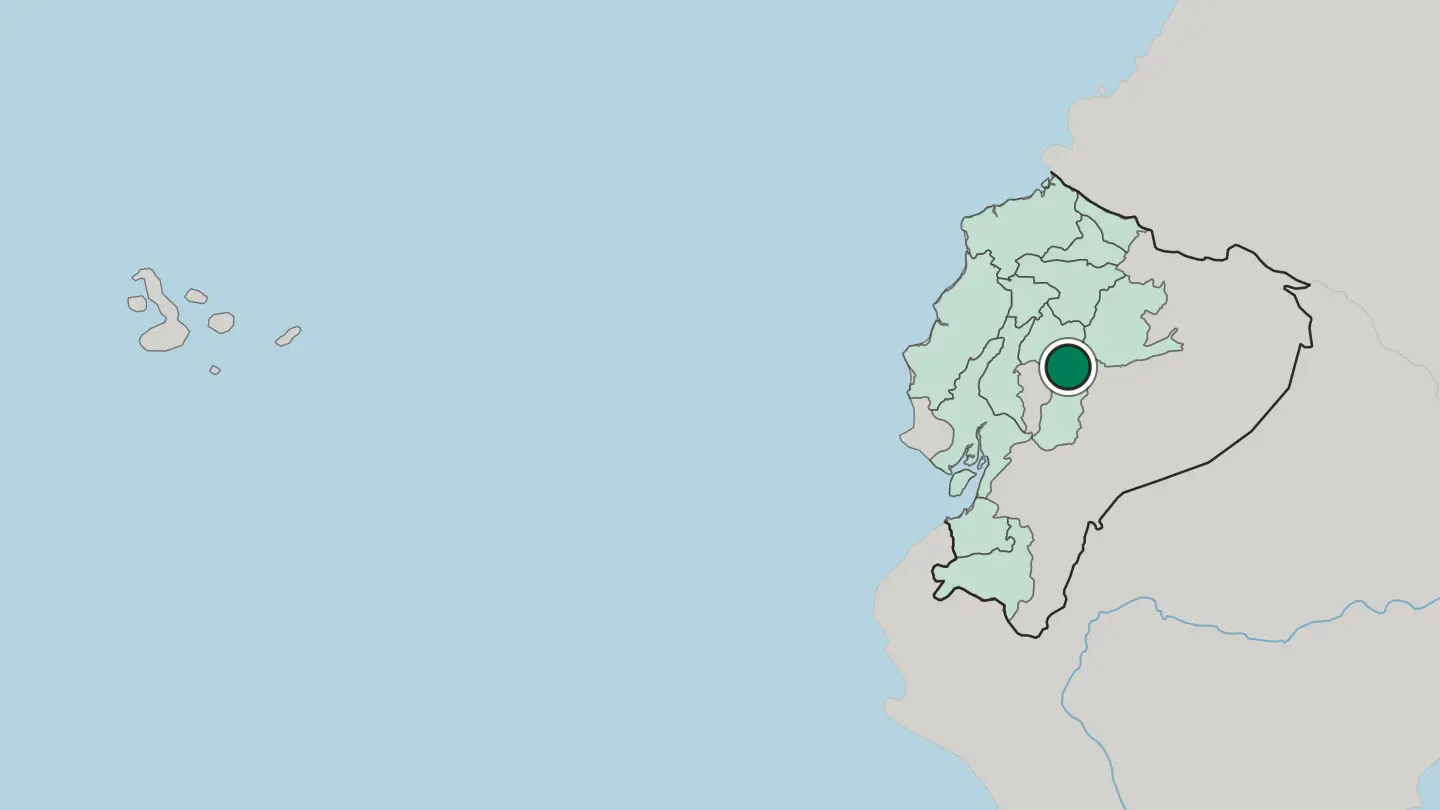 Ecuador
Riobamba
Riobamba is a highland city of central Ecuador at the foot of Chimborazo, the great volcano, an old colonial town called the Sultan of the Andes.Where to stay →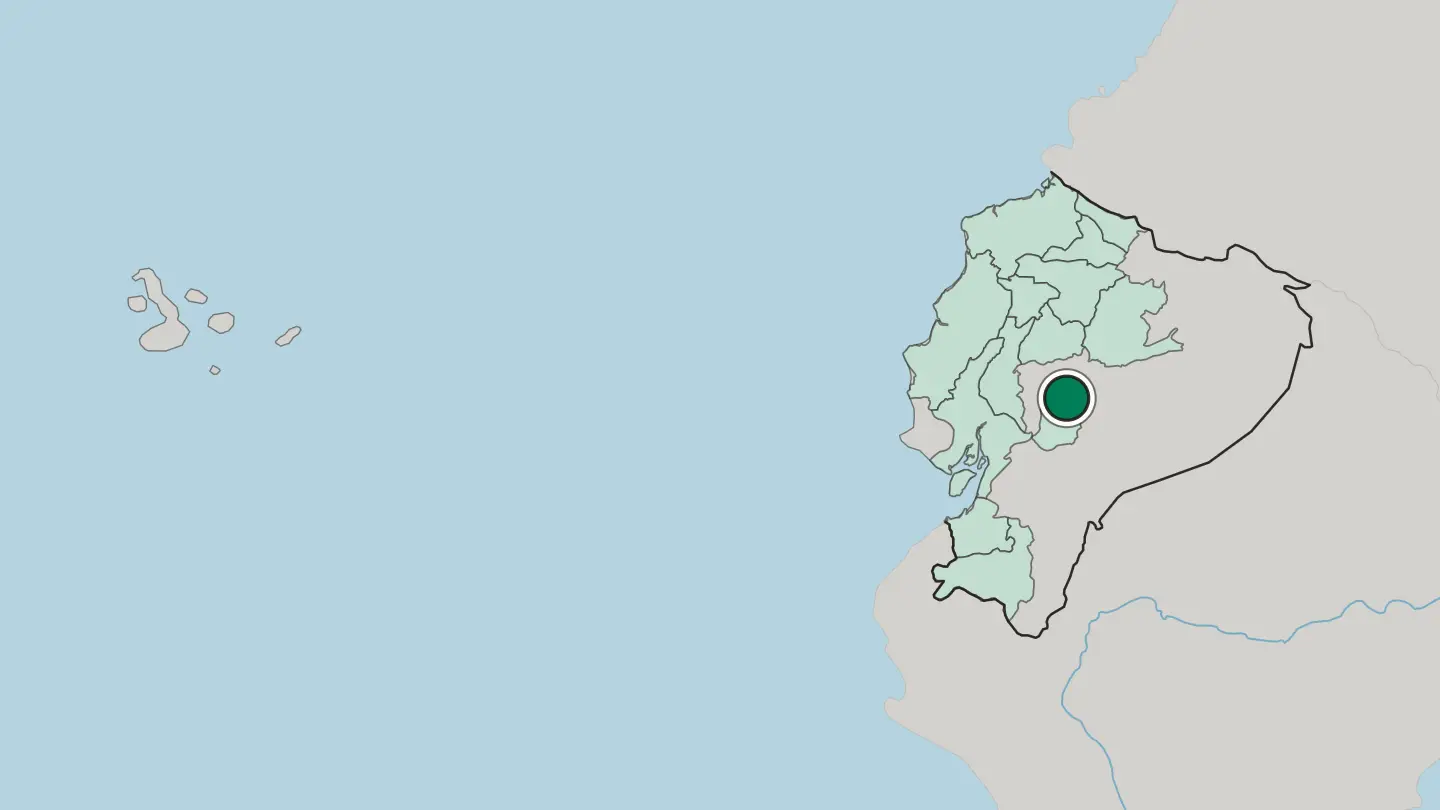
 Ecuador
Machala
Machala is the capital of El Oro Province, a port city on fertile lowlands near the Gulf of Guayaquil known as the Banana Capital of the World.Where to stay →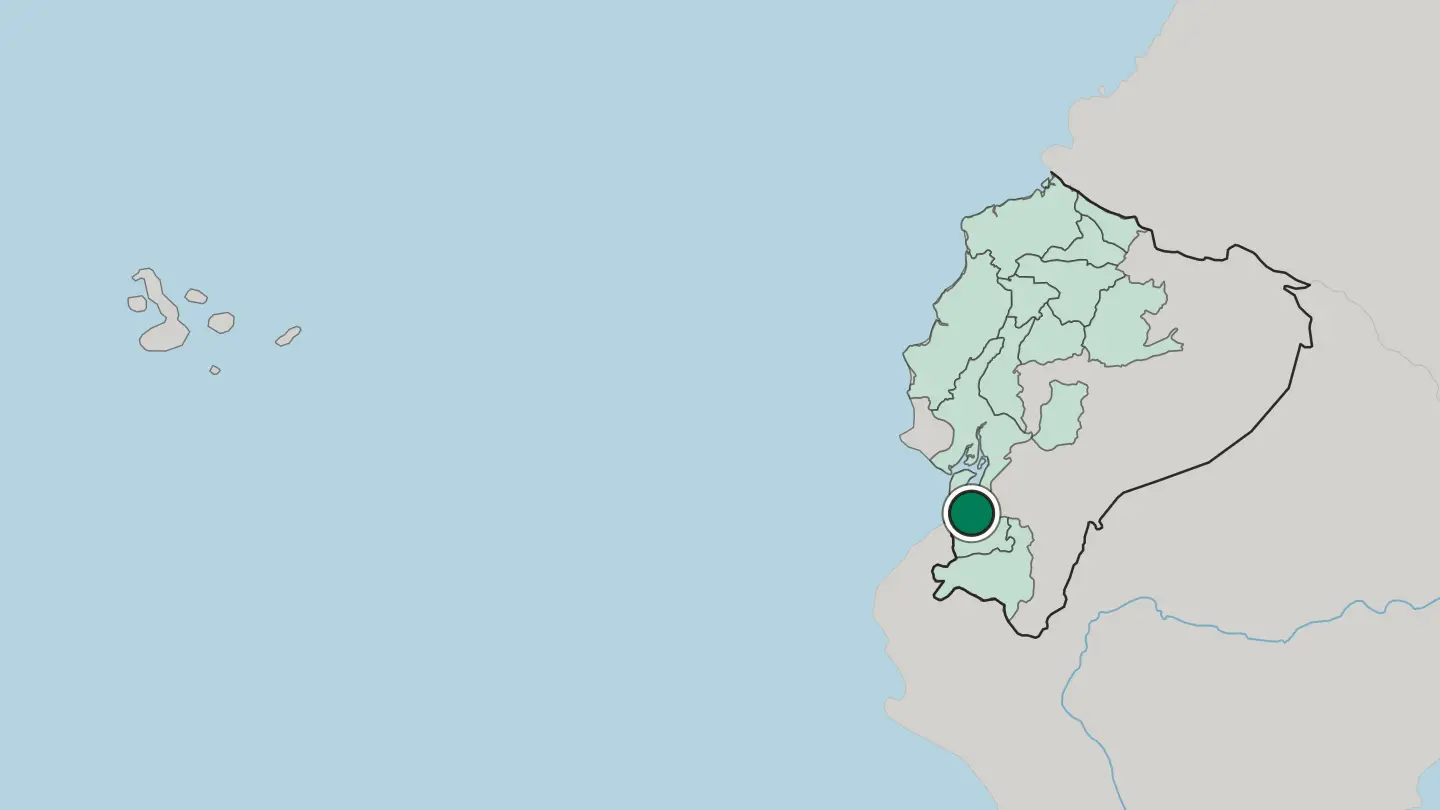
Hotel links are affiliate links: booking through them may earn us a commission, at no extra cost to you. It never affects how places are ranked. How this works
Regions of Ecuador
Ecuador
Chimborazo
Chimborazo is a province of the central Ecuadorian Andes holding Ecuador's highest mountain, part of Sangay National Park, and the city of Riobamba.Towns & cities →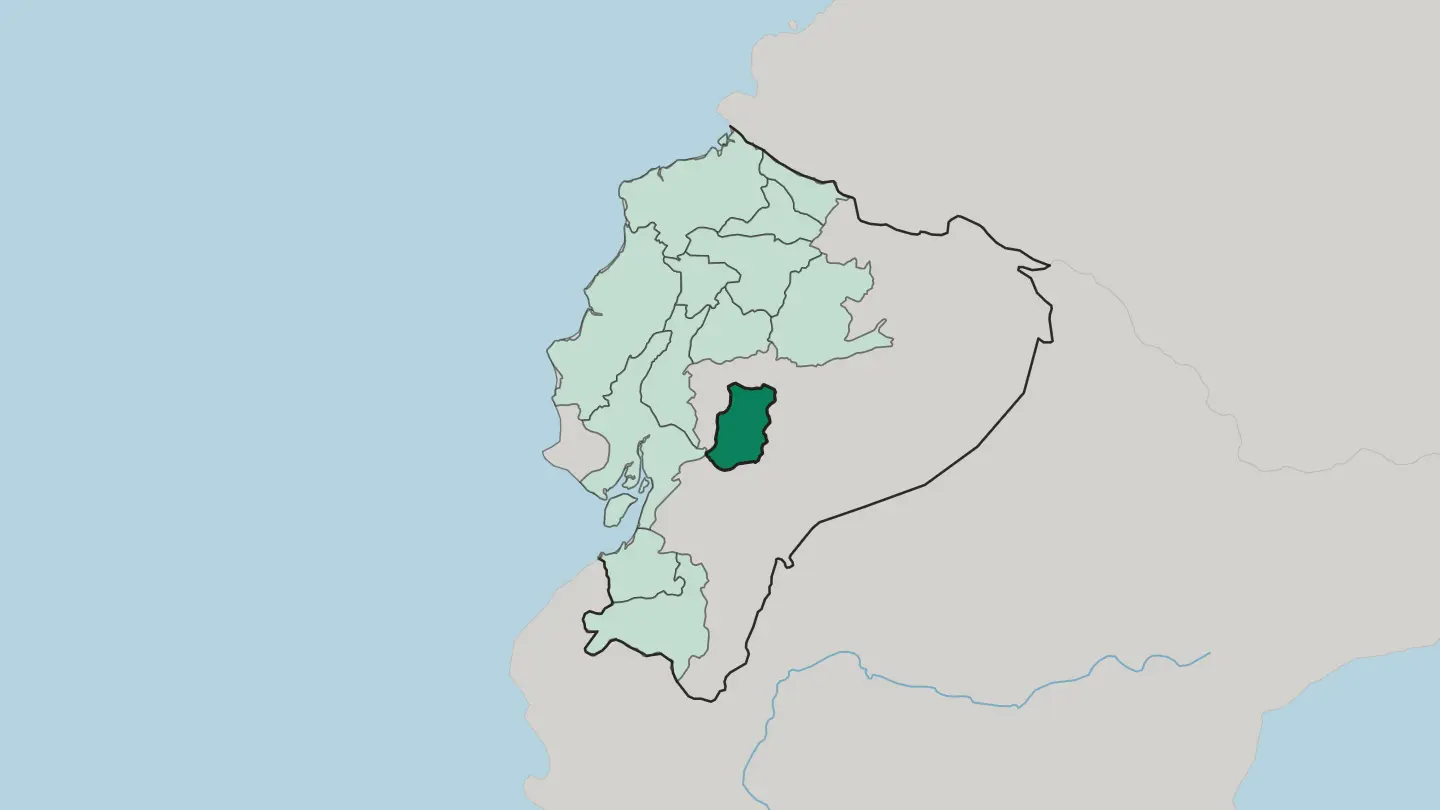 Ecuador
Provincia de Cotopaxi
Provincia de Cotopaxi is an Ecuadorian province built around the volcano it is named for, with Latacunga as its capital on the ground below the cone.Towns & cities →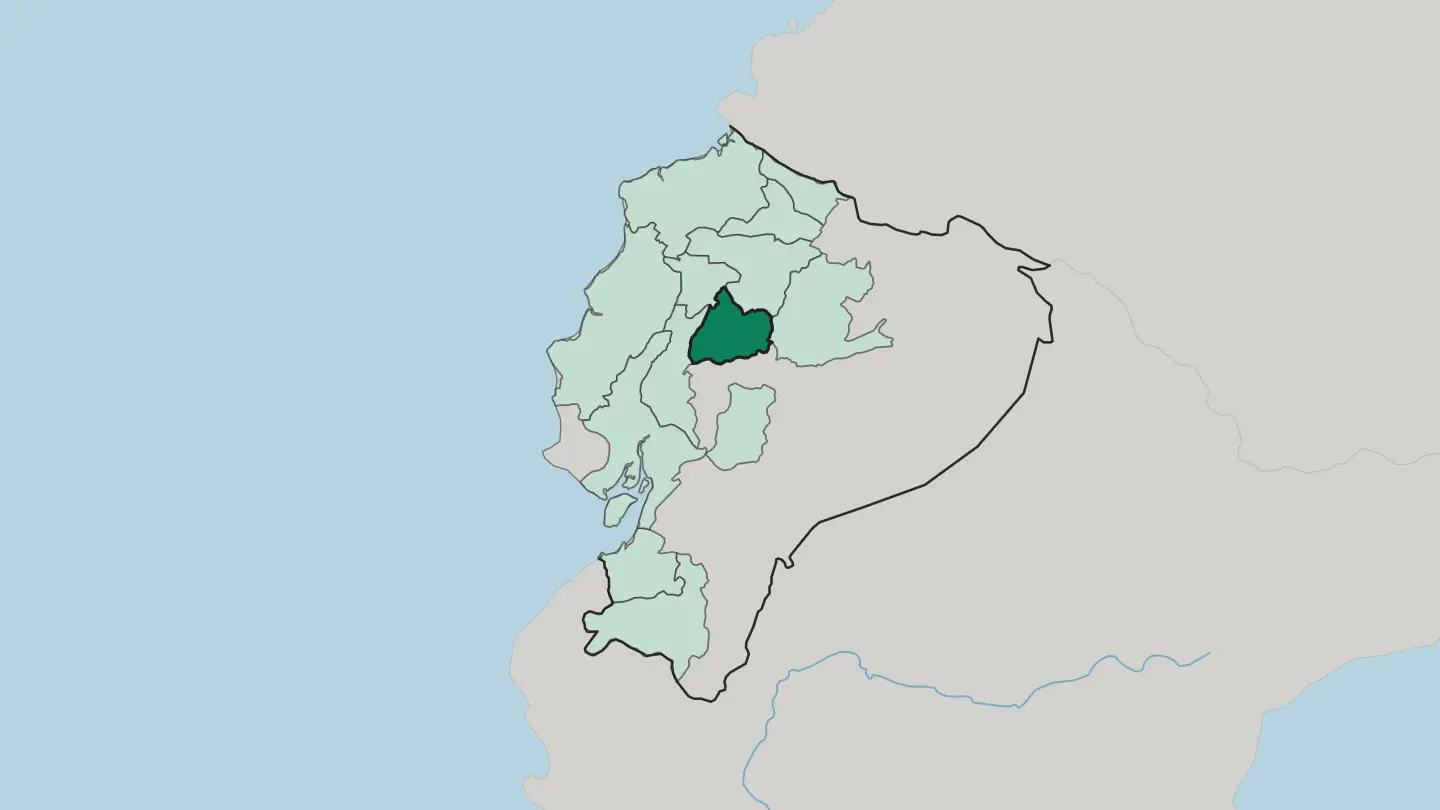 Ecuador
Provincia de El Oro
Provincia de El Oro is a coastal Ecuadorian province of banana country and old gold workings, run from Machala on the lowland plain.Towns & cities →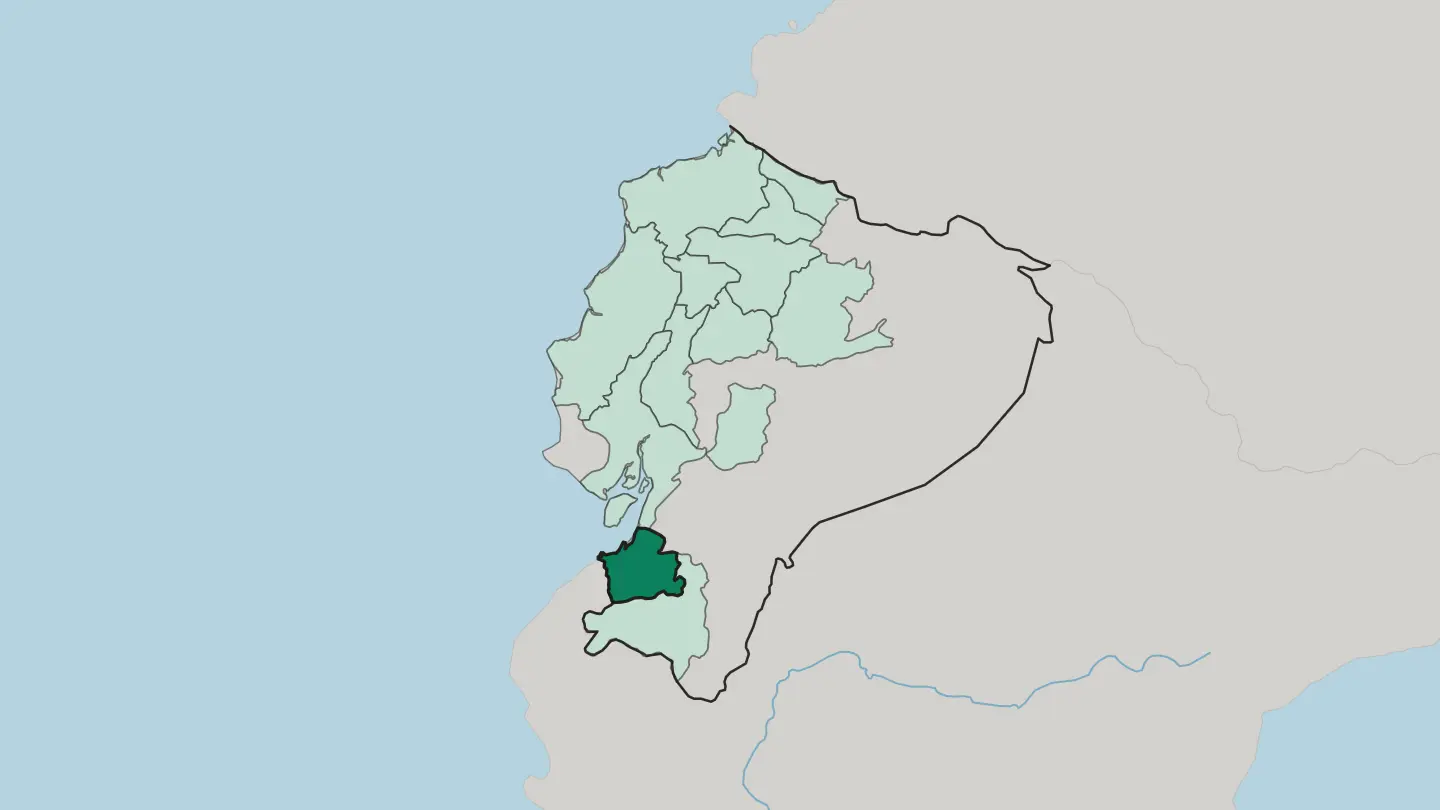 Ecuador
Provincia de Esmeraldas
Provincia de Esmeraldas is Ecuador's Pacific province on the Colombian border, capital Esmeraldas, and the recognised seat of Afro-Ecuadorian culture.Towns & cities →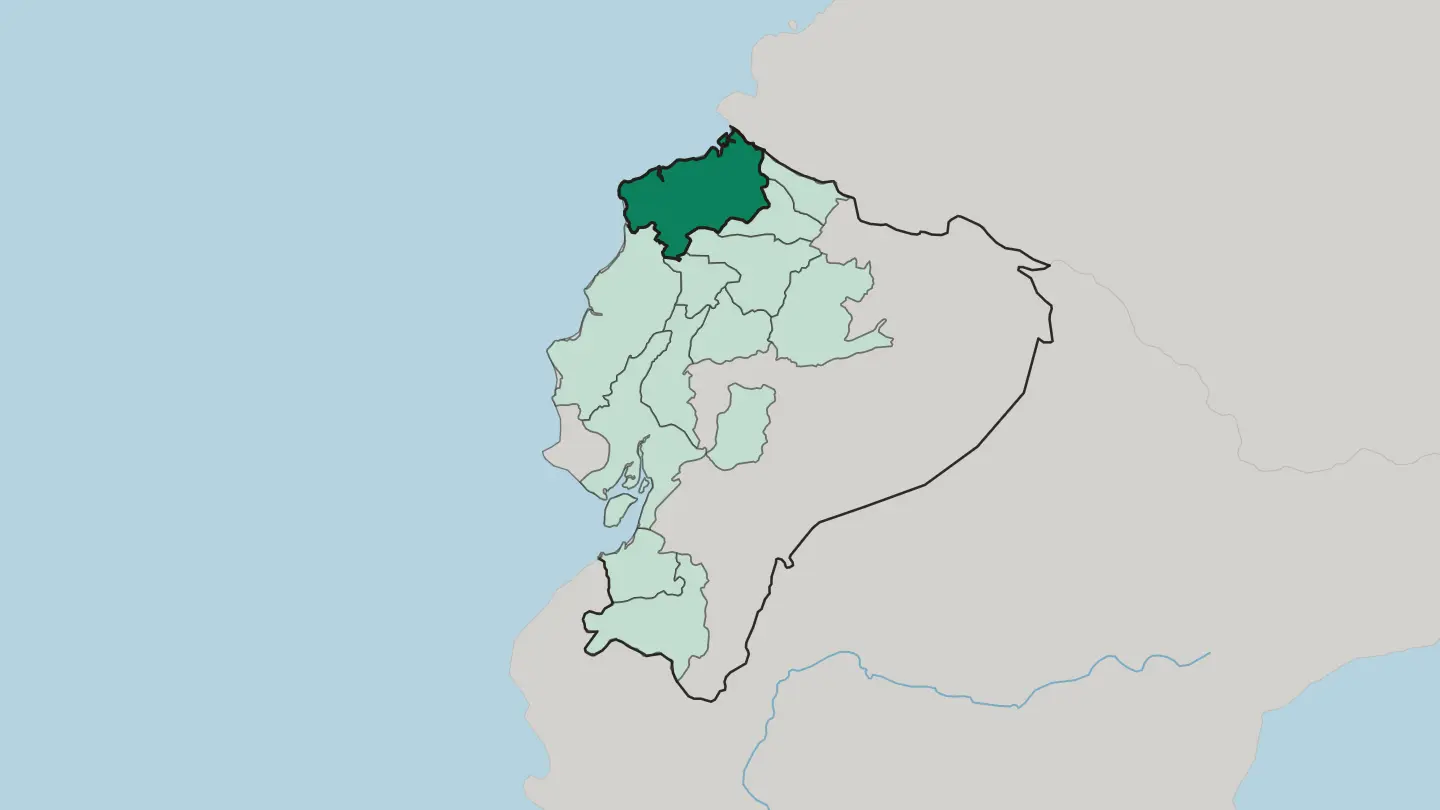 Ecuador
Provincia de Imbabura
Provincia de Imbabura is an Andean province of Ecuador where Spanish shares the ground with Imbaburan Kichwa, administered from Ibarra.Towns & cities →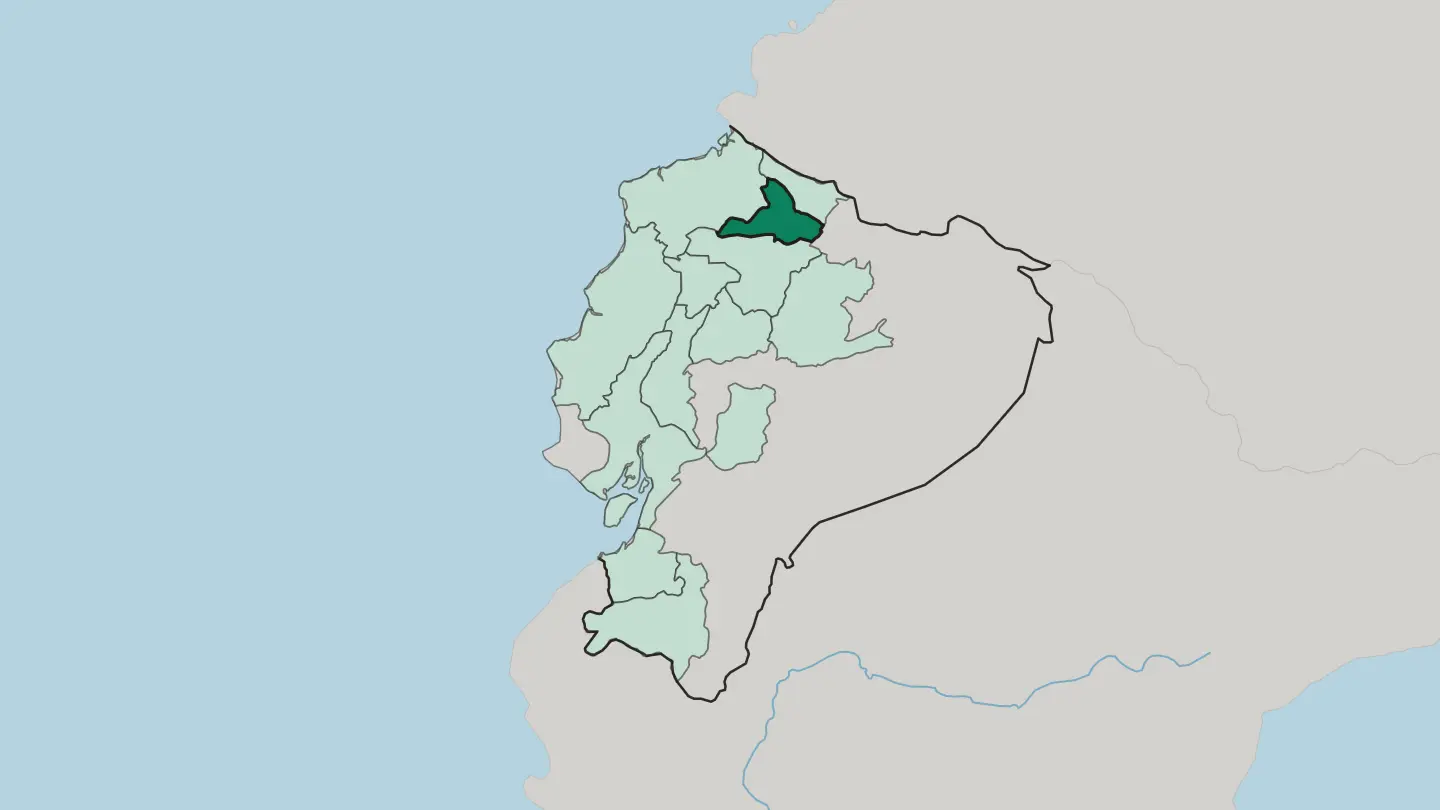 Ecuador
Provincia de Loja
Provincia de Loja sits between El Azuay and Zamora-Chinchipe, its namesake city rebuilt in the Cuxibamba Valley in 1548 after earthquakes.Towns & cities →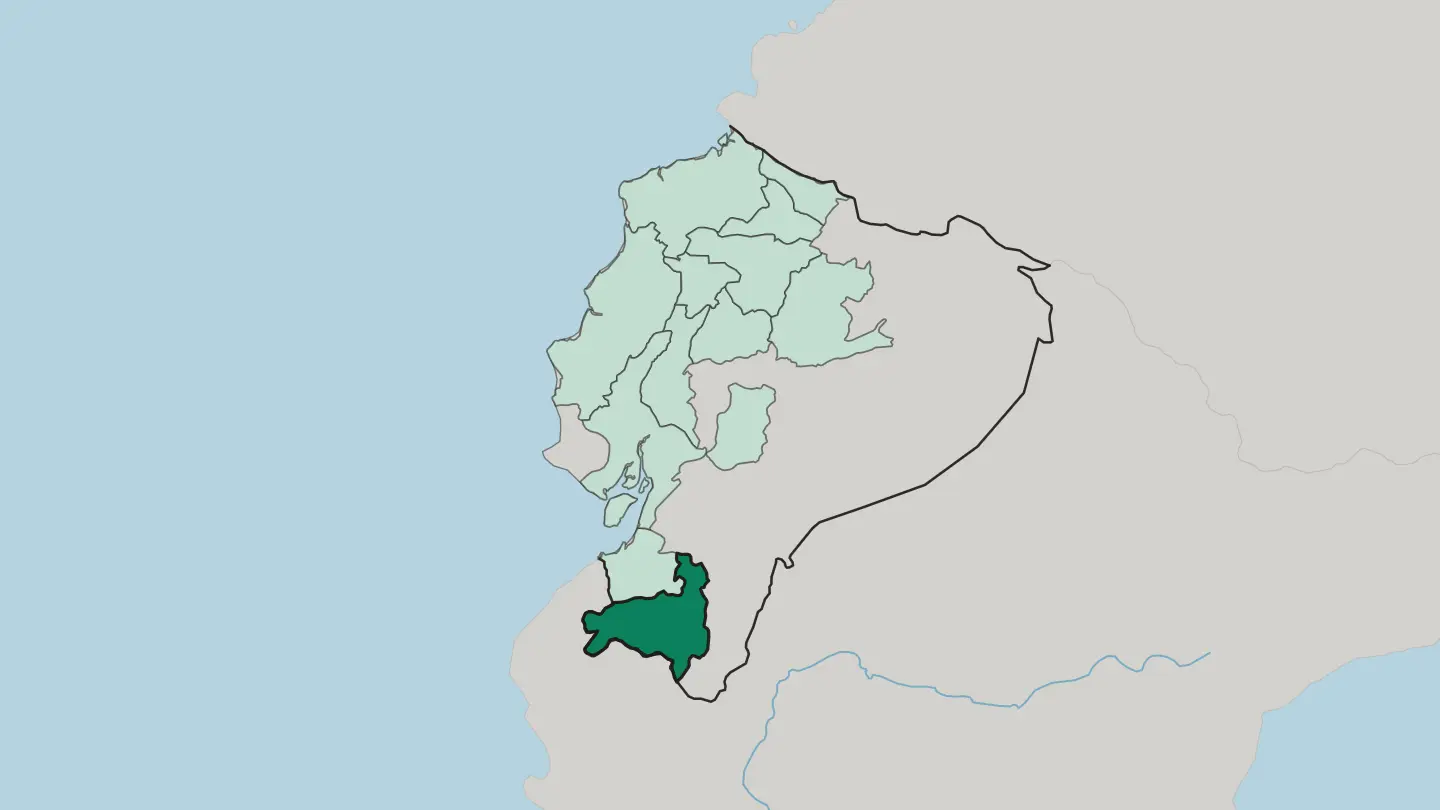
 Ecuador
Provincia de Los Ríos
Provincia de Los Ríos is an inland province of Ecuador, made by legislative decree in 1860 and seated at Babahoyo since 1948.Towns & cities →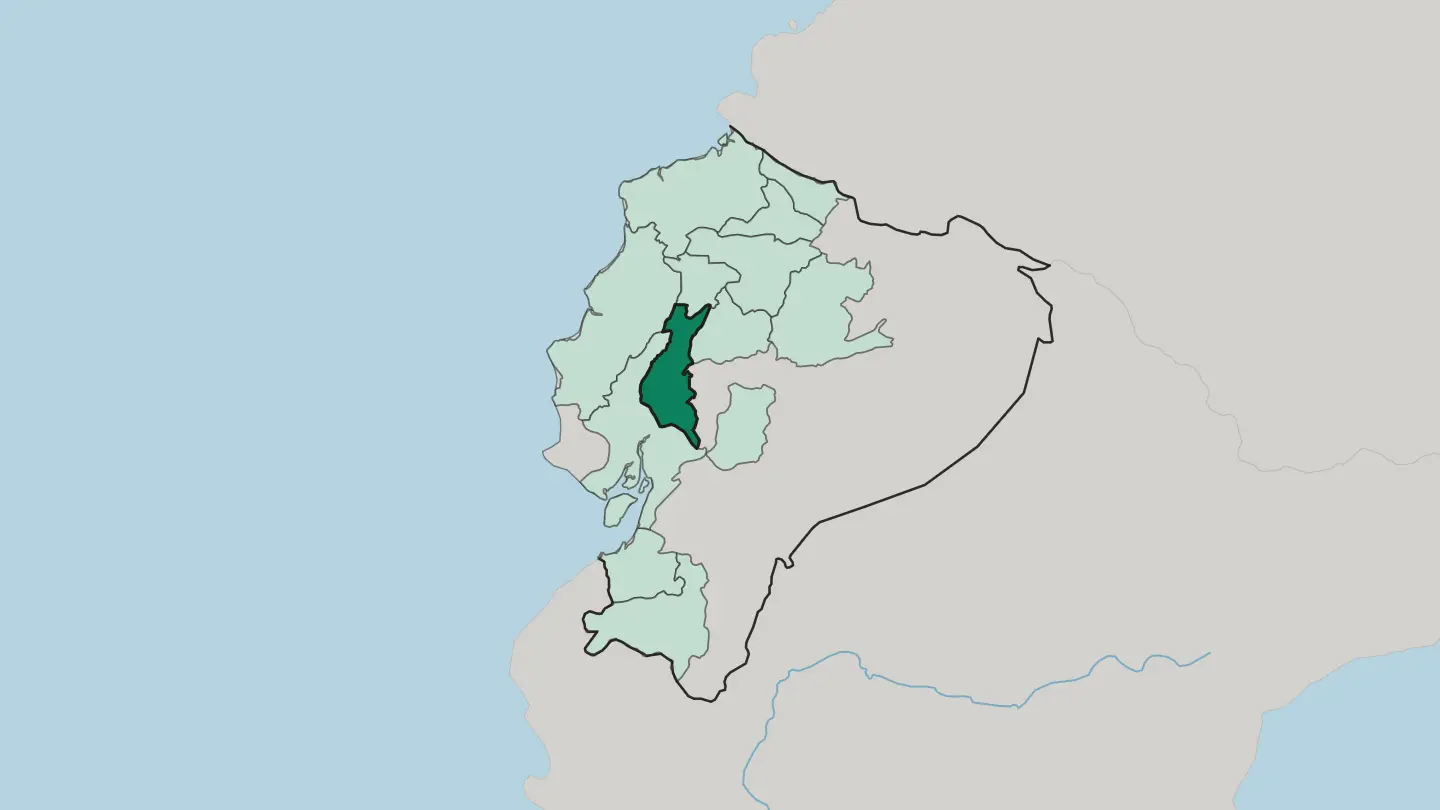 Ecuador
Provincia de Manabí
Portoviejo is the capital. Manabí is a province of Ecuador named for the Manabí people, with 1824 recorded as its founding year.Towns & cities →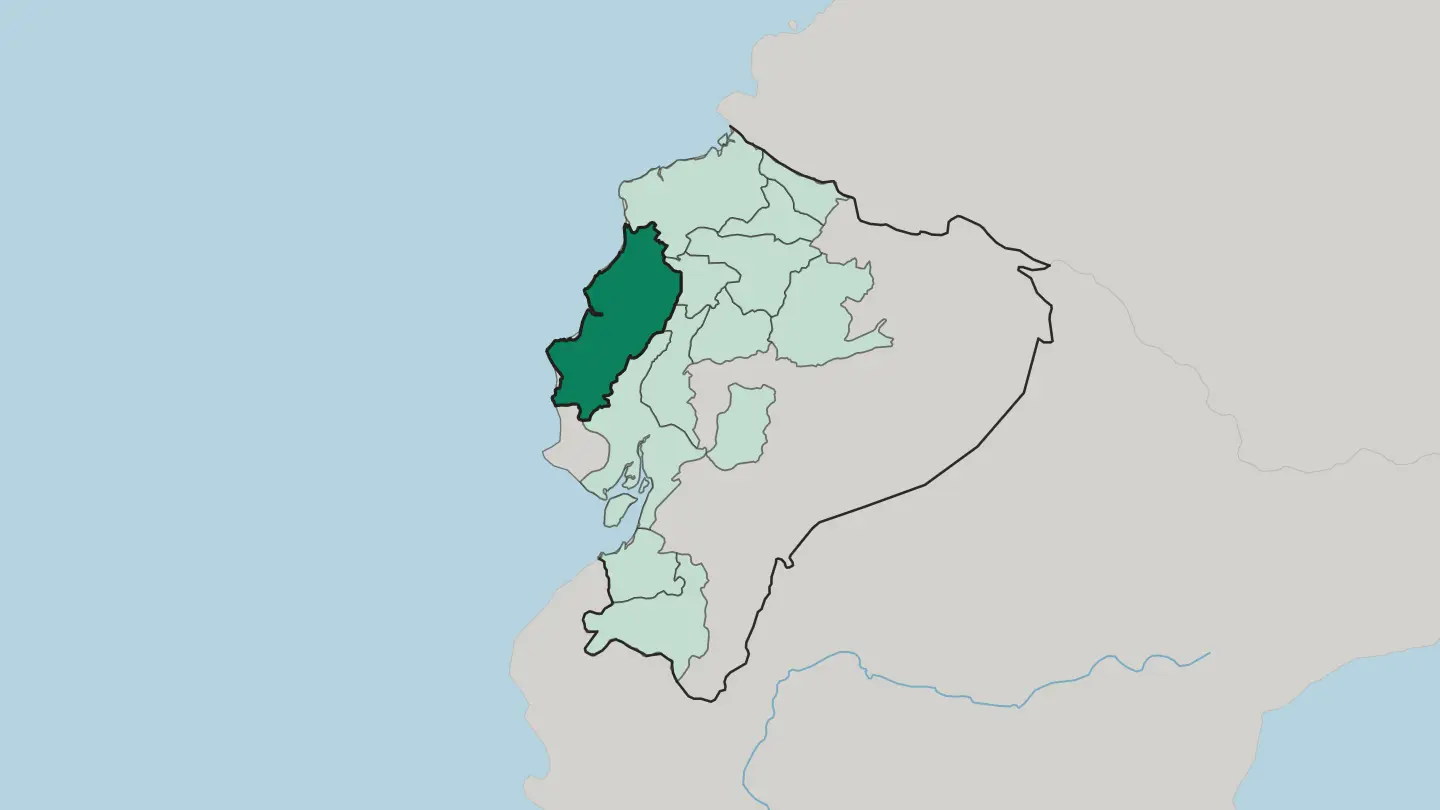 Ecuador
Provincia de Pichincha
Pichincha is a province in the northern Sierra of Ecuador, an Andean highland whose capital and largest city is Quito.Towns & cities →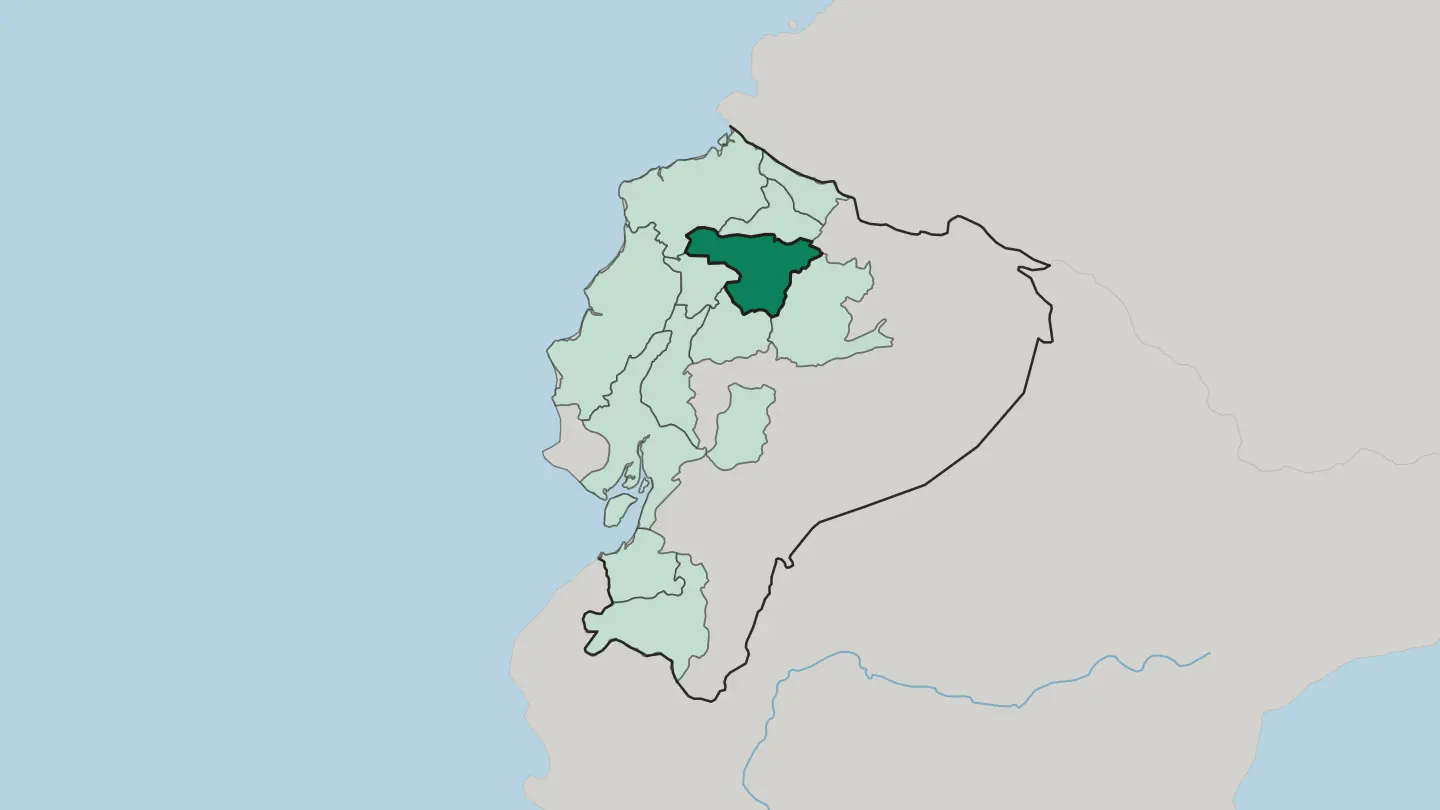 Ecuador
Provincia de Santo Domingo de los Tsáchilas
Santo Domingo de los Tsáchilas is an Ecuadorian province carved from Pichincha in 2007. The map here is young.Towns & cities →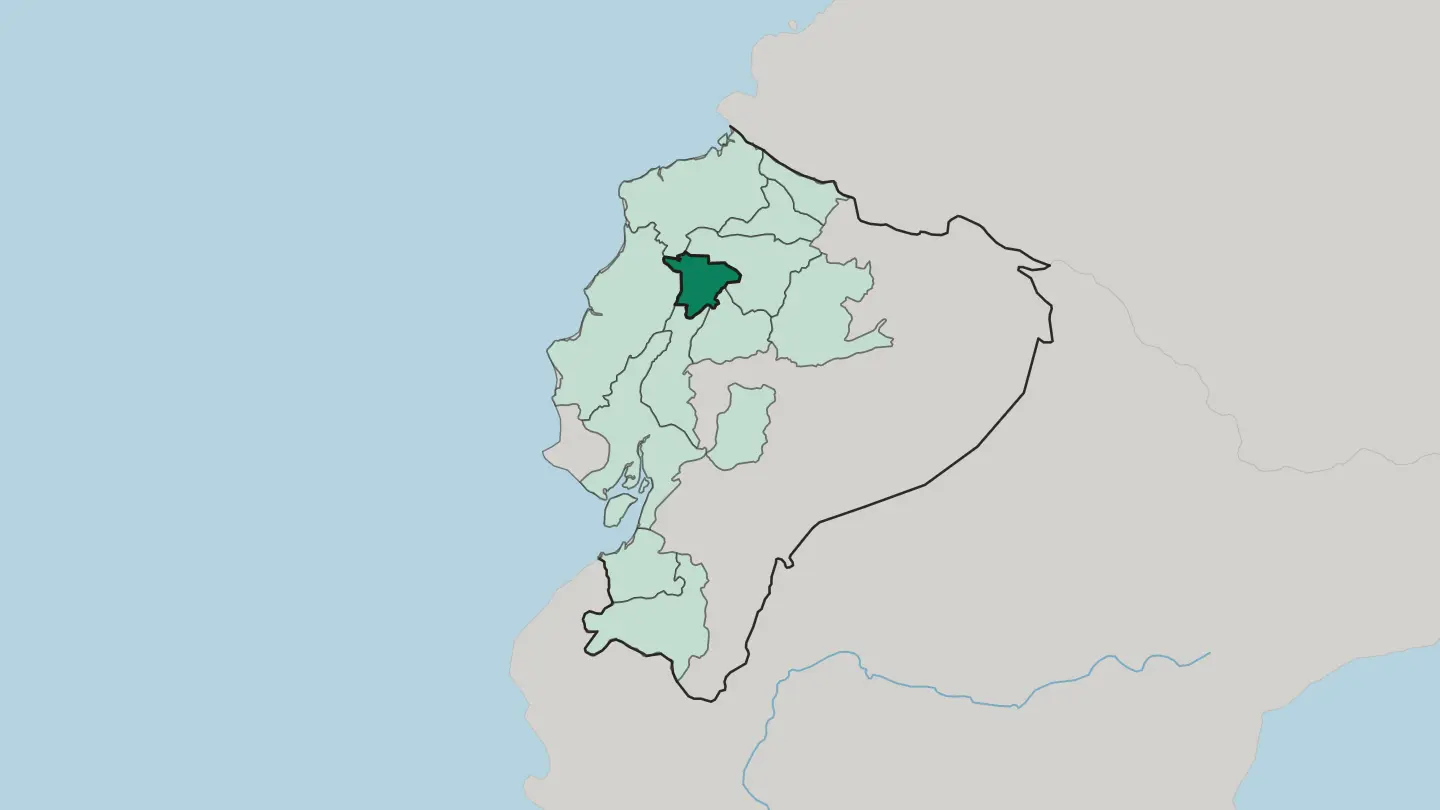
 Ecuador
Provincia del Carchi
Tulcán is the capital of Carchi, the Ecuadorian province that meets Colombia at the Rumichaca Bridge. The Carchi River draws that line.Towns & cities →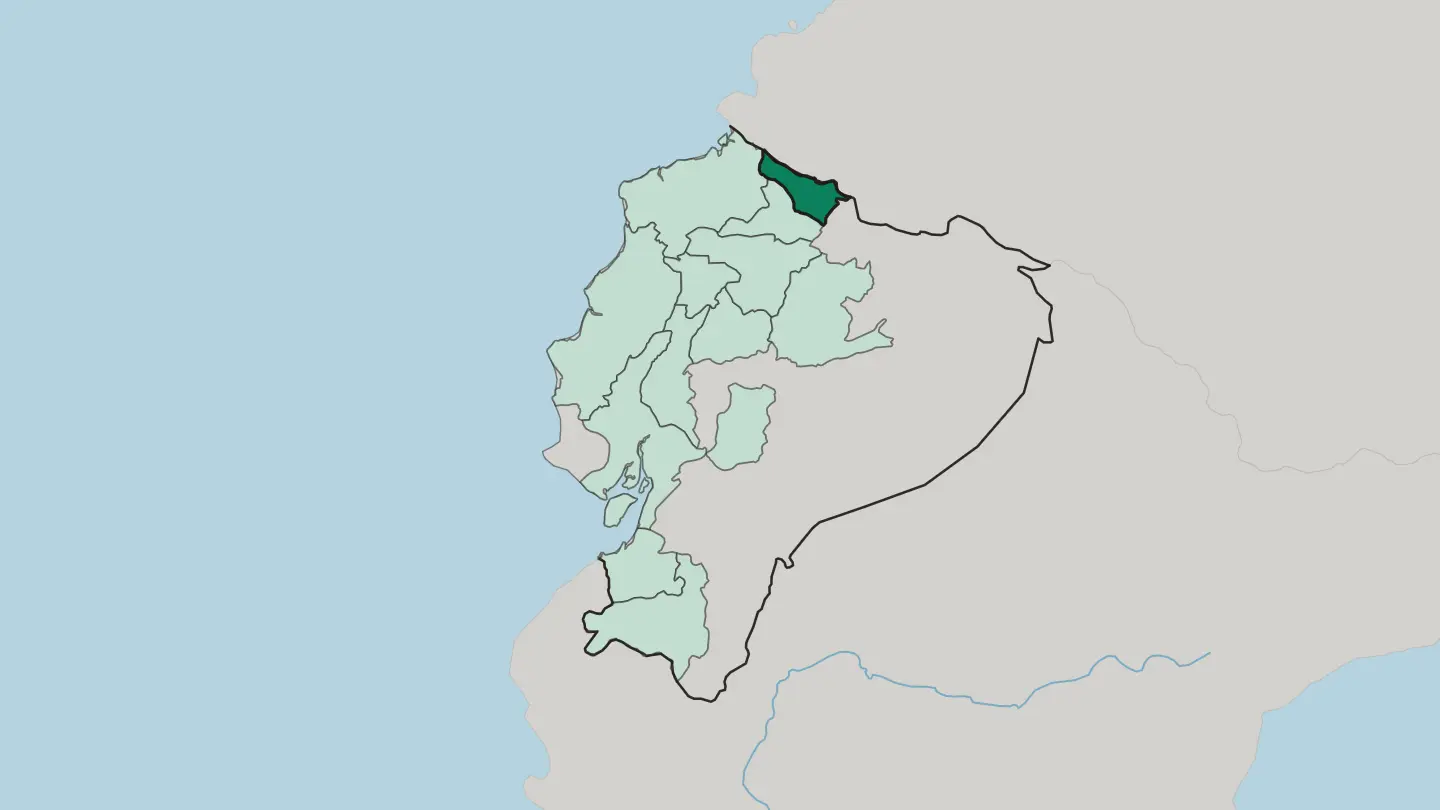 Ecuador
Provincia del Guayas
Guayas is a coastal province of Ecuador on the Pacific Ocean, a lowland region whose largest city and hub is Guayaquil.Towns & cities →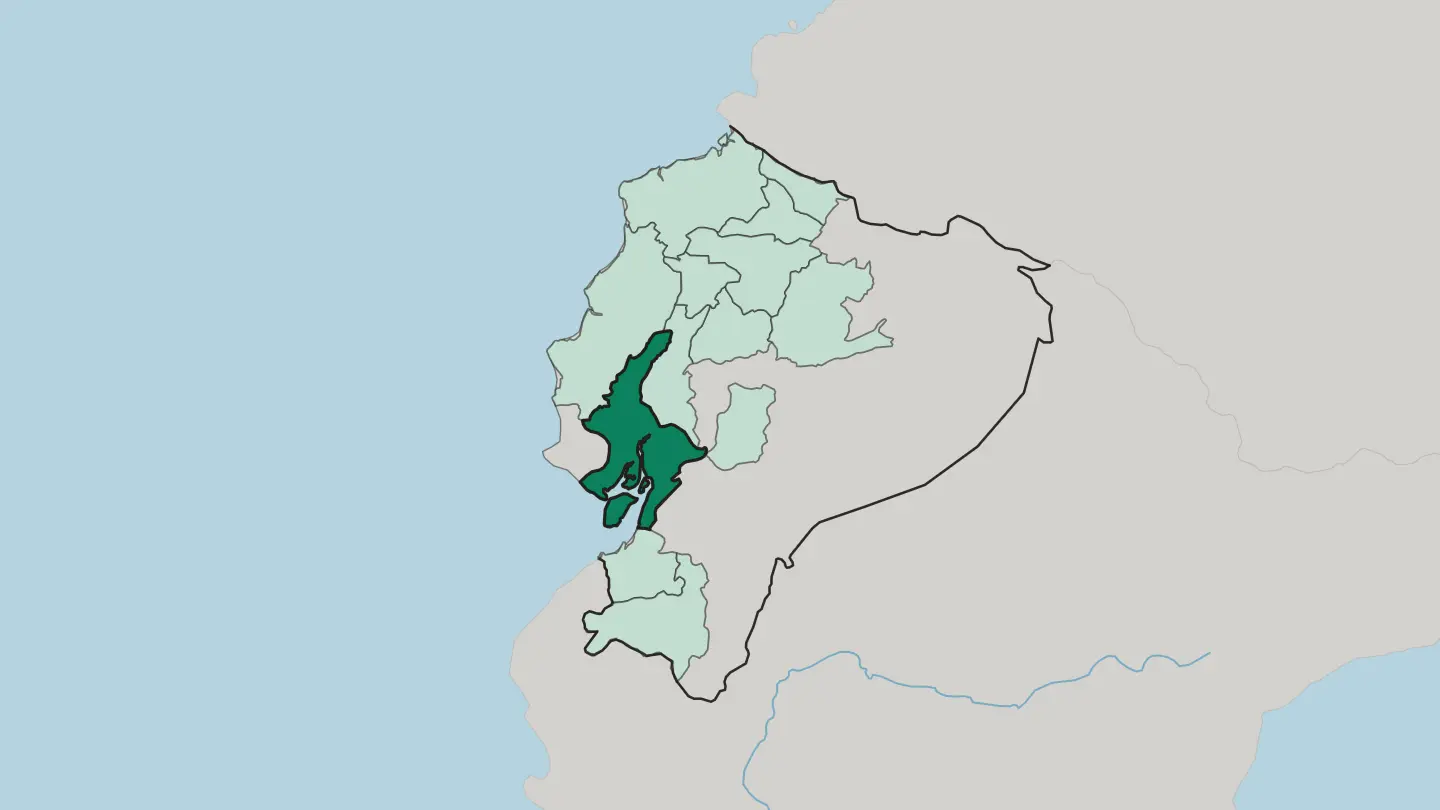 Ecuador
Tungurahua
The volcano names the province. Tungurahua, with Ambato as its capital, is one of the twenty-four provinces Ecuador is divided into.Towns & cities →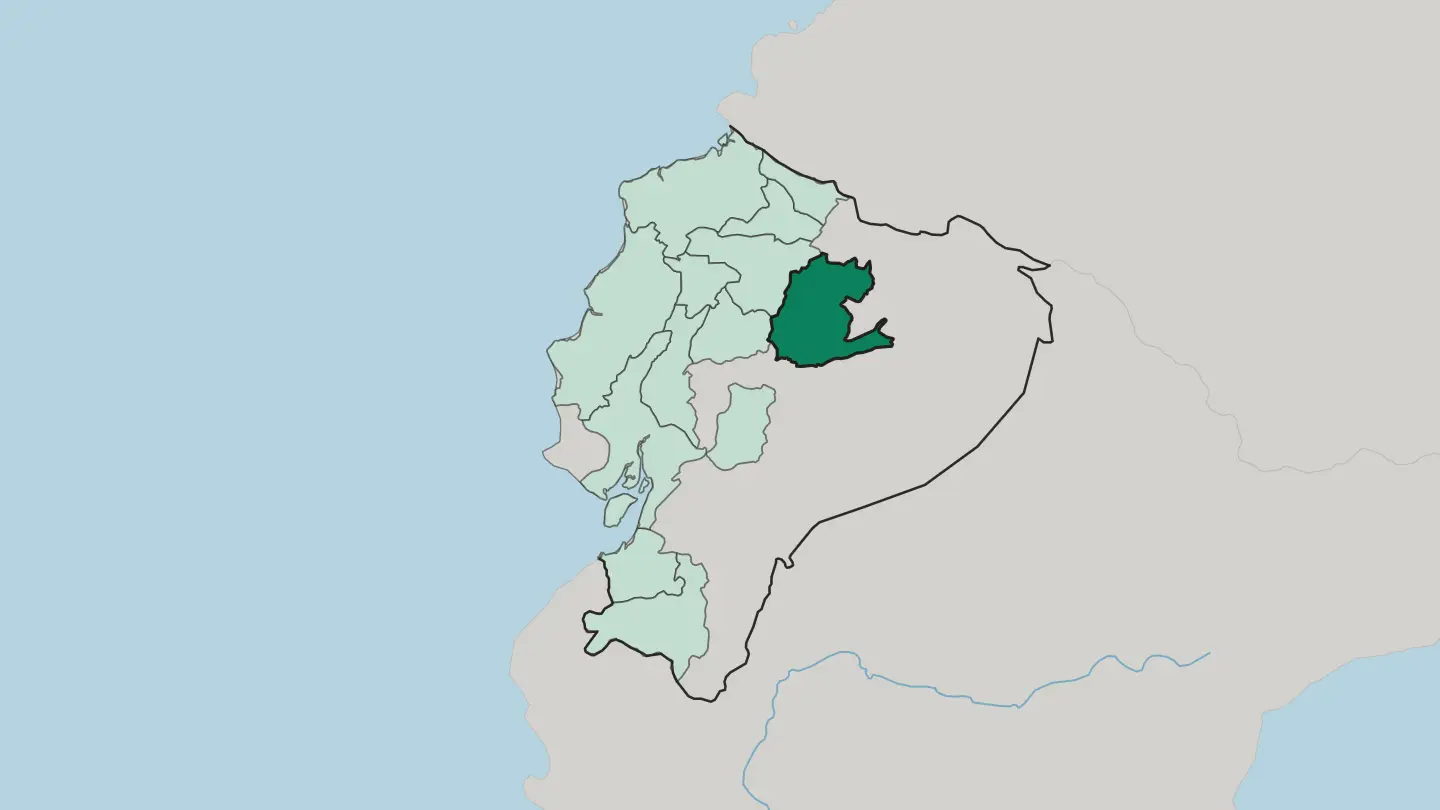
Explore by experience
Not sure which place? Start from how you want to travel.
About Ecuador
Few countries pack so much into so little ground.
What is Ecuador known for?
Ecuador carries four worlds at once: the Pacific coast, the high Andes, the Amazon in the east, and the Galápagos Islands far out in the ocean. Quito, the capital, and the port of Guayaquil anchor its cities, while colonial Cuenca holds the south. Volcanoes define the middle.
Cotopaxi and Chimborazo rise along the corridor Alexander von Humboldt named the Avenue of the Volcanoes.
Where is Ecuador?
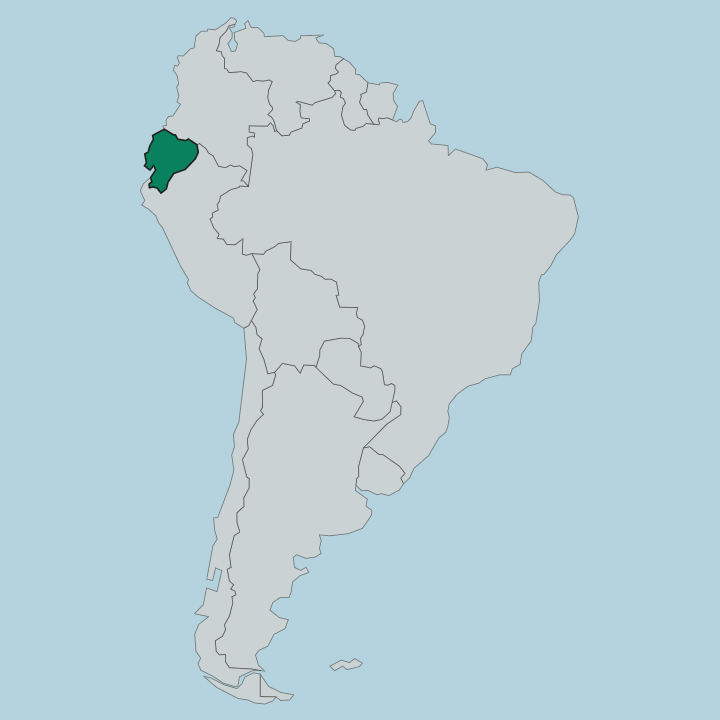
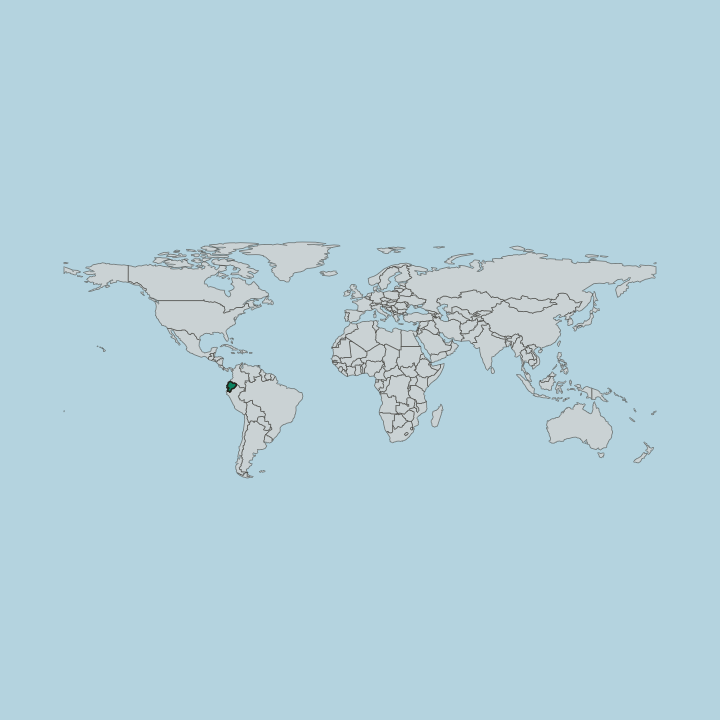
Ecuador is a compact country in northwestern South America, bordered by Colombia to the north, Peru to the east and south, and the Pacific Ocean along its western edge. Its land falls into four sharply different worlds. The Costa, a belt of hot lowlands and mangrove, runs behind the Pacific shore and holds the port of Guayaquil.
Inland the ground climbs fast into the Sierra, the double spine of the Andes that carries Quito and Cuenca on a string of high basins between two mountain walls. Volcanoes crowd this corridor. Cotopaxi, among the highest active volcanoes on earth, and Chimborazo, whose summit stands farther from the planet's centre than any other point because of the equatorial bulge, both rise along the highland avenue that Alexander von Humboldt mapped two centuries ago.
East of the mountains the land drops again into the Oriente, the Amazon lowlands drained by headwater rivers of the great basin, dense with rainforest and among the most biologically diverse ground anywhere. Far out in the Pacific, roughly a thousand kilometres west of the mainland, lie the volcanic Galápagos Islands, a province and a marine reserve in their own right. Coast, highland, jungle, and islands sit within a single small republic.
The contrast is the whole point.
What is the history of Ecuador?
Long before Spain arrived, the peoples of the northern Andes were drawn into the Inca Empire, which pushed up through the Sierra in the late fifteenth century and made Quito a northern seat of its power. That order fell within a generation. Spanish forces under Francisco Pizarro overthrew the Inca in the 1530s, and the highland audiencia of Quito was governed from afar, first under the Viceroyalty of Peru and later New Granada.
Colonial rule held for nearly three centuries. The break began in Quito. On the tenth of August 1809 a group of the city's leading citizens seized the local government, an early cry for self-rule that Ecuadorians still mark as their first step toward independence.
The decisive stroke came on the slopes above the capital. At the Battle of Pichincha in 1822, Antonio José de Sucre routed the royalist army and secured the highlands for the patriot cause. Ecuador then entered Gran Colombia, the union Simón Bolívar had forged with present-day Colombia, Venezuela, and Panama.
The federation frayed under regional rivalries. In 1830 Ecuador left it to stand as a separate republic, and Quito has been its capital ever since.
What is Ecuador like?
Ecuador wears its indigenous inheritance openly, especially through the Kichwa highland peoples whose language is a branch of the tongue the Inca once spread across the Andes. Nowhere is that clearer than Otavalo. Its Saturday market, one of the largest indigenous markets in the Americas, draws weavers in embroidered blouses and felt hats selling textiles their families have made for generations.
Spanish is the working language of government and the street, yet Kichwa and Shuar stay alive in the highlands and the Amazon, and it is common to hear two of them braided into one conversation. Food tracks the geography. The coast around Guayaquil lives on ceviche and encebollado, the hangover soup of tuna and yuca, while the Sierra leans on hominy, potatoes, and roast cuy served on feast days.
Devotion runs through it all. In Baños de Agua Santa, pilgrims still climb to the shrine of the Virgin below the volcano Tungurahua, and highland towns keep festival calendars that fold Catholic saints into far older harvest and solstice rites. Music, weaving, and the fine Panama hat, woven in Cuenca despite the misleading name, carry the same layered past.
One country holds many peoples.
What is the climate of Ecuador?
The Equator sets less of the weather here than the height of the land. On the coast around Guayaquil the climate is tropical, hot and wet, with a rainier stretch early in the year. Up in the Sierra, altitude keeps Quito and Cuenca mild by day and cold after dark, spring-like the year round rather than tropical.
The Amazon in the east stays warm and humid, soaked by frequent rain. Weather here is a matter of elevation.
How do you get to Ecuador?
Two airports carry almost every arrival. Quito's Mariscal Sucre, high in the Andes, is the busier of the pair and the usual entry for the highlands, while José Joaquín de Olmedo in Guayaquil handles the coast and the largest share of traffic bound for the islands. Reaching the Galápagos means a domestic flight that touches down in Guayaquil to refuel before crossing the ocean.
Distances on the mainland are short. Most travellers hop between regions by bus or a quick internal flight.
Good for
Updated September 2026