Ecuador · Provincia de Pichincha
Where to Stay in Quito, Provincia de Pichincha
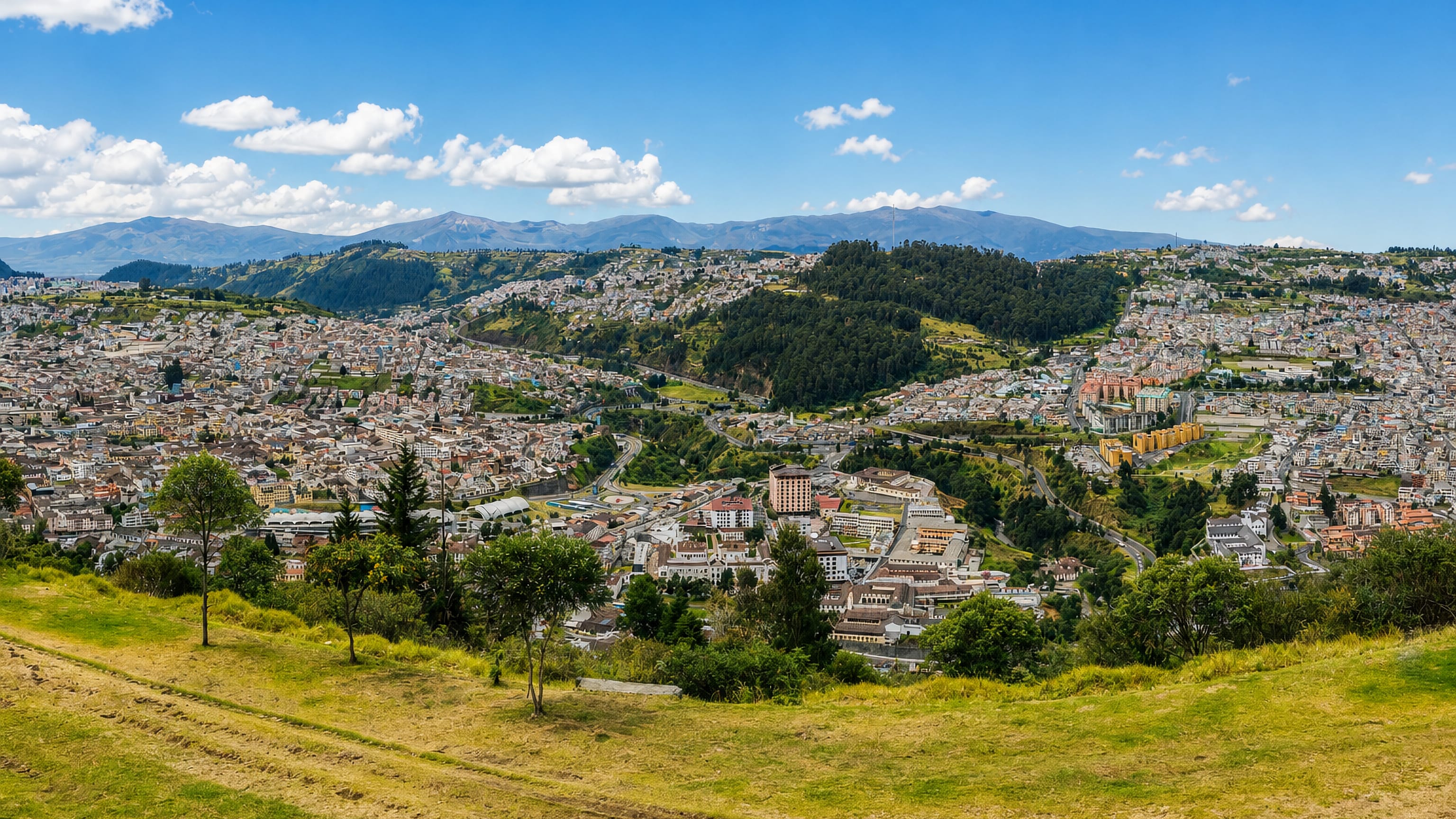
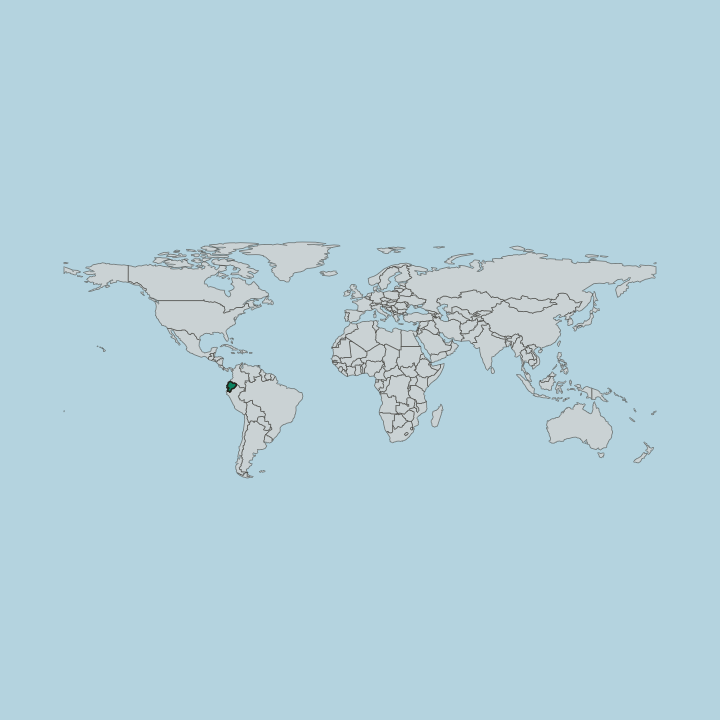
Bell towers crowd a high Andean valley in Quito, capital of Ecuador and of Pichincha, set below the volcano Pichincha and known for its colonial old town.
Hotel links are affiliate links: booking through them may earn us a commission, at no extra cost to you. It never affects how places are ranked. How this works


Where to stay in Quito
Not every neighbourhood fits every trip — here's what each one is good for.

 QuitoEcuadorBest if you want restaurants and later nightlife on the doorstep with an easy ride to the historic plazas.
La Mariscal
The district north of the historic core gathers bars and cafes near the ridge crowned by the Basilica of the National Vow, well back from the quiet old-town squares.La Mariscal → QuitoEcuador
Itchimbía
Itchimbía is a hill in Quito, standing on the border of the downtown quarter with the Machángara River to its east.Where to stay →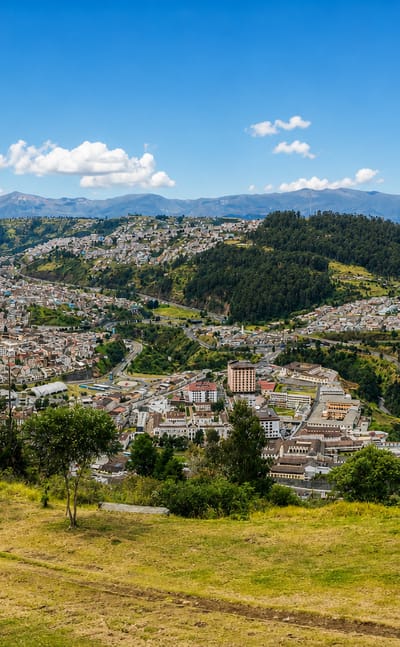 QuitoEcuador
Chimbacalle
Chimbacalle is a parish of south Quito, where the railway reached the capital: the first train ran into the Estación de Tren de Chimbacalle in 1908.Where to stay →QuitoEcuadorIñaquito
Iñaquito is a parish toward the north of Quito, holding La Capilla del Hombre and the Museo Ecuadoriano de Ciencias Naturales.Where to stay →QuitoEcuadorJipijapa
Jipijapa is an urban parish of Quito, Ecuador, named after the coastal town whose weavers make the hats the world wrongly calls Panamas.Where to stay →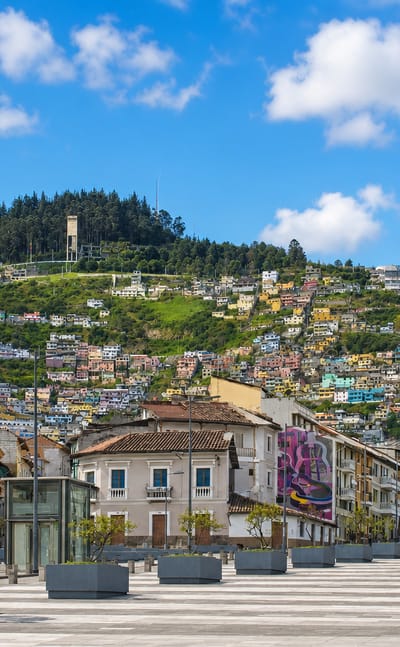 QuitoEcuador
La Libertad
La Libertad is a parish of Quito, Ecuador, climbing the eastern flank of Pichincha to the Cima de la Libertad, where the Battle of Pichincha was fought.Where to stay →QuitoEcuadorPonceano
The Estadio Rodrigo Paz Delgado stands in Ponceano, a parish of north Quito where Liga Deportiva Universitaria de Quito has played since 1997.Where to stay →Hotel links are affiliate links: booking through them may earn us a commission, at no extra cost to you. It never affects how places are ranked. How this works
Find hotels in Quito
Direct booking search for this neighbourhood.
Hotel links are affiliate links: booking through them may earn us a commission, at no extra cost to you. It never affects how places are ranked. How this works
Things to do in Quito
Ranked by global recognition; descriptions from Wikidata (CC0).
Museums & Galleries
3- La Capilla del Hombre
- National Museum of Ecuador
- Panopticon
Churches & Religious Sites
3- Basilica of the National Vow
- Church of Saint Frinci
- Cathedral of Quito
Castles & Historic Sites
3- Virgin of El Panecillo
- Monument to Independence
- Puerta de La Circasiana
Stadiums & Sports
1- Coliseo General Rumiñahui
Parks & Gardens
1- Vulqano Park
Landmarks & Notable Places
2- Casa Speck
- Hotel Húngaro
worth knowingacross 6 categories in Quito
About Quito
What is Quito known for?
Quito is known above all for its old town, the largest and most intact colonial center in the Americas and one of the first sites named to the UNESCO World Heritage list. The core holds more than 40 churches and 16 convents and monasteries. Landmark facades line its plazas.
The Cathedral of Quito, the Basilica of La Merced, and the Monument to Independence anchor the square at the heart of the historic city, while the Virgin of El Panecillo watches over it from a hill to the south.
What are the main landmarks in Quito?
Quito's main landmarks cluster in the colonial old town. The Cathedral of Quito and the Monument to Independence face the central square, and the Basilica of La Merced and the Basilica of the National Vow raise the skyline with their towers. Museums fill the surrounding blocks.
The Casa del Alabado Pre-Columbian Art Museum, the Alberto Mena Caamaño Museum, and the City Museum hold the historic collections, while the Virgin of El Panecillo tops the hill that closes the quarter to the south.
What is the history of Quito?
Quito was founded in 1534 as San Francisco de Quito, raised by Spanish settlers on the ruins of an earlier Inca city high in the Andes. The choice of ground mattered. Builders laid a grid of churches, convents, and plazas across the slopes below the volcano Pichincha, and that colonial core survives as the largest and most intact of its kind in the Americas.
Over the following centuries the town filled with more than 40 churches and 16 convents and monasteries, among them the Cathedral of Quito and the Basilica of La Merced. Independence reshaped the city in the nineteenth century. The Monument to Independence rose on the central square to mark the break with colonial rule, and the historic center later joined the UNESCO World Heritage list among its first entries, which set off a long restoration program across the old town.
Its museums preserve that layered past. The Casa del Alabado Pre-Columbian Art Museum keeps the deep pre-colonial record, while the Alberto Mena Caamaño Museum and the City Museum trace the colonial and republican eras that followed below Pichincha.
Where is Quito?
Quito sits in a long valley on the eastern slopes of Pichincha, an active stratovolcano in the Andes. The mountain wall rises steeply to the west, so the city runs north to south along a narrow strip of high ground. Altitude defines daily life here.
The old town climbs the folds of that ground, and the Virgin of El Panecillo caps a rounded hill that closes the valley to the south, a natural marker between the historic center and the districts beyond.
What is the climate of Quito?
Quito holds a mild, spring-like climate all year, set by its great height in the Andes rather than by season. Days are cool and often bright, and nights turn cold on the high slopes below Pichincha. Rain arrives in long afternoon showers.
The wetter months bring frequent cloud over the valley, while the drier stretch opens clearer skies above the old town and the hill of El Panecillo.
How do you get to Quito?
Quito is reached mainly by air, through the international airport that serves the capital of Ecuador from the high plateau east of the city. Roads climb to the valley from every direction across the Andes, linking Quito to the coast and to the towns of Pichincha province. The drive gains altitude fast.
From the terminals and bus stations, routes run into the old town below Pichincha, where the plazas and churches sit within walking reach of one another.
Common questions
What is the best area to stay in Quito?
Old town: Best if you want to walk from bed to the plaza churches and museums and accept steep Andean streets in return.. La Mariscal: Best if you want restaurants and later nightlife on the doorstep with an easy ride to the historic plazas..
Good for
Updated October 2026