Spain · Comunidad de Madrid · Madrid
Chamartín, Madrid — Area Guide & Where to Stay
The Santiago Bernabéu Stadium fronts the Paseo de la Castellana in Chamartín, a district of Madrid that was the town of Chamartín de la Rosa until 1948.
Hotel links are affiliate links: booking through them may earn us a commission, at no extra cost to you. It never affects how places are ranked. How this works


Where to stay in Chamartín
Where the beds are, and what that means for the visit.
Chamartín has no one hotel quarter; the choice here is which of its six barrios to sleep in. El Viso runs along the Paseo de la Castellana at the southern end, the closest thing here to a sightseeing base, with the National Museum of Natural Sciences and the Santiago Bernabéu Stadium a short walk off. Castilla holds the Madrid-Chamartín-Clara Campoamor terminus. That is the barrio for an early train north. Prosperidad and Ciudad Jardín lie southeast around the Auditorio Nacional de Música, residential and off the through-traffic. If you want a working Madrid address rather than a central one, that is the trade Chamartín offers.
Find hotels in Chamartín
Direct booking searches for these neighbourhoods.
El Viso
El Viso covers the south-western corner of Chamartín along the Paseo de la Castellana, with the National Museum of Natural Sciences and the Santiago Bernabéu Stadium both a short walk off.Find hotels in El Visoa plain residential Chamartín stay away from the Castellana trafficHispanoamérica
Hispanoamérica sits in the middle of Chamartín, quieter than the Castellana edge, and keeps the Mercado de Chamartín inside its own streets.Find hotels in Hispanoaméricaearly departures from the Madrid-Chamartín-Clara Campoamor terminusCastilla
Castilla is the northern barrio of Chamartín and holds the Madrid-Chamartín-Clara Campoamor terminus, so a train to the north of Spain starts on foot.Find hotels in Castillaa quiet base east of the Paseo de la Castellana, near the Auditorio Nacional de MúsicaProsperidad
Prosperidad lies in the south-eastern corner of Chamartín, off the through-traffic, with the Auditorio Nacional de Música and Ciudad Jardín beside it.Find hotels in ProsperidadHotel links are affiliate links: booking through them may earn us a commission, at no extra cost to you. It never affects how places are ranked. How this works
Things to do in and around Madrid
Ranked by global recognition; descriptions from Wikidata (CC0).
Museums & Galleries
4- National Museum of Archaeology Heritage
- Sorolla Museum Heritage
- Madrid History Museum Heritage
- Museo de Arte Contemporáneo Heritage
Churches & Religious Sites
2- Church of San Fermín de los Navarros Heritage
- church of Nuestra Señora de Guadalupe
Castles & Historic Sites
8- Colegio del Pilar Heritage
- Palace of Villamejor Heritage
- Maudes Hospital Heritage
- Residencia de Estudiantes Heritage
- Instituto Lope de Vega Heritage
Show 3 more →
- Palacio del Marqués de Salamanca, Madrid Heritage
- Hospital Santa Cristina Heritage
- Palace of Duques de Pastrana Heritage
Landmarks & Notable Places
1- Velintonia Heritage
worth knowingacross 4 categories in and around Madrid
About Chamartín
What are the main landmarks in Chamartín?
Chamartín keeps its set pieces along the Paseo de la Castellana and the streets east of it. The Santiago Bernabéu Stadium dominates. Just south, the National Museum of Natural Sciences stands on Calle de José Gutiérrez Abascal, next to the Residencia de Estudiantes, the student hall founded in 1910.
The Auditorio Nacional de Música sits east of them in Ciudad Jardín; further north the Palace of Duques de Pastrana survives in Nueva España, beside the Jesuit school on the Plaza del Duque de Pastrana. The Lázaro Galdiano Museum is often listed with these, but it stands outside Chamartín, over the boundary in the Salamanca district.
What is the history of Chamartín?
Chamartín was a village called Chamartín de la Rosa before Madrid annexed it in 1948, and the old municipal territory now carries three districts rather than one. Tetuán and the northern strip of Ciudad Lineal took the rest. The name held on locally: the cementerio de Chamartín de la Rosa still uses it, and the Jesuit Colegio Nuestra Señora del Recuerdo is known in Madrid simply as the Colegio de Chamartín.
Modern Chamartín dates from what came after. The Santiago Bernabéu Stadium opened in 1947 and the Madrid-Chamartín-Clara Campoamor terminus in 1967.
Where is Chamartín?
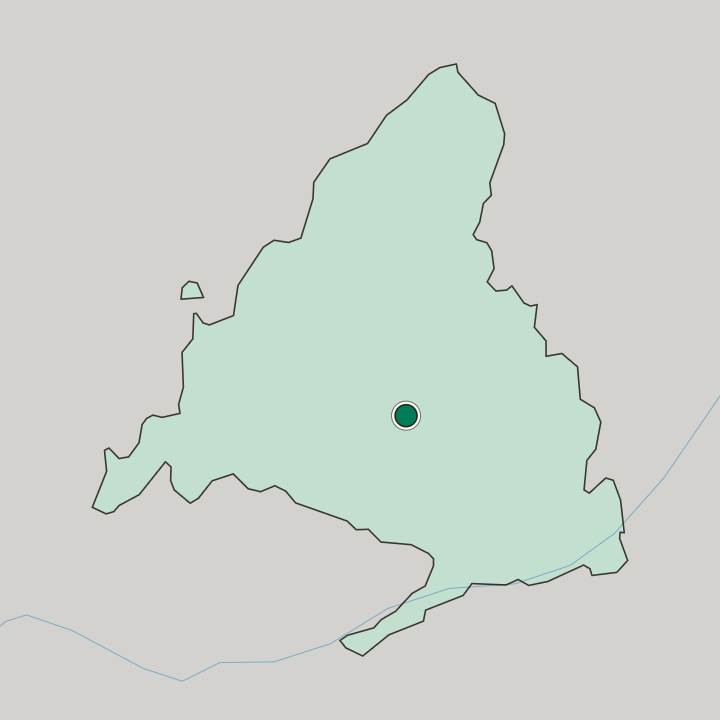
Chamartín runs north through Madrid between the Paseo de la Castellana and the M-30, with Salamanca along its southern edge and Ciudad Lineal across the motorway.
Common questions
What is the best area to stay in Chamartín?
El Viso: the closest thing Chamartín has to a sightseeing base, right on the Paseo de la Castellana. Hispanoamérica: a plain residential Chamartín stay away from the Castellana traffic. Castilla: early departures from the Madrid-Chamartín-Clara Campoamor terminus. Prosperidad: a quiet base east of the Paseo de la Castellana, near the Auditorio Nacional de Música.
Good for
More areas in Madrid
Updated October 2026