Spain · Comunitat Valenciana · Valencia
Sant Pau, Valencia — Area Guide & Where to Stay
Sant Pau is a barrio of Valencia marked by working stock: the Molí de Pobres and the mill, chimney and ceramic panel of Molino de Llobera.
Hotel links are affiliate links: booking through them may earn us a commission, at no extra cost to you. It never affects how places are ranked. How this works



Where to stay in Sant Pau
Where visitors usually base themselves, and why.
Mills mark the ground here. A bed in Sant Pau puts the Molí de Pobres within an easy walk, along with the chimney and ceramic panel catalogued together as Molino de Llobera, Chimenea y Retablo Cerámico. The Slaughterhouse of Benimàmet is the third protected building, tied by name to Benimàmet.
Find hotels in Sant Pau
Direct booking searches for these neighbourhoods.
Molí de Pobres
The Molí de Pobres fixes one end of Sant Pau, and the chimney recorded with Molino de Llobera rises within the same few streets.Find hotels in Molí de Pobresstays at the Benimàmet end of Sant PauBenimàmet
Beds beside the Slaughterhouse of Benimàmet sit at the Benimàmet end of Sant Pau, well clear of the mill buildings.Find hotels in BenimàmetHotel links are affiliate links: booking through them may earn us a commission, at no extra cost to you. It never affects how places are ranked. How this works
About Sant Pau
What are the main landmarks in Sant Pau?
The Molí de Pobres is the best-known of Sant Pau's protected buildings, a mill carried on the city's heritage list. Molino de Llobera is listed with two attachments, a chimney and a ceramic panel, so the entry covers a small industrial group rather than a single structure. The third entry is industrial too.
The Slaughterhouse of Benimàmet carries the name of Benimàmet into Sant Pau's register, and its walls record the trade that once ran there.
What is the history of Sant Pau?
Two mills carry the story. Sant Pau's oldest fabric is industrial: the Molí de Pobres and Molino de Llobera survive from a milling economy that stood here before the barrio took its place in the roll of Valencia districts. The Slaughterhouse of Benimàmet belongs to the same working past, and it ties Sant Pau to Benimàmet by name.
Where is Sant Pau?
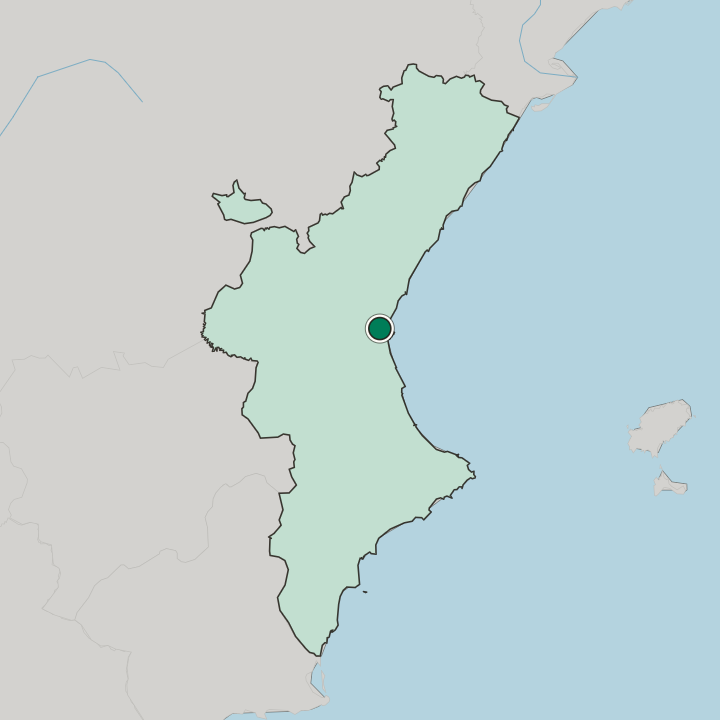
Sant Pau spreads across a broad slice of Valencia, taking in the Molí de Pobres and reaching as far as Benimàmet.
Common questions
What is the best area to stay in Sant Pau?
Molí de Pobres: walkers tracing the Molí de Pobres and the Llobera chimney. Benimàmet: stays at the Benimàmet end of Sant Pau.
More areas in Valencia
Updated September 2026