Spain
Comunitat Valenciana, Spain — Towns & Travel Guide
The Valencian Community runs down Spain's Mediterranean coast, a strip of orange groves, rice paddies and beach resorts east of Madrid.
Hotel links are affiliate links: booking through them may earn us a commission, at no extra cost to you. It never affects how places are ranked. How this works


Towns & cities in Comunitat Valenciana
Pick a town or city — each links to where to stay.

 Spain
Spain
Valencia
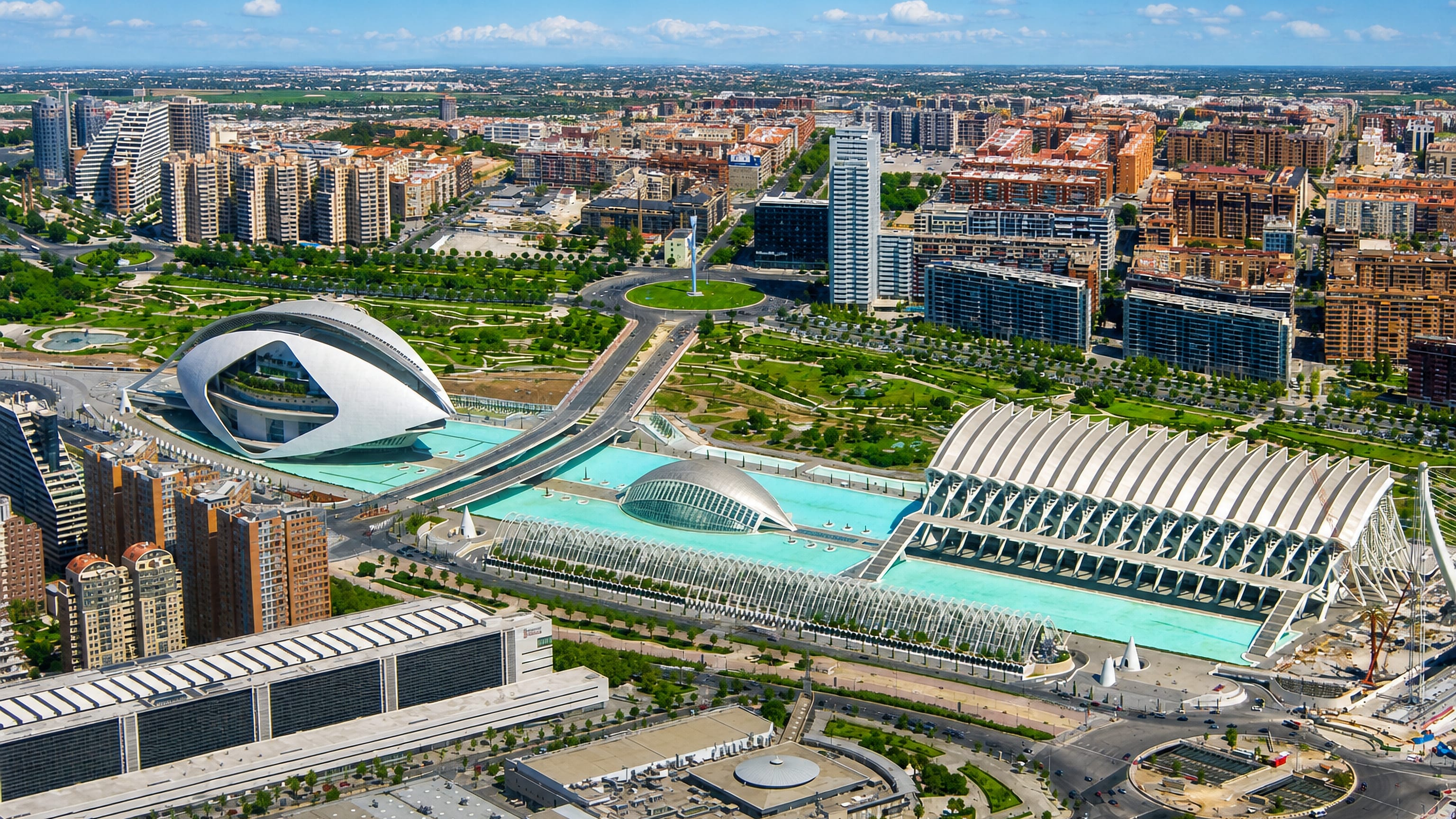
Salt wind crosses the drained Turia bed in Valencia, capital of the Valencian Community, known for Falles and the City of Arts and Sciences.Where to stay →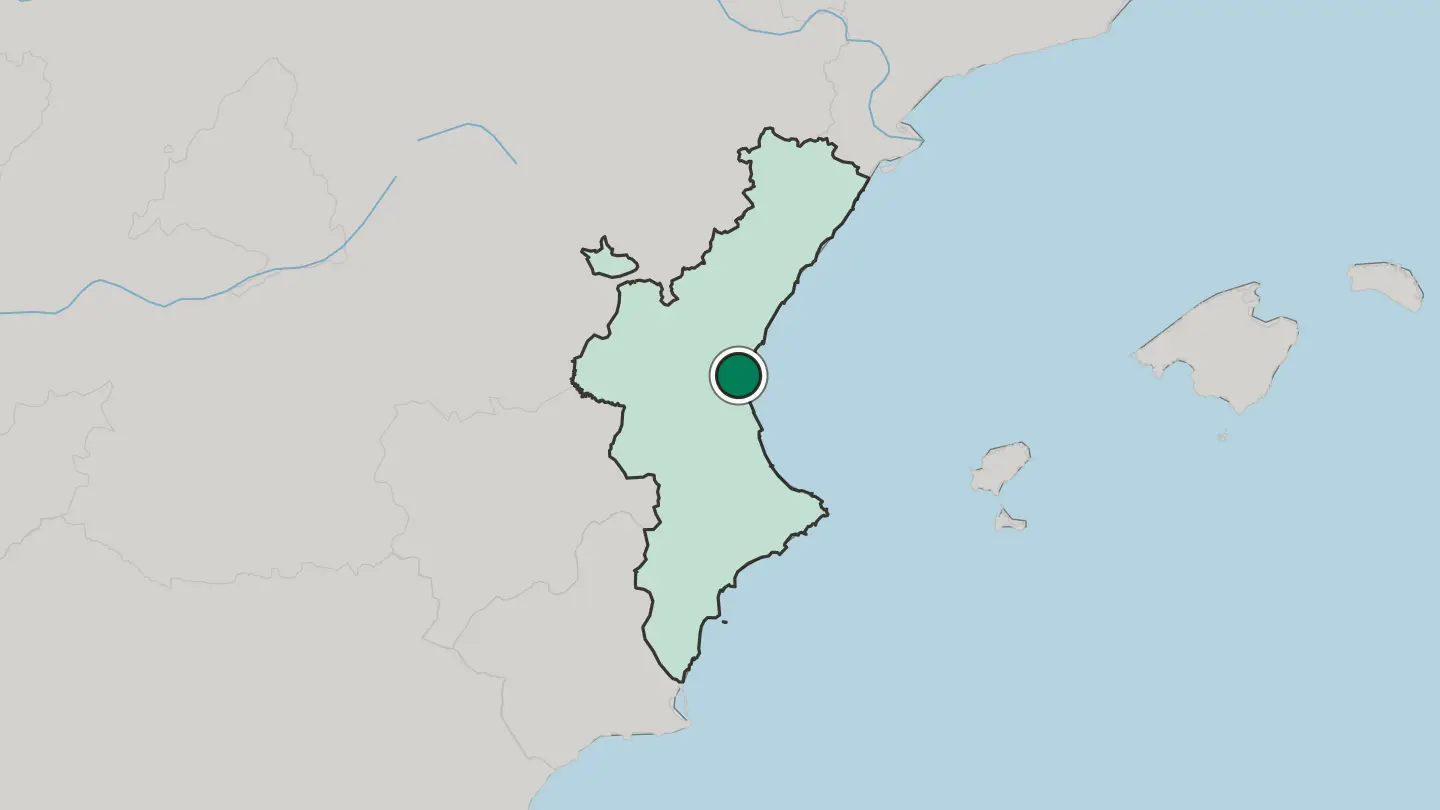
 Spain
Spain
Alicante
Santa Bárbara Castle stands over the harbour at Alicante, a Mediterranean port in the Valencian Community, known for the beaches of the Costa Blanca.Where to stay →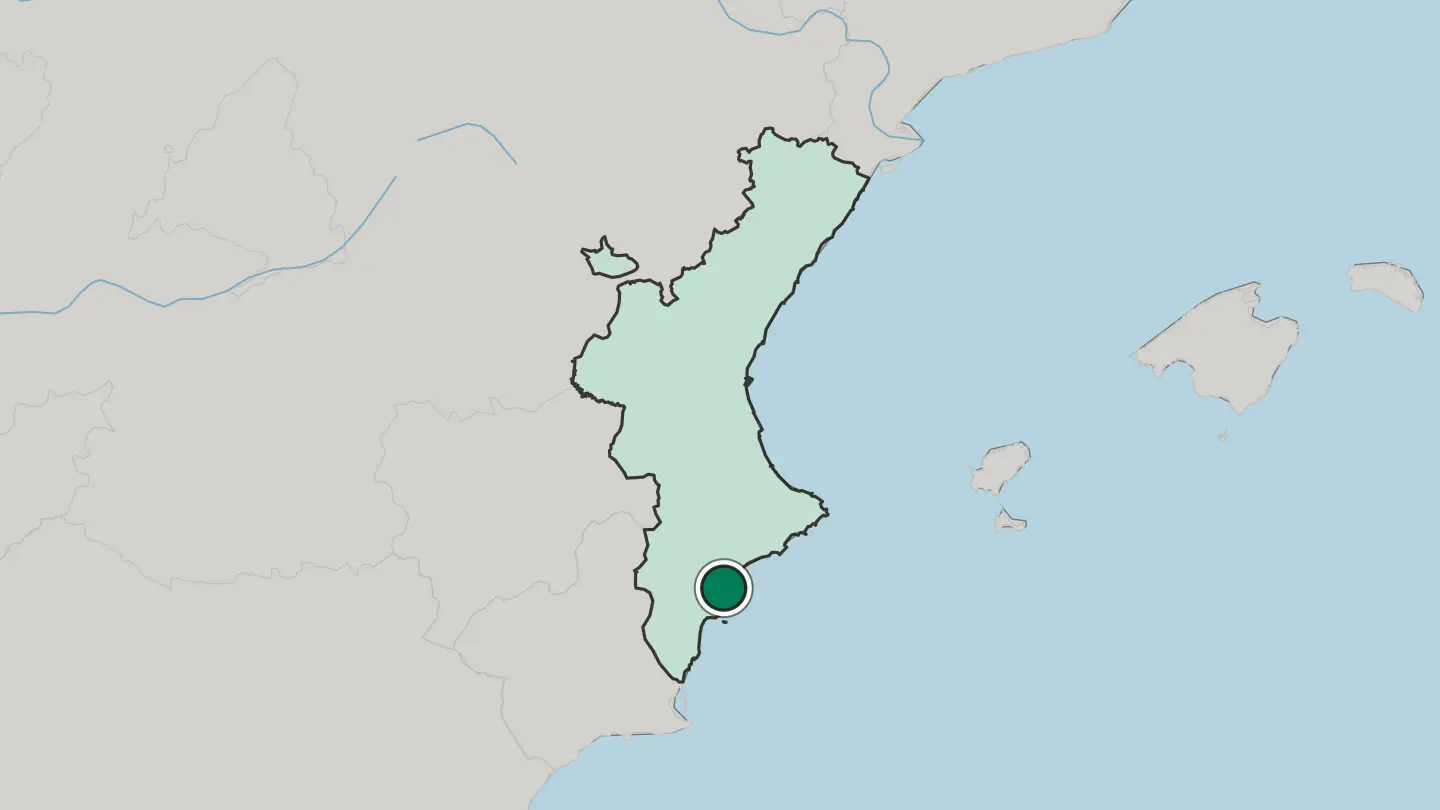
 Spain
Spain
Elche
Elche, officially Elx: a Valencian Community city of palm plantations, the Mystery Play of Elche and the excavated ground of L'Alcúdia.Where to stay →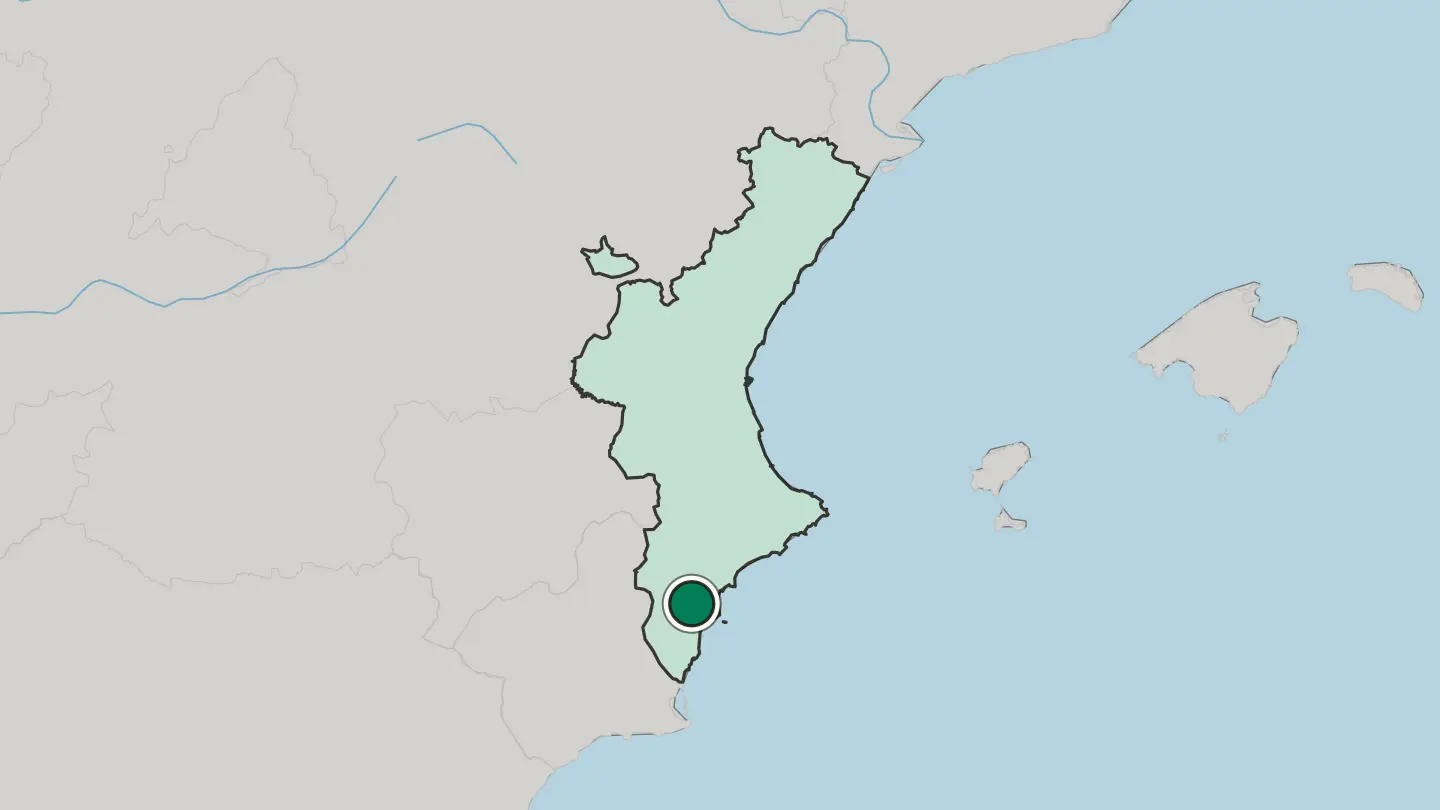
 Spain
Spain
Castelló de la Plana
Castelló de la Plana is capital of the province of Castellón, an inland core with the detached port district of Grau, under the Desert de les Palmes.Where to stay →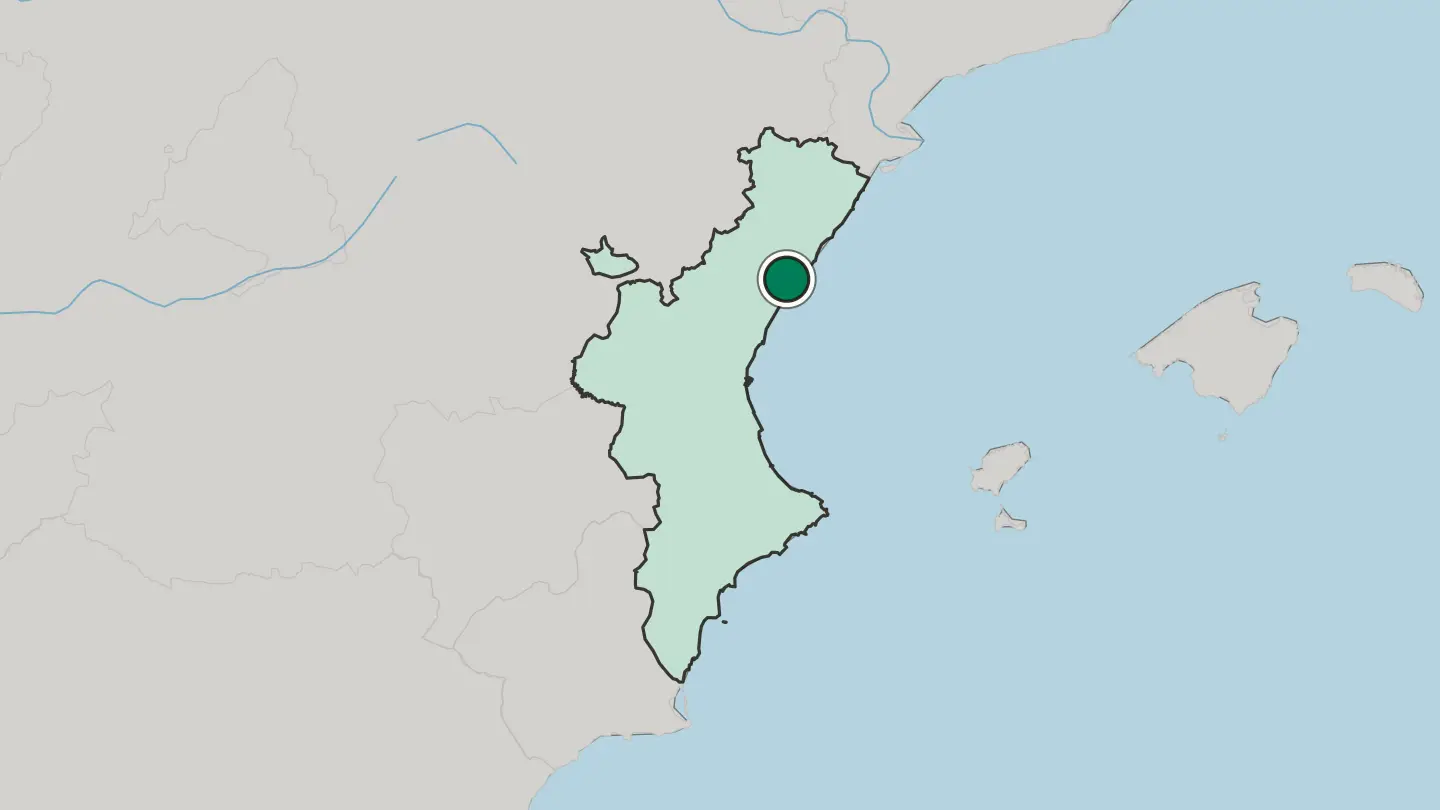 Spain
Spain
Orihuela
A walled Valencian Community city under the Castle of Orihuela, with the Colegio de Santo Domingo and a long line of monasteries below it.Where to stay →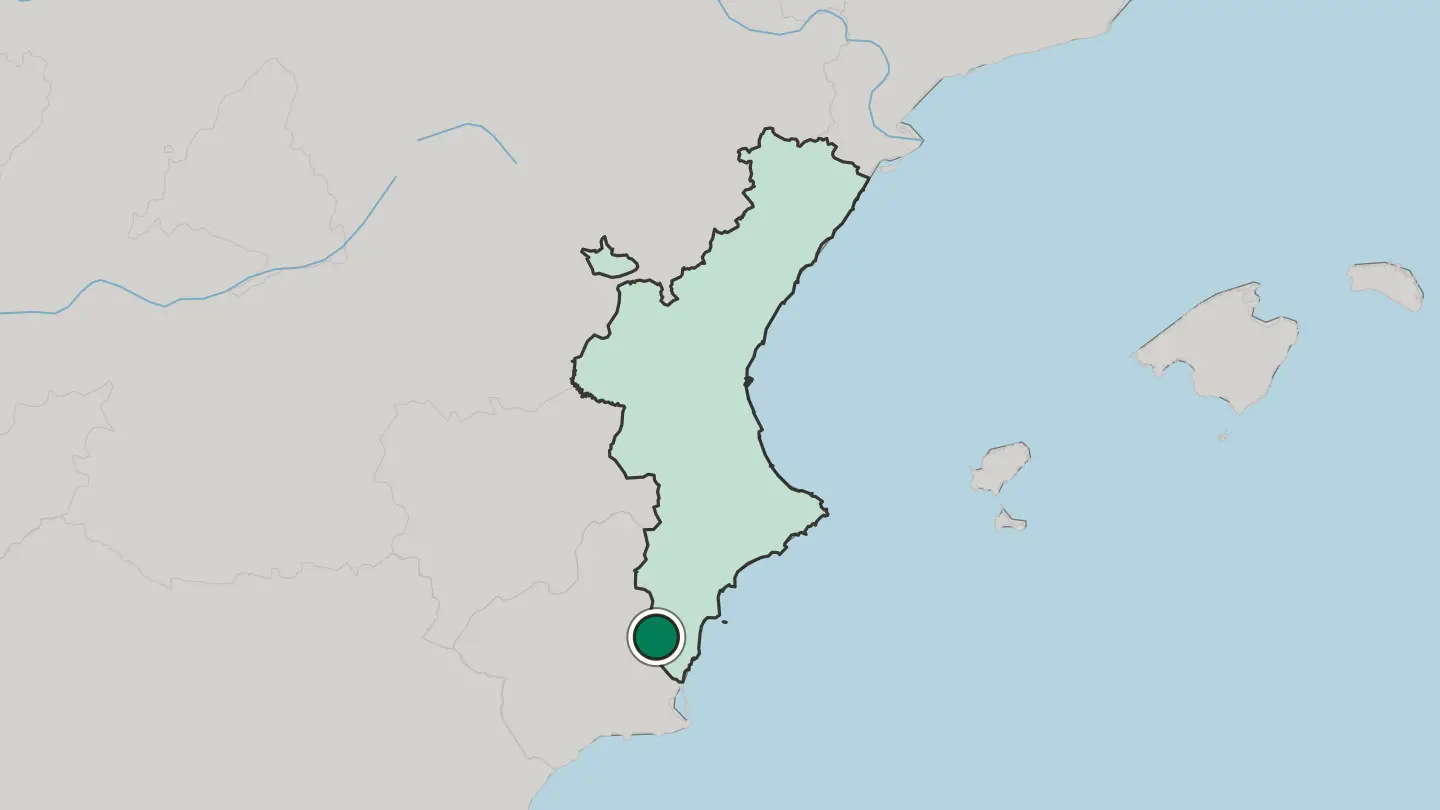
 Spain
Spain
Torrevieja
Torrevieja is a salt town on the Costa Blanca, in the province of Alicante, where the Museo del Mar y de la Sal keeps the trade's record.Where to stay →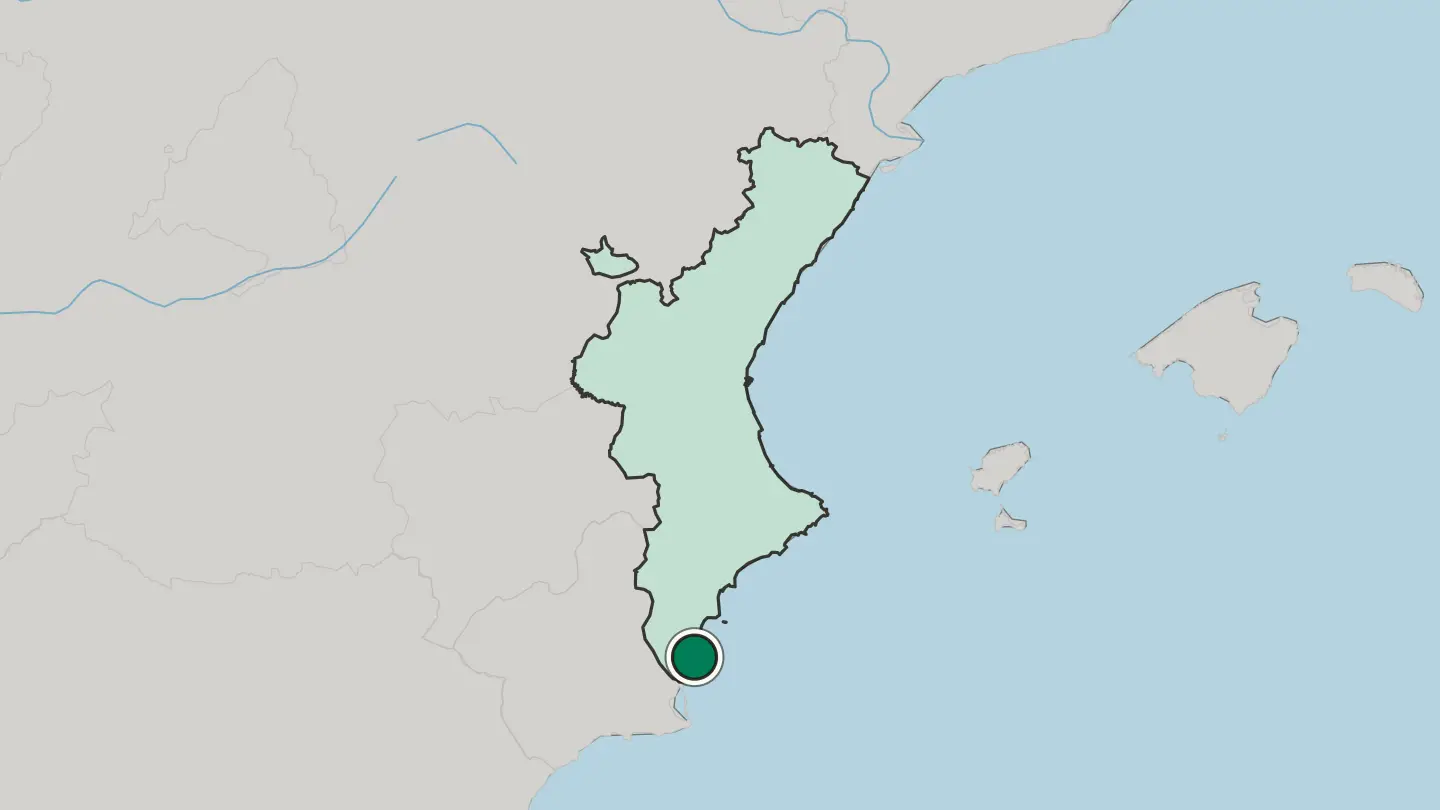
 Spain
Spain
Torrent
Torrent, also known as Torrente, is the largest municipality of the Horta Oest, built around the Castell-Palau dels Aguilar outside Valencia.Where to stay →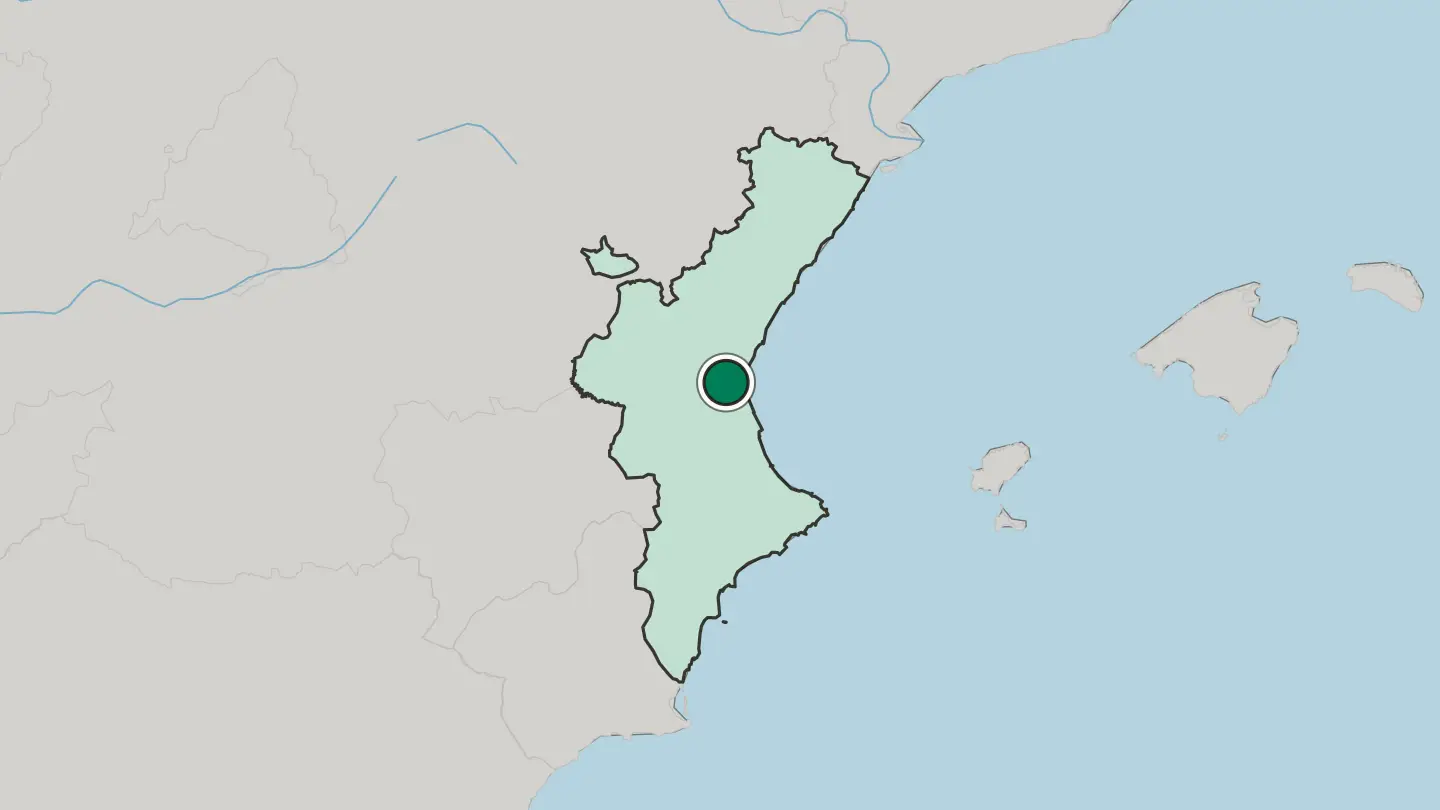
 Spain
Spain
Gandia
Gandia is a Costa de Valencia city on the Mediterranean, where the beach lies some 4 km from the town and the Castle of Bairén keeps the older ground.Where to stay →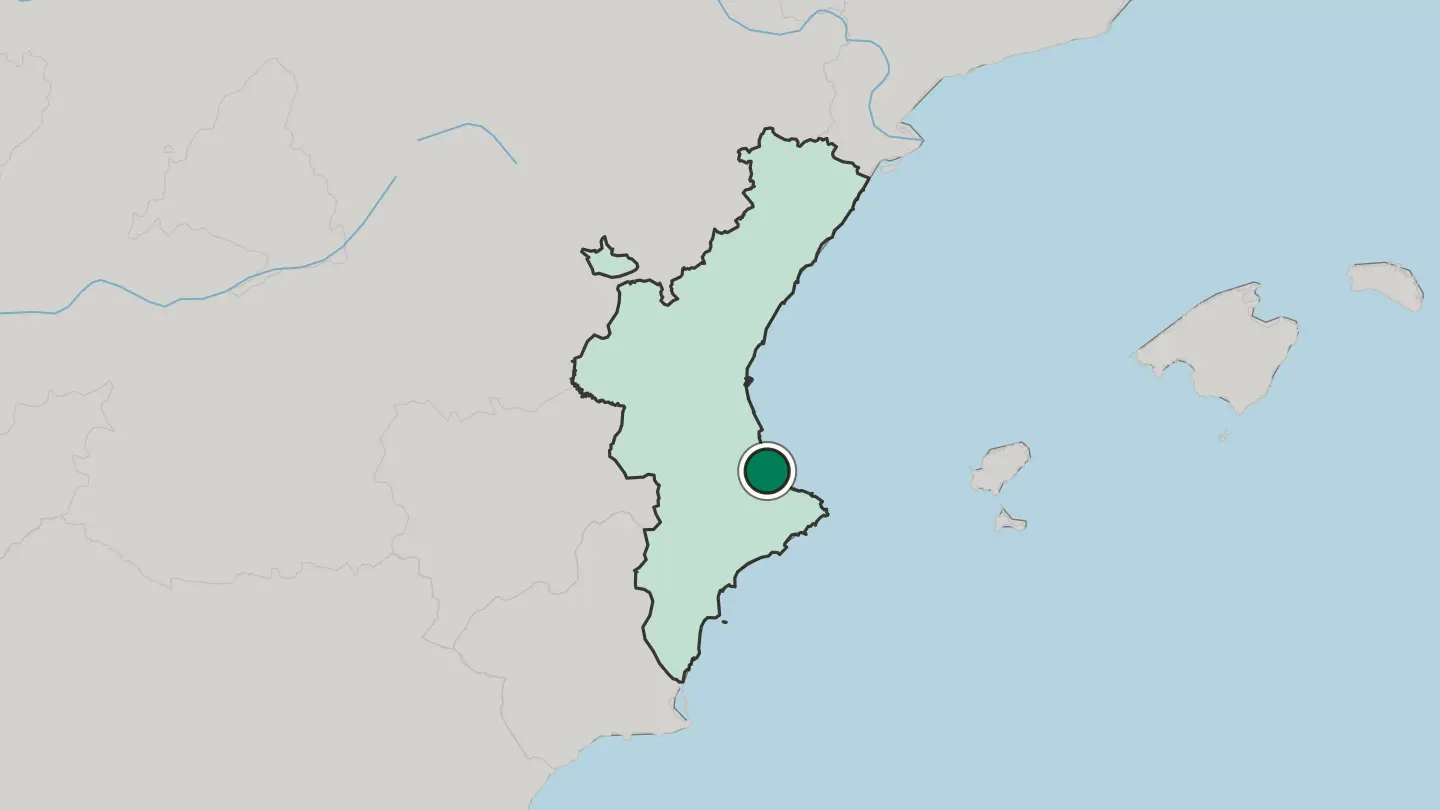
All towns & cities (14)
 Spain
Spain
Benidorm
Benidorm is a Mediterranean city in Alicante province, holding Terra Mítica, Aqualandia and Mundomar alongside the church of Saint James and Saint Anne.Where to stay →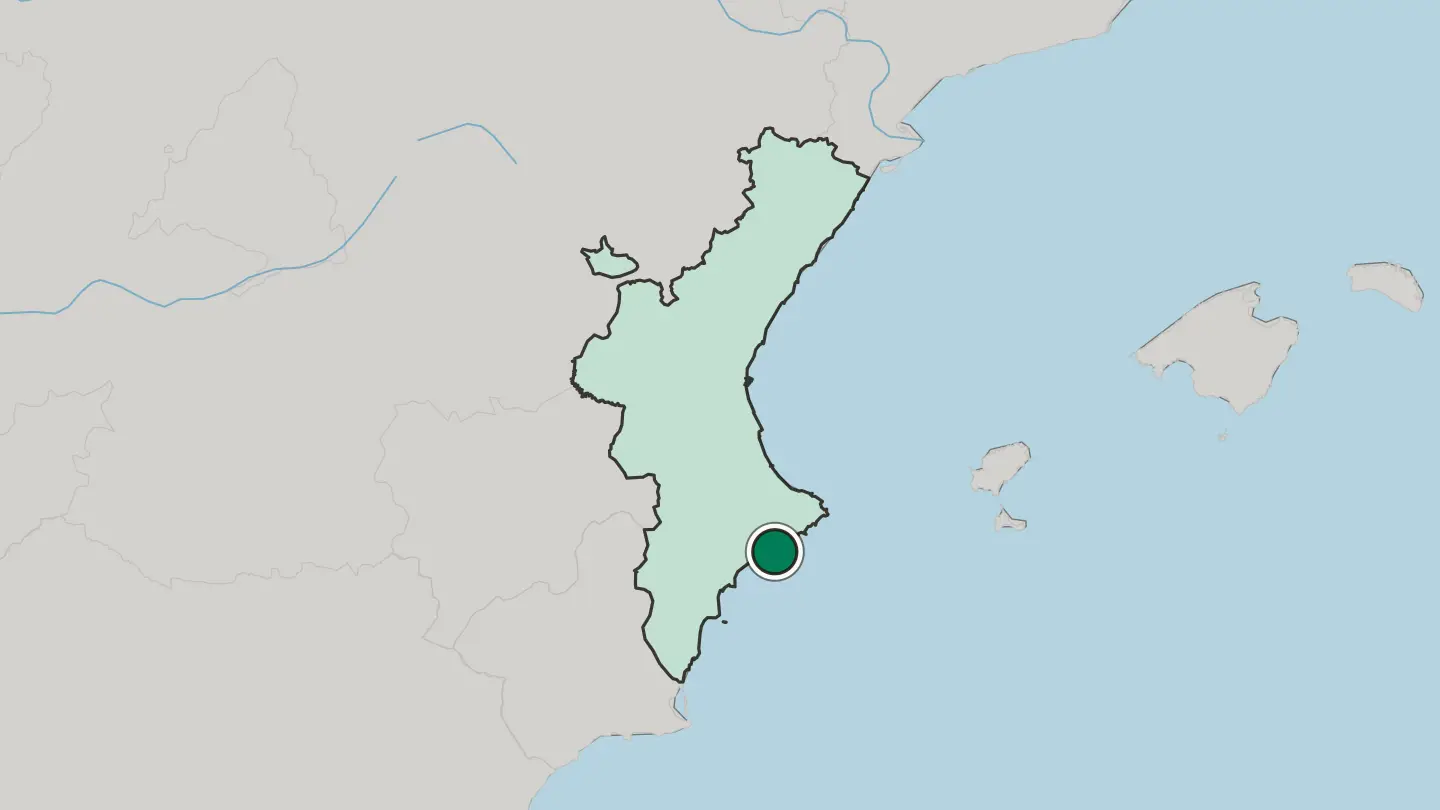 Spain
Spain
Sagunto
Sagunto stands on the Costa de Valencia in Camp de Morvedre, holding Roman Saguntum, Sagunto Castle and the Roman Theatre of Saguntum.Where to stay →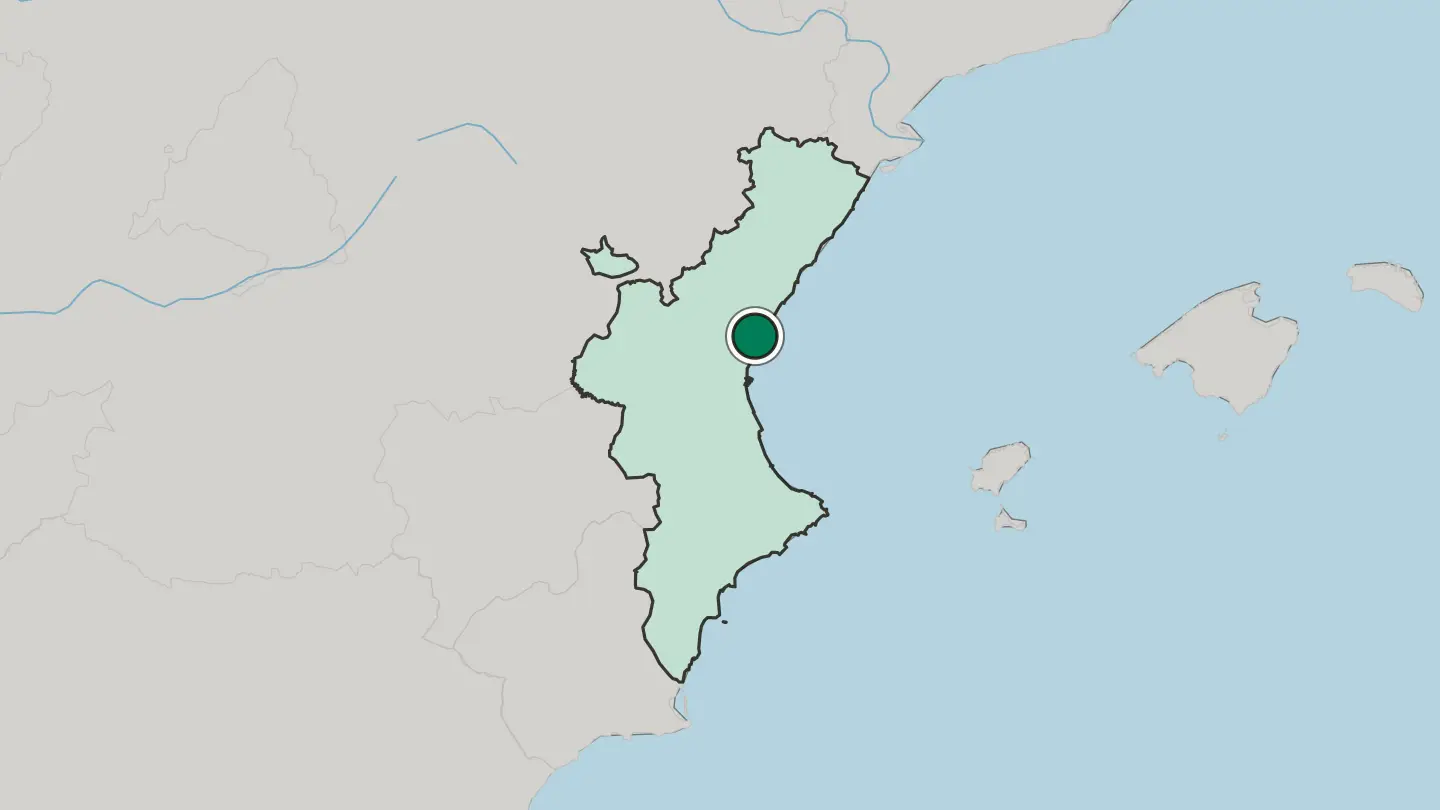 Spain
Spain
Paterna
Paterna stands beside Valencia in the Comunitat Valenciana, a ceramics town of cave dwellings marked by the Tower of Paterna.Where to stay →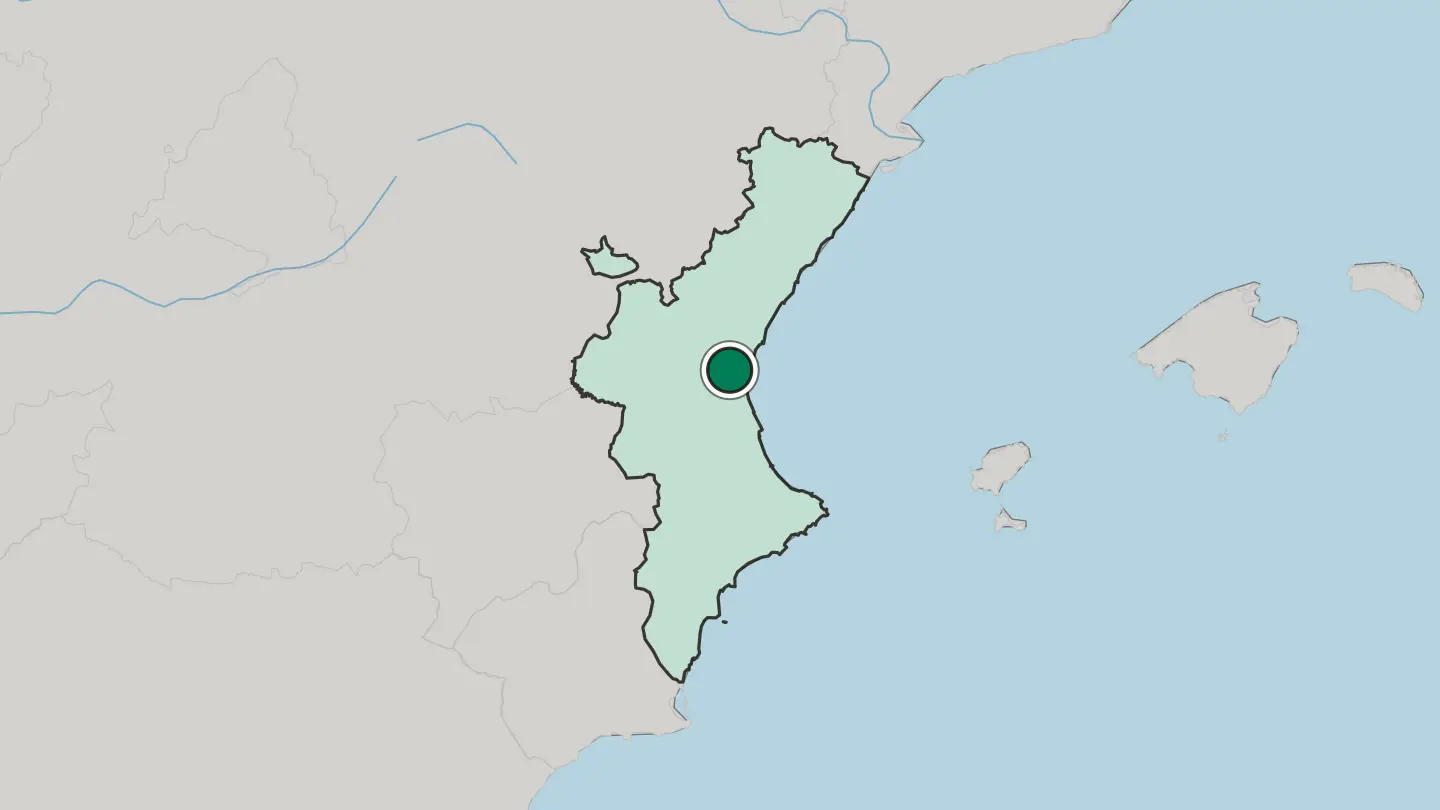
 Spain
Spain
Alcoy
Alcoy, or Alcoi, is an industrial city on the Serpis in the Province of Alicante, best known for its Moros i Cristians festival.Where to stay →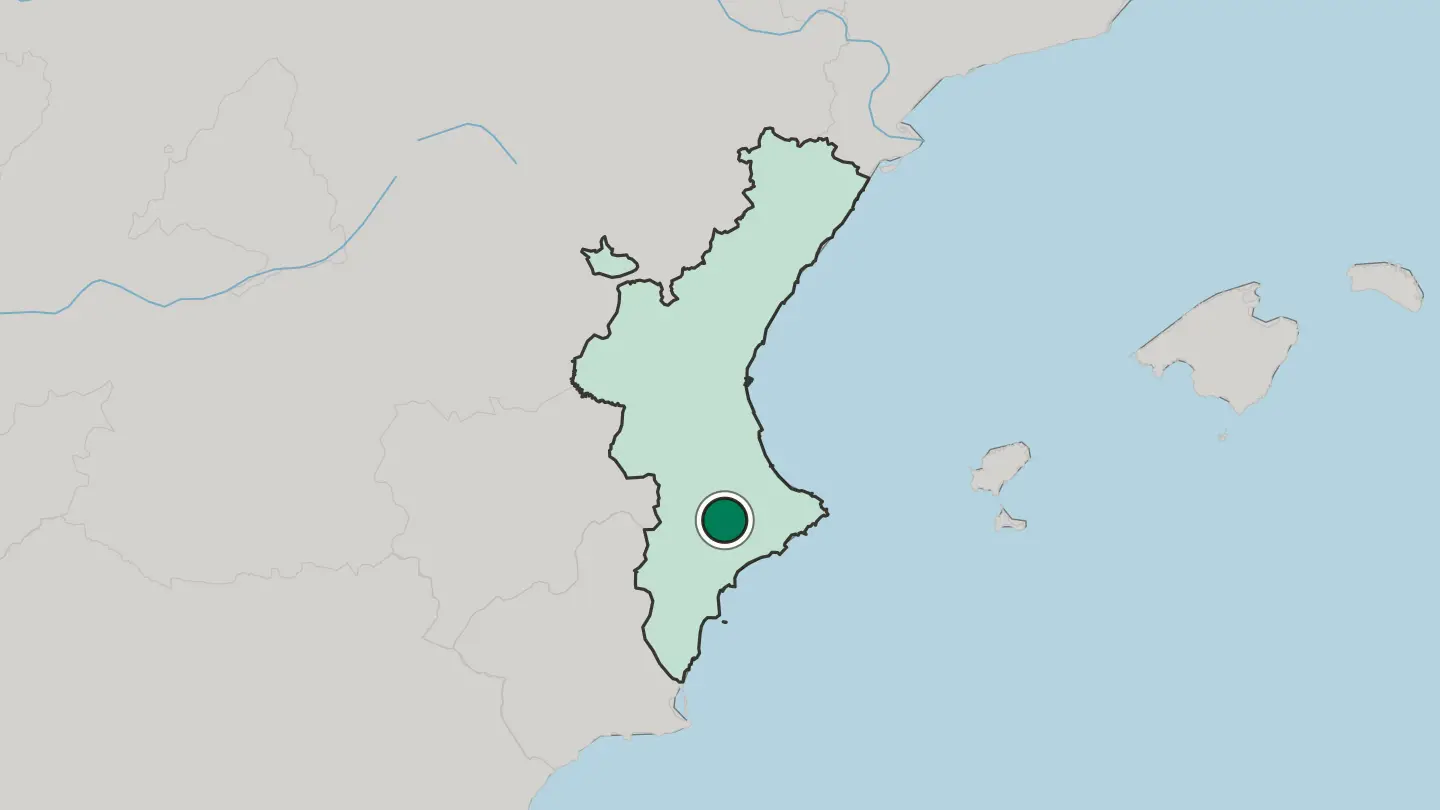
 Spain
Spain
Elda
A Valencian Community town of shoemaking, with the Castillo de Elda above it and the Ibero-Roman settlement of El Monastil in the same municipality.Where to stay →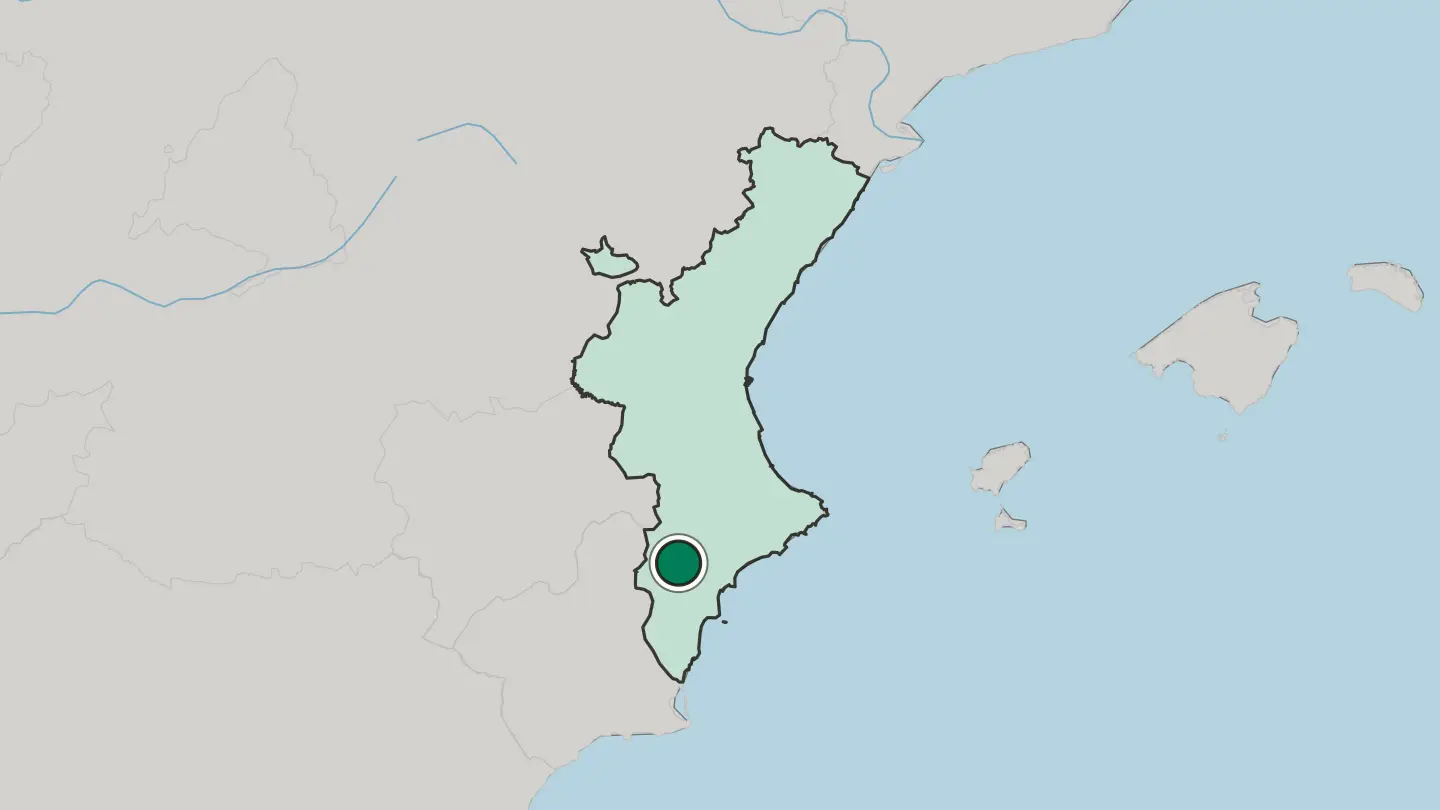
 Spain
Spain
Vila-real
Vila-real, known in Spanish as Villarreal, was founded in 1274 in the province of Castellón, with Vila-real Vila Square at its core.Where to stay →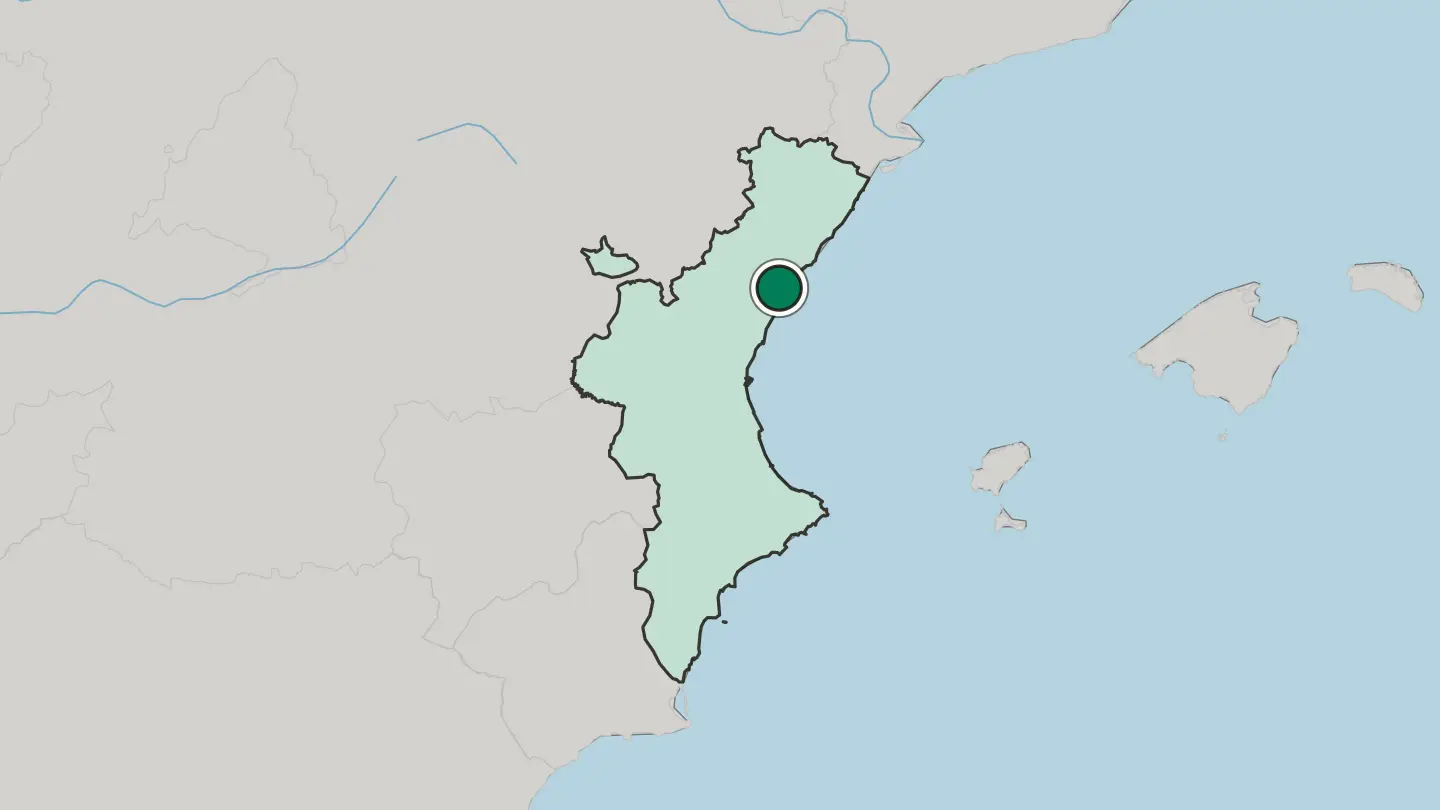
Hotel links are affiliate links: booking through them may earn us a commission, at no extra cost to you. It never affects how places are ranked. How this works
About Comunitat Valenciana
Beaches, above all.
What is Comunitat Valenciana known for?
The region draws sun-seekers to the Costa Blanca, the white-sand coast that runs south from the city of Alicante past the high-rise resort of Benidorm. Valencia, the capital, sits further north and gave the world paella, the rice dish cooked outdoors in the fields around the Albufera lagoon. Every March the capital burns giant papier-mâché figures in the streets during the Falles, its fire festival.
Inland the land climbs into dry, craggy mountains, but most visitors keep to the shore.
Where is Comunitat Valenciana?
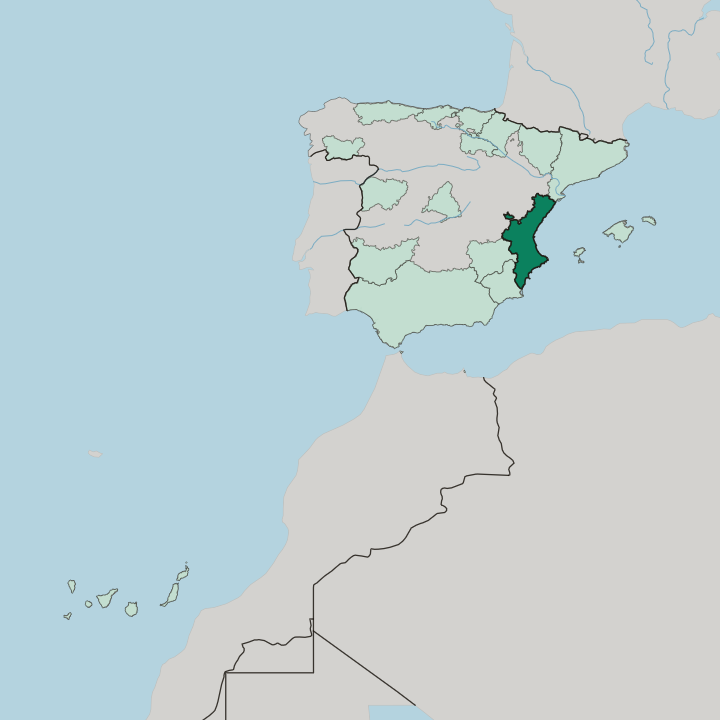
The Valencian Community forms a long, narrow band down the eastern edge of the Iberian Peninsula, facing the Mediterranean Sea. It stretches roughly north to south. Catalonia lies over its northern border, Aragon and the plateau of central Spain rise to the west, and the Region of Murcia adjoins it in the south. The whole eastern flank is coast.
Some six hundred kilometres of shore run from the Costa del Azahar in the north down through the Costa Blanca, and the Balearic Islands sit out across the water to the east. The land divides sharply between coast and interior. A fertile coastal plain, watered by rivers like the Turia that reaches the sea at Valencia, carries the orchards, the rice fields and nearly all the cities.
Behind it the ground rises fast. The mountains of the interior belong to the Iberian System in the north and the Baetic ranges in the south, dry and thinly settled by comparison. That steep, irregular terrain long made travel inland hard, which is one reason the region has always faced the sea.
What is Comunitat Valenciana like?
Food and fire sit at the heart of the local culture. Paella was born in the rice fields around the Albufera lagoon south of Valencia, where farmers cooked rice with rabbit, chicken and beans over an open flame, and the region still treats it as its own. Rice is more than a dish here.
The Moors laid down the irrigation channels that turned the coastal plain into orchard and paddy, and oranges from those groves became the region's signature export. That medieval inheritance runs through the architecture too. Language marks the place as much as the cooking.
Alongside Spanish, many people speak Valencian, the local form of Catalan, and street signs, place names and schools carry both. The calendar turns on festival. Each March the capital fills with towering ninot figures for the Falles, sculpted for a year and then set alight in a single night of bonfires.
The character is coastal, agricultural and loud, closer to the fields and the sea than to the Spanish interior.
What is the history of Comunitat Valenciana?
The region traces its shape to 1238. In that year James I of Aragon took the Moorish city of Valencia and founded the Kingdom of Valencia as a self-governing realm within the Crown of Aragon, with its own laws, the Furs. It kept that separate standing for centuries.
The kingdom's institutions survived until 1707, when Philip V abolished them after the War of the Spanish Succession and folded the territory into a centralised Spain. The modern autonomous community, restored to self-rule in the twentieth century, is the heir to that medieval kingdom.
What is the climate of Comunitat Valenciana?
The coast is warm and dry. A Mediterranean climate holds along the shore, with hot summers, mild winters and little rain, which is why the Costa Blanca draws sun-seekers through much of the year. Rain, when it comes, tends to arrive in short autumn bursts rather than steady falls, and the fields lean on irrigation more than on the sky.
Inland it is a different story. The mountains of the interior run colder in winter, and the higher ground away from the sea can see frost that the beaches never do.
How do you get to Comunitat Valenciana?
Two airports do most of the work. Alicante's airport handles the bulk of the Costa Blanca traffic in the south, while Valencia's airport at Manises serves the capital and the northern coast. Both draw budget and scheduled flights from across Europe.
High-speed trains link Valencia and Alicante to Madrid in a couple of hours, and the coastal motorway runs the length of the region past every resort. Cruise ships and ferries to the Balearic Islands call at the port of Valencia.
Good for
More regions in Spain
Updated September 2026