Spain · Comunitat Valenciana
Where to Stay in Valencia, Comunitat Valenciana
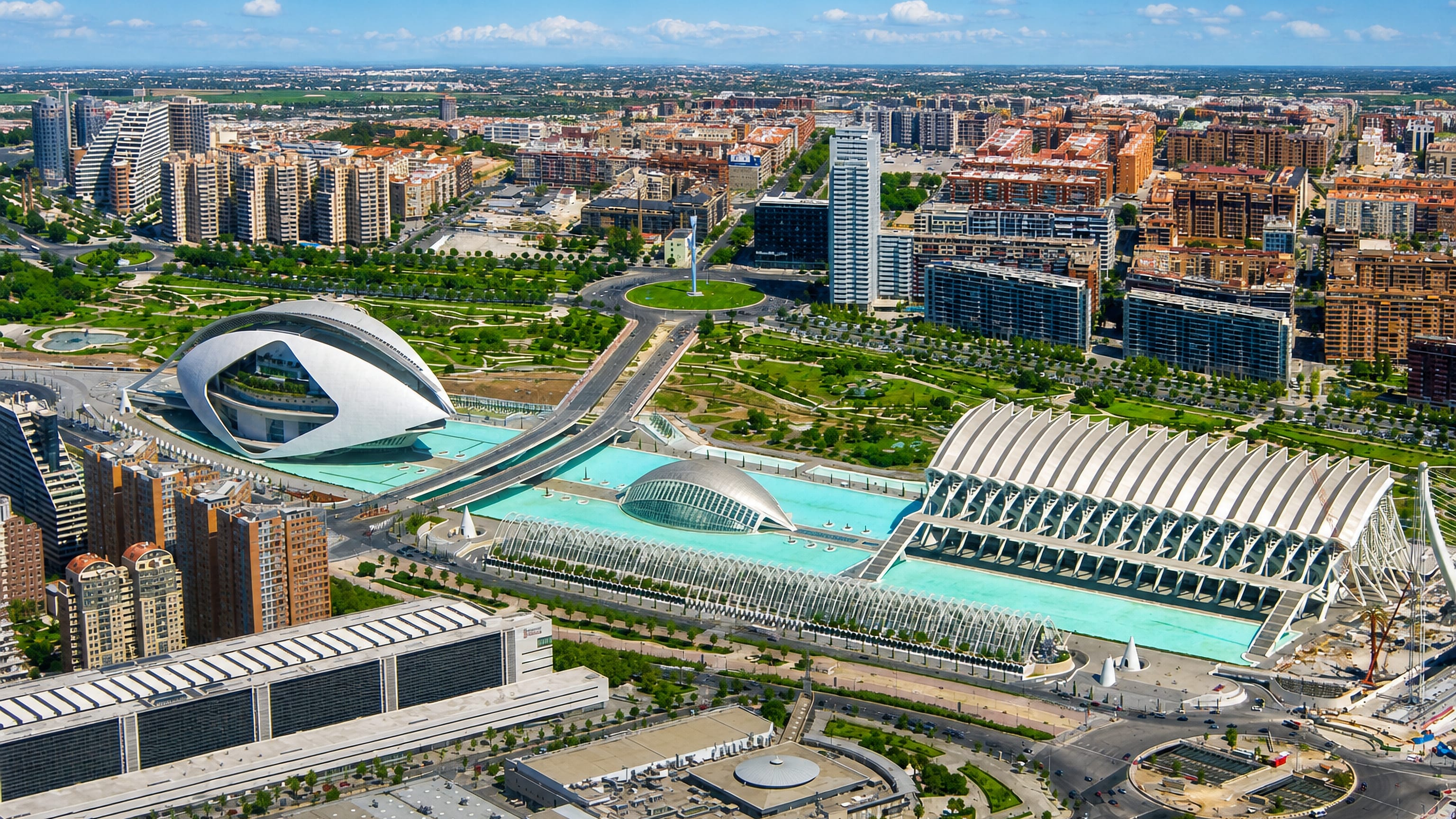
Salt wind crosses the drained Turia bed in Valencia, capital of the Valencian Community, known for Falles and the City of Arts and Sciences.
Hotel links are affiliate links: booking through them may earn us a commission, at no extra cost to you. It never affects how places are ranked. How this works


Where to stay in Valencia
Not every neighbourhood fits every trip — here's what each one is good for.

 ValenciaSpainLate eaters working through the bars south of the vanished walls
Russafa
A nineteenth-century grid of small kitchens within ten minutes on foot of the Estació del NordRussafa →ValenciaSpainEl Mercat
El Mercat is a district of Valencia whose streets carry the Church of Sant Joan del Mercat, the Church of San Nicolás and several parish churches.Where to stay →ValenciaSpainLa Seu
La Seu packs the Centre Arqueològic de l'Almoina, the Roman city walls of Valencia and the Museu de la Ciutat de València into a few streets.Where to stay → ValenciaSpain
El Botanic
El Botanic shares its name with the Jardín Botánico de la Universidad de Valencia, the university garden that sits among its streets.Where to stay →ValenciaSpainSant Francesc
Sant Francesc, or San Francisco, is the Valencia barrio of the Teatre Principal, the Roman thermae and the Museu Històric Municipal de València.Where to stay →ValenciaSpainLa Xerea
La Xerea lines up the Reial Col·legi Seminari de Corpus Christi, Sant Joan de l'Hospital and the Museo del palacio de Cervellón inside Valencia.Where to stay →ValenciaSpainLa Roqueta
La Roqueta is a Valencia district recorded from 1979, with the Estación del Norte rail yard, the Museo Taurino de Valencia and Cinema Jerusalem.Where to stay →ValenciaSpainLa Petxina
La Petxina is a Valencia district whose listed buildings run to schools and a church, among them CEIP Teodoro Llorente and Colegio Jesús y María.Where to stay →ValenciaSpainArrancapins
Arrancapins gathers the Mercat d'Abastos de València, the Finca Roja and the Lluís Vives School beside the Estación del Norte in Valencia.Where to stay → ValenciaSpain
El Pla del Remei
El Pla del Remei wraps the Mercado de Colón and the Gran Via Marqués del Túria into a compact barrio of Valencia's Eixample.Where to stay →ValenciaSpainLes Tendetes
Les Tendetes is a Valencia barrio carrying a single entry on the record: the Institut Valencià d'Art Modern.Where to stay →ValenciaSpainTrinitat
Trinitat carries two Valencia museums and a monastery: fine art, natural science, and the Monestir de la Trinitat de València.Where to stay →All neighbourhoods (61)
 ValenciaSpain
Marxalenes
Marxalenes, Marchalenes in Castilian, is a barrio of Valencia in the La Zaidía district, its name from the marshland north of the old walls.Where to stay → ValenciaSpain
Morvedre
Morvedre is a Valencia barrio holding the Casa-Museu Benlliure, the Pont de Fusta Station building and the Market Hall of Sant Pere Nolasc.Where to stay → ValenciaSpain
Eixample
Eixample, or Ensanche, is Valencia's main shopping district, holding carrer Colón, the Mercado de Colón and the older core of Russafa.Where to stay →ValenciaSpainExposicio
Exposicio is the Valencia district of the Jardín de Monforte, where the Fountain of Flora and the Fountain of the Four Seasons stand.Where to stay →ValenciaSpainJaume Roig
Jaume Roig is a central barrio of Valencia, Spain, in the El Pla del Real district beside the university quarter.Where to stay → ValenciaSpain
El Calvari
El Calvari, a Valencia district, is recorded through two churches: Our Lady of Mercy and the iglesia de Nuestra Señora de la Esperanza.Where to stay →ValenciaSpainNou Moles
Nou Moles is a barrio of Olivereta. The Séquia de Favara drove the mill that named it, from Valencia's Avinguda del Cid to the Turia.Where to stay →ValenciaSpainTormos
Tormos is a barrio of Valencia holding an old sawmill chimney, the Casa Lluna panel of Saint Vincent Ferrer, and the Església de Sant Antoni Abat.Where to stay →ValenciaSpainMestalla
Mestalla is a barrio of Valencia built around the Palau de la Música de València and a monument to the supporters of Valencia CF.Where to stay →ValenciaSpainCiutat Universitaria
Ciutat Universitaria, also written Ciudad Universitaria, is the Valencia district of the Col·legi Major Lluís Vives and the city's medical faculty.Where to stay → ValenciaSpain
La Raiosa
La Raiosa is a Valencia district holding the Quartell d'Infanteria del Carrer de Sant Vicent and a run of industrial buildings on Giorgeta avenue.Where to stay →ValenciaSpainTres Forques
Tres Forques is a barrio of the Olivereta district in western Valencia, Spain, built over huerta that the Valencia to Utiel railway once crossed.Where to stay →ValenciaSpainEn Corts
En Corts is a barrio of Valencia listed for two working buildings: a level-crossing keeper's house on Rafael Contreras street and a substation.Where to stay →ValenciaSpainBenicalap
Benicalap is a district of Valencia holding the Alqueria del Moro, the Alqueria de la Torre and the Església de Sant Roc de Benicalap.Where to stay →ValenciaSpainSafranar
Safranar is a barrio in the Patraix district of south-western Valencia, Spain, whose name means the saffron field.Where to stay →ValenciaSpainEls Orriols
Els Orriols is a district of Valencia holding the Monestir de Sant Miquel dels Reis and the Lladró Museum.Where to stay → ValenciaSpain
Albors
A compact quarter of Valencia, Albors is marked by the ceramic panel of Our Lady of the Forsaken at Suay alley rather than by any monument.Where to stay →ValenciaSpainCami Fondo
A factory chimney marks Cami Fondo, a small Valencia district recorded in full as Camí Fondo del Grau.Where to stay → ValenciaSpain
L'Amistat
L'Amistat is one of the smaller districts of Valencia, carrying no listed monument of its own and no museum to send a visitor toward.Where to stay →ValenciaSpainFavara
The Hospital Pare Jofré is the one listed building in Favara, a barrio on the Valencia record in the Comunitat Valenciana.Where to stay → ValenciaSpain
Patraix
Patraix is a Valencia barrio built around its own Historical Area, the Convent de Jesús and the chimneys left by its sawmills and factories.Where to stay →ValenciaSpainTorrefiel
Torrefiel is a ward of Valencia inside the district of Rascanya, keeping the Alqueria de Falcó and a ceramic retablo on its short register.Where to stay → ValenciaSpain
La Vega Baixa
La Vega Baixa is a Valencia barrio of Algirós, La Bega Baixa, Barri de Sant Josep: streets Xúquer, Serpis, Gorgos, Clariano, Vinalopó south of the Túria.Where to stay → ValenciaSpain
L'Hort de Senabre
The Cayetano Gil furniture factory is the one protected building recorded in L'Hort de Senabre, a district of Valencia rather than a destination in it.Where to stay →ValenciaSpainNa Rovella
Na Rovella is a barrio of Valencia in Quatre Carreres, holding the Pabellón Fuente de San Luis of 1983 on Avinguda dels Germans Maristes.Where to stay →ValenciaSpainSant Pau
Sant Pau is a barrio of Valencia marked by working stock: the Molí de Pobres and the mill, chimney and ceramic panel of Molino de Llobera.Where to stay →ValenciaSpainSoternes
Soternes enters the record in 1979, a Valencia district whose addresses run from the Valencia Bioparc to the Museu d'Història de València.Where to stay →ValenciaSpainLa Fontsanta
La Fontsanta is a broad Valencia district holding the Hospital General Universitari de València and the Casa de la Misericòrdia.Where to stay →ValenciaSpainVara de Quart
Vara de Quart is a barrio of the Patraix district in south-western Valencia, Spain, with its own station and the Ciudad Gran Turia estate.Where to stay → ValenciaSpain
Cami de Vera
Camí de Vera, listed as Cami de Vera, is a district of Valencia whose two named landmarks are a parish church and a computing collection.Where to stay →ValenciaSpainMalilla
Malilla is a district of Valencia recorded through four listed sites, among them the Molí de les Fonts and the Partidor de las Casas del Barber.Where to stay →ValenciaSpainLa Creu Coberta
La Creu Coberta is a Valencia barrio of factories and barracks, named like the covered cross on carrer Sant Vicent Màrtir.Where to stay →ValenciaSpainCiutat Jardi
Ciutat Jardí is a barrio in the Algirós district of eastern Valencia, Spain, named for a garden city that was planned along Blasco Ibáñez and never built.Where to stay →ValenciaSpainCiutat Fallera
Ciutat Fallera is a Valencia barrio recorded with two churches, the Church of Saint Michael and the church of Saint James the Great.Where to stay → ValenciaSpain
Penya-Roja
Penya-Roja is the barrio of Valencia holding the City of Arts and Sciences, with L'Oceanogràfic and L'Umbracle inside its bounds.Where to stay →ValenciaSpainAiora
Aiora is a district of Valencia listing a flour mill, warehouse fronts, the chimney of Industrias Aceiteras Casanova and the Palauet d'Aiora.Where to stay →ValenciaSpainLa Llum
La Llum, La Luz in Spanish, is a Valencia barrio whose one listed monument is the church of Our Lady of Good Health.Where to stay → ValenciaSpain
Sant Isidre
Sant Isidre, written San Isidro in Spanish, is a barrio of Valencia built around the Núcleo Histórico Tradicional de Sant Isidre.Where to stay → ValenciaSpain
La Carrasca
La Carrasca answers to a single recorded address in Valencia: the Museum for Telecommunication Vicente Miralles Segarra.Where to stay →ValenciaSpainLa Creu del Grau
La Creu del Grau is a quarter of Valencia whose protected buildings are all industrial: a gasometer, a fertiliser works, and the Noguera street sheds.Where to stay →ValenciaSpainL'Illa Perduda
L'Illa Perduda is a compact barrio of Valencia, listed for the Museo de la Semana Santa Marinera and the old Slaughterhouse of El Cabanyal.Where to stay →ValenciaSpainCami Real
Camí Real, recorded as Cami Real, is a district of Valencia where a brewery, a factory building and a technical institute share the streets.Where to stay →ValenciaSpainPoble Nou
Poble Nou is a pedania of Valencia in Pobles del Nord: one line of houses with orchards and old farmhouses on every side.Where to stay →ValenciaSpainBetero
Beteró is a barrio of Valencia in the Poblados Marítimos district whose northern third is the Virgen del Carmen group, built after the Turia flood of 1957.Where to stay →ValenciaSpainFaitanar
Faitanar is a compact Valencia district listing the Alqueria de Pastor, the Church of Saint George and the chimney of Agustín Hurtado's brickyard.Where to stay →ValenciaSpainLa Torre
La Torre is a pedanía of Valencia in the Poblados del Sur district, grown from a fortified alquería of the 14th century on the old Camino Real de Madrid.Where to stay →ValenciaSpainLa Malva-Rosa
La Malva-rosa is a working barrio of Valencia in the Poblados Marítimos district, named for the rose mallow that once grew on the ground.Where to stay →ValenciaSpainLa Punta
La Punta holds rural ground inside Valencia, with the Ermita del Fiscal, Casa Orient and the Arrocería Roca factory among its listed names.Where to stay →ValenciaSpainEl Forn D'Alcedo
El Forn d'Alcedo, also written Horno de Alcedo, is a village of Valencia's Pobles del Sud with three listed churches.Where to stay →Hotel links are affiliate links: booking through them may earn us a commission, at no extra cost to you. It never affects how places are ranked. How this works
Find hotels in Valencia
Direct booking searches for these neighbourhoods.
Ciutat Vella
The medieval knot around the Church of Santa Catalina, where small rooms buy short distancesFind hotels in Ciutat VellaBeach mornings on the Malvarrosa sand with the tram back into townEl Cabanyal
Tiled fishermen's houses in straight rows behind the beach, near L'OceanogràficFind hotels in El CabanyalHotel links are affiliate links: booking through them may earn us a commission, at no extra cost to you. It never affects how places are ranked. How this works
Things to do in Valencia
Ranked by global recognition; descriptions from Wikidata (CC0).
Museums & Galleries
5- Museu de Belles Arts de València Heritage
- National Museum of Ceramics and Sumptuary Arts González Martí Heritage
- Centre Arqueològic de l'Almoina Heritage
- Jardín Botánico de la Universidad de Valencia Heritage
- Museu de Prehistòria de València Heritage
Churches & Religious Sites
8- Church of San Nicolás Heritage
- Church of Sant Joan del Mercat Heritage
- Church of Santa Catalina, Valencia Heritage
- Monestir de Sant Miquel dels Reis Heritage
- Sant Joan de l'Hospital church Heritage
Show 3 more →
- Reial Col·legi Seminari de Corpus Christi Heritage
- Església i Palau del Temple (València) Heritage
- Convent del Carme (València) Heritage
Castles & Historic Sites
4- Palauet d'Aiora Heritage
- Sindicato Arrocero de Alfafar Heritage
- Vall Cobert Heritage
- Espacio de Protección Arqueológica Palacio Real Heritage
Nature & Outdoors
1- Jardín de Monforte Heritage
Stadiums & Sports
1- Pavelló Sant Isidre
Landmarks & Notable Places
8- Mercado de Colón Heritage
- Post Office of Valencia, Spain Heritage
- Finca Roja Heritage
- Presó Model de València Heritage
- Mercat d'Abastos de València Heritage
Show 3 more →
- Torre de Sant Bartomeu Heritage
- Col·legi Major Lluís Vives Heritage
- Telefonica Building Heritage
worth knowingacross 6 categories in Valencia
About Valencia
What is Valencia known for?
Valencia is known for the Falles, for paella, and for the white shells of the City of Arts and Sciences. Fire ends the festival. Each March the neighbourhoods raise satirical monuments in the streets and burn them on the last night, a craft the Museu Faller de València keeps on display through the rest of the year.
Rice grew here first. The paddies of the Albufera south of the city gave the dish its name and its short grain, and L'Oceanogràfic and L'Umbracle draw the crowds the old centre once held alone.
What are the main landmarks in Valencia?
Valencia's oldest landmark lies underfoot. The Centre Arqueològic de l'Almoina shows the Roman forum through a glass floor, and the Roman thermae of Valencia survive a short way off, beneath the same dense grid of streets that carries the Church of San Nicolás and the Church of Sant Joan del Mercat. Calatrava changed the skyline.
His City of Arts and Sciences fills the drained Turia bed with the Museu de les Ciències Príncipe Felipe, L'Umbracle and L'Oceanogràfic, while the Institut Valencià d'Art Modern keeps the modern painting a few blocks north.
What is the history of Valencia?
Roman colonists founded Valencia in 138 BC. Veterans of the legions took a river island in the Turia and called the place Valentia Edetanorum, a name the excavated forum under the Centre Arqueològic de l'Almoina still carries. Rome fell away.
Visigoths, then the armies of Islam, held the town from the eighth century, and under the name Balansiya it grew rich on irrigated huerta land whose channels still divide the fields west of the city. James I of Aragon took the city in 1238 and made it the capital of a new kingdom. Silk did the rest.
Weavers and merchants filled the fifteenth century with trade, and the churches of Santa Catalina and Sant Joan del Mercat were rebuilt on the profits. The old kingdom kept its own law and its own tongue until the Bourbon decrees of 1707 swept both away. Modern Valencia begins with water.
After the Turia broke its banks in 1957 and drowned the streets, engineers cut a new channel south of the city and left the old bed dry, and the gardens laid into it run from the inland edge to the sea.
Where is Valencia?
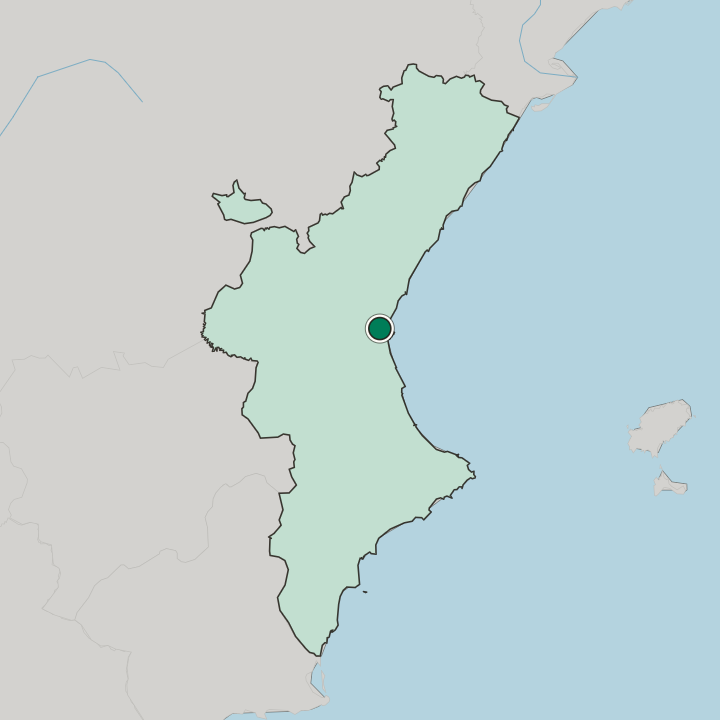
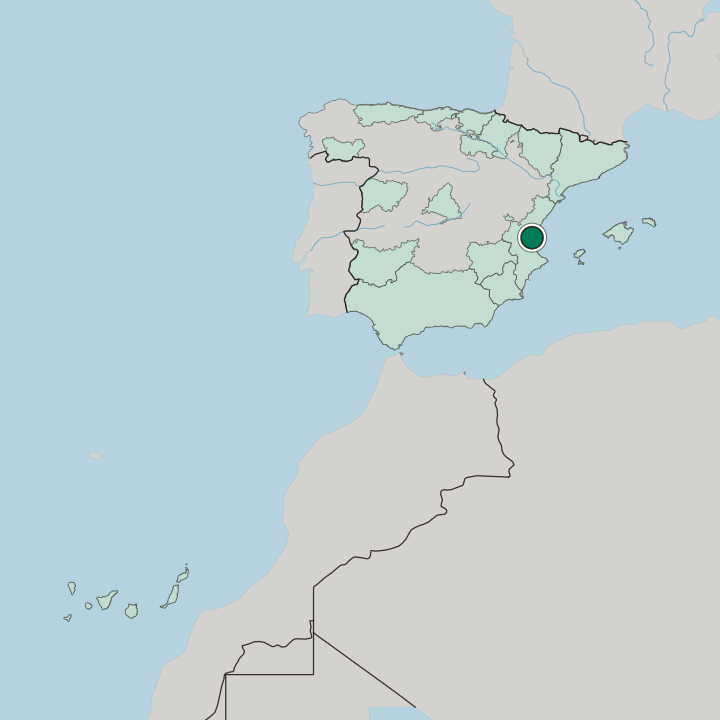
Valencia stands on the coastal plain of eastern Spain, where the Turia reaches the Mediterranean. Flat ground reaches inland from the shore until the Serra Calderona lifts it to the north-west, and the huerta between them is cut into small irrigated plots by channels older than the kingdom. South of the port the Albufera lagoon lies behind a bar of pine and sand, shallow and thick with rice paddies.
The city barely rises.
What is the climate of Valencia?
Valencia keeps a mild Mediterranean climate that the sea, not the land, decides. Winters stay soft and bright, with frost almost unknown on the coastal plain, while July and August turn heavy and humid until the sea breeze reaches the streets in the afternoon. Autumn is the violent season.
Cold air moving over warm Mediterranean water drops the rain the huerta needs and, in bad years, more water in a day than the Turia channel can take.
How do you get to Valencia?
Valencia connects to Madrid by the high-speed line into Joaquín Sorolla station, a run of well under two hours. The older Estació del Nord sits beside it and handles the regional trains along the coast, while Metrovalencia carries the airport line in from Manises on the western edge. Ferries leave the port for the Balearics.
Drivers arrive on the AP-7, which follows the coast from Catalonia to Alacant and skirts the huerta north of the city.
Common questions
What is the best area to stay in Valencia?
Ciutat Vella: Walkers who want the Mercat Central and the Falles at the door. Russafa: Late eaters working through the bars south of the vanished walls. El Cabanyal: Beach mornings on the Malvarrosa sand with the tram back into town.
Good for
More cities in Comunitat Valenciana
Updated October 2026