Spain · Galicia
Where to Stay in Lugo, Galicia
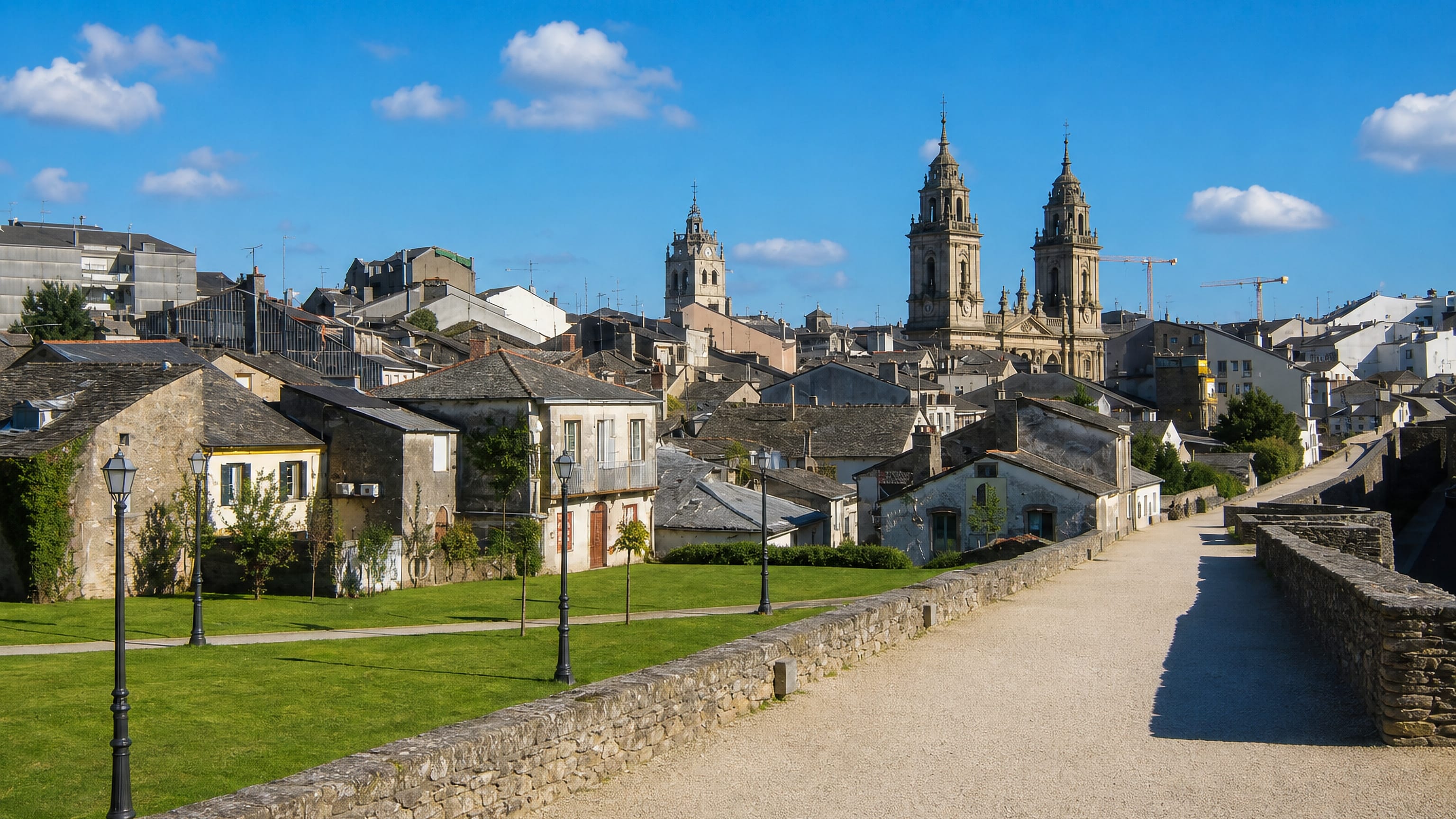
Lugo is a Galician provincial capital enclosed by an intact Roman wall circuit, a UNESCO site that still rings the entire old town.
Hotel links are affiliate links: booking through them may earn us a commission, at no extra cost to you. It never affects how places are ranked. How this works


Where to stay in Lugo
The practical side of choosing where to sleep.
Two decisions matter, and both are about the wall. Inside it, the old town packs Lugo Cathedral, the Museo Diocesano e Catedralicio de Lugo and Lugo town hall into a few streets, which is why most visitors pay to sleep within the circuit rather than beyond it. Rooms are limited there.
Book early if the pilgrim trail is the plan. Down by the gates the character changes. Streets near the Sala de exposiciones Porta Miñá drop away from the enclosed centre towards the Roman thermae of Lucus Augusti and the University Museum A Domus do Mitreo, and they suit you if Roman Lugo is the reason for the trip.
Steps come with the slope. Museo Provincial de Lugo stays a few streets behind on the higher ground. Meilán lies outside all of it.
Beds around the Igrexa Parroquial de Santiago de Meilán belong to the outer city rather than the walled one, with room to park and a clear run onto the roads through the province of Lugo, which is the trade for a longer walk back in. Museums stay behind the wall. Centro Arqueolóxico San Roque is the exception.
Find hotels in Lugo
Direct booking searches for these neighbourhoods.
Inside the circuit
The enclosed old town of Lugo, where Lugo Cathedral, the Museo Diocesano e Catedralicio de Lugo and Lugo town hall stand inside one unbroken Roman wall. Lodging is scarce in this area; reserve in advance.Find hotels in Inside the circuitthe Roman thermae of Lucus Augusti and the lower gateThe Porta Miñá gate
The quarter around the Sala de exposiciones Porta Miñá, where the wall meets the slope running down towards the University Museum A Domus do Mitreo. Few places to stay nearby — book ahead.Find hotels in The Porta Miñá gateparking and a straight run out across the province of LugoMeilán
The outer parish around the Igrexa Parroquial de Santiago de Meilán, well clear of the Roman Walls of Lugo and the museum streets inside them.Find hotels in MeilánHotel links are affiliate links: booking through them may earn us a commission, at no extra cost to you. It never affects how places are ranked. How this works
Things to do in Lugo
Ranked by global recognition; descriptions from Wikidata (CC0).
Museums & Galleries
3- Museo Provincial de Lugo Heritage
- University Museum A Domus do Mitreo
- Museo Interactivo de la Historia de Lugo
Churches & Religious Sites
3- Lugo Cathedral UNESCO
- Igrexa Parroquial de Santiago de Meilán Heritage
- Iglesia de San Froilán
Castles & Historic Sites
3- Roman Walls of Lugo UNESCO
- Roman thermae of Lucus Augusti Heritage
- Lugo town hall Heritage
worth knowingacross 3 categories in Lugo
About Lugo
The wall is the whole point.
What is Lugo known for?
An intact Roman circuit rings the old town of Lugo and carries a UNESCO listing, and its gates are still the way in and out, among them the one at the Sala de exposiciones Porta Miñá. Lugo Cathedral stands inside it. Pilgrims gather here as well, because one of the trails to Santiago de Compostela begins in the city and leaves through the Roman Walls of Lugo.
What are the main landmarks in Lugo?
Roman Walls of Lugo come first. Lugo Cathedral and the Museo Diocesano e Catedralicio de Lugo share one corner of the old town, the Iglesia de San Froilán and Lugo town hall stand close by, and the Triumph arch marks the civic ground. Roman work runs below.
The Roman thermae of Lucus Augusti, the University Museum A Domus do Mitreo and the Centro Arqueolóxico San Roque uncover it, while the Museo Provincial de Lugo and the Museo Interactivo de la Historia de Lugo tell it indoors.
What is the history of Lugo?
Rome laid out Lucus Augusti. The thermae that carry the name survive, the University Museum A Domus do Mitreo shows what lay under the later streets, and the Centro Arqueolóxico San Roque holds more of the same ground. Then the wall went up.
Its circuit closed the town completely and has never been broken, which is why UNESCO lists it and why the plan of Roman Lugo stays legible. The church took the centre next. Lugo Cathedral rose inside the walls and gathered the Museo Diocesano e Catedralicio de Lugo around it, while the Iglesia de San Froilán and the Igrexa Parroquial de Santiago de Meilán served parishes of their own.
The town then built for itself. Lugo town hall and the Triumph arch belong to that later ordering of the enclosed town. Pilgrimage gave the city a second role.
One of the trails to Santiago de Compostela starts here, so walkers leave through Roman gates cut for a wholly different purpose, and the Sala de exposiciones Porta Miñá occupies one of them. Provincial office added the final layer. Lugo is capital of the province of Lugo within Galicia, and the Museo Provincial de Lugo, the Museo Interactivo de la Historia de Lugo and the Obradoiro e Arquivo de Documentación Musical do Centro de Artesanía e Deseño all belong to that provincial role.
Where is Lugo?
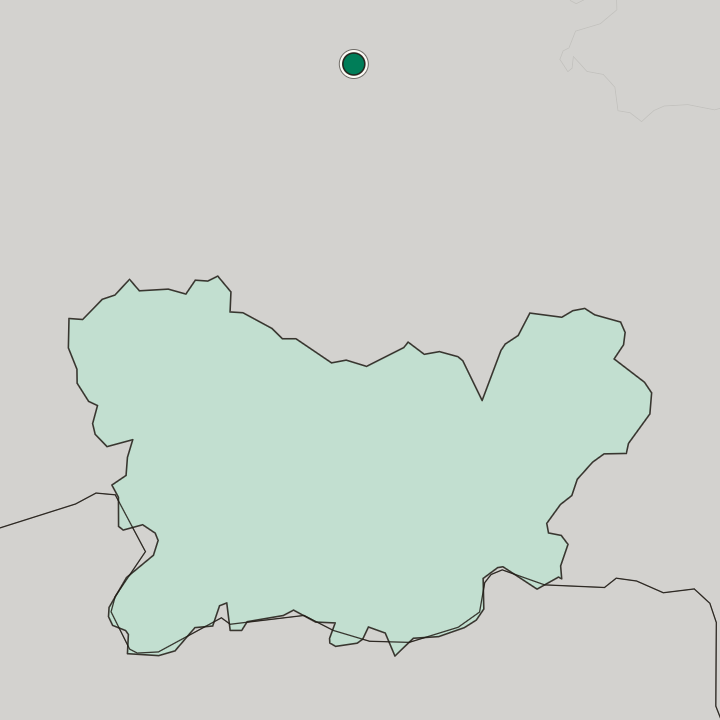
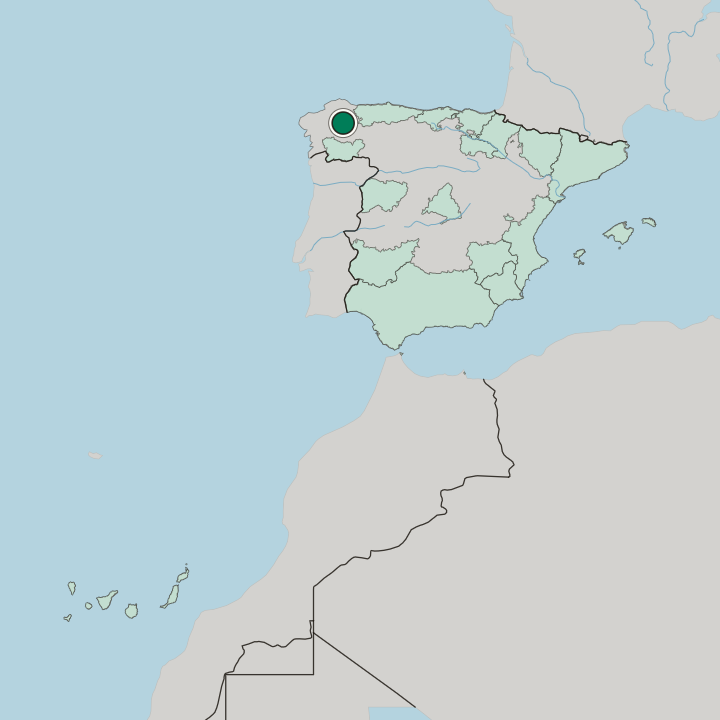
Everything here divides at the wall. Lugo keeps its old town inside a complete Roman circuit, with Lugo Cathedral and Lugo town hall enclosed by it and the newer city built up hard against the outside. Meilán lies further out.
The province of Lugo takes both its name and its capital from the city, and its territory reaches away around the walls on every side.
What is the climate of Lugo?
Galician weather arrives in instalments. Rain comes, clears and comes back often enough that a full circuit of the Roman Walls of Lugo is a matter of taking the gap when it opens. Winters are damp and cold.
Summer is the season for Lugo Cathedral and the walk out to the Roman thermae of Lucus Augusti, though the old stone keeps its chill in any month.
How do you get to Lugo?
Roads converge on a provincial capital. Lugo is the administrative centre of its province, so routes across Galicia meet at the city, and arrival leaves a visitor outside the walls with the old town one gate away. Gates do the rest.
The low way in passes the Sala de exposiciones Porta Miñá, and walkers bound for Santiago de Compostela leave the Roman Walls of Lugo by another.
Common questions
What is the best area to stay in Lugo?
Inside the circuit: sleeping within the Roman perimeter, minutes from Lugo Cathedral. The Porta Miñá gate: the Roman thermae of Lucus Augusti and the lower gate. Meilán: parking and a straight run out across the province of Lugo.
Good for
More cities in Galicia
Updated October 2026