Spain · Galicia
Where to Stay in Santiago de Compostela, Galicia
Santiago de Compostela is a historic cathedral city in Galicia, its old stone streets gathered around its great Cathedral.
Hotel links are affiliate links: booking through them may earn us a commission, at no extra cost to you. It never affects how places are ranked. How this works



Where to stay in Santiago de Compostela
One neighbourhood here has its own guide — here's what it is best for.
 Santiago de CompostelaSpain
San Lázaro
San Lázaro is a district of Santiago de Compostela in Galicia, holding the Museo Pedagóxico de Galicia and the Monument to the pilgrim.Where to stay →Hotel links are affiliate links: booking through them may earn us a commission, at no extra cost to you. It never affects how places are ranked. How this works
Find hotels in Santiago de Compostela
Direct booking searches for these neighbourhoods.
The old town
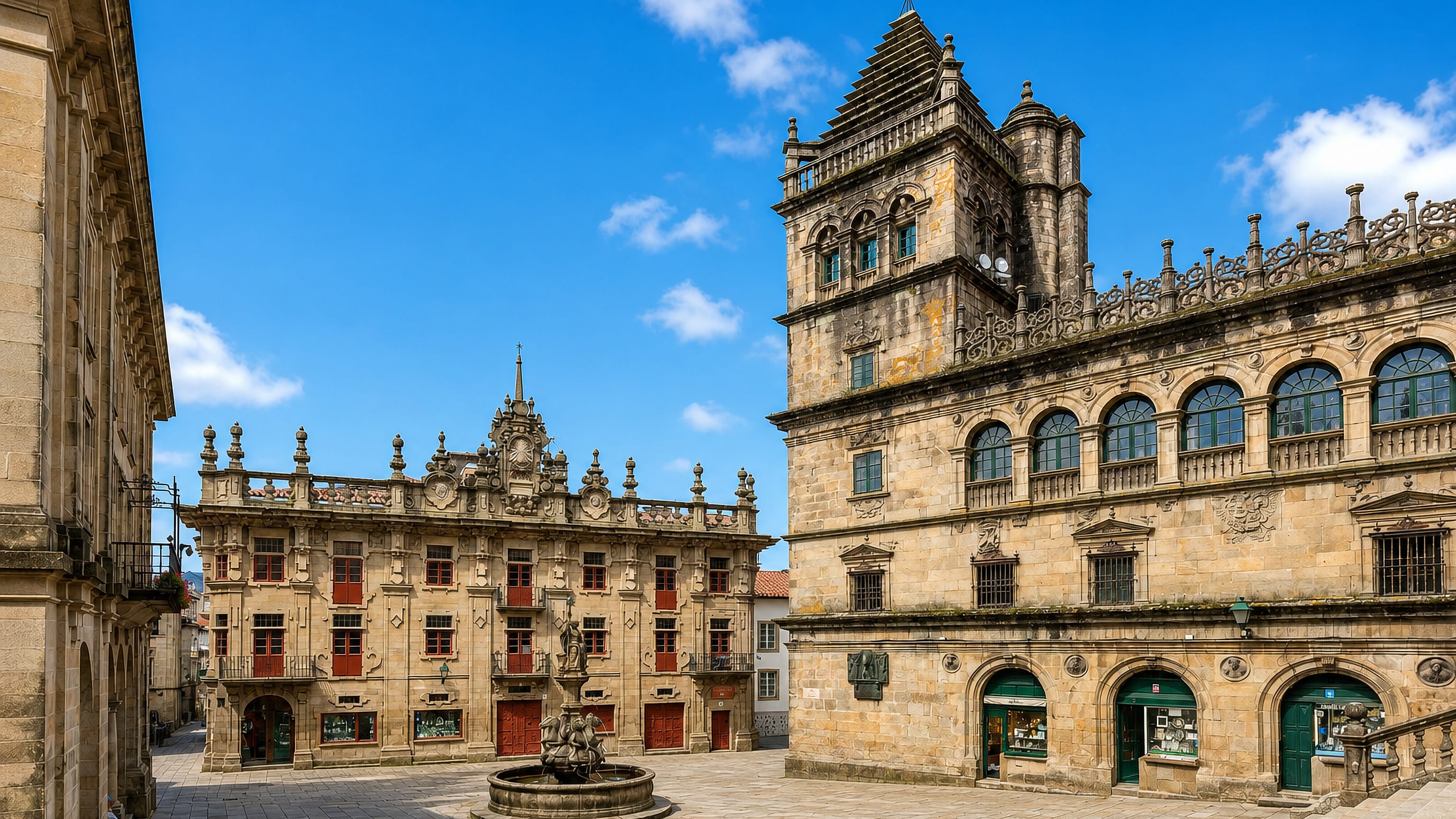
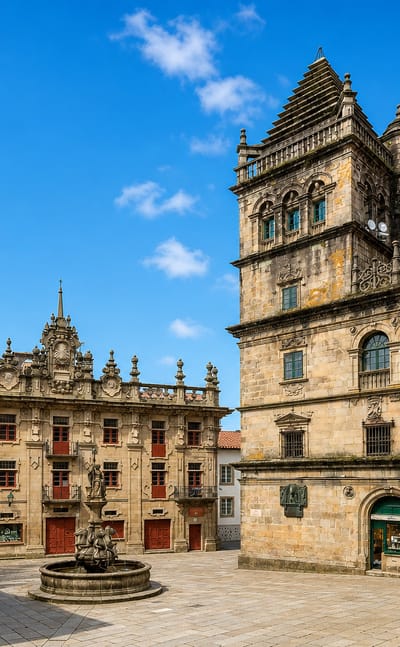
The historic core wraps the Cathedral of Santiago de Compostela and the Hospital de los Reyes Católicos in stone lanes on the cathedral square.Find hotels in The old towna quieter green edge of the old cityBonaval
The Bonaval quarter gathers around the Convent of San Domingos de Bonaval and the Museum of the Galician People, with its park and gardens.Find hotels in BonavalHotel links are affiliate links: booking through them may earn us a commission, at no extra cost to you. It never affects how places are ranked. How this works
Things to do in Santiago de Compostela
Ranked by global recognition; descriptions from Wikidata (CC0).
Museums & Galleries
3- Museo das Peregrinacións e de Santiago Heritage
- Galicia Contemporary Art Center
- Museum of the Galician People
Churches & Religious Sites
8- Cathedral of Santiago de Compostela Heritage
- San Martiño Pinario monastery Heritage
- Church of Santa María la Real del Sar Heritage
- Monastery of San Francisco do Val de Deus Heritage
- Monastery of Saint Pelagius of Antealtares Heritage
Show 3 more →
- Pazo de San Lourenzo, Santiago Heritage
- Church of María Salomé, Santiago de Compostela Heritage
- Church of San Fiz de Solovio Heritage
Castles & Historic Sites
3- Hospital de los Reyes Católicos Heritage
- Convent of San Domingos de Bonaval Heritage
- Castriño of Conxo
Landmarks & Notable Places
1- Berenguela Tower
worth knowingacross 4 categories in Santiago de Compostela
About Santiago de Compostela
What is Santiago de Compostela known for?
Santiago de Compostela is known for the Cathedral of Santiago de Compostela, the goal of pilgrims for centuries and the heart of the old city. Its stone lanes wind past monasteries and churches, among them San Martiño Pinario, toward squares laid out for arriving travellers. The pilgrimage made the place.
Museums like the Museo das Peregrinacións and the Museum of the Galician People tell the story of that long road and of Galicia itself. The city is the goal at the end.
What are the main landmarks in Santiago de Compostela?
Santiago de Compostela turns on the Cathedral of Santiago de Compostela, the goal of the pilgrimage and the anchor of the old town. The Berenguela Tower rises over the roofs, while the Hospital de los Reyes Católicos faces it across the cathedral square and the great monastery of San Martiño Pinario stands close by. Stone is everywhere.
Beyond the core, the Galicia Contemporary Art Center, the Convent of San Domingos de Bonaval, and the Church of Santa María la Real del Sar mark the edges of the city. The old town wears its faith in carved stone.
What is the history of Santiago de Compostela?
Santiago de Compostela grew up around its cathedral, the church that drew pilgrims from far off and gave the city its reason to exist. As the pilgrimage swelled over the centuries, the settlement spread outward from the Cathedral of Santiago de Compostela in rings of stone streets and squares. Faith built the town.
Monasteries and hospices rose to house and feed the arriving faithful, among them San Martiño Pinario and the Hospital de los Reyes Católicos, and the old city took the compact, walled-in shape it still holds. Over time Santiago de Compostela became the principal city of Galicia, a seat of the church as much as the end of the road for pilgrims. Its monasteries and convents multiplied around the core.
The great institutions of Galician life, from the Museum of the Galician People to the Galicia Contemporary Art Center, later settled in and around the old town. Through every century the Cathedral of Santiago de Compostela stayed at the centre, and the city's long story is still written in the stone of its churches, its squares, and its pilgrim streets.
Where is Santiago de Compostela?
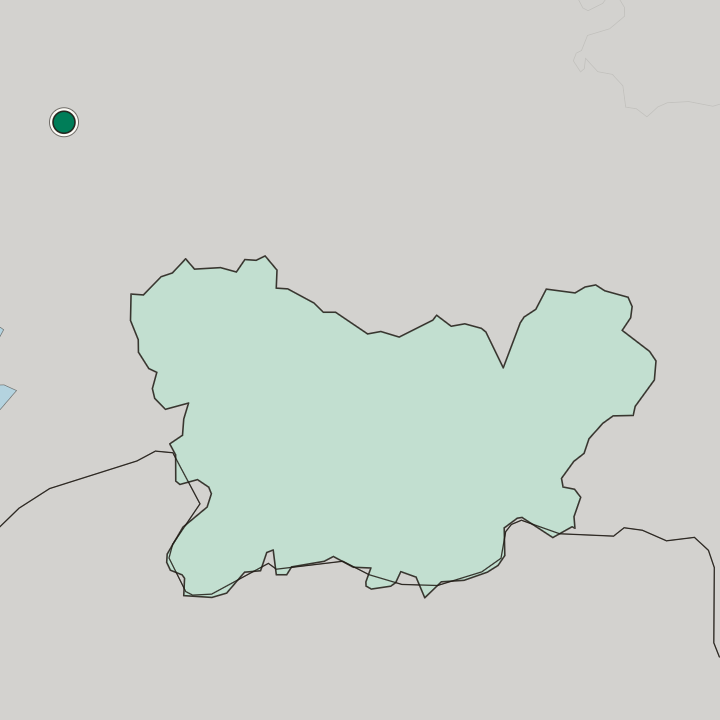
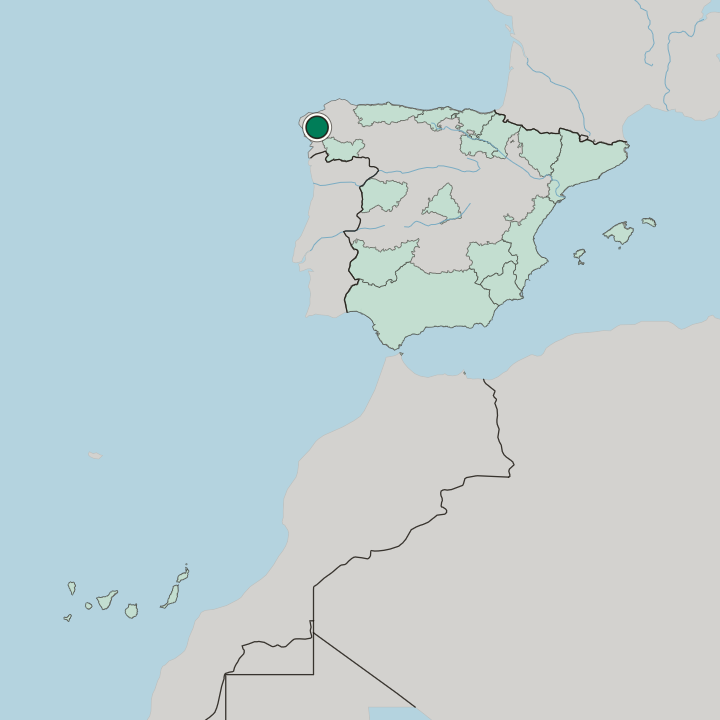
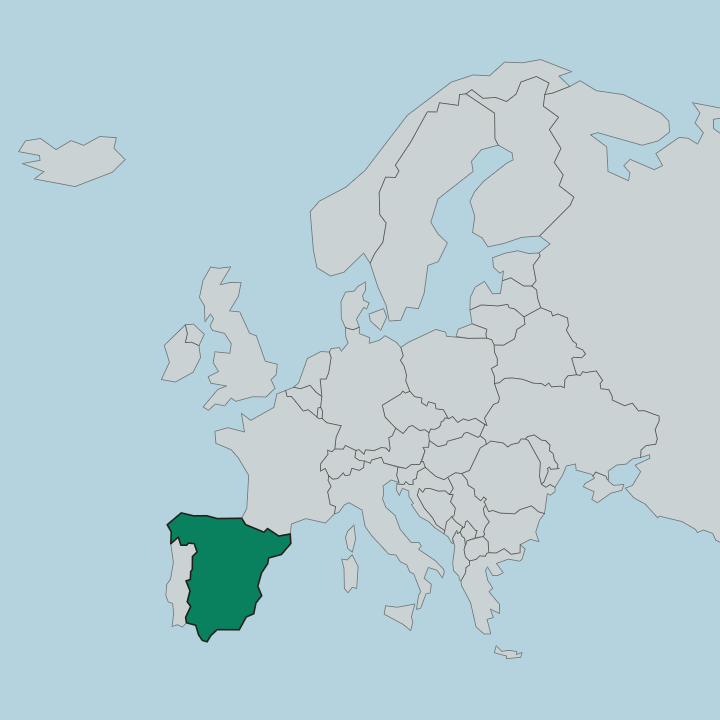
Santiago de Compostela lies in Galicia, an autonomous community of the Kingdom of Spain. The city sits inland, its old town built around the Cathedral of Santiago de Compostela. Its streets are made for walking.
Within Galicia, it stands as the community's principal city, the point that roads and pilgrim routes from across the region and beyond lead toward its cathedral.
What is Santiago de Compostela like?
Santiago de Compostela feels like a city shaped by pilgrimage, its old streets full of arriving travellers and the toll of cathedral bells. Life gathers in the squares around the Cathedral of Santiago de Compostela, over long meals and slow evenings, and Spanish is the language of it all. The old town sets the pace.
Galician culture runs deep here too, kept in places like the Museum of the Galician People, and the city wears the calm of a place people reach on foot.
How do you get to Santiago de Compostela?
Santiago de Compostela is the main hub of Galicia, reached by air, rail, and road from across the region and the wider Kingdom of Spain. For centuries travellers have arrived on foot as pilgrims, and the old routes still end at the Cathedral of Santiago de Compostela. Many still walk in.
Once in the city, the cathedral, the monasteries, and the museums lie within a short walk of one another in the compact old town.
Common questions
What is the best area to stay in Santiago de Compostela?
The old town: the cathedral heart of the city. Bonaval: a quieter green edge of the old city.
Good for
More cities in Galicia
Updated October 2026