Finland · Central Finland
Where to Stay in Jämsä, Central Finland
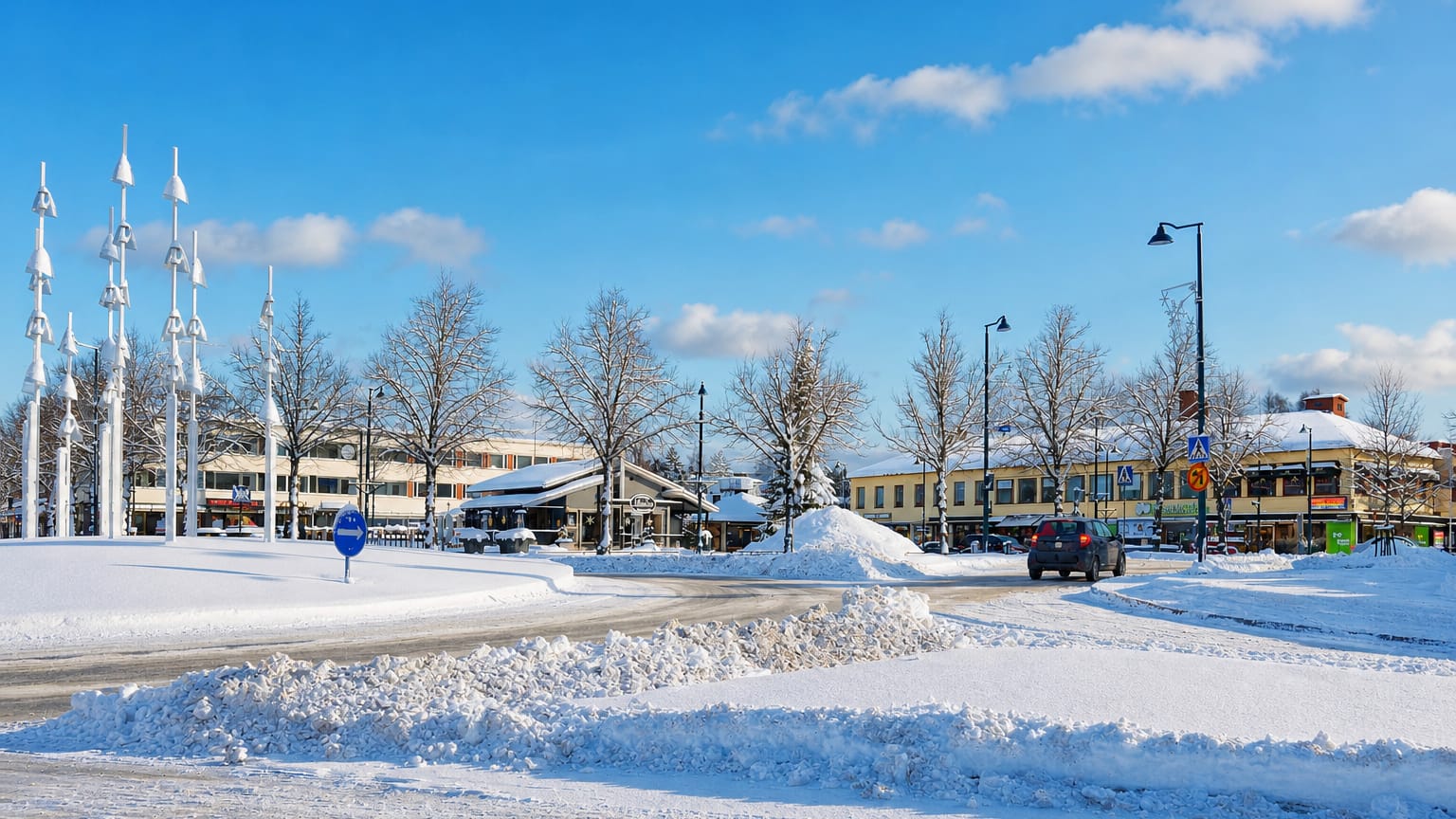
Jämsä is a town in central Finland, in the lakeland on the Jämsänjoki, home to the Himos ski resort.
Find your area →


Where to stay in Jämsä
Each area has its own feel; here's who each one suits.
Jämsä holds the broadest stock of beds in this part of Central Finland, gathered between the town centre on the Jämsänjoki and the slopes of the Himos ski resort in the lakeland. The town centre suits visitors who want the shops, the river and the Jämsän kirkko on foot, an easy base for the wider district. It is the working base.
Skiers and summer walkers cluster instead around Himos, where cabins, lodges and apartments fill the hills above the town, the busiest beds in the season. Rooms run scarce at the peak. The lakeshores of Lake Päijänne and the forests of the municipality hold quieter cottages for those touring the waters of Central Finland, and travellers tracing the deep past often pause near the Käpinniemen kalliomaalaus and the old hill fort of the Pukinvuori before returning to a room in Jämsä.
Book ahead for the ski season and high summer.
Things to do in Jämsä
Ranked by global recognition; descriptions from Wikidata (CC0).
Museums & Galleries
1- Längelmäen kirkkomuseo ja makasiini
Churches & Religious Sites
3- Jämsän kirkko Heritage
- Kuoreveden kirkko Heritage
- Koskenpään kirkko
worth knowingacross 2 categories in Jämsä
About Jämsä
What is Jämsä known for?
Jämsä is known above all for the Himos ski resort, the winter draw of Central Finland set among the hills of the lakeland near the Jämsänjoki. Slopes bring the crowds. The town also keeps the Jämsän kirkko at its heart and the ancient Käpinniemen kalliomaalaus, a rock painting from the deep past, while the lakes of the country reach toward the great water of Lake Päijänne in this corner of Central Finland.
What are the main landmarks in Jämsä?
The Himos ski resort is the best-known landmark of Jämsä, its slopes rising over the lakeland of Central Finland. Older marks reach far deeper. The Käpinniemen kalliomaalaus carries a rock painting from the prehistoric past, and the hill forts of the Pukinvuori and the Linnasenvuori crown ridges above the country.
Churches gather the parishes. The Jämsän kirkko stands at the town's heart, while the Koskenpään kirkko and the Kuoreveden kirkko serve the outer villages of this broad municipality on the Jämsänjoki near Lake Päijänne.
What is the history of Jämsä?
Jämsä's past runs back to the first people of the lakeland. The Käpinniemen kalliomaalaus carries a rock painting left on the cliffs in the prehistoric age, and the hill forts of the Pukinvuori and the Linnasenvuori guarded the country of the inland lakes in the early centuries. People held the high ground.
The parish grew on the farmland by the Jämsänjoki near the great water of Lake Päijänne, its centre held by the Jämsän kirkko, and the forest and river worked the land of Central Finland. The town gathered the wider country in time. Jämsä was chartered in 1866, drawing the villages of the river valley under one parish council, the outer settlements keeping their own churches in the Koskenpään kirkko and the Kuoreveden kirkko.
Timber and farming carried the economy through the decades, and in the modern era the hills above the town rose as the Himos ski resort, the winter draw of Central Finland. The old forts, the rock painting and the slopes still bring visitors to Jämsä in the heart of the lakeland.
Where is Jämsä?
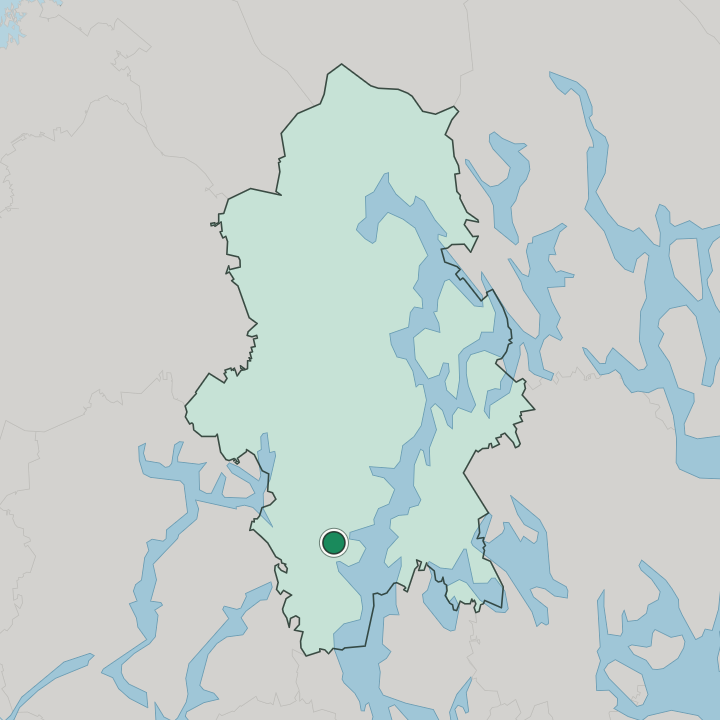
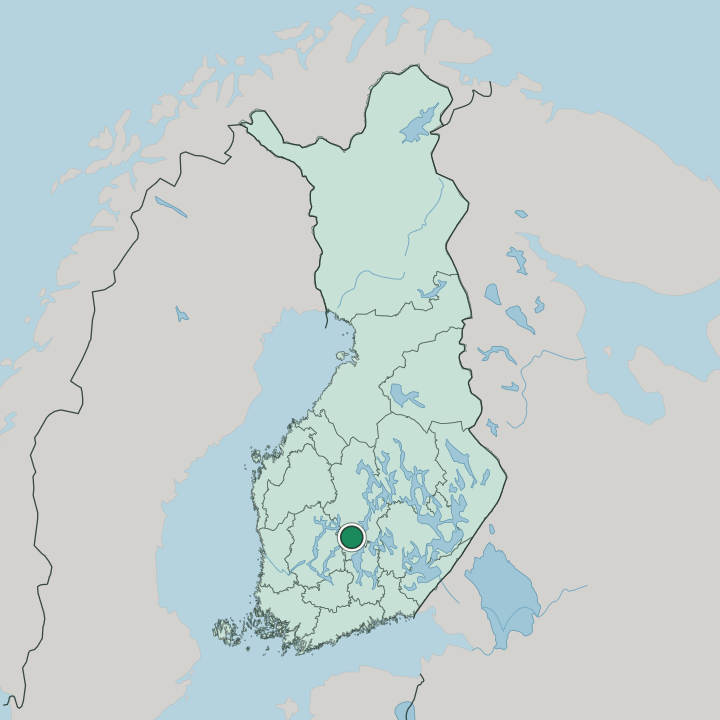
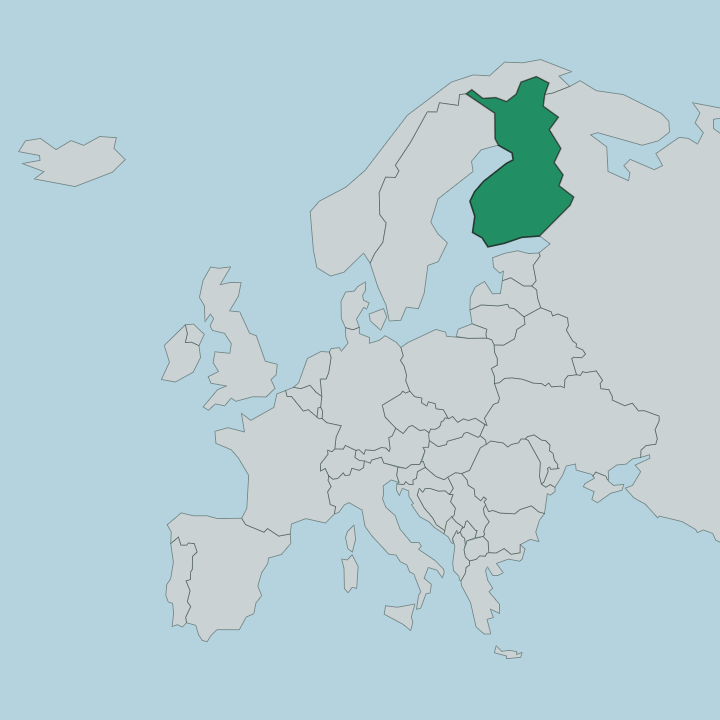
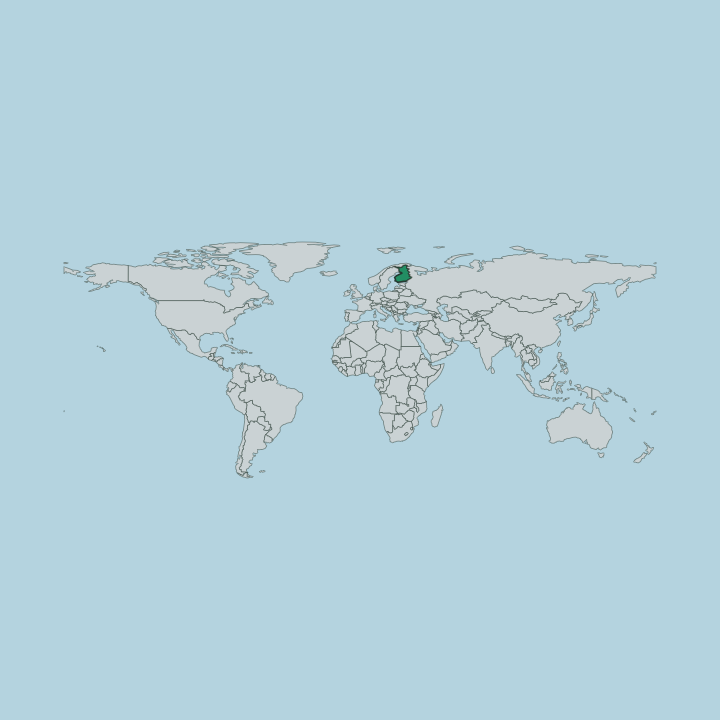
Jämsä lies in central Finland, in the lakeland, on the Jämsänjoki where the river runs down to the great water of Lake Päijänne. The town gathers in the river valley, hills and ridges rising around it, the slopes of Himos standing above the country to the north. Hills break the lake country here.
Forests, lakes and the higher ground of the Pukinvuori spread across the broad municipality, the Jämsänjoki cutting through the centre, and the long arm of Lake Päijänne reaches into this corner of Central Finland far from any coast.
What is the climate of Jämsä?
Jämsä has a cold continental climate, shaped by the forests, hills and lakes of the Central Finland lakeland far inland from the sea. Winters are long and snowy, the slopes of Himos holding deep snow and the Jämsänjoki and the bays of Lake Päijänne freezing from early in the season until the late spring break-up. The green season runs brief.
The long northern light then draws walkers to the hills of the Pukinvuori and the open water around Jämsä, while the deep winter snow draws the skiers to the slopes of Himos.
How do you get to Jämsä?
Jämsä sits on the main road through the lakeland of Central Finland, and the car is the usual way in to the town and the Himos resort. The highways cross the forested country to the river valley on the Jämsänjoki, joining Jämsä to the larger centres of the region. The road carries the traffic.
Buses run along the main routes to the town, linking Jämsä to the rest of Central Finland, and skiers and lake travellers come down the highways to the slopes of Himos and the shores of Lake Päijänne.
Good for
More cities in Central Finland
Updated September 2026