Greece · Thessaly
Where to Stay in Lárisa, Thessaly
Frourio Hill rises over the Pineios in Lárisa, capital of Thessaly, a farming and university city known for its ancient theatre and lively cafes.
Hotel links are affiliate links: booking through them may earn us a commission, at no extra cost to you. It never affects how places are ranked. How this works


Where to stay in Lárisa
The practical side of choosing where to sleep.
Where to stay in Lárisa turns on the compact centre, since the city spreads flat across the Thessalian plain and the sights cluster tight. The heart of it is the old acropolis at Frourio Hill, where the first ancient theatre of Larissa steps down the slope and the surrounding lanes hold most of the hotels, the cafes, and the evening crowds. Rooms here put the theatre, the Diachronic Museum of Larissa, and the pedestrian shopping streets a short walk apart, and the whole core stays walkable end to end.
Closer to the water the ground drops toward the Pineios, where riverside parks and the Alcazar gardens give a greener base a little back from the noise. Culture-first travellers often prefer the streets around the Municipal Gallery of Larissa and the Yeni Mosque, an easy stroll from the central square. Frourio and the Pineios sit minutes apart.
Because Lárisa sits at the meeting of the road and rail lines that cross Thessaly, the station district also suits travellers passing between Athens and Thessaloníki, so the real choice is between the old hill, the river, and the transit edge.
Find hotels in Lárisa
Direct booking searches for these neighbourhoods.
Frourio Hill and the ancient theatre
The lanes around Frourio Hill and the first ancient theatre of Larissa hold most of the hotels, the museums, and the evening crowds.Find hotels in Frourio Hill and the ancient theatretravellers wanting a greener base beside the waterThe Pineios riverside and Alcazar gardens
Riverside parks and the Alcazar gardens along the Pineios give a quieter setting a short walk back from the central square.Find hotels in The Pineios riverside and Alcazar gardensvisitors passing between Athens and Thessaloníki by railThe station district on the Thessaly line
The rail and road lines crossing Thessaly meet at Larisa's station edge, an easy base for onward travel north or south.Find hotels in The station district on the Thessaly lineHotel links are affiliate links: booking through them may earn us a commission, at no extra cost to you. It never affects how places are ranked. How this works
Things to do in Lárisa
Ranked by global recognition; descriptions from Wikidata (CC0).
Museums & Galleries
3- Diachronic museum of Larissa
- Municipal Gallery of Larissa
- Museum of the Military Veterinary Service
Churches & Religious Sites
2- Yeni Mosque, Larissa Heritage
- Basilica of St. Achillios
Castles & Historic Sites
2- Frourio Hill Heritage
- Church of Agios Bessarion
Stadiums & Sports
1- Neapolis Indoor Gymnasium
worth knowingacross 4 categories in Lárisa
About Lárisa
What is Lárisa known for?
Lárisa is the capital and largest city of the Thessaly region, and the fifth-most populous city in Greece. It anchors the wide Thessalian plain as a farming and university town on the Pineios. Few tourists stop.
Those who do find the ancient theatre below Frourio Hill, the Diachronic Museum of Larissa, and the Ottoman-era Yeni Mosque set among a cafe and bar scene that keeps the centre busy well into the night.
What are the main landmarks in Lárisa?
The main landmarks in Lárisa gather around the old acropolis at Frourio Hill, where the first ancient theatre of Larissa cuts into the slope. Ottoman rule left the Yeni Mosque nearby. The Diachronic Museum of Larissa traces the plain's settlement across the ages, while the Municipal Gallery of Larissa and the Basilica of St. Achillios add the city's Christian and modern layers, and the Church of Agios Bessarion holds its own quarter east of the centre.
What is the history of Lárisa?
The history of Lárisa runs deep in the plain of Thessaly, one of the longest continuously inhabited sites in Greece. The ancient acropolis stood on Frourio Hill above the Pineios, and the first ancient theatre of Larissa, carved into that slope, dates the classical city that flourished here. In antiquity the city gave its name to a ruling Thessalian family and drew philosophers and physicians to the plain.
Under later empires it changed hands many times, and Ottoman rule reshaped the centre and raised the Yeni Mosque that still marks the old quarter. Christian Lárisa left its own marks across those centuries. The city's Basilica of St. Achillios recalls an early bishop tied to the region, and later churches such as Agios Bessarion carried that faith forward through Ottoman and modern times.
The plain around it stayed farmland throughout. When road and rail arrived, they turned Lárisa into the transport hub of Thessaly, and the Diachronic Museum of Larissa now gathers the finds of all those layers under one roof, tracing the city from prehistory to the present day.
Where is Lárisa?
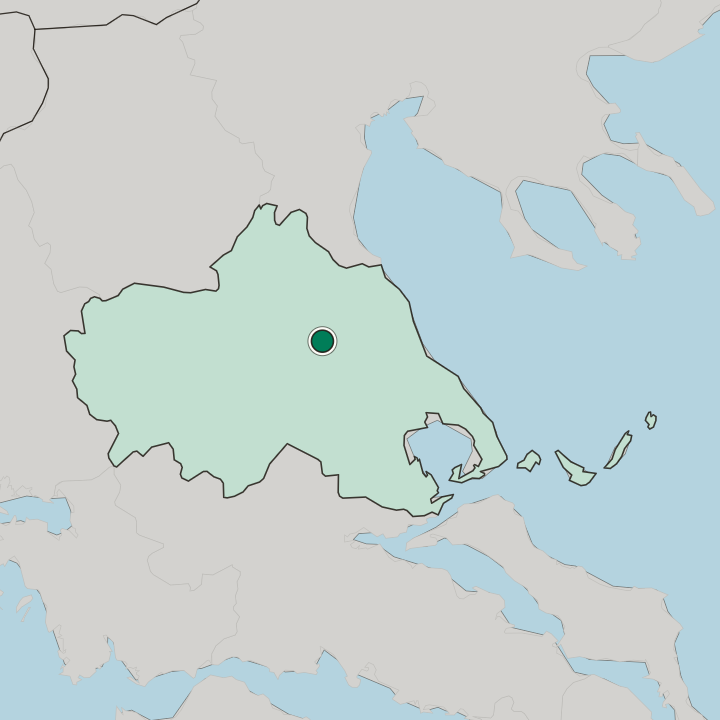
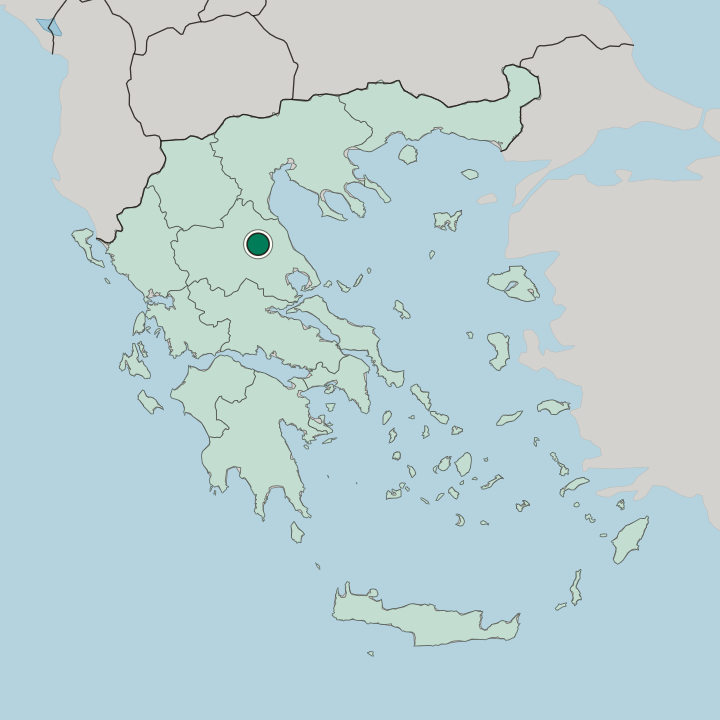
Lárisa sits at the centre of the wide Thessalian plain, on the banks of the Pineios in the Thessaly region. The old town rises on Frourio Hill above the river, then the modern city spreads flat and low across the surrounding farmland in every direction. The plain is Greece's granary.
Ringed by mountains and drained by the Pineios toward the coast, this fertile basin has long made Lárisa the natural heart of Thessaly and its farming trade.
What is the climate of Lárisa?
Lárisa has a continental Mediterranean climate shaped by its inland setting on the Thessalian plain. Summers run hot and dry. Shut off from the sea by the mountains that ring Thessaly, the basin traps the heat, and the city counts among the warmest in Greece through high summer.
Winters turn sharply cooler, with frost and the odd snowfall reaching the plain from the surrounding heights. Spring and autumn are milder and better suited to walking the riverside and the old town.
How do you get to Lárisa?
Lárisa is the national transport hub of Thessaly, sitting midway on the main line between Athens and Thessaloníki. Trains and the motorway both run straight through, so the city is reached easily by road and rail from either direction. The port of Volos lies close by.
A short run southeast links Lárisa to that harbour on the Aegean, while road and rail west open the rest of the Thessalian plain, making the city the natural interchange for the whole region.
Common questions
What is the best area to stay in Lárisa?
Frourio Hill and the ancient theatre: first-timers who want the old acropolis and the cafes at the door. The Pineios riverside and Alcazar gardens: travellers wanting a greener base beside the water. The station district on the Thessaly line: visitors passing between Athens and Thessaloníki by rail.
Good for
More cities in Thessaly
Updated October 2026