India · Madhya Pradesh
Where to Stay in Mandsaur, Madhya Pradesh
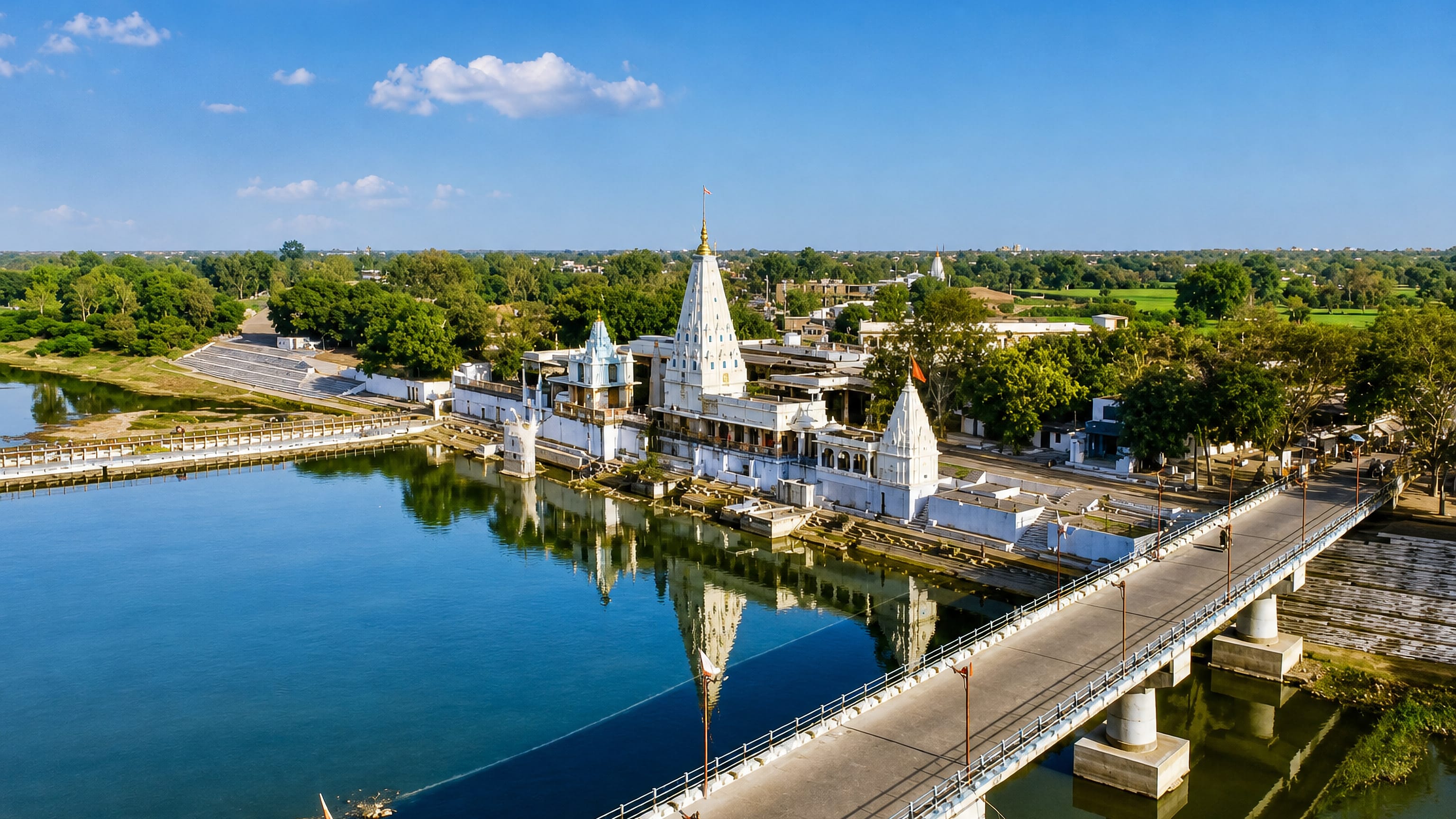
Mandsaur is a Madhya Pradesh city on the border of Malwa and Mewar, known for the ancient Pashupatinath Temple and for opium farming.
Hotel links are affiliate links: booking through them may earn us a commission, at no extra cost to you. It never affects how places are ranked. How this works


Where to stay in Mandsaur
The practical side of choosing where to sleep.
Pashupatinath Temple anchors most stays in Mandsaur. Pilgrims and day visitors want to be close to it, and the rooms in the older streets around the temple are where that demand has settled, which makes them the first place to look and the first to fill whenever the temple is busy. Book ahead in the season.
That side of the city is also the walkable one, with the markets and the offices of Mandsaur district all within a short distance of one another. The other choice is the outward road towards Sondani. Rooms on the edge suit anyone driving to the Sondani victory pillars or continuing across the opium country of the Malwa and Mewar border, since parking is simpler out there and an early start costs nothing.
You want the temple streets for an evening visit. Callers on district business tend to take the plainer rooms nearer the administrative quarter, which settles down after dark and sits closer to the offices that run the district, and one night is enough to see both the temple and the pillars if the driving is planned tightly. Two nights leaves room for the country beyond the city.
Find hotels in Mandsaur
Direct booking searches for these neighbourhoods.
The Pashupatinath Temple lanes
The older streets wrapped around the ancient Pashupatinath Temple, walkable to the markets and the first rooms taken when the temple is busy.Find hotels in The Pashupatinath Temple lanesdrivers heading out to the Sondani victory pillarsThe Sondani road edge
On the outward road towards the Sondani victory pillars, with parking and an early exit into the opium country.Find hotels in The Sondani road edgeHotel links are affiliate links: booking through them may earn us a commission, at no extra cost to you. It never affects how places are ranked. How this works
About Mandsaur
Opium is farmed here.
What is Mandsaur known for?
Mandsaur carries a name across Madhya Pradesh for that crop and for the ancient Pashupatinath Temple, which stands in the city and gives it a pull that the surrounding farmland on its own would never generate. The border position counts too. The city stands on the boundary between the Malwa and Mewar regions, so what grows and what gets built here belongs to both, and its work as the headquarters of Mandsaur district lays the business of a whole district on top of that.
What are the main landmarks in Mandsaur?
Mandsaur's reputation rests on two sites. The ancient Pashupatinath Temple stands in the city itself and is the reason a good share of visitors come at all, an old foundation inside a town that otherwise runs as a district headquarters. The Sondani victory pillars stand outside it.
Between the temple in the middle and the pillars beyond the edge, Mandsaur holds more visible antiquity than most farming towns along the Malwa and Mewar border, which rewards an unhurried day rather than an hour between drives.
What is the history of Mandsaur?
Antiquity is not in short supply. The ancient Pashupatinath Temple and the Sondani victory pillars both belong to a past far older than anything the city does now, and together they mark Mandsaur as a place that counted long before any district line was drawn along the Malwa and Mewar border. Victory pillars are raised for a reason.
Whatever was settled at Sondani, the stone was put up to be seen, and it has outlasted every administration that has governed this ground since. Later the country came under Gwalior state, the second largest of the princely states of its day, and the town was governed from that court rather than on its own account. Opium shaped the farming.
The crop the district became known for decided what the fields grew and what the markets handled, and it still explains the working landscape around the city better than any monument can. The modern frame is administrative: Mandsaur ended as the headquarters of Mandsaur district in Madhya Pradesh, and the temple, the pillars and the opium fields all sit inside that arrangement rather than the other way round. Little of it was arranged for visitors.
Where is Mandsaur?
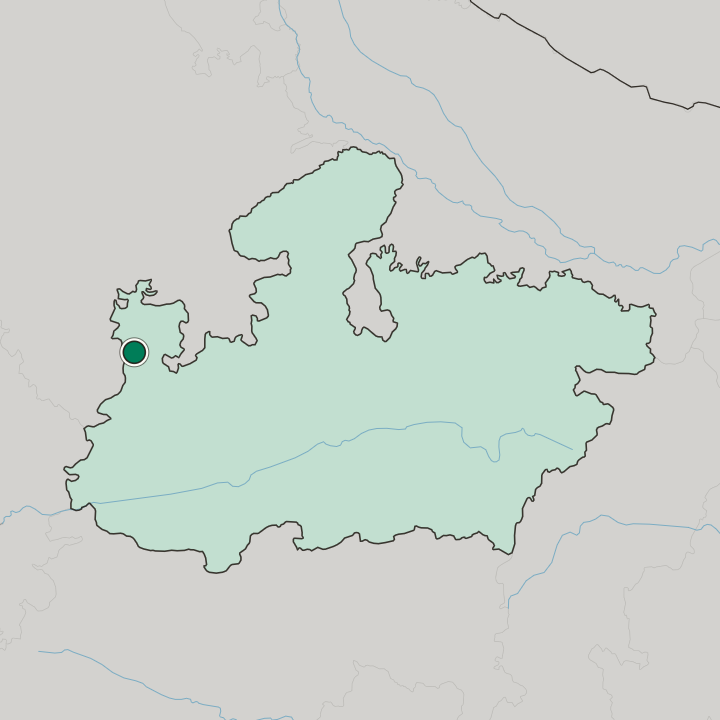
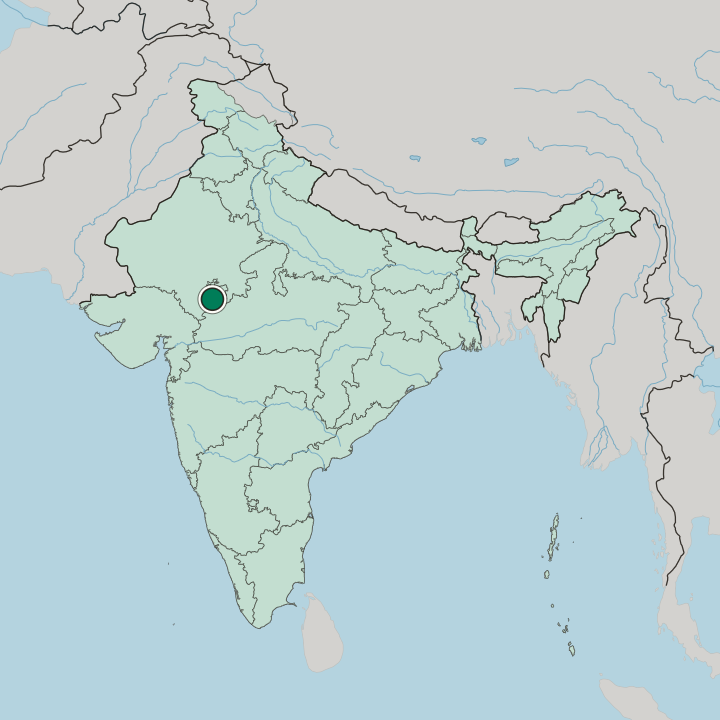
The city sits on a regional boundary. Mandsaur lies along the border of Malwa and Mewar, inland in Madhya Pradesh and well within the subtropical country of Central India, with farmland running out from the built-up edge in every direction and no coast within many hundreds of kilometres. Relief is modest here.
What makes the setting worth noticing is the ground itself, since the opium fields and the wider agriculture of Mandsaur district shape the view far more than any hill or watercourse does.
What is the climate of Mandsaur?
The year turns on the rains. Mandsaur sits in the subtropical belt along the Malwa and Mewar border, far enough inland that nothing coastal softens the extremes, so the hot season runs on and on before the wet months break across the fields of Mandsaur district. Sowing waits on the sky.
A visitor coming for the country rather than the town should know that the opium fields either side of that turn look like two different landscapes, one bare and pale, the other worked and green.
How do you get to Mandsaur?
Cars and buses bring nearly everyone. Mandsaur sits on the routes crossing between Malwa and Mewar, which makes it reachable from either side, and the traffic that turns up is regional rather than long-haul. Plan the approach as a drive.
Many visitors arrive in the middle of a wider journey through Madhya Pradesh, stopping for the Pashupatinath Temple or the Sondani victory pillars before carrying on to the next town in Mandsaur district.
Common questions
What is the best area to stay in Mandsaur?
The Pashupatinath Temple lanes: pilgrims wanting an evening at the temple. The Sondani road edge: drivers heading out to the Sondani victory pillars.
More cities in Madhya Pradesh
Updated September 2026