India · Madhya Pradesh
Where to Stay in Tīkamgarh, Madhya Pradesh
Tīkamgarh, once the Tehri of three hamlets, is a district headquarters in Madhya Pradesh named for the fort that drew the Orchha capital here in 1783.
Hotel links are affiliate links: booking through them may earn us a commission, at no extra cost to you. It never affects how places are ranked. How this works


Where to stay in Tīkamgarh
The practical side of choosing where to sleep.
Lodging sits in the district town, within reach of Purani Tehri and the offices that make Tīkamgarh a headquarters. Rooms here suit anyone working the tehsil or planning a run out to Garh Kundar, the fort in the district that draws most of the outside interest, and the walk between the market streets and the older locality takes little time in either direction. The town covers small ground.
Some 21 km² of built and open land make up the place, so nothing inside it stands far from anything else and one base serves every part of a visit. Orchha is the alternative, 64 km off. The capital that Tehri replaced in 1783 carries the heritage traffic and the hotels that come with it, which means a traveller wanting range books there and treats Tīkamgarh as a day's work or a night on the way through.
Beds in town are plain. If you want an early start at Garh Kundar and a room in the place that took the fort's name, the district town is the practical choice, and if you want variety in where you eat and sleep you will find much more of it back toward Orchha. Heritage sites in Madhya Pradesh sit a long way apart, and pairing the two towns is the efficient way to see the old Bundeli country around Tikamgarh district.
Find hotels in Tīkamgarh
Direct booking searches for these neighbourhoods.
Purani Tehri
The locality that kept the Tehri name after the town took the fort's, and the oldest ground in Tīkamgarh. Beds are limited here, so book early.Find hotels in Purani Tehritehsil business and an early road out to Garh KundarThe district-headquarters streets
Market streets and offices of the Tikamgarh district seat, the base most visitors use for Garh Kundar.Find hotels in The district-headquarters streetsheritage stays 64 km from TīkamgarhOrchha
The kingdom's first capital, which kept the visitor trade after 1783 and holds hotels Tīkamgarh does not.Find hotels in OrchhaHotel links are affiliate links: booking through them may earn us a commission, at no extra cost to you. It never affects how places are ranked. How this works
About Tīkamgarh
Two forts carry the name.
What is Tīkamgarh known for?
The town took its own from the fort of Tīkamgarh, which stood at Tehri when the capital of Orchha was moved there in 1783, while Tikamgarh district is better known for Garh Kundar, the old fort of Kundar raised by the Khangars. Purani Tehri survives in the streets. That locality preserves the older identity of a settlement which began as three hamlets set in a rough triangle, and it is the part of town where the arrangement before the capital arrived is still easiest to picture.
What are the main landmarks in Tīkamgarh?
Garh Kundar is the great one. The old fort of Kundar, built by the Khangars, served as the capital of the Khangar rulers from 1180 to 1347 and remains the structure that gives Tikamgarh district its reputation among people who travel for forts rather than for towns. Tīkamgarh's own fort names the place.
It stood at Tehri when the capital of Orchha was moved there, and the settlement gradually took the fort's name in place of its old one, with Purani Tehri left behind as the surviving mark of what the town was called before.
What is the history of Tīkamgarh?
Three hamlets came first. Tehri was the name they carried, set in a rough triangle on ground that is still identifiable in the locality called Purani Tehri, and that arrangement was the whole of the settlement before any capital or fort attached itself to the place. Rulers made the difference.
The kingdom of Orchha was founded in the 16th century by the Bundeli chief Rudra Pratap Singh, who became the first King of Orchha, and the state he established eventually reached down to this stretch of country. In 1783 the capital was moved to Tehri, 64 km from Orchha, and the town that grew there took the name of the fort of Tīkamgarh which already stood on the site. The change of capital rewrote the town.
What had been three hamlets became the seat of a princely state, and it remained part of Orchha until Indian independence in 1947, after which the administrative map of Madhya Pradesh gave it the role of district headquarters and tehsil that it holds now. Older still is the fort of Kundar. Garh Kundar was raised by the Khangars and served as the capital of the Khangar rulers from 1180 to 1347, which puts a working seat of power in Tikamgarh district some six centuries before the Orchha capital arrived at Tehri.
Where is Tīkamgarh?
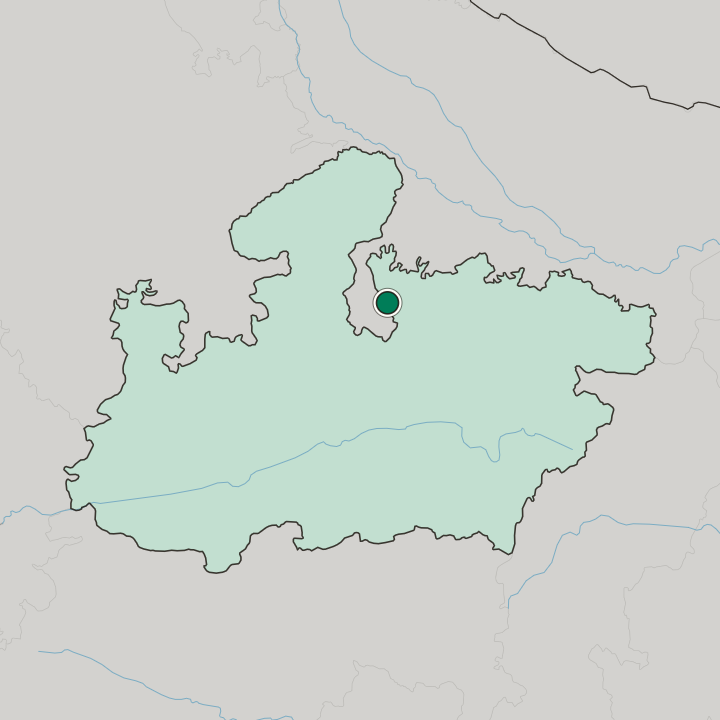
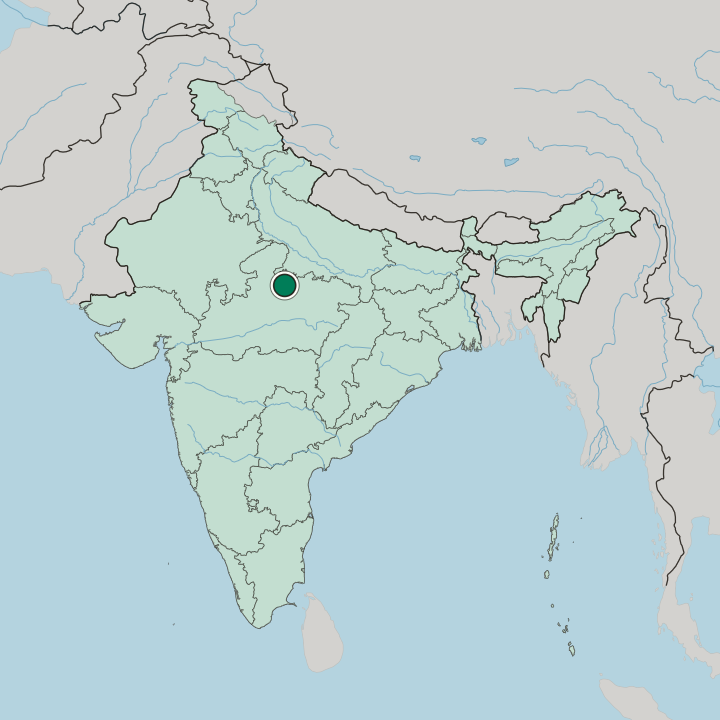
Orchha fixes the position: 64 km separates the two, and the town stands inland in Madhya Pradesh on the open ground where the three hamlets of Tehri once formed their rough triangle. The built area is compact. Around 21 km² covers it, and beyond that edge Tikamgarh district runs out into the country that holds Garh Kundar, which is the reason most visitors have for driving any distance from the town at all.
What is the climate of Tīkamgarh?
Old stone holds the heat. Garh Kundar and the fort ground around Tīkamgarh are hard work in the hot half of a subtropical year, easier once the rains have passed, and best of all in the cool months when a full day among the walls costs nothing in effort. Shade is scarce on the ramparts.
Travellers combining the district town with Orchha, 64 km away, generally plan both for the same cool season, since the two sites sit in the same open country and the same weather governs the drive between them.
How do you get to Tīkamgarh?
Orchha is the common approach, 64 km away and the older capital whose move in 1783 created the town in the first place, so the road between them carries both heritage travellers and the everyday traffic of Tikamgarh district. Everyone reaches Tīkamgarh by road. No terminal or operator is set down for Tīkamgarh in the record, and once here the tehsil headquarters is small enough that Purani Tehri, the market streets and the offices are all within easy reach of wherever a vehicle stops.
Common questions
What is the best area to stay in Tīkamgarh?
Purani Tehri: sleeping beside the oldest of Tīkamgarh's three hamlets. The district-headquarters streets: tehsil business and an early road out to Garh Kundar. Orchha: heritage stays 64 km from Tīkamgarh.
More cities in Madhya Pradesh
Updated September 2026