India · State of Andhra Pradesh
Where to Stay in Guntur, State of Andhra Pradesh
Guntur, once Garthapuri, is the headquarters of Guntur district in Andhra Pradesh and a trade hub for chili, cotton and tobacco.
Hotel links are affiliate links: booking through them may earn us a commission, at no extra cost to you. It never affects how places are ranked. How this works


Where to stay in Guntur
The practical side of choosing where to sleep.
Trade sets the pattern. Guntur handles chili, cotton and tobacco in volume, and the largest chili yard in Asia stands in the city, so a good share of its rooms are taken by people whose business starts at the market rather than at a sight. Match days shift that.
The ACA Women's Cricket Academy Ground is the single landmark the record attaches to Guntur, and when it is in use the demand moves to whichever side of the city it stands on. The Capital Region widens the choice. Guntur stands about twenty-three kilometres southwest of Amaravati, and with that capital and with Vijayawada it makes up the Andhra Pradesh Capital Region, so a bed in any of the three can serve business in the other two.
The three sit within an easy run of each other. Amaravati has been the state capital since 2014, and the region it heads with Guntur and Vijayawada is described as the modern heart of the state. District work points inward.
Guntur district is administered from the city, and anyone whose errands run across it will do better in the centre, close to the headquarters and to the yards, than out at the edges where the trade never reaches.
Find hotels in Guntur
Direct booking searches for these neighbourhoods.
By the chili yard
The largest chili yard in Asia trades in Guntur, and the rooms closest to it keep the market and the city centre within the same short walk.Find hotels in By the chili yardFixtures at the ACA Women's Cricket Academy GroundToward the ACA Women's Cricket Academy Ground
The ACA Women's Cricket Academy Ground is the only landmark recorded in Guntur, and a bed on its side of the city saves the cross-town run on a match day. Beds are limited here, so book early.Find hotels in Toward the ACA Women's Cricket Academy GroundTrips split between Guntur, Amaravati and VijayawadaAcross the Capital Region
Guntur lies about twenty-three kilometres southwest of Amaravati, and the three cities of the Andhra Pradesh Capital Region are close enough that one base covers all of them.Find hotels in Across the Capital RegionHotel links are affiliate links: booking through them may earn us a commission, at no extra cost to you. It never affects how places are ranked. How this works
About Guntur
Chili moves the money here.
What is Guntur known for?
Guntur is a major trade hub for chili, cotton and tobacco, and the largest chili yard in Asia sits in the city, which is what its name carries beyond Andhra Pradesh. Size does the rest. It is the third-largest city in the state and the administrative headquarters of Guntur district, and with Amaravati and Vijayawada it forms the Andhra Pradesh Capital Region.
What are the main landmarks in Guntur?
One ground carries the list. The ACA Women's Cricket Academy Ground is the only landmark recorded in Guntur, which makes a sporting venue rather than a temple or a fort the city's fixed point on the map. Trade supplies the alternative.
The largest chili yard in Asia works here, and for most arrivals the yards handling chili, cotton and tobacco are the thing worth seeing, since they are what the city is known for beyond Guntur district.
What is the history of Guntur?
Garthapuri came first. The city now written as Guntur, and natively spelt Gunturu, carried that older name before the modern one settled, and the record gives no year for the change. Nothing earlier is dated.
What the account offers instead of a chronology is a function: a trading town on the Eastern Coastal Plains that grew into the administrative headquarters of Guntur district. One date anchors the modern account. Guntur has been part of that Capital Region with Amaravati and Vijayawada since 2014, an arrangement the record calls the modern heart of the state.
Trade preceded politics. Chili, cotton and tobacco built the city's standing long before any capital region existed, and the largest chili yard in Asia is the clearest surviving expression of that trade. The district came with it.
Guntur serves as the administrative headquarters of Guntur district, and its position roughly twenty-three kilometres southwest of Amaravati keeps the older commercial town and the seat of government within an easy run of each other. Sport is the newest layer. The ACA Women's Cricket Academy Ground is the one built landmark the record names, and it belongs to a city whose entries are otherwise about markets and administration.
Where is Guntur?
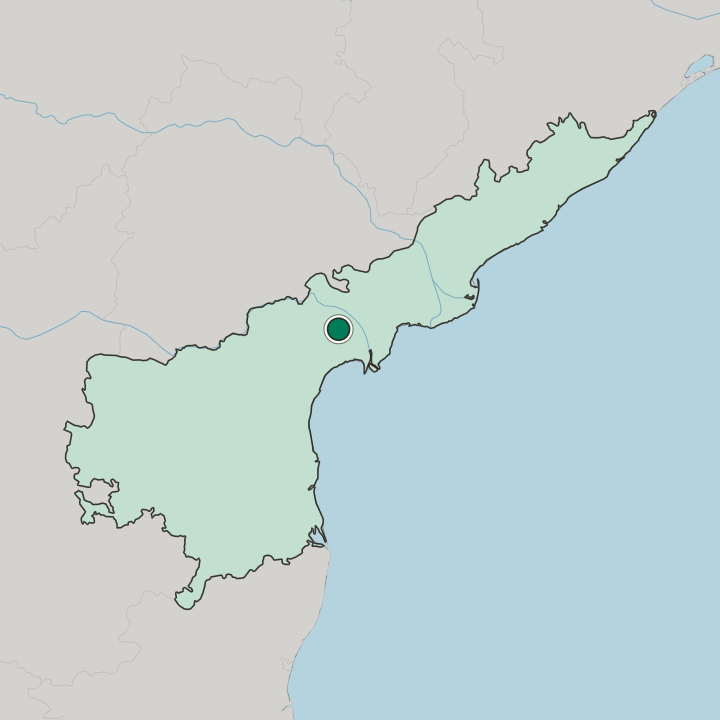
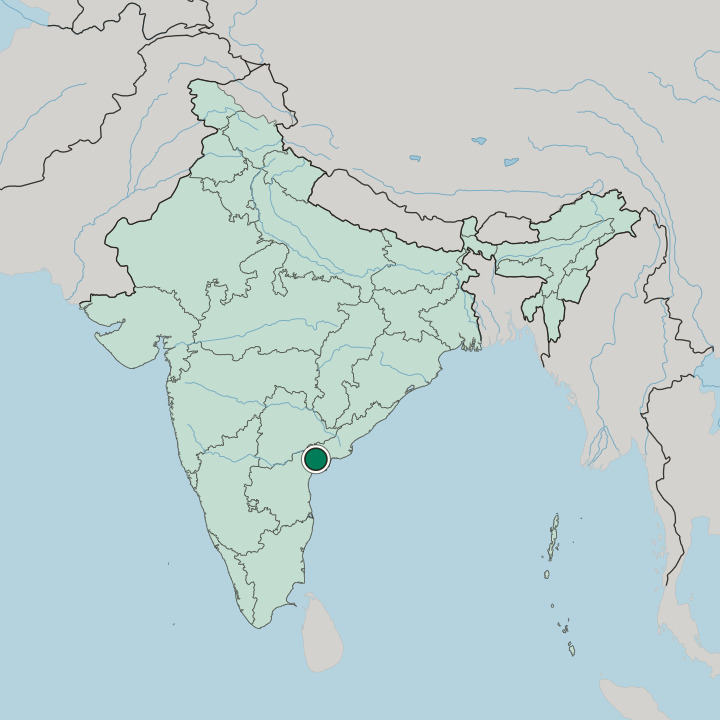
The Eastern Coastal Plains carry the city. Guntur sits on them, in the tropical band, roughly twenty-three kilometres southwest of Amaravati and within reach of Vijayawada, the two other members of the Andhra Pradesh Capital Region. Guntur district spreads around it.
The record describes the city as the heartland of the state, a position that connects different regions rather than sitting at one edge of them.
What is the climate of Guntur?
Flat ground and tropical air. Guntur lies on the Eastern Coastal Plains with nothing between it and the sun but its own streets, so the heat of the middle hours is the fixed feature of any day spent here. The plains do the rest.
Guntur stands on open ground rather than in hills, and the record adds no altitude or shelter to soften a tropical year, so the hour of the day is the only variable worth planning around.
How do you get to Guntur?
Arrival is a Capital Region matter. Guntur lies roughly twenty-three kilometres southwest of Amaravati, and the state capital, Vijayawada and Guntur are treated as one region, so approaches to any of the three end up serving all of them. No line or terminal is named.
The record gives Guntur no railway station, airport or highway by name, which leaves the short run between the city and Amaravati as the one connection it actually describes.
Common questions
What is the best area to stay in Guntur?
By the chili yard: Buyers working the chili, cotton and tobacco trade of Guntur. Toward the ACA Women's Cricket Academy Ground: Fixtures at the ACA Women's Cricket Academy Ground. Across the Capital Region: Trips split between Guntur, Amaravati and Vijayawada.
More cities in State of Andhra Pradesh
Updated September 2026