India · State of Jhārkhand
Where to Stay in Dhanbad, State of Jhārkhand
Dhanbad is Jhārkhand's coal city. Known as the Coal Capital of India, it also carries the state's largest economy and the Indian School of Mines.
Hotel links are affiliate links: booking through them may earn us a commission, at no extra cost to you. It never affects how places are ranked. How this works


Where to stay in Dhanbad
How the choice of base plays out on the ground.
Industry sets the tone. Dhanbad is a working city before it is a destination, so the beds cluster where the business is, near the railway quarter and along the approaches used by people whose reason for coming is coal, manufacturing or a contract. The campus side is calmer.
Streets near the Indian School of Mines keep a different pace, and a room there trades a longer walk to the station for evenings that are not organised around shift ends and freight movements. The Paschim Bardhaman district and the Purulia district of West Bengal begin at the city's own boundary, which puts a state line within reach of an ordinary afternoon. Neighbours offer alternatives.
Bokaro lies against Dhanbad district, and the Giridih and Jamtara districts share its boundary too, so a traveller working across this part of Jhārkhand can choose a base outside the coalfield without adding much to the day's driving. Book with the working week in mind. Rooms in Dhanbad answer to business demand rather than to a tourist season, which means midweek is the tight stretch and a weekend arrival usually finds more choice than a Tuesday one.
Find hotels in Dhanbad
Direct booking searches for these neighbourhoods.
Around the Indian School of Mines
The Indian School of Mines gives this part of Dhanbad a campus rhythm, so its streets settle earlier than the ones serving the mines and the freight yards.Find hotels in Around the Indian School of MinesEarly departures on the Dhanbad railway divisionThe Dhanbad railway quarter
The railway division that takes its name from Dhanbad keeps this quarter awake and well served, which suits anyone whose route through Jhārkhand is built around train times.Find hotels in The Dhanbad railway quarterWork that spans Bokaro, Giridih and Jamtara as well as the coalfieldBokaro and the neighbouring districts
Bokaro and the Giridih and Jamtara districts all touch Dhanbad district, so a bed in one of them keeps a working week inside a short drive without sitting in the mining belt itself. Few places to stay nearby — book ahead.Find hotels in Bokaro and the neighbouring districtsHotel links are affiliate links: booking through them may earn us a commission, at no extra cost to you. It never affects how places are ranked. How this works
About Dhanbad
Coal made Dhanbad.
What is Dhanbad known for?
The city holds one of the largest coal mines in the country and answers to the epithet Coal Capital of India, and that single industry underwrites the largest economy in Jhārkhand. Mining brought teaching with it. The Indian School of Mines sits in Dhanbad, and information technology has become a second string alongside manufacturing and the coal that still defines the place.
What are the main landmarks in Dhanbad?
Dhanbad keeps few attractions. The Indian School of Mines is the building most often pointed out, an institution rather than a monument, and the coal workings that gave the city its title are the other thing visitors are shown. Dhanbad district carries the heritage.
Cultural material is spread through the district rather than concentrated in the city, which is why the place reads as a well-rounded stop rather than a sightseeing one.
What is the history of Dhanbad?
Coal came before everything else. One of the largest coal mines in the country sits at Dhanbad, and the workings drew the labour, the capital and the railway that between them turned a district into a city. The railway followed the seams.
A Dhanbad railway division exists because the freight had to move, and the network built for coal became the reason the city could later handle manufacturing and, after that, information technology. Teaching followed the industry. The Indian School of Mines was placed in Dhanbad because the subject was already there, and the presence of that institution is one reason the city's reputation runs to expertise rather than only to extraction.
Wealth followed too. Dhanbad came to hold the largest economy in Jhārkhand and to be described as the state's economic capital, second in size only to Jamshedpur, which makes it the rare industrial town whose name is known for what it produces rather than for what it preserves. Borders shaped the trade as much as the seams did, since Dhanbad meets the Paschim Bardhaman district and the Purulia district of West Bengal along one stretch of its edge and Bokaro, Giridih and Jamtara along another.
Where is Dhanbad?
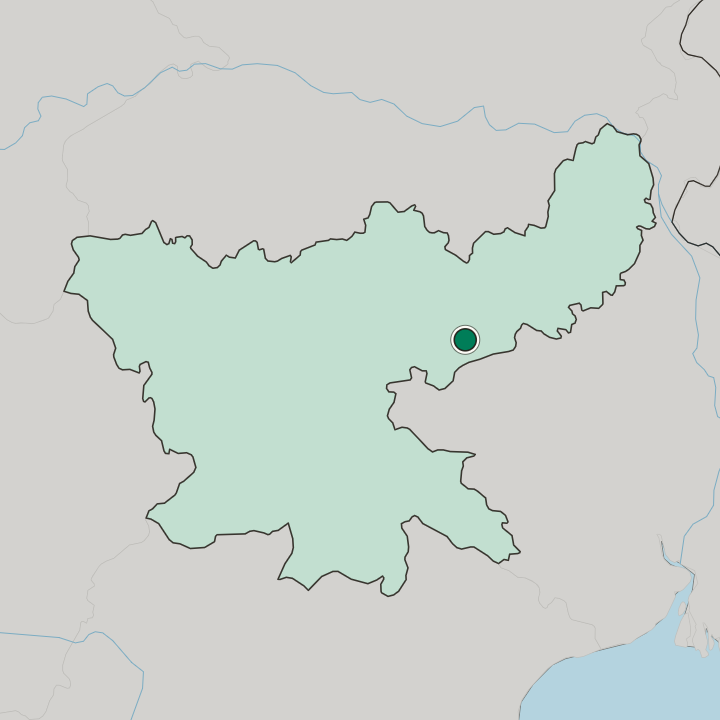
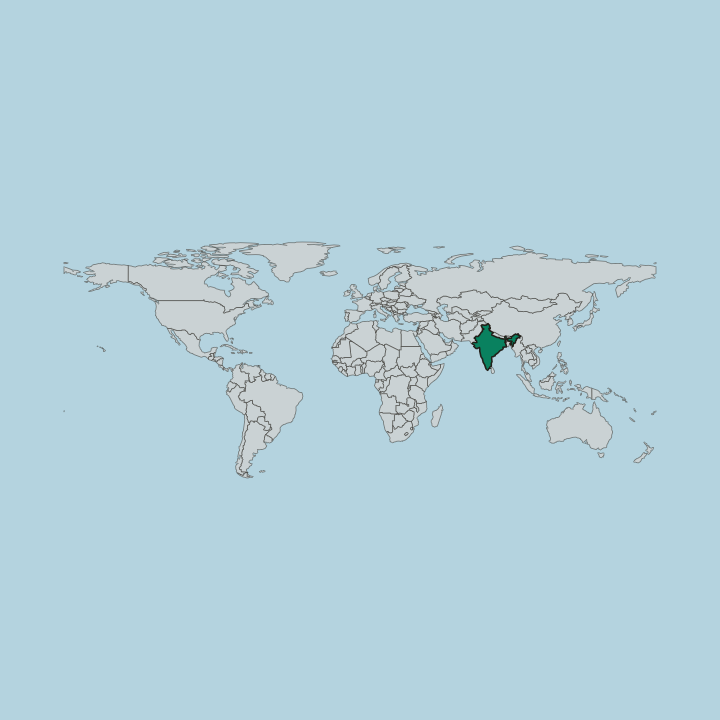
Dhanbad sits on a coalfield. The city and its district cover a broad spread of ground in the subtropical band, and the boundary runs against the Paschim Bardhaman district and the Purulia district of West Bengal as well as Bokaro, Giridih and Jamtara. A state line runs through that list.
Two of those neighbours belong to West Bengal and the rest to Jhārkhand, so Dhanbad district functions as an edge as much as a centre, with traffic crossing in both directions daily.
What is the climate of Dhanbad?
The year splits three ways. Winters here are genuinely cool, the summer before the rains is hard, and the subtropical setting gives Dhanbad a wider annual swing than its reputation for heat and dust would suggest. Dust is the local complication.
Working a coalfield in dry weather puts particles in the air that rain clears, so the wet months are unexpectedly the more comfortable ones for anyone walking around Dhanbad district on foot.
How do you get to Dhanbad?
The railway is the answer. The Dhanbad railway division runs the network that was laid to move coal out of the district, and the same lines carry passenger services that make the city straightforward to reach from across India. Road links cross a state line.
Approaches from the Paschim Bardhaman district and the Purulia district of West Bengal arrive from one direction while Bokaro, Giridih and Jamtara feed in from within Jhārkhand, which gives Dhanbad more overland entrances than most cities its size.
Common questions
What is the best area to stay in Dhanbad?
Around the Indian School of Mines: Academic visits and quieter evenings than the coalfield edge allows. The Dhanbad railway quarter: Early departures on the Dhanbad railway division. Bokaro and the neighbouring districts: Work that spans Bokaro, Giridih and Jamtara as well as the coalfield.
More cities in State of Jhārkhand
Updated September 2026