India · Uttar Pradesh
Where to Stay in Amroha, Uttar Pradesh
Amroha, headquarters of Amroha district in Uttar Pradesh, keeps the Dargah Shah Wilayat and a trade in mangoes, dholak drums, and hand-loom cloth.
Hotel links are affiliate links: booking through them may earn us a commission, at no extra cost to you. It never affects how places are ranked. How this works


Where to stay in Amroha
How the choice of base plays out on the ground.
Amroha's beds cluster near the Dargah Shah Wilayat or near the railway, and the errand decides which. Pilgrims come for the tomb of Syed Husain Sharaf-ud-din Soharwardi Naqvi, who reached the city from Wasit in Iraq in the thirteenth century, and they want the old quarters on that side of town. The Vasudev Temple and Tulsi Park stand within the same walk.
District paperwork pulls the other way. Amroha is the headquarters of Amroha district, and the offices that serve Gajraula, Hasanpur, and Dhanaura all sit here, which fills rooms on ordinary weekdays rather than at any festival. Amroha railway station takes all passenger trains on the Delhi-Moradabad line and most of the expresses.
A room within reach of the platform is worth more than a view after a night arrival, because the lanes are no pleasure to cross in the dark with luggage. Drivers read a different map. NH 24 runs about five kilometres off, and traffic from the capital leaves it for the Atrasi road shortly before Zoya, so a bed on that edge spares two slow runs through the market in one day.
Stock is thin at every grade. Moradabad, thirty kilometres off, holds the larger choice for anyone who wants one.
Find hotels in Amroha
Direct booking searches for these neighbourhoods.
Around the Dargah Shah Wilayat
The Sufi shrine that draws visitors from across the country stands in the old quarters, with the Vasudev Temple and Tulsi Park inside the same walk. Lodging is scarce in this area; reserve in advance.Find hotels in Around the Dargah Shah WilayatNight arrivals off the Delhi-Moradabad lineNear Amroha railway station
Amroha railway station takes all passenger trains on the Delhi-Moradabad line, which suits anyone landing after dark who would rather not carry luggage across the lanes. Lodging is scarce in this area; reserve in advance.Find hotels in Near Amroha railway stationDrivers leaving NH 24 at the Zoya turnThe Atrasi road edge
NH 24 runs about five kilometres from Amroha and the Atrasi road carries traffic in from the Delhi direction, so a bed on that edge spares two slow crossings of the market. Beds are limited here, so book early.Find hotels in The Atrasi road edgeHotel links are affiliate links: booking through them may earn us a commission, at no extra cost to you. It never affects how places are ranked. How this works
About Amroha
Mangoes and drums.
What is Amroha known for?
Amroha's orchards supply the fruit the city is known for, while its workshops turn out dholak, hand-loom cloth, pottery, and wood handicrafts, with cotton, textiles, and sugar milling behind them. The Dargah Shah Wilayat draws pilgrims from across the country to the tomb of a Sufi who arrived in the thirteenth century. Urdu carries the other reputation.
Jaun Elia and his elder brother Rais Amrohvi belong to the city's Urdu line, as does the film director Kamal Amrohi, and the cricketer Mohammed Shami is named among its own.
What are the main landmarks in Amroha?
The Dargah Shah Wilayat holds the tomb of Syed Husain Sharaf-ud-din Soharwardi Naqvi, the Sufi who came from Wasit in Iraq in the thirteenth century, and the tradition around it says scorpions never sting at his resting place. Hindus keep the Vasudev Temple. Older Sufi ground survives as well, in the mazar of Shah Nasruddin, reckoned the city's earliest such figure, and in the dargahs of Bhure Shah and Sheikh Saddu.
Tulsi Park sits nearby. Bayen ka Kuan is counted among the same list of sites.
What is the history of Amroha?
The name is said to come from a meal. Tradition holds that when Hazrat Sharfuddin arrived at this place, the people who met him offered mango and fish, and the two words behind those gifts settled into the name Amroha. Tyagis ruled the ground before Islamic rule.
The city's own account of itself reaches back into deep antiquity, well before any of that, though no founding year survives in the record. Sufi authority arrived in the thirteenth century, when Syed Husain Sharaf-ud-din Soharwardi Naqvi travelled from Wasit, in Iraq, and settled here. Rail arrived under the Oudh and Rohilkhand Railway, whose line reaches this station 868 miles out from Kolkata and ties the town to Delhi and Moradabad alike.
Hasan Khan founded Hasanpur in 1634, on the Ganges twenty-five kilometres away, and the town still carries his name. Amroha answered to Moradabad district for most of its administrative life. That ended on 24 April 1997, when Amroha district was constituted and this city was declared its headquarters.
Urdu letters left the deepest mark of the last century. Jaun Elia and Rais Amrohvi were brothers of that line, Nasim Amrohvi compiled Urdu lexicography, Ahmad Saeed Kazmi left for Multan in 1935, and Sadequain carried the city's name into Pakistani painting.
Where is Amroha?
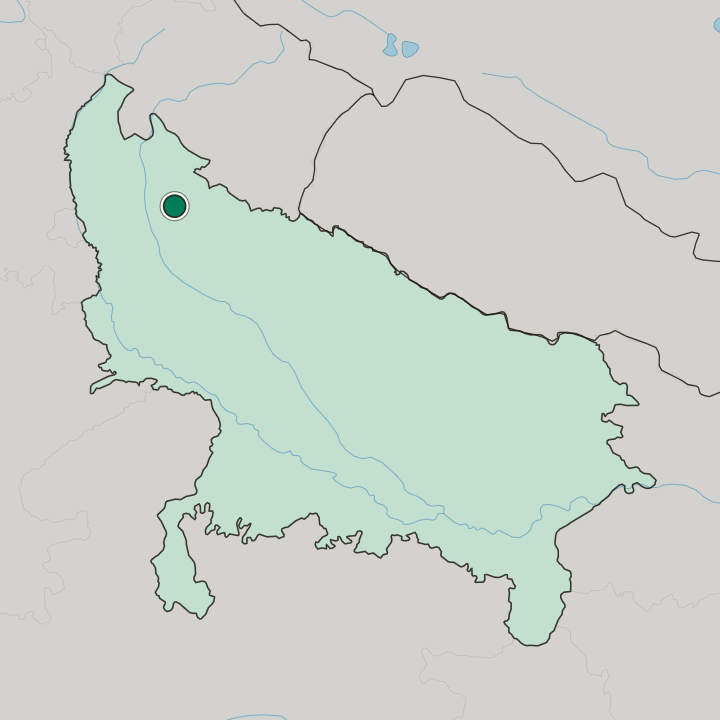
The Sot is the nearest river, a small stream running past the city on its way through the district. The Ganges lies further out, along the eastern side of Amroha district, where Tigri draws a bathing crowd and Hasanpur sits on the bank. Garhmukteshwar stands on the same water, eight kilometres west of Kankhathar. Bijnor is the district to the north.
Moradabad lies to the east. Meerut, Ghaziabad, and Bulandshahr fall away to the west, and all of this ground is the flat country below the Himalayas. The city divides into localities and blocks.
What is the climate of Amroha?
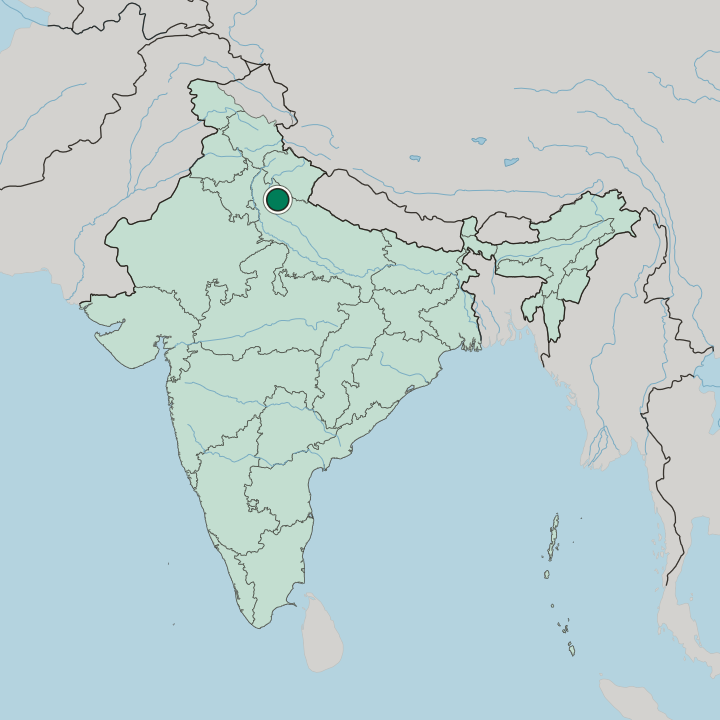
The Himalayas stand behind this plain, and the ground below them runs hot in summer and dry and cold in winter. Delhi is the closer measure. Amroha lies about 130 km from the capital and its weather tracks Delhi's very closely, so a season that suits one suits the other.
Monsoon rain does the rest. The pattern holds across the districts of Uttar Pradesh on this side of the state.
How do you get to Amroha?
Amroha railway station stands on the Delhi-Moradabad line, and all passenger trains plus most expresses stop there. The line itself was built by the Oudh and Rohilkhand Railway, 868 miles out from Kolkata. Roads take the rest.
NH 24 passes about five kilometres from the city, four lanes running between New Delhi and Lucknow, and drivers coming from the capital turn onto the Atrasi road shortly before Zoya. Indira Gandhi Airport in Delhi is the nearest air link.
Common questions
What is the best area to stay in Amroha?
Around the Dargah Shah Wilayat: Pilgrims at the tomb of Syed Husain Sharaf-ud-din Soharwardi Naqvi. Near Amroha railway station: Night arrivals off the Delhi-Moradabad line. The Atrasi road edge: Drivers leaving NH 24 at the Zoya turn.
More cities in Uttar Pradesh
Updated September 2026