India · Uttar Pradesh
Where to Stay in Varanasi, Uttar Pradesh
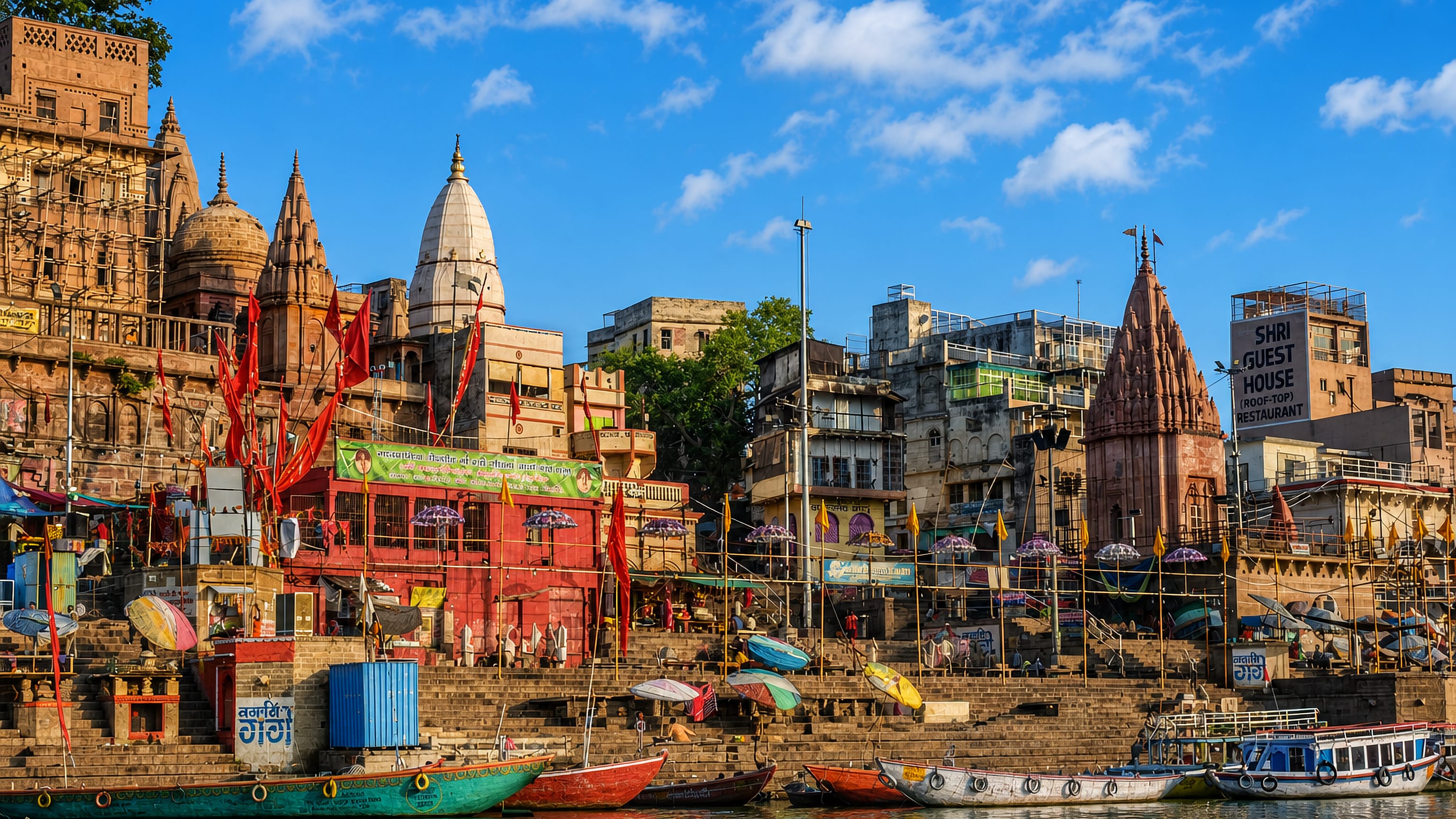
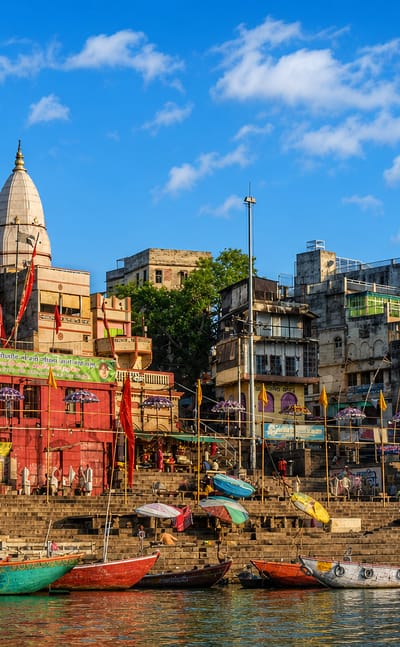
Stone steps drop to the water at the ghats of Varanasi, an ancient riverside city in Uttar Pradesh, known for its ghats and the Sarnath Temple nearby.
Hotel links are affiliate links: booking through them may earn us a commission, at no extra cost to you. It never affects how places are ranked. How this works


Where to stay in Varanasi
Each area has its own feel; here's who each one suits.
 VaranasiIndia
Bhelūpura
Bhelūpura is a neighbourhood of Varanasi in Uttar Pradesh, set down in English-language sources under the shorter spelling Bhelupur.Where to stay →VaranasiIndiaLahartara
Lahartara is a locality of Varanasi in Uttar Pradesh, and Lahartara Pond carries the same name a short way inside it.Where to stay →Hotel links are affiliate links: booking through them may earn us a commission, at no extra cost to you. It never affects how places are ranked. How this works
Find hotels in Varanasi
Direct booking searches for these neighbourhoods.
Above the ghats
The riverfront terraces stepping down to the stone ghats of Varanasi. Few places to stay nearby — book ahead.Find hotels in Above the ghatsBeing at the heart of the shrinesOld-city lanes
The tight maze of streets around the Mahalaxmi temple behind the riverbank.Find hotels in Old-city lanesA wider river outlookMan Singh Observatory terraces
Broad terraces by the Man Singh Observatory with an open view over the water.Find hotels in Man Singh Observatory terracesA quieter, greener baseSarnath
The calmer grounds around the Sarnath Temple a short drive from the old city.Find hotels in SarnathHotel links are affiliate links: booking through them may earn us a commission, at no extra cost to you. It never affects how places are ranked. How this works
About Varanasi
What is Varanasi known for?
Varanasi is one of the oldest living cities in Uttar Pradesh, defined by the ghats that line its riverfront. Pilgrims come for the water. The stepped ghats descend to the river in a long ribbon, and just outside the city the Sarnath Temple marks a major Buddhist site, while the Man Singh Observatory and the Mahalaxmi shrine add to a skyline of towers and temples.
Faith runs through everything here.
What are the main landmarks in Varanasi?
Varanasi is best known for its ghats, the long stair of stone terraces that line the river. Above them rise the shrines and towers of the old city. The Man Singh Observatory keeps its astronomical instruments on the riverbank, the Mahalaxmi temple draws worshippers in the lanes, and the Sarnath Temple marks the Buddhist site just outside town at Sarnath.
St. Mary's Cathedral and the Victoria Memorial add a colonial layer.
What is the history of Varanasi?
Varanasi ranks among the oldest continuously lived-in cities of Uttar Pradesh, its riverfront settled for millennia around the ghats that step down to the water. The river made the city. Successive generations built the stone terraces, shrines, and towers that still crowd the bank, laying down the pilgrimage pattern that has drawn people to the river here across a very long stretch of recorded and remembered time.
Buddhism left its mark just beyond the old city. The Sarnath Temple stands at Sarnath, the site associated with the Buddha's early teaching, one of the deep historical layers around the town. Later eras added the astronomical instruments of the Man Singh Observatory on the riverbank and, under colonial rule, buildings such as St. Mary's Cathedral and the Victoria Memorial.
Temples like the Mahalaxmi shrine kept the older devotional life going. Each layer stacked on the last, leaving Varanasi a city where ancient, medieval, and colonial pasts all read at once along the ghats.
Where is Varanasi?
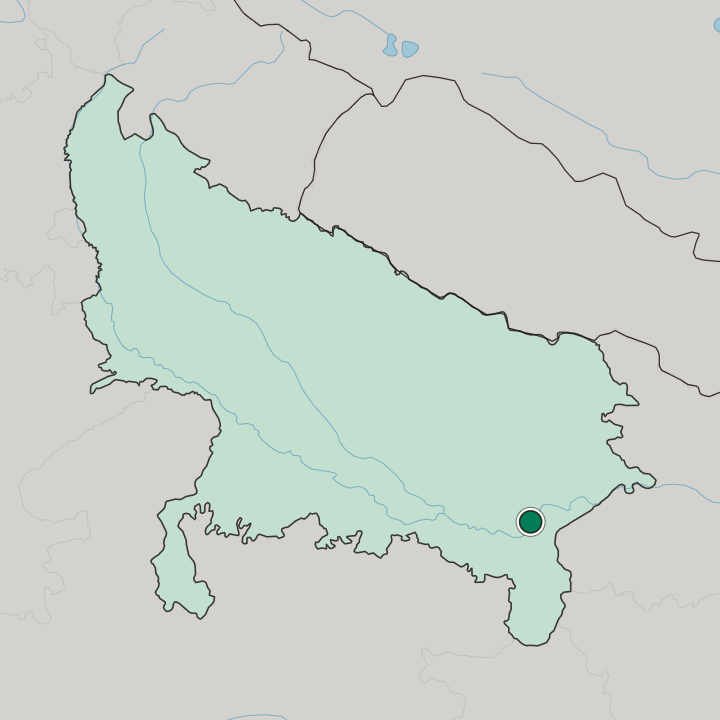
Varanasi sits on a curving riverbank in the plains of Uttar Pradesh. The river bends past the city. Its west bank rises in a long crescent of ghats, stepped stone terraces that give the waterfront its shape, while the flat alluvial plain spreads inland and the neighbouring site of Sarnath lies a short way out.
It is a low, riverine setting.
What is the climate of Varanasi?
Varanasi has the subtropical climate of the Uttar Pradesh river plains. Summers are long and searing. The monsoon then swells the river and greens the surrounding plain, and the cool, dry winter is the pleasantest season for walking the ghats at dawn or visiting Sarnath.
Heat and river rhythm set the year.
How do you get to Varanasi?
Varanasi is a major rail and road hub of eastern Uttar Pradesh, served by its own airport and a busy railway junction. Trains reach it from across the country. From the stations and the airport, roads run down to the riverfront and its ghats, and a short drive links the city to the Sarnath Temple on the outskirts.
Arriving is easy from any direction.
Common questions
What is the best area to stay in Varanasi?
Above the ghats: The dawn river and evening prayers. Old-city lanes: Being at the heart of the shrines. Man Singh Observatory terraces: A wider river outlook. Sarnath: A quieter, greener base.
Good for
More cities in Uttar Pradesh
Updated September 2026