India · Uttar Pradesh
Where to Stay in Khurja, Uttar Pradesh
Khurja is the ceramics town of Bulandshahr district in Uttar Pradesh, India, a pottery centre south-east of Delhi whose skyline is a row of kiln chimneys.
Hotel links are affiliate links: booking through them may earn us a commission, at no extra cost to you. It never affects how places are ranked. How this works


Where to stay in Khurja
Where visitors usually base themselves, and why.
Khurja is a working town and the choice reflects it. The pottery quarter puts you among the kilns, which is the reason most outsiders come, and the crockery can be bought where it is fired rather than in a shop. Pilgrims want the other end.
The Nav Durga Shakti temple fills twice a year for its fair. Anyone simply passing between Delhi and Aligarh will find the through road the easiest place to break the journey.
Find hotels in Khurja
Direct booking searches for these neighbourhoods.
The pottery quarter
The working heart of Khurja, where the ceramic factories and their chimneys stand together and the crockery can be bought where it is fired.Find hotels in The pottery quarterThe twice-yearly fair and the pilgrim crowds it bringsAround the Nav Durga Shakti temple
The temple side of town, which fills twice a year when the fair draws worshippers from well beyond Bulandshahr district.Find hotels in Around the Nav Durga Shakti templeDrivers passing between Delhi and Aligarh or AgraThe Delhi road
The through route, convenient for anyone treating Khurja as a stop on the way to Aligarh, Agra or Kanpur rather than a destination.Find hotels in The Delhi roadHotel links are affiliate links: booking through them may earn us a commission, at no extra cost to you. It never affects how places are ranked. How this works
About Khurja
Pots are the whole story.
What is Khurja known for?
Khurja supplies a large share of the ceramics used across India and is called The Ceramics City for it, with bone china from here reaching markets abroad and the town counted among the world's larger pottery clusters. Chimneys stand over the streets. A sweet called khurchan is known almost as widely as the crockery.
What are the main landmarks in Khurja?
The Nav Durga Shakti temple is the largest draw, showing all nine forms of the goddess in a single image and holding a fair twice a year that brings worshippers from far outside Bulandshahr district. Siddheshwar Mahadev and Bhuda Mahadev have their own followings. A large Jain temple stands in the town as well.
The kilns are the other sight, and the chimneys above them are what a visitor sees first.
What is the history of Khurja?
The name is a loan. Khurja comes from kharja, a Persian and Urdu word meaning foreign, and the principal families here have long been Pashtuns, counted from the Kheshgi line that came with Timur's army. Pottery is the older trade and the one that stuck, and the craft here has a history running back centuries rather than decades.
Sanskrit learning once shared the billing. Khurja was called Mini Kashi for the scholars it drew, and students travelled a long way to study here before the colleges declined. The kilns outlasted the schools.
Where is Khurja?
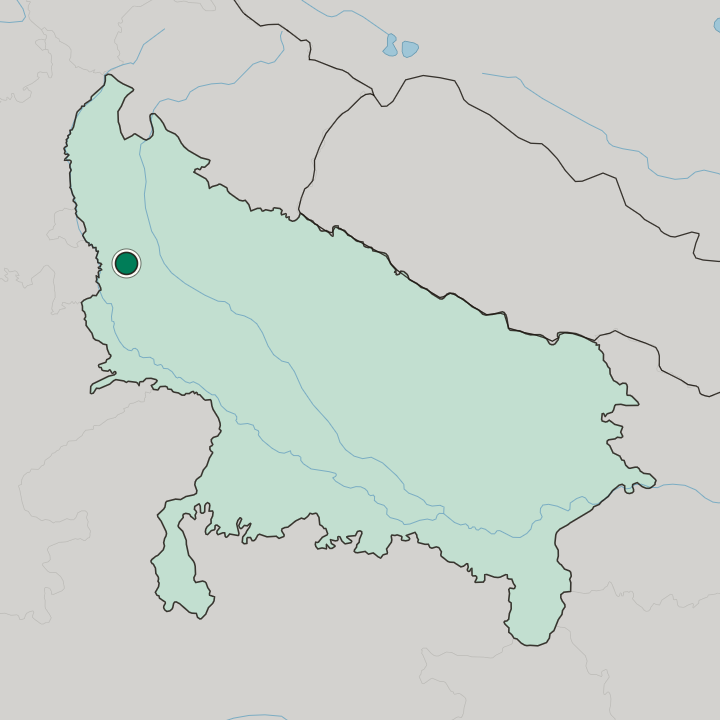
Khurja stands on the plain of western Uttar Pradesh, in Bulandshahr district and a short run south-east of Delhi, with Bulandshahr itself the nearest larger town. Roads leave in every direction. Meerut and Haridwar lie north, Aligarh and Agra south, and Kanpur further east, which is how a town of this size came to trade so widely in wheat, oilseed, barley, cotton, and sugarcane.
What is the climate of Khurja?
Khurja sits in the subtropical belt of the upper Gangetic plain, so the year runs through a long hot season, the monsoon, and a cool dry winter. The rains matter most. They set the wheat and sugarcane the district trades in, and the dry months are when the kilns work hardest without the damp working against the clay.
How do you get to Khurja?
Rail and road both serve Khurja well for its size. The railway connects it directly to Delhi and to Kolkata, and a separate line runs to Meerut, which is more than most towns of this scale manage. Roads fan out in every direction.
Delhi is the usual approach, with Aligarh, Agra and Kanpur reachable on the same network, and Bulandshahr close enough to count as local.
Common questions
What is the best area to stay in Khurja?
The pottery quarter: Watching bone china made and buying it at the kiln. Around the Nav Durga Shakti temple: The twice-yearly fair and the pilgrim crowds it brings. The Delhi road: Drivers passing between Delhi and Aligarh or Agra.
More cities in Uttar Pradesh
Updated September 2026