India · Uttar Pradesh
Where to Stay in Mahobā, Uttar Pradesh
Mahobā, once a Chandela capital in Bundelkhand, keeps a ninth-century granite Sun temple and the carved rock face of Gokhar hill.
Hotel links are affiliate links: booking through them may earn us a commission, at no extra cost to you. It never affects how places are ranked. How this works


Where to stay in Mahobā
The practical side of choosing where to sleep.
Two landmarks organise the town. The granite Sun temple stands at one pole and Gokhar hill with its 24 rock-cut Jain tirthankara images at the other, and most of what a visitor walks to falls between them. Mahoba District keeps its seat here, so the town centre carries the offices and the ordinary business of Bundelkhand.
Rooms follow that centre. The supply is a small town's, not a resort strip's. Choosing between the two poles is the whole decision.
A base near the Sun temple puts the ninth-century Pratihara work and the town's own streets within an easy walk, which suits you if the carving is why you came. Gokhar hill asks for a different rhythm, with the climb to the tirthankara images best taken before the day heats up. The Chandela dynasty ruled from Mahobā, and that history is the reason to stay rather than pass through.
Khajuraho, Kalinjar, Orchha and Jhansi all lie within the ring of historic places Mahobā is named beside, and travellers often fold the town into a longer circuit rather than making it the only stop. Kulpahar and Charkhari sit closer still. Mahobā keeps its distances small.
Find hotels in Mahobā
Direct booking searches for these neighbourhoods.
Around the Sun temple
The Pratihara-style Sun temple sits inside the town fabric, with the offices of Mahoba District and the working streets of the Bundelkhand seat a short walk away.Find hotels in Around the Sun templean early climb to the 24 rock-cut Jain tirthankara imagesBelow Gokhar hill
Gokhar hill carries its tirthankara images in the rock face itself, so beds stay down in Mahobā and the carvings are reached on foot from the town below. Rooms are few around here — worth securing early.Find hotels in Below Gokhar hillHotel links are affiliate links: booking through them may earn us a commission, at no extra cost to you. It never affects how places are ranked. How this works
About Mahobā
Stone carving defines the record.
What is Mahobā known for?
The granite Sun temple, raised in the ninth century in the Pratihara style, remains the best-known work, and on Gokhar hill 24 rock-cut Jain tirthankara images face the open air. Chandela rulers held Mahobā as their capital, and that inheritance still shapes what a visitor comes to see. Khajuraho lies nearby, with Kalinjar and Orchha within reach.
What are the main landmarks in Mahobā?
The Sun temple is the anchor. It is granite, ninth century, and Pratihara in style, the piece of Mahobā that carries the town's name furthest beyond Bundelkhand. Gokhar hill answers it with 24 rock-cut Jain tirthankara images, cut into the rock face rather than built on it, and they are the second reason people climb up from the town.
Kalinjar and Khajuraho draw the same kind of visitor.
What is the history of Mahobā?
Mahobā was a capital. The Chandela dynasty ruled from here, and the town's standing in Bundelkhand was set long before the district that carries its name existed. What survives from that period is architectural rather than written.
The granite Sun temple, dated to the ninth century and built in the Pratihara style, is the clearest surviving statement of how much the place once mattered. Little else of the Chandela period speaks as plainly in Mahobā, and later centuries left the town as a district centre inside Uttar Pradesh instead. Stone outlasted the court.
Jain carving marks a second thread. On Gokhar hill, 24 rock-cut Jain tirthankara images were worked directly into the rock face, and they record a religious presence standing alongside the temple rather than in place of it. The images face the open rock.
Mahobā sits close to Khajuraho, and Kulpahar, Charkhari, Kalinjar, Orchha, Lavkushnagar and Jhansi are named in the same breath, so the town belongs to a dense band of historic places rather than standing alone. Uttar Pradesh drew the modern district around it, with Mahobā as the seat. The old fabric still sets the terms.
Where is Mahobā?
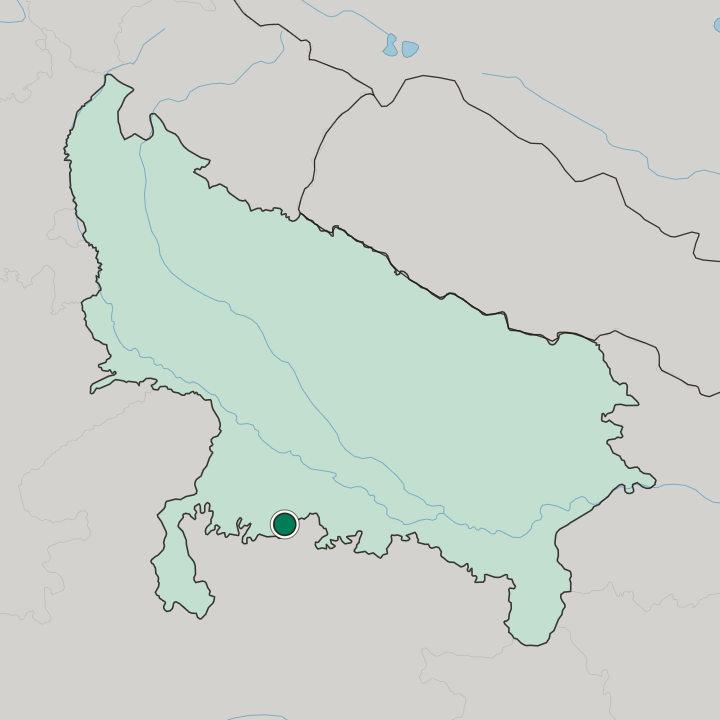
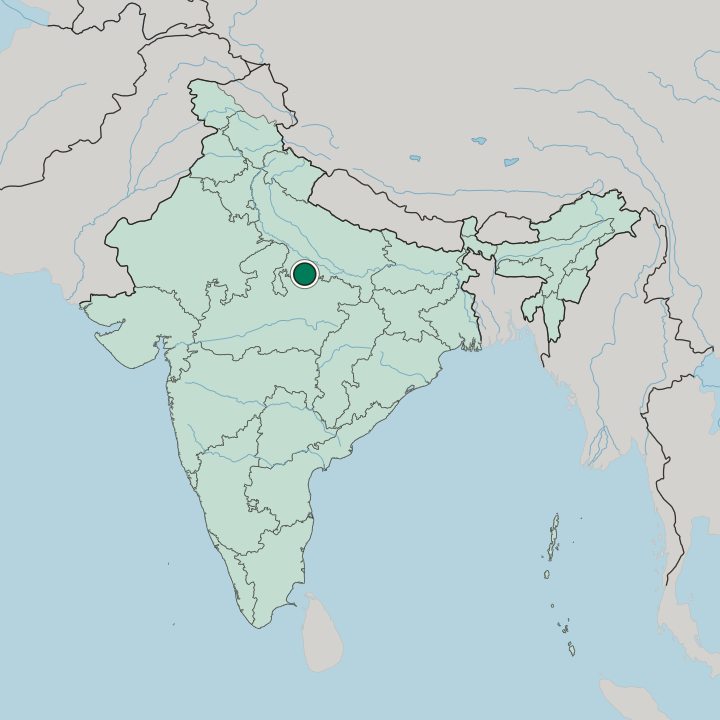
Gokhar hill sets the outline. Mahobā sits in the Bundelkhand region of Uttar Pradesh, in India, and the rock face of the hill above the town carries the 24 rock-cut Jain tirthankara images. Mahoba District takes its name and its seat from the town.
Khajuraho, Kalinjar and Orchha lie within the same historic belt, and Kulpahar, Charkhari, Lavkushnagar and Jhansi complete the ring of places named alongside it.
What is the climate of Mahobā?
Bundelkhand's heat governs the year. Mahobā falls in the subtropical band, so the hot months run long and the cooler stretch is short but welcome to anyone climbing Gokhar hill. Uttar Pradesh lies well inside that same band, and the town shares the pattern with Jhansi and the rest of the region.
Mornings suit the climb.
How do you get to Mahobā?
Rail and road both reach Mahobā. The railway serves the town, and state highways carry traffic on toward Kulpahar, Charkhari and the wider Bundelkhand, with Jhansi and Khajuraho the larger names on the same map. Lavkushnagar counts among the near neighbours.
Orchha and Kalinjar sit within that same run of historic places.
Common questions
What is the best area to stay in Mahobā?
Around the Sun temple: walking to the ninth-century granite Sun temple before the heat builds. Below Gokhar hill: an early climb to the 24 rock-cut Jain tirthankara images.
More cities in Uttar Pradesh
Updated September 2026