Iran · Isfahan Province
Where to Stay in Shāhīn Shahr, Isfahan Province
Shāhīn Shahr is Iran's first master-planned satellite city, laid out north of Isfahan by the Boroumand family.
Find your area →


Where to stay in Shāhīn Shahr
Where visitors usually base themselves, and why.
Two shopping streets carry the evening. Ferdowsi and Attar hold the arcades and shopfronts that most visitors to Shāhīn Shahr actually walk, and Bazar-e Shab keeps the same trade going after the daytime shops shut, which makes the retail spine the obvious first choice for a short stay. Hafez Park anchors the quieter option.
Streets near it read residential rather than commercial, which suits a stay that is mostly about the city itself and about Eastern Borumand House, the one heritage entry the register keeps for Shāhīn Shahr. Drivers should think about the road first. Moallem Freeway ties the city to the Dr. Shariati Bridge and to Kaveh Boulevard on the Isfahan side, so a bed near that approach turns the run into the provincial capital into a short errand.
The industrial edge suits contract work. Land the Boroumand brothers gifted to Isfahan University of Technology and to the government lies out here, along with the helicopter works that became the Iran Aircraft Manufacturing Industrial Company, so anyone billing hours at HESA loses nothing by staying beside it. Beds are thin everywhere.
The record names one four-star hotel, the Atlas Hotel, plus the Yaghut ecolodge, which means the choice of quarter matters less here than it would in a city with a hotel district. Summer sets the walking radius. Precipitation is slight and the annual swing in temperature is wide, so a distance that costs nothing in the cool months costs plenty in the heat.
About Shāhīn Shahr
What is Shāhīn Shahr known for?
Iran's first master-planned satellite city is the claim that sets Shāhīn Shahr apart. Six brothers of the Boroumand family turned the Amirabad farm they had inherited into streets, sewers, and affordable housing, financed at the outset by Bank Taavoni Va Tozie. Schools followed the roads.
Families displaced from Khuzestan during the Iran-Iraq war settled here in numbers, and the city that grew from them is the most diverse in Iran, Persian-speaking throughout yet drawn from every corner of the country.
What are the main landmarks in Shāhīn Shahr?
Eastern Borumand House carries the heritage register on its own, and everything else worth a walk in Shāhīn Shahr came out of the plan rather than out of an older town. Hafez Park and Bank Ostan Park sit among the residential blocks; the Ferdowsi arcades pull the daytime shoppers; Bazar-e Shab takes over once they shut. Sport has three grounds.
Takhti Stadium, Mellat Stadium and Pouria-ye Vali Stadium all stand in the city, and the Jam theatre plus the Eshraq cultural centre give an evening somewhere to go besides Shahin Mall.
What is the history of Shāhīn Shahr?
The Boroumand brothers did the arithmetic first. Six of them had inherited the Amirabad farm from Agha Muḥammad Khān Boroumand, and they judged that housing would pay better than agriculture on land that close to Isfahan, with water already running through the qanat their father had salvaged and upgraded. Demand for cheap housing settled it.
They incorporated the Sherkat Omran Shahinshahr, drew initial funding from Bank Taavoni Va Tozie, since absorbed into Bank Mellat, and began laying roads, sewers, water, and electricity across the farm in the mid to late 1960s. The payroll ran past ten thousand. Accountants, engineers, architects, and labourers worked under Abdol Ghafar, Abdol Rahim, Abdol Karim, and Abdol Rashid Boroumand, and the company put up more than ten thousand affordable homes.
A wider plan came later. Peter Verity, the urbanist behind PDR consultants, prepared the master plan for the expanded new town and the detailed designs for several residential areas and public buildings. Gifts of land pulled institutions in.
Two large tracts went to Isfahan University of Technology and to the Iranian government, the second on the understanding that a factory would follow; the helicopter plant planned for it was overtaken by the Iranian Revolution, and the site now holds the Iran Aircraft Manufacturing Industrial Company. Foreigners lived here in the 1970s. American and other expatriates on contract to the Iranian government and military occupied a walled compound, and the Toufanian High School of the American School of Isfahan stood at the northern tip of the city, a building that later became a satellite campus of Malek Ashtar University.
War brought a second wave. Families displaced from Khuzestan by the Iran-Iraq war arrived in numbers, and the first-class schools built at the start gave Shāhīn Shahr the educational standing it still trades on.
Where is Shāhīn Shahr?
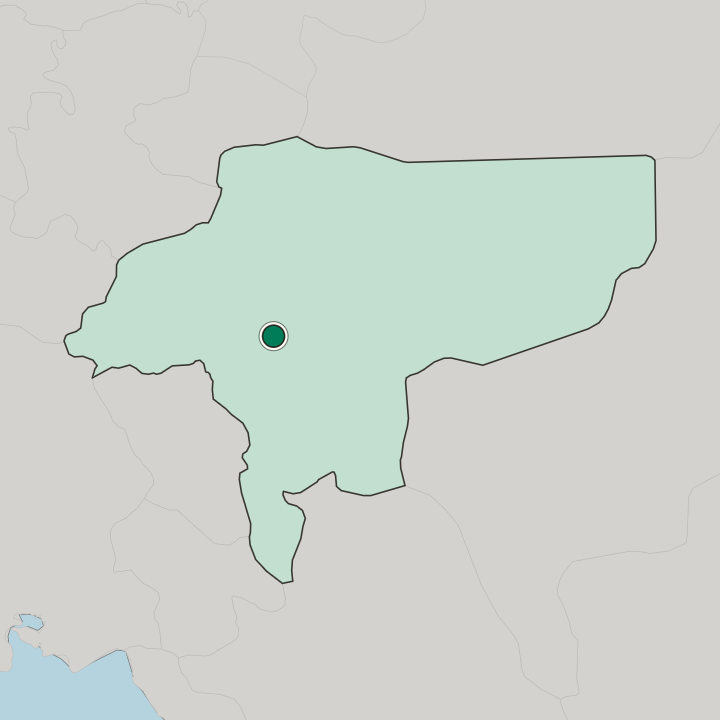
Shāhīn Shahr stands on high ground north of Isfahan, among the central mountain ranges of the country and east of the Zagros Mountains. The site tilts. A steady slope runs across the built area, the plateau around it takes little rain, and the yearly temperature swing runs wide.
Fields still edge the town. The Behris land west of the city, out along the Jahadabad road, grows melons, sunflower seeds, and medicinal plants.
What is the climate of Shāhīn Shahr?
Dryness comes with the position. East of the Zagros Mountains, high on the interior plateau of Iran, Shāhīn Shahr takes very little rain across the year, and the swing between its hottest and coldest hours is close to fifty degrees. The label is semi-arid.
Mornings carry high summer, and the shade under the Ferdowsi passages or the trees of Hafez Park is what the afternoon offers instead.
How do you get to Shāhīn Shahr?
Moallem Freeway is the spine. It runs down to the Dr. Shariati Bridge and Kaveh Boulevard on the Isfahan side, which puts Iran's second-largest metropolitan area and historic capital within a short drive of Shāhīn Shahr. Buses use a terminal outside the built-up area rather than a central stand, so an arrival by coach begins with a short hop into the middle of town.
Shāhīn Shahr County and its Central District are both run from here.
Good for
More cities in Isfahan Province
Updated September 2026