Iceland
Norðurland Eystra, Iceland — Towns & Travel Guide
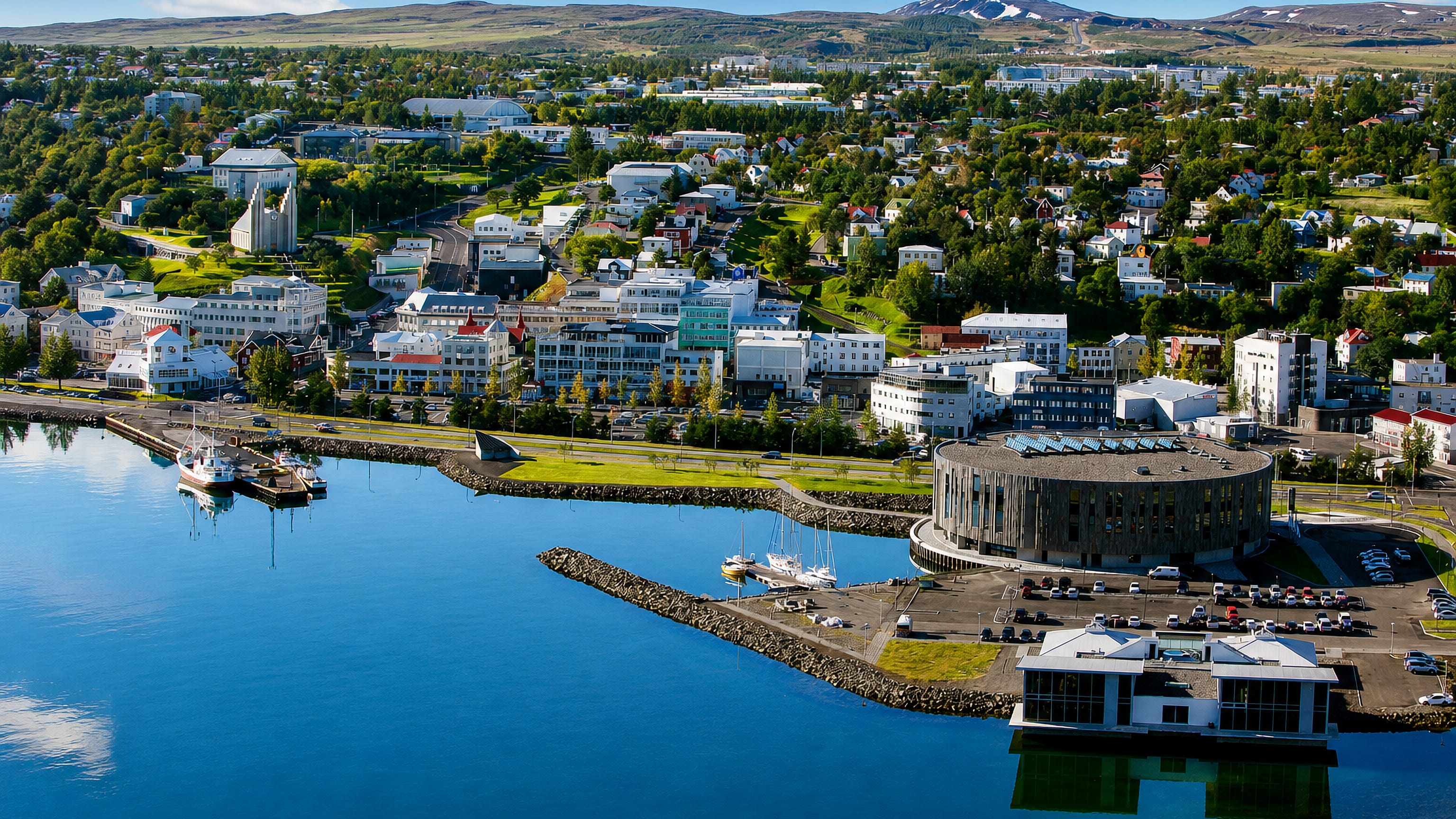
Norðurland Eystra wraps the head of Eyjafjörður in northern Iceland, with the town of Akureyri as its hub.
Hotel links are affiliate links: booking through them may earn us a commission, at no extra cost to you. It never affects how places are ranked. How this works


Towns & cities in Norðurland Eystra
One town here has its own guide — it links to where to stay.
 Iceland
Akureyri
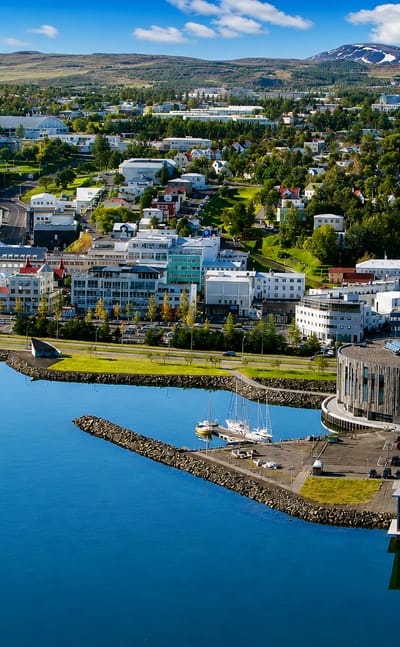
Akureyri is the main town of northern Iceland, set at the head of the long Eyjafjörður fjord.Where to stay →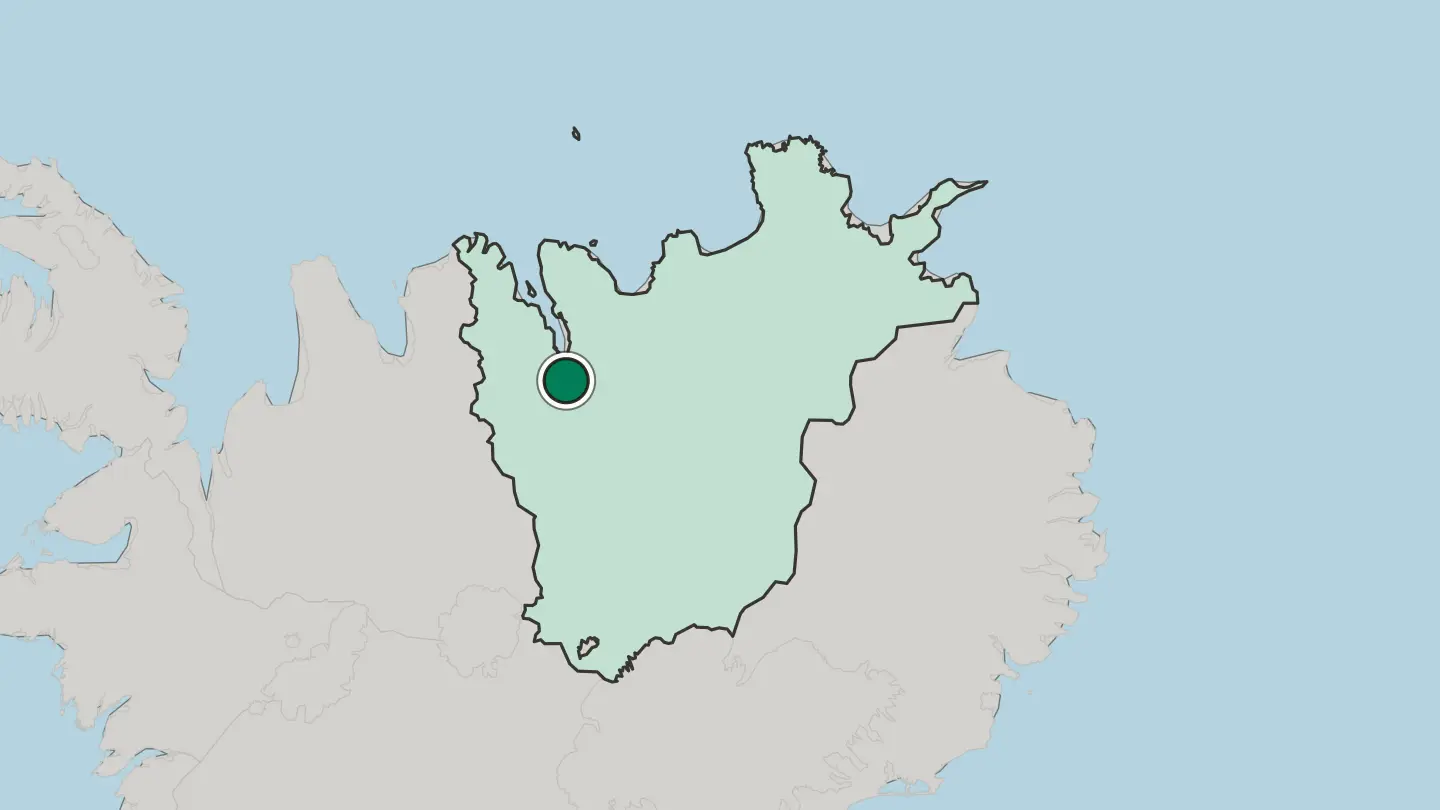
Hotel links are affiliate links: booking through them may earn us a commission, at no extra cost to you. It never affects how places are ranked. How this works
About Norðurland Eystra
Norðurland Eystra is known for fjords and a northern coast.
What is Norðurland Eystra known for?
The region gathers around Eyjafjörður, the long fjord that reaches deep inland to Akureyri, and stretches out to the islands of Hrísey and Grímsey on the open sea. Akureyri anchors the north. Whale watching, fishing, and winter skiing draw visitors here.
The waters of Eyjafjörður set the rhythm of the place.
Where is Norðurland Eystra?
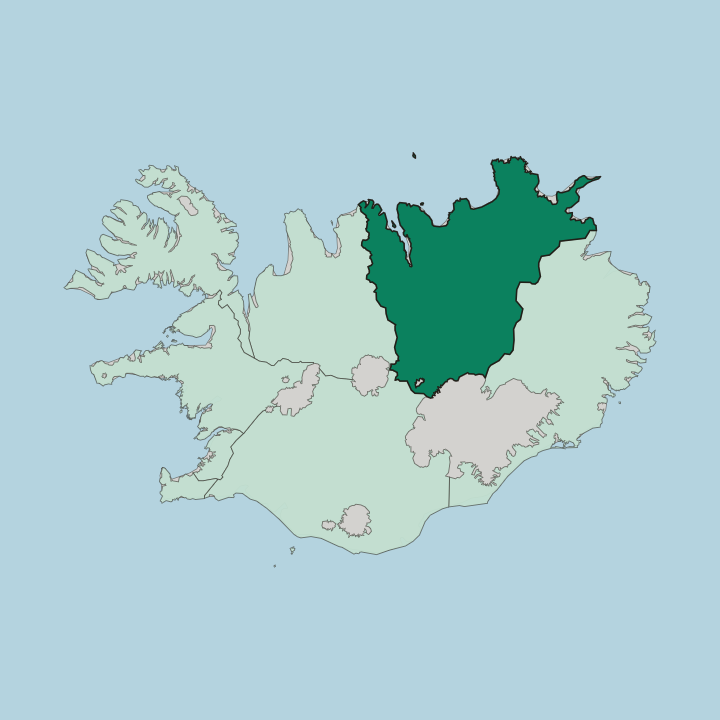
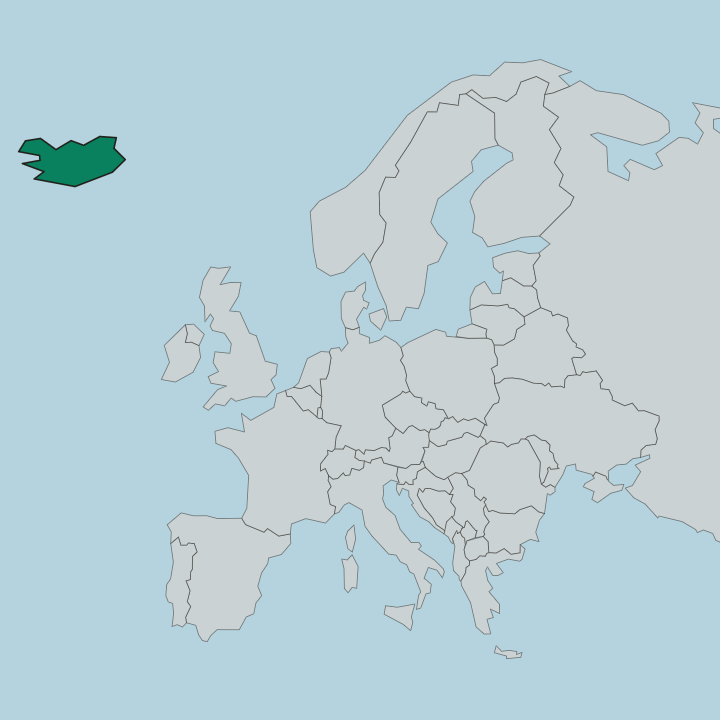
Norðurland Eystra lies in northern Iceland, a broad region that reaches from the central highlands down to a coast cut by long fjords and scattered islands. The land tilts toward the sea. Eyjafjörður drives deep into the heart of the region, a long sheltered fjord that carries ships up to Akureyri at its head, where farms and the town crowd the flat ground between steep slopes and tidewater.
North of the fjord mouth the sea opens out, and the islands of Hrísey and Grímsey stand alone in cold water far from the mainland shore. Beyond the fjord the country climbs fast. Mountains, glaciers, and lava plateaus fill the interior, and meltwater rivers run north across the lowlands to reach the sea.
The coast carries the people. Most farms, harbours, and roads of Norðurland Eystra keep to the fjord shores and the river valleys, while the highlands behind them stay empty, crossed only by rough tracks that close with the first heavy snow of the cold season.
What is Norðurland Eystra like?
Akureyri carries the cultural life of the north. The town keeps theatres, galleries, and the Akureyri Art Museum, and its tall church of Akureyrarkirkja stands over the harbour as the mark of the place, a centre that draws students, artists, and writers from across the region. Fishing shapes the year.
Boats still work out of the harbours along Eyjafjörður and from the island of Hrísey, and the catch sets the table and the calendar of festivals through the seasons. Life runs close to the land and the cold sea. Out on Grímsey the small community lives by birds, fish, and the long swing between the dark winter and the endless light of the northern summer.
Music and writing run deep in the north. Akureyri holds concerts, choral gatherings, and summer arts weeks, while the farms and fishing villages of Norðurland Eystra keep older traditions of horse, hayfield, and the sea alive across the year.
What is the history of Norðurland Eystra?
Norðurland Eystra is old fjord and farming country. Settlers took the green slopes around Eyjafjörður early, working the hayfields and the inshore fishing, and trade gathered at the sheltered head of the fjord where ships could lie safe. From that harbour Akureyri grew into the chief port and market of the north, and the islands of Hrísey and Grímsey kept their small fishing communities through the same long centuries.
What is the climate of Norðurland Eystra?
Norðurland Eystra has a cold northern climate tempered by the sea. Winters are long and dark, with snow lying across the highlands and the inland valleys while the fjord shores around Eyjafjörður stay milder under the reach of the coastal water. Summers are short and cool here in northern Iceland.
The long days of the northern summer warm the lowlands enough for hay and gardens, and the light barely leaves the sky on Grímsey out in the far north.
How do you get to Norðurland Eystra?
Norðurland Eystra is reached by road, air, and sea. The ring road runs north from the south of Iceland over high passes to Akureyri, which holds the region's airport and its main bus links, while flights connect the town with the capital in under an hour. Ferries serve the islands.
Boats cross to Hrísey from the Eyjafjörður shore, and a longer ferry and small flights link Grímsey to the mainland across the open northern sea.
Common questions
What is the best area to stay in Norðurland Eystra?
Akureyri: Travellers who want services, the fjord, and onward transport at the head of Eyjafjörður.. Hrísey: Quiet island nights and slow walks among the eider colonies of Hrísey.. Grímsey: Birdwatchers and long-light seekers willing to sail out to Grímsey..
Good for
More regions in Iceland
Updated October 2026