Italy · Sicilia · Siracusa
Neapolis, Siracusa — Area Guide & Where to Stay
Neapolis puts the rock-cut Teatro greco di Siracusa at one end of the quarter and the offices along corso Gelone at the other.
Hotel links are affiliate links: booking through them may earn us a commission, at no extra cost to you. It never affects how places are ranked. How this works


Where to stay in Neapolis
Where visitors usually base themselves, and why.
Neapolis is the mainland quarter where Siracusa keeps its offices, its shops, and the gate of the archaeological park. A bed here stands among post-war blocks rather than baroque fronts, and it puts the Teatro greco di Siracusa within a walk instead of a bus ride across the city. Corso Gelone runs up its eastern side. Ortygia lies south-east across the bridges, so the trade is the old city's lanes against easier parking and a shorter walk to the ruins.
If you have come for the ruins and want them on foot, sleep on this side of the water.
About Neapolis
What are the main landmarks in Neapolis?
Neapolis holds the Parco archeologico della Neapolis, entered from Via Luigi Bernabò Brea beside the Norman church of San Nicolò ai Cordari. The Teatro greco di Siracusa steps down the south slope of the colle Temenite, its cavea cut in 67 rows, largely out of living rock, and split into nine wedges by stairways. Caravaggio named the Orecchio di Dionisio.
That limestone slot cuts 65 metres into the wall of the Latomia del Paradiso, and the Ara di Ierone II lies below the theatre, a sacrificial base 198 metres long. The Anfiteatro romano di Siracusa sits just east of the altar, first dug out by Domenico Lo Faso Pietrasanta in 1839. The Via dei Sepolcri runs 150 metres of votive niches up to the crest of the hill, and the Necropoli Grotticelle closes the park with the rock-cut chamber long called the tomb of Archimedes.
What is the history of Neapolis?
Neapolis is the youngest quarter of ancient Siracusa, and Cicero wrote that it took the name new city because it was built last. The theatre went into the south slope of the colle Temenite in the fifth century BC. Gerone II rebuilt the cavea.
Stone from the latomie raised the polis, and the emptied pits then held prisoners: Filosseno di Citera is said to have written his Ciclope inside the Latomia del Paradiso. Spanish engineers carted off the upper courses of the Ara di Ierone II in the sixteenth century for the city's fortifications, and ropemakers worked the caves from the Middle Ages into the twentieth century. Paolo Orsi drew the boundary and Luigi Bernabò Brea saw it fenced between 1952 and 1955, ahead of the building that pushed up to its edges.
Where is Neapolis?
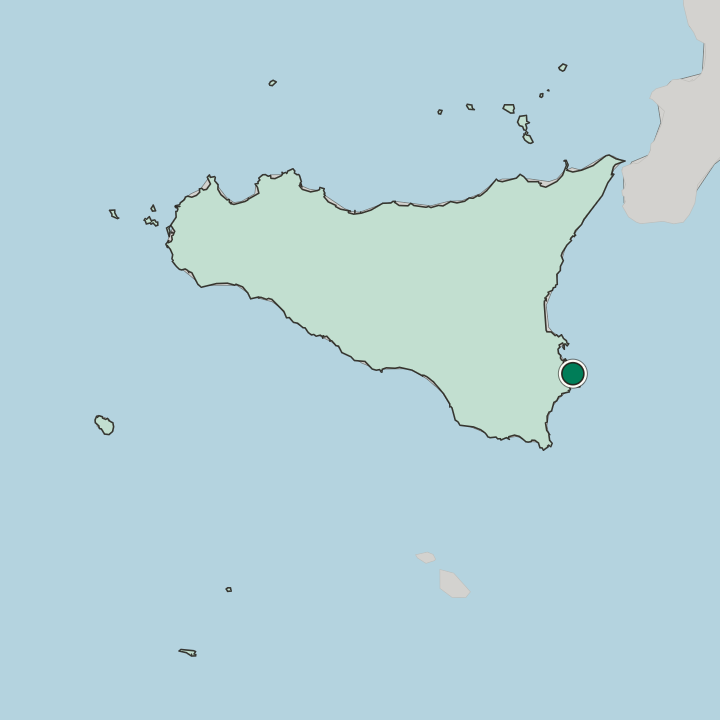
Neapolis takes the western and southern spread of Siracusa, from the colle Temenite and its quarries down to the Anapo and the Ciane at Pantanelli, with viale Teracati along its northern edge and corso Gelone on its eastern one. As a circoscrizione it reached the southern frazioni as far as Ognina, and stopped short of Cassibile.
More areas in Siracusa
Updated October 2026