Japan · Fukushima-ken
Where to Stay in Iwaki, Fukushima-ken
Iwaki covers more ground than any other city in Fukushima Prefecture, a Pacific coast merger of 14 municipalities made in 1966.
Hotel links are affiliate links: booking through them may earn us a commission, at no extra cost to you. It never affects how places are ranked. How this works


Where to stay in Iwaki
How the choice of base plays out on the ground.
Iwaki spreads too wide for a single obvious base. The 1966 merger left a city assembled from fourteen former towns, so the question is less which centre to pick than which of its scattered anchors a visit is really built around. Galleries first.
The Iwaki City Art Museum anchors the built-up part of the city, and rooms nearby also serve the nights of the Taira Tanabata Festival in the first week of August. Nothing about the plan is compact. Shiramizu Amida-dō sits apart from all of that, and a room on its side suits a traveller who would rather begin the day at a temple pond than in the middle of the traffic.
The Kabutozuka Kofun belongs to the same unhurried circuit, along with the Nakata Cave Tombs and the Negishi Government Offices Sites. The coast is the third choice. A base towards the Pacific Ocean puts the Terushima Cormorant Habitat within one morning and leaves the mountains that ring Iwaki standing behind everything else.
Neither Iino Hachimangū nor the Snake Museum of Contemporary Art fits neatly into either plan, which is what a city assembled out of fourteen former towns asks of a visitor.
Find hotels in Iwaki
Direct booking searches for these neighbourhoods.
Around the Iwaki City Art Museum
The gallery and the festival streets share the built-up part of IwakiFind hotels in Around the Iwaki City Art MuseumSlow mornings at Shiramizu Amida-dō and the Kabutozuka KofunThe Shiramizu Amida-dō side
The hall and its pond stand clear of the fourteen former town centres. Lodging is scarce in this area; reserve in advance.Find hotels in The Shiramizu Amida-dō sideCoast days spent at the Terushima Cormorant HabitatThe Pacific shore
The Terushima Cormorant Habitat and the open Pacific Ocean edge lie far from the galleries. Few places to stay nearby — book ahead.Find hotels in The Pacific shoreHotel links are affiliate links: booking through them may earn us a commission, at no extra cost to you. It never affects how places are ranked. How this works
About Iwaki
Sunshine gives the city its nickname.
What is Iwaki known for?
Iwaki collects enough bright hours to be called Sunshine Iwaki, and the same mildness that earns the name puts it among the most temperate cities in Japan. Shiramizu Amida-dō heads the landmark list, with the Iwaki City Art Museum and the oddly named Snake Museum of Contemporary Art filling out the modern side. August belongs to the Taira Tanabata Festival, three days from the sixth of the month.
What are the main landmarks in Iwaki?
Shiramizu Amida-dō comes first. That hall and Iino Hachimangū divide the religious ground between them, and the Iwaki City Art Museum answers for everything made since. Older ground survives in the Kabutozuka Kofun, the Nakata Cave Tombs and the Negishi Government Offices Sites, three sites that record burial and administration long before any of it was called Iwaki.
The Snake Museum of Contemporary Art is the outlier, and the Terushima Cormorant Habitat the one entry that is not built at all.
What is the history of Iwaki?
Burial ground came first. The Kabutozuka Kofun and the Nakata Cave Tombs mark the earliest layer of settlement recorded here, and the Negishi Government Offices Sites show that administration followed on the same ground. Religion left the more visible marks.
Shiramizu Amida-dō carries the Buddhist side of that record and Iino Hachimangū the Shinto one, and both outlast every municipal boundary drawn around them. Municipal Iwaki arrived late. Fourteen separate municipalities merged on the first day of October in 1966 to make one administrative unit, which is why Iwaki holds more territory than anywhere else in Fukushima Prefecture.
The new name broke a convention: Iwaki City is written in hiragana rather than in characters, one of a small group of Japanese cities to do so. Core city status followed. The Iwaki City Art Museum and the Snake Museum of Contemporary Art are additions of the modern city, while the Terushima Cormorant Habitat answers to nothing in the municipal record.
The Taira Tanabata Festival takes the sixth through the eighth of August, and it draws the merged city into one place for three days.
Where is Iwaki?
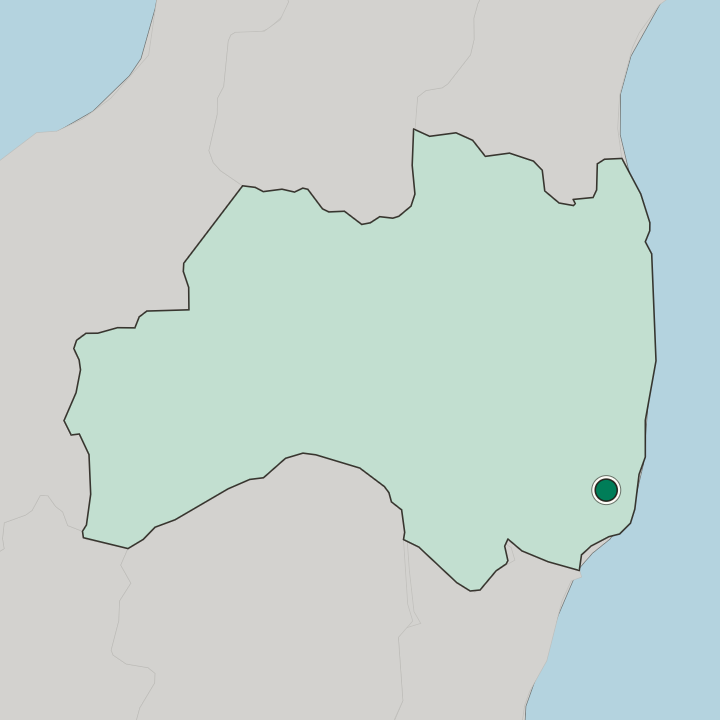
Mountains inland, the Pacific Ocean at the edge. No other city in Fukushima Prefecture covers as much ground, which is what makes the distance between the shoreline and the mountain rim a real part of any itinerary here. The Terushima Cormorant Habitat marks the wilder end of that range.
Fourteen former towns fill the rest.
What is the climate of Iwaki?
The Pacific Ocean keeps Iwaki even. Sunshine Iwaki is the local name for the result, earned by a tally of bright hours high enough to stand out in Japan and by a mildness reckoned among the country's most temperate. Seasons still separate.
The mountains behind the city and the open water in front of it hold the range narrow, which is the whole of what the nickname claims and the whole of what a visit should be planned around.
How do you get to Iwaki?
Plan for distance. Iwaki covers more territory than any other city in Fukushima Prefecture, so a day that pairs Shiramizu Amida-dō with the Terushima Cormorant Habitat spends real time in transit. Mountains stand behind the built-up ground and the Pacific Ocean closes the other side, which leaves the fourteen former town centres strung out rather than gathered.
August is the exception. The Taira Tanabata Festival takes over the first week of the month, and rooms across the merged city are harder to find then.
Common questions
What is the best area to stay in Iwaki?
Around the Iwaki City Art Museum: Afternoons at the Iwaki City Art Museum and Taira Tanabata Festival nights. The Shiramizu Amida-dō side: Slow mornings at Shiramizu Amida-dō and the Kabutozuka Kofun. The Pacific shore: Coast days spent at the Terushima Cormorant Habitat.
Good for
More cities in Fukushima-ken
Updated September 2026